
Hello,
It would be really great if everyone here could just post one or a few pictures showing the current state of their house.
I'll start right away.
For renovations, it’s best to provide a comparison of before and after the remodeling.
Before March 2014:
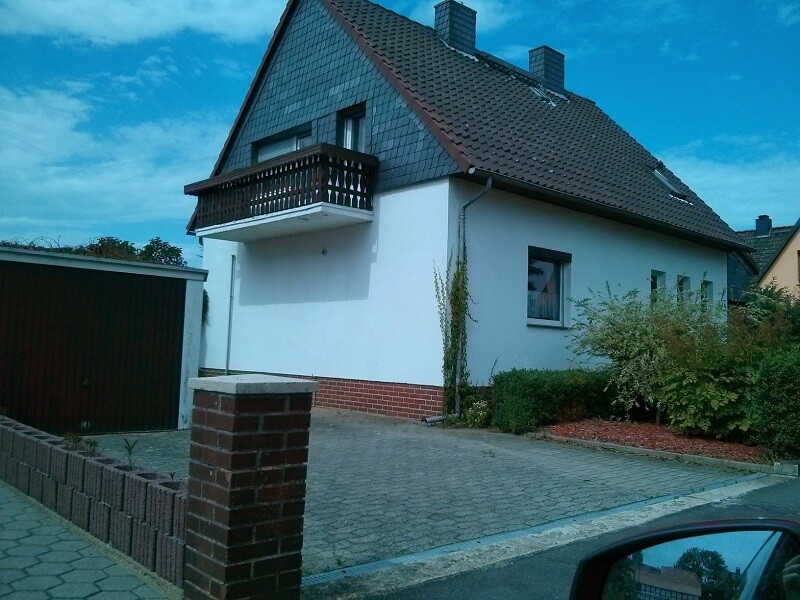
After May 2015:
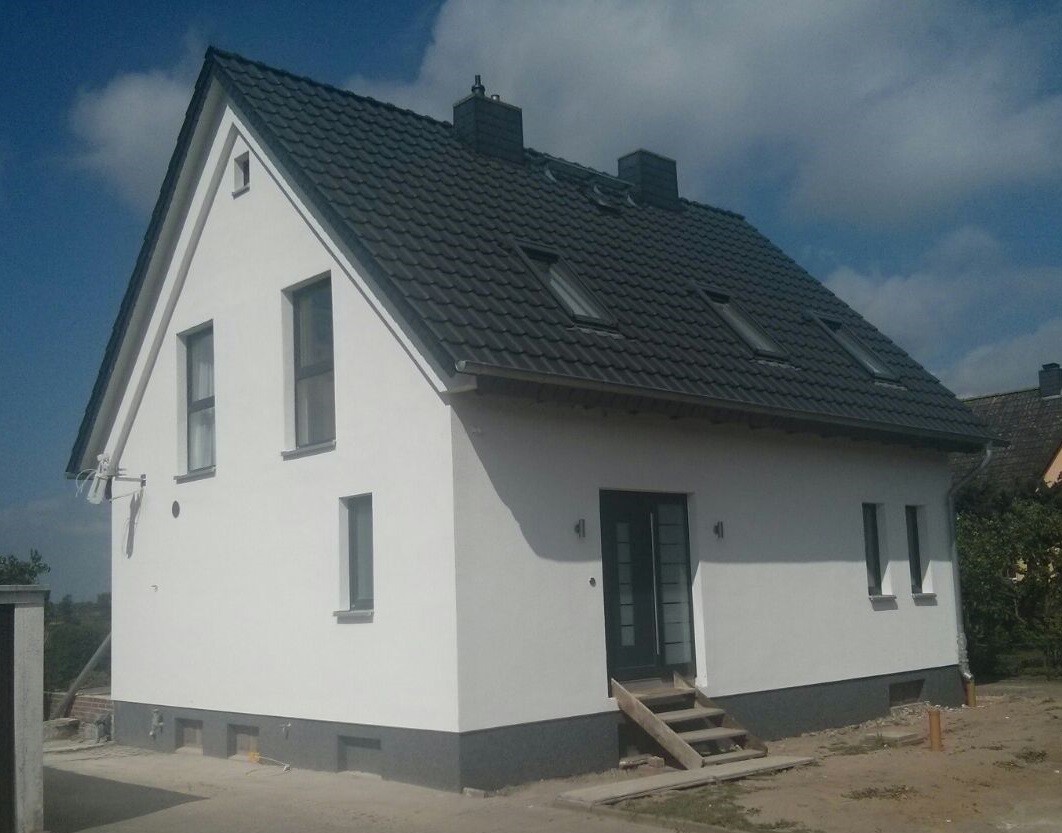
It would be really great if everyone here could just post one or a few pictures showing the current state of their house.
I'll start right away.
For renovations, it’s best to provide a comparison of before and after the remodeling.
Before March 2014:
After May 2015:
H
hampshire26 Apr 2021 12:00borxx schrieb:
Correcting a room’s acoustic shortcomings with digital distorters only works within certain limits and is even more challenging in living spaces designed to be very reflective, which is quite common nowadays. That’s true.
Calibration programs for multichannel systems primarily measure the signal delay times. This ensures that the spatial sound effect at the listening position works properly when speakers are placed at uneven distances, which is usually the case in residential rooms.
Some systems also detect resonance frequencies and reduce them using steep-slope digital equalizers. This allows a corrected frequency response at the listening spot. Incidentally, it’s the same technology that car manufacturers use to tune their compartments.
To compensate for echo or reverberation, a continuous measurement with a fast processor would be required to send phase-inverted signals to a driver that cancels out exactly that energy. Electronic compensation like this—used in noise-canceling headphones, conference systems, and recording technology—intervenes in the signal before it reaches the driver. In a living space, compensation afterwards would be necessary. Such a solution is currently not available on the market.
By the way, these calibration systems obviously don't help when the sound source is a group of people at dinner. If there is reflection and reverberation here, it quickly becomes uncomfortably noisy and unpleasant. Therefore, in my opinion, it is worth addressing room acoustics as an integral part of “living quality.”
Or as Ambrose Bierce defined “noise”: “Stink in the ear.” Who wants that?

borxx schrieb:
Correcting a room’s acoustic shortcomings with digital equalizers only works within certain limits The alternative—planning the room around the sound system—leads straight to a home theater setup.
Heavy curtains, plush armchairs, wall-to-wall carpeting, no windows—that’s not how I want to live.
The available correction options—removing reverberation, adjusting speaker timing, bass room modes, and so on—result in about an 80% solution, which is more than enough for my 70% hearing ability.
We also have a 5.0 speaker system; each speaker doubles as a subwoofer, so there are no room modes.
I happen to know some developers and tuners who have also worked for OEMs. The current systems and corrections go far beyond simple equalizing; they include not only pure time-delay correction and volume adjustments (EQ) but also phase alignment, among other things. However, that would lead us too far here.
On the other hand, the best hi-fi system I know of for cars (which has been crowned European champion multiple times) managed to achieve its results “only” with FIR filters.
Anyway, a room measuring 5x5x2.5m (16x16x8 feet) is a complete disaster no matter what purely digital tricks you use. Nobody is expected to sit in a dark, carpeted living room, but current trends are not necessarily beneficial for pleasant acoustics. From time to time, I watch YouTube documentaries about house construction, and while some of it looks really cool, I always cringe during interviews with the homeowners sitting at the dining table because everything echoes. I can’t imagine how that must be during normal daily life with children.
Brief anecdote: Our windows and the pillar between the living room and dining room follow a DTS/Dolby arrangement, which is naturally just a coincidence :p
On the other hand, the best hi-fi system I know of for cars (which has been crowned European champion multiple times) managed to achieve its results “only” with FIR filters.
Anyway, a room measuring 5x5x2.5m (16x16x8 feet) is a complete disaster no matter what purely digital tricks you use. Nobody is expected to sit in a dark, carpeted living room, but current trends are not necessarily beneficial for pleasant acoustics. From time to time, I watch YouTube documentaries about house construction, and while some of it looks really cool, I always cringe during interviews with the homeowners sitting at the dining table because everything echoes. I can’t imagine how that must be during normal daily life with children.
Brief anecdote: Our windows and the pillar between the living room and dining room follow a DTS/Dolby arrangement, which is naturally just a coincidence :p

borxx schrieb:
Correcting the acoustic shortcomings of a room using digital equalizers works only within certain limits and is even more challenging in modern living spaces that are often designed with hard, reflective surfaces. Issues like reverberation and standing waves cannot truly be fixed digitally but require careful planning from the start and appropriate treatment with absorbers and acoustic elements.Completely clear. However, I’m not quite sure what you are trying to tell me with this!?Similar topics