
Hello,
It would be really great if everyone here could just post one or a few pictures showing the current state of their house.
I'll start right away.
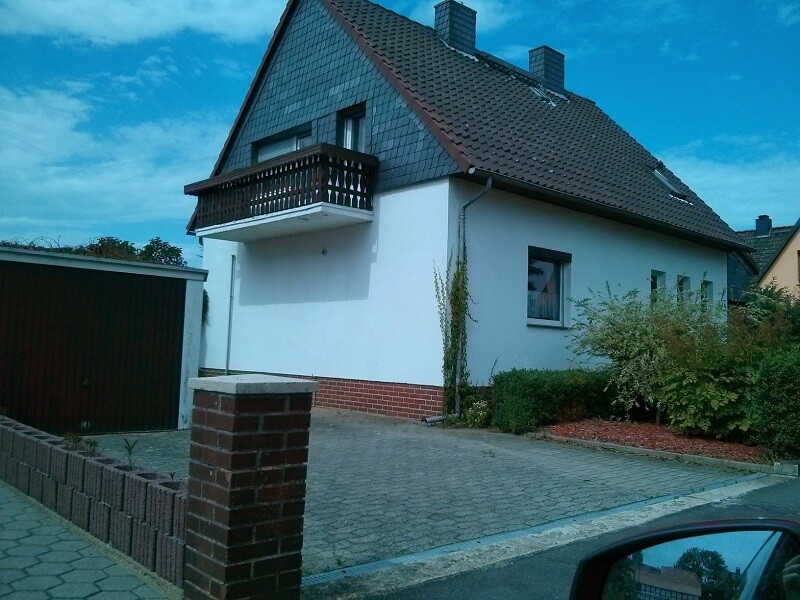
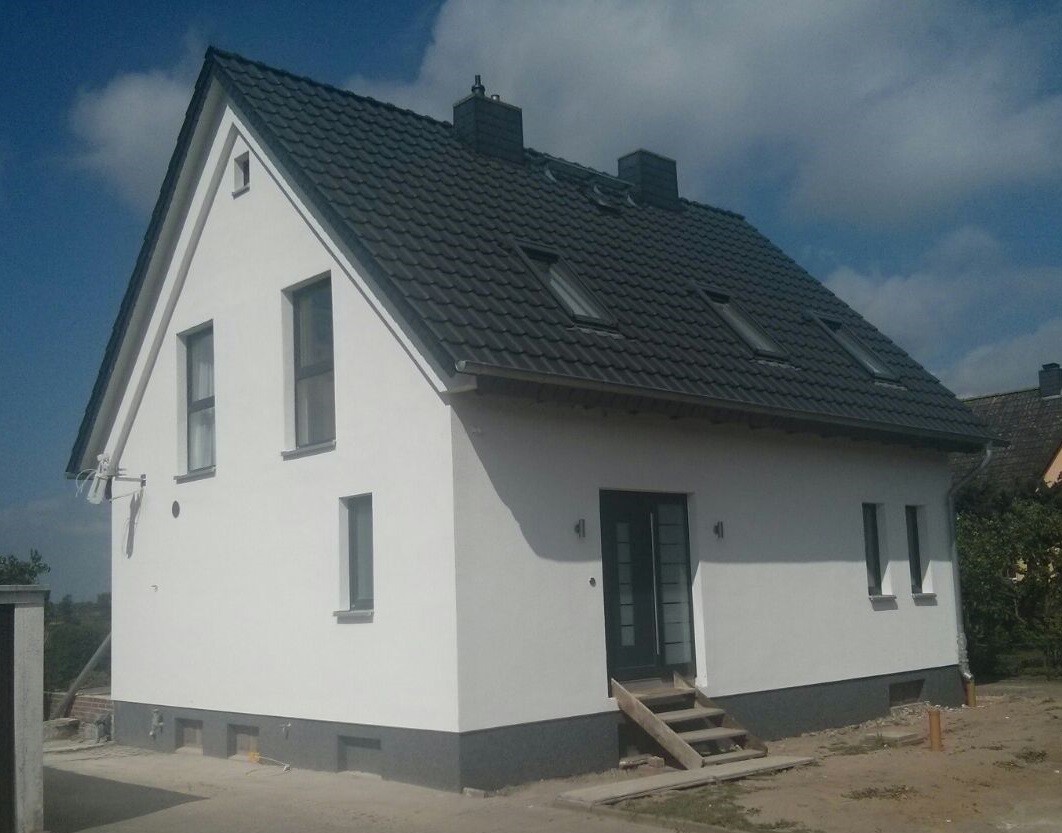
For renovations, it’s best to provide a comparison of before and after the remodeling.
Before March 2014:
After May 2015:
It would be really great if everyone here could just post one or a few pictures showing the current state of their house.
I'll start right away.
For renovations, it’s best to provide a comparison of before and after the remodeling.
Before March 2014:
After May 2015:

Hello Zaba12,
I have a photo. Here you can see the opening for a duct of the ventilation system. We have such openings from the basement up to the upper floor. These were precisely cut into the aerated concrete block (42.5 cm (17 inches)) before the blocks were laid.
Best regards
Axel
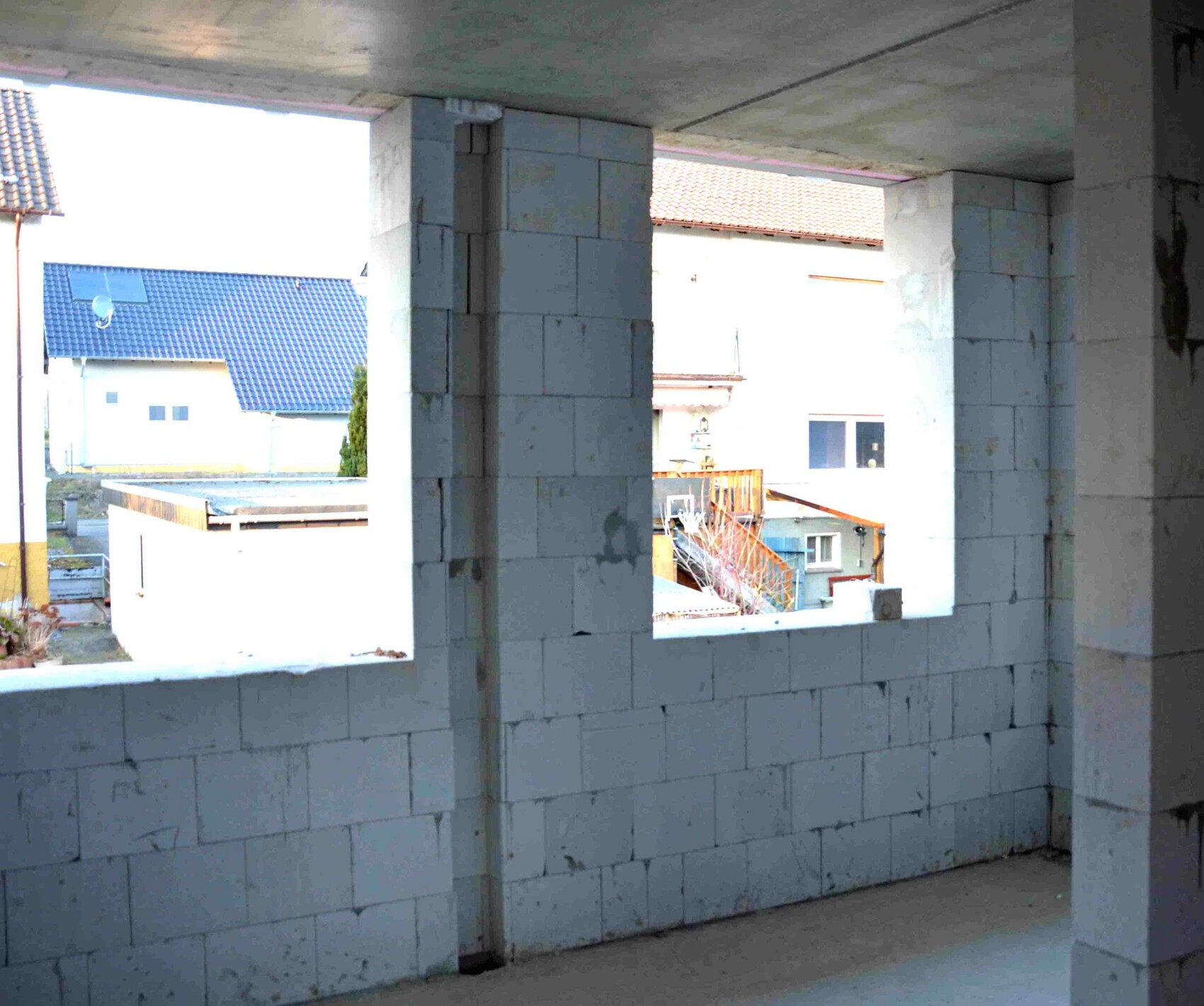
I have a photo. Here you can see the opening for a duct of the ventilation system. We have such openings from the basement up to the upper floor. These were precisely cut into the aerated concrete block (42.5 cm (17 inches)) before the blocks were laid.
Best regards
Axel
A recess like this is a matter for the structural engineer, but it is not impossible.
For solid masonry, the depth is also important because it inevitably creates a thermal bridge, and condensation can occur inside the pipe. This would then require additional insulation. We included such notes in an earlier version of the ventilation concept, but currently, no installations run through exterior walls. The bathtub on the upper floor drains through a soil pipe in a load-bearing wall (175mm (7 inches) calcium silicate brick) on the ground floor – the structural engineer has approved it.
For solid masonry, the depth is also important because it inevitably creates a thermal bridge, and condensation can occur inside the pipe. This would then require additional insulation. We included such notes in an earlier version of the ventilation concept, but currently, no installations run through exterior walls. The bathtub on the upper floor drains through a soil pipe in a load-bearing wall (175mm (7 inches) calcium silicate brick) on the ground floor – the structural engineer has approved it.
Oh my goodness. There has to be a better way. This is not just about structural integrity but also the U-value of the exterior walls.
AxelH. schrieb:
Hello Zaba12,
I have a photo. Here you can see the recess for a duct of the ventilation system. We have such recesses from the basement up to the upper floor. These were precisely cut into the aerated concrete block (42.5cm (17 inches)) before it was even laid.
Best regards
Axel
M
MIA_SAN_MIA__24 Apr 2018 11:43Okay, as a precaution, we consulted the heating engineer first regarding the controlled residential ventilation and wastewater pipes, and then the structural engineer. That’s why we never had this problem. However, we wouldn’t be able to drain the bathtub any other way.
In our case, even a single wastewater pipe runs through an exterior wall. Unfortunately, I don't have a photo, but it looked similar. I also remember that I packed quite a bit of glass wool insulation in there before the masons sealed up the shaft.
An alternative would be to run the pipe through interior walls (an 11cm (4.3 inches) wall is definitely not thick enough for this) or to create a boxed-in area, possibly along the entire length of the wall if you want to avoid any offsets in the finished surface.
An alternative would be to run the pipe through interior walls (an 11cm (4.3 inches) wall is definitely not thick enough for this) or to create a boxed-in area, possibly along the entire length of the wall if you want to avoid any offsets in the finished surface.
Similar topics