
Hello,
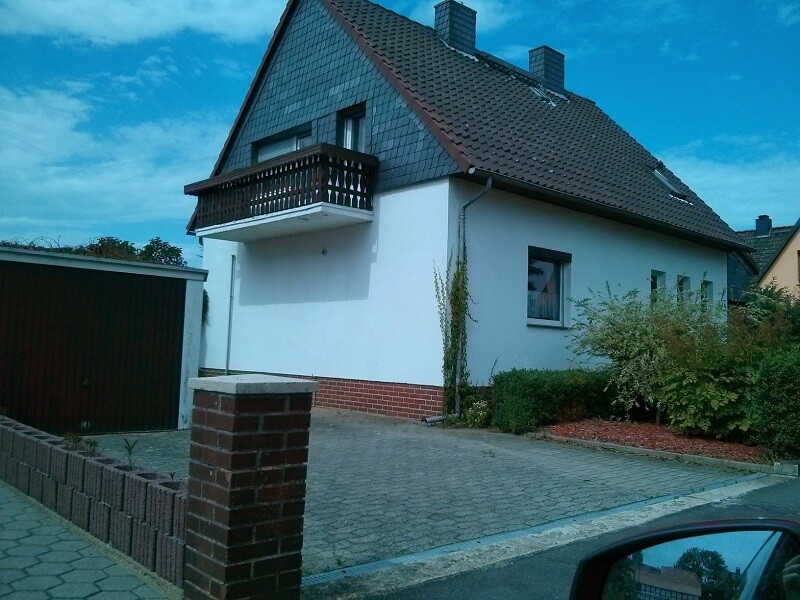
It would be really great if everyone here could just post one or a few pictures showing the current state of their house.
I'll start right away.
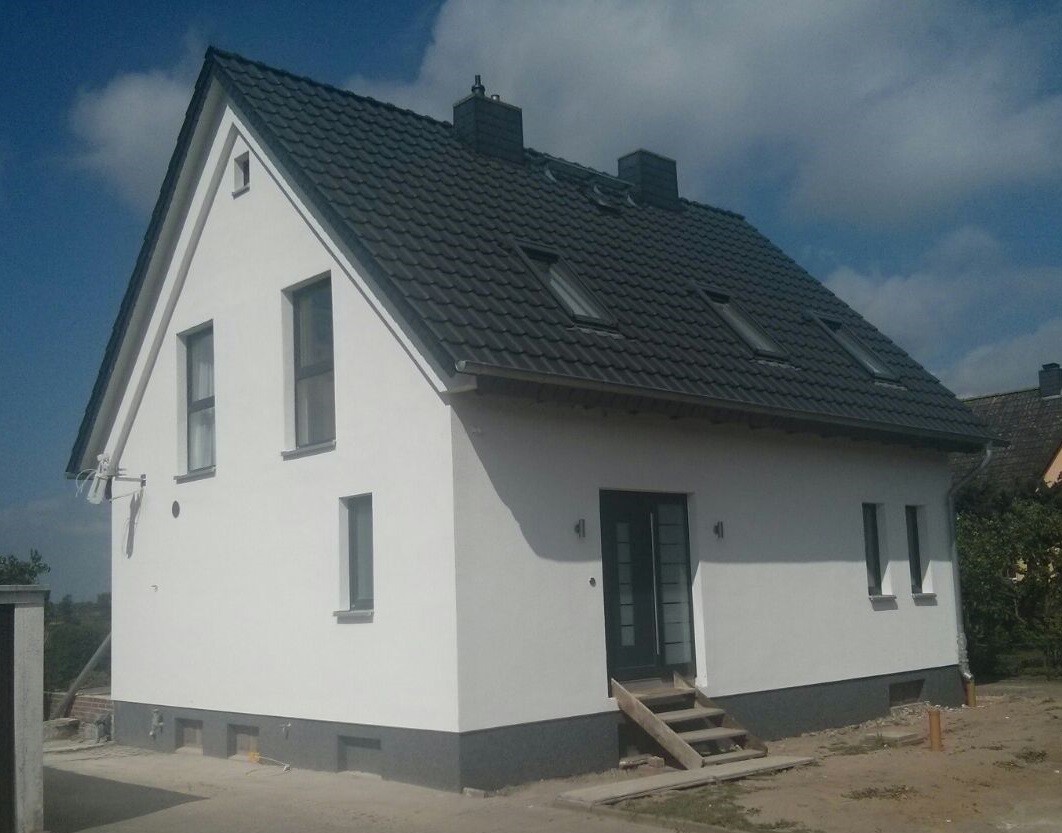
For renovations, it’s best to provide a comparison of before and after the remodeling.
Before March 2014:
After May 2015:
It would be really great if everyone here could just post one or a few pictures showing the current state of their house.
I'll start right away.
For renovations, it’s best to provide a comparison of before and after the remodeling.
Before March 2014:
After May 2015:
S
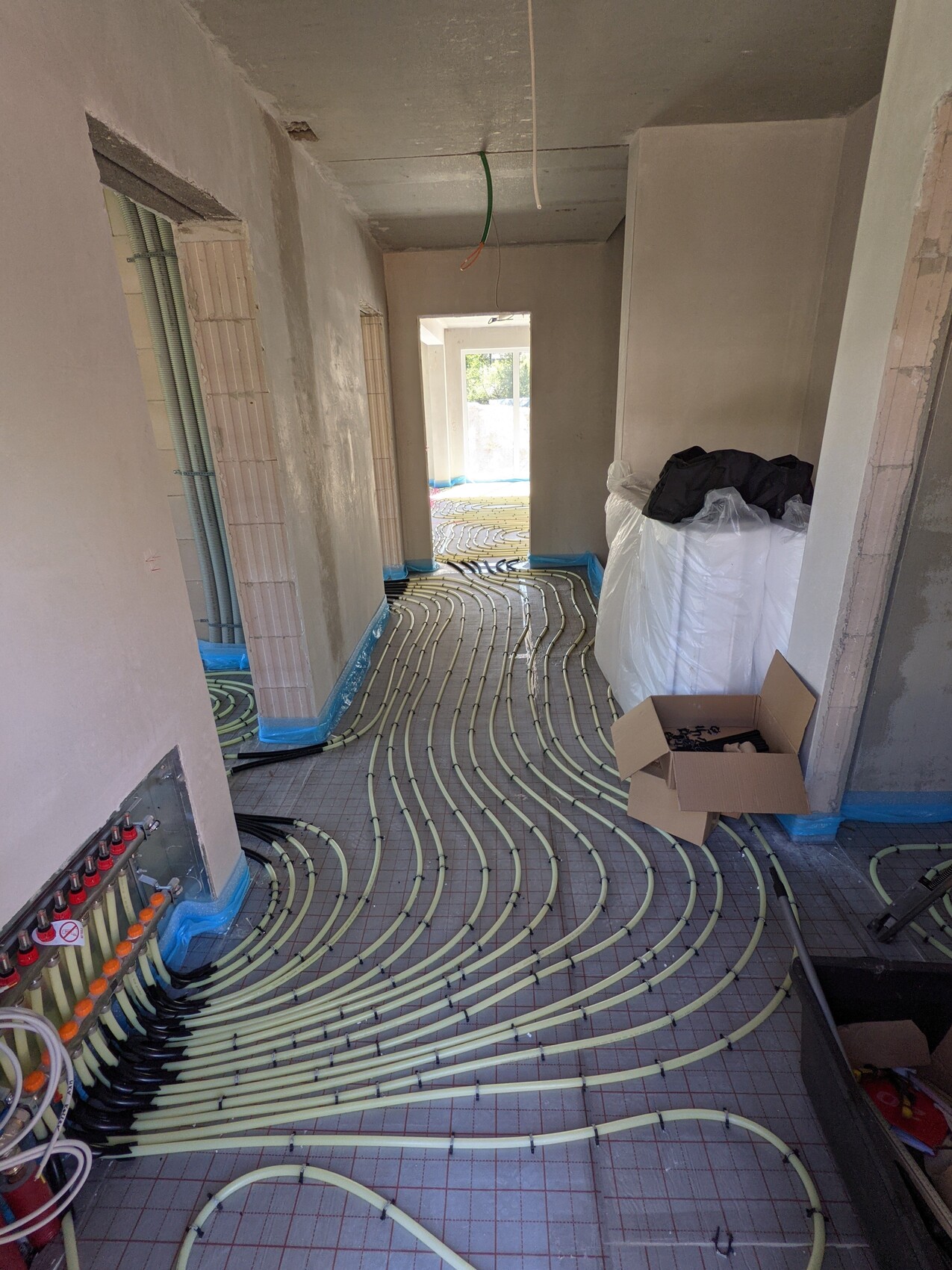
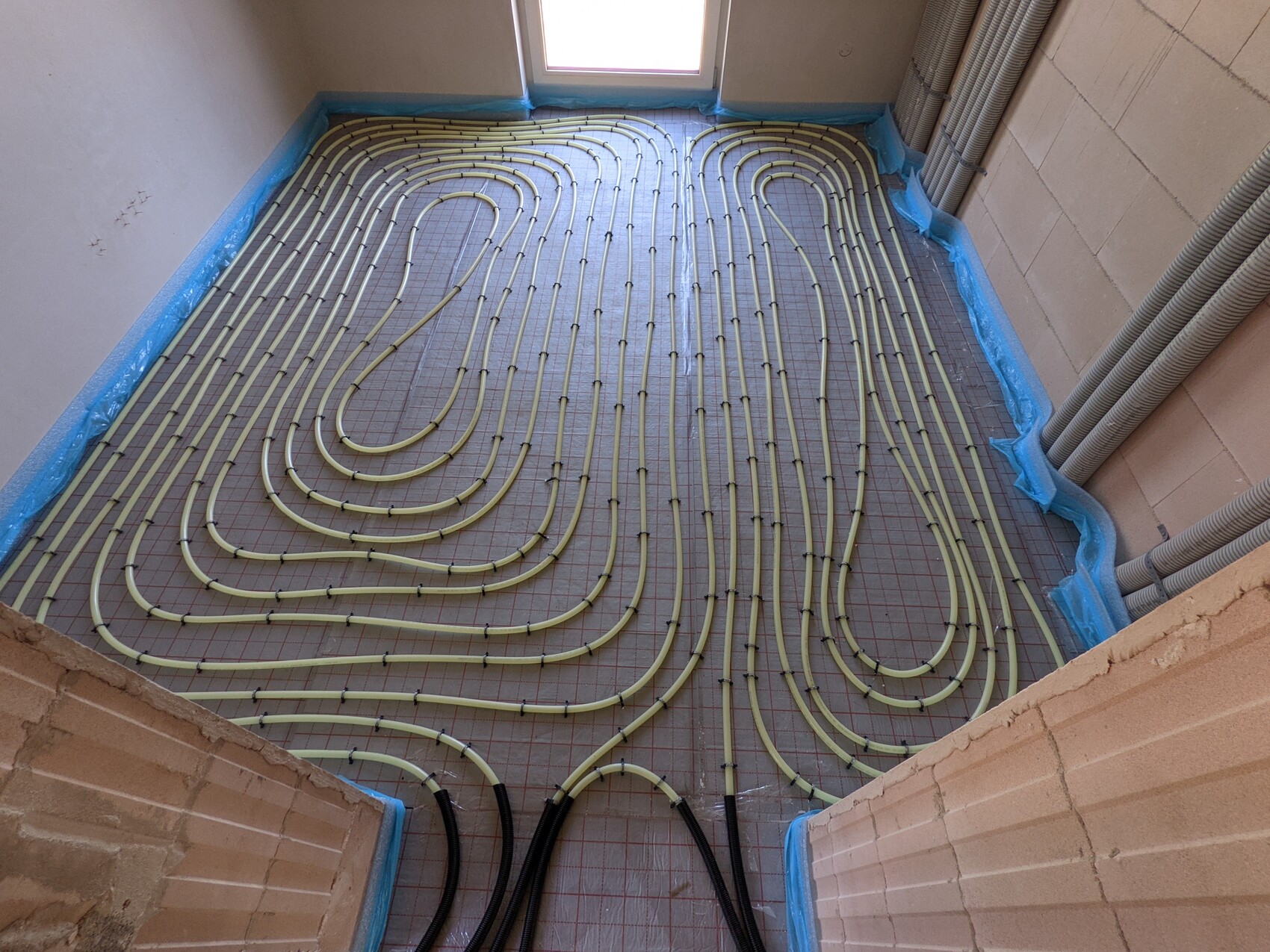
Strahleman10 May 2021 09:09Over the weekend, the two of us installed the remaining underfloor heating in the house. During this, the previously mentioned circuit with a kink was removed again.
In two rooms, we made a mistake and laid one loop too far. Now, we have one circuit with 100m (330 feet) and one with 82m (269 feet) installed. But with 17mm (0.67 inch) pipes, 100m (330 feet) should still be acceptable. Considering we are complete amateurs at this, I’m satisfied with the result: a total of 31 circuits, each measuring between 75 and 100m (246 and 330 feet) from the manifold (excluding the small circuit in the basement hallway. There, there is slight undercoverage, but it’s not critical), with a maximum installation spacing of 10cm (4 inches). Today, our heating engineer will have a quick look at it again, and tomorrow the screed will be poured.
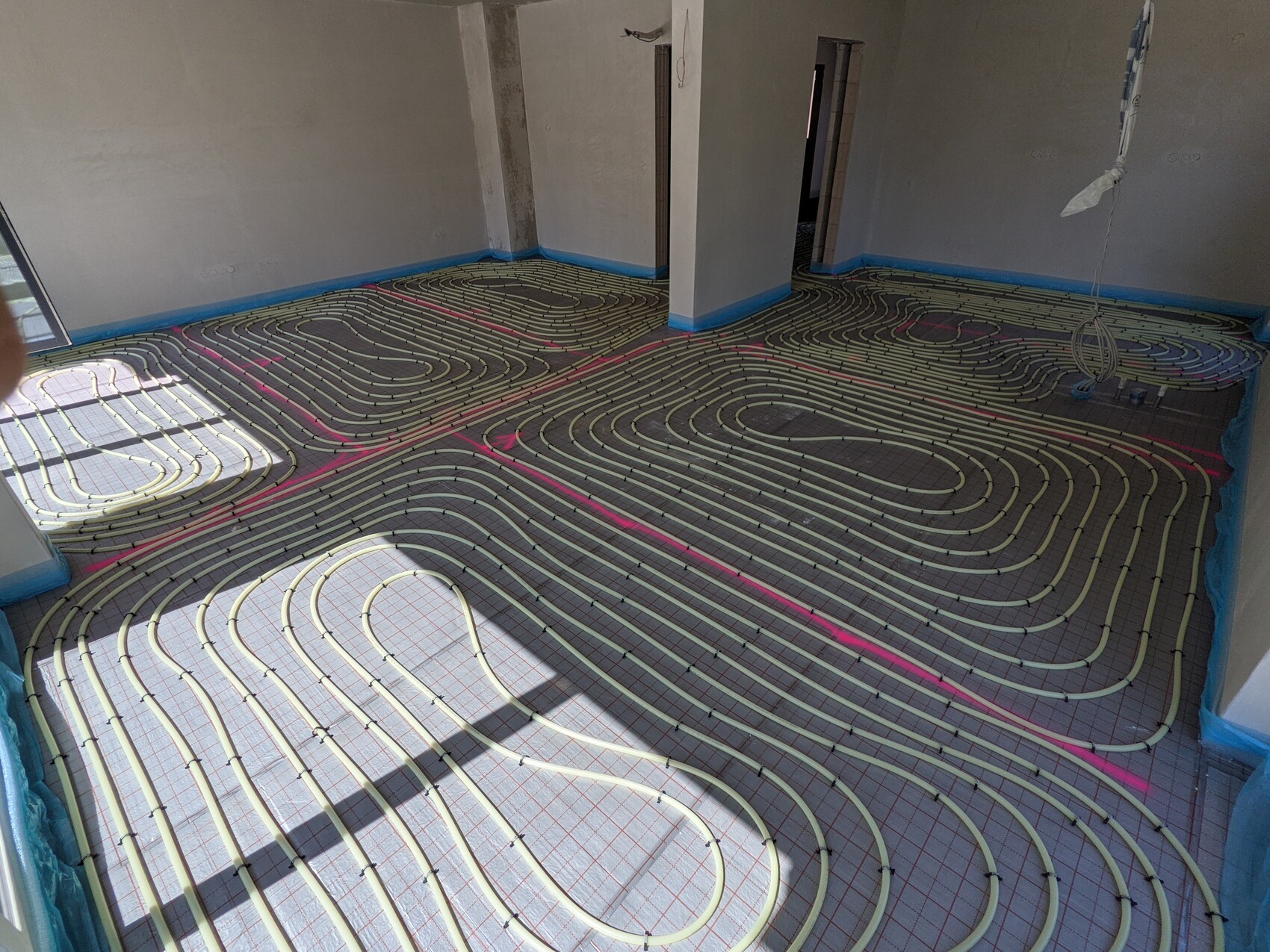
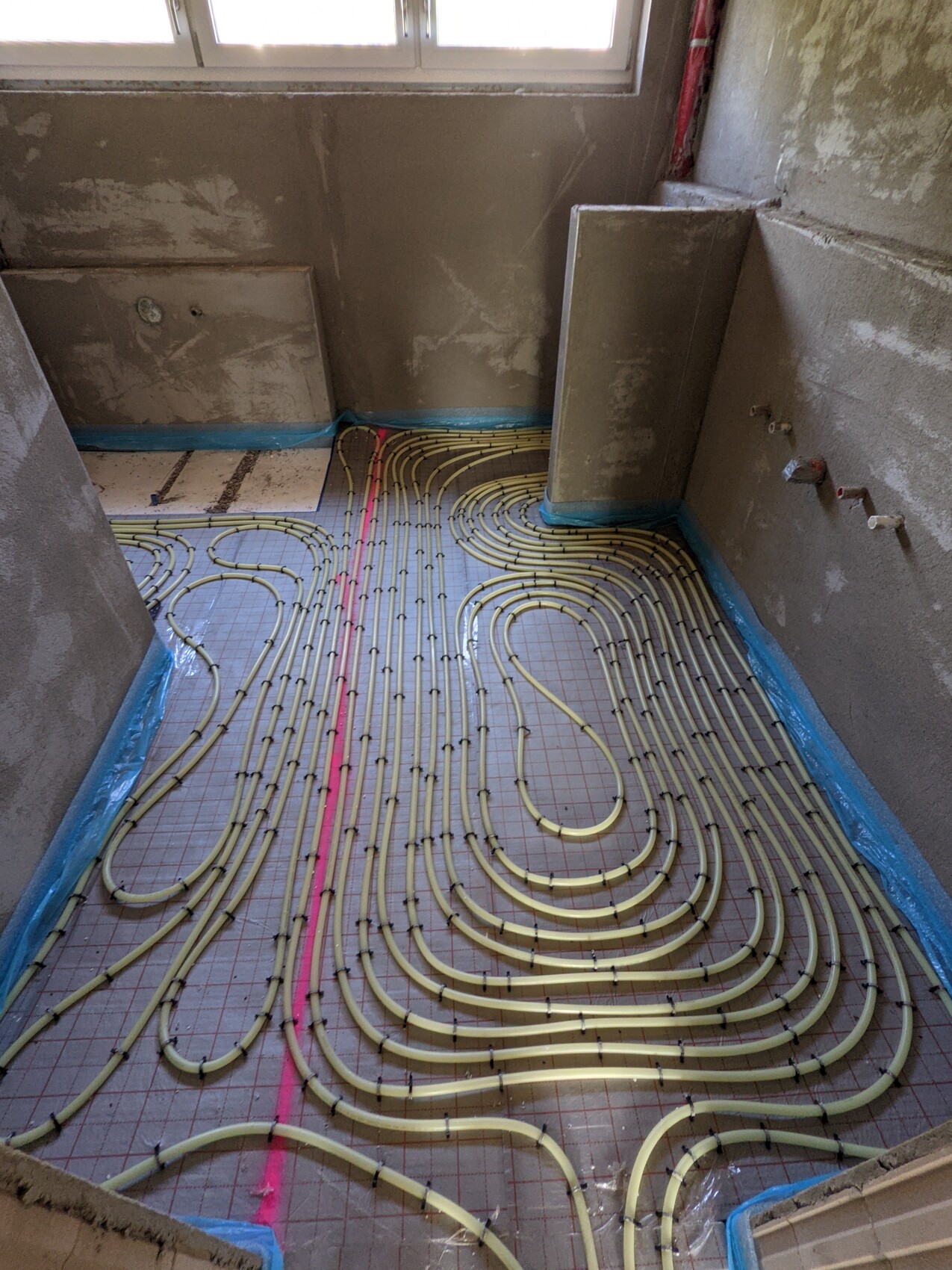
In two rooms, we made a mistake and laid one loop too far. Now, we have one circuit with 100m (330 feet) and one with 82m (269 feet) installed. But with 17mm (0.67 inch) pipes, 100m (330 feet) should still be acceptable. Considering we are complete amateurs at this, I’m satisfied with the result: a total of 31 circuits, each measuring between 75 and 100m (246 and 330 feet) from the manifold (excluding the small circuit in the basement hallway. There, there is slight undercoverage, but it’s not critical), with a maximum installation spacing of 10cm (4 inches). Today, our heating engineer will have a quick look at it again, and tomorrow the screed will be poured.
How did you arrive at a 10cm (5 inches) installation spacing for every room? In my experience, it varies depending on the room—from 5cm (2 inches) in bathrooms up to 30cm (12 inches) in basements. It also depends on the room itself and factors like window sizes on the south side, etc.
One tip before the screed is poured: make sure to insulate the supply lines at the underfloor heating manifold, otherwise the room there can overheat and you won’t be able to control it (directly).
One tip before the screed is poured: make sure to insulate the supply lines at the underfloor heating manifold, otherwise the room there can overheat and you won’t be able to control it (directly).
S
Strahleman13 May 2021 11:37annab377 schrieb:
How did you arrive at a 10 cm (4 inches) spacing for every room? From my experience, the spacing varies depending on the room—from 5 cm (2 inches) in bathrooms to 30 cm (12 inches) in basements. This also depends on the room type and factors like window sizes on the south side, etc. Why choose the largest spacing in the coldest room (basement)? That doesn’t make sense to me. With a tighter spacing, you can reduce the supply temperature, which allows for more efficient heat pump operation. In rooms that get too warm, the heating circuit valve can be adjusted. Moreover, we will be building without actively used exhaust ventilation recovery systems, so we plan to benefit from the self-regulating effect of underfloor heating across all rooms. With this spacing, we achieve a supply temperature of 30°C (86°F) and a temperature difference of 5K (9°F). Our neighbors had their system installed with 15–20 cm (6–8 inches) spacing and a supply temperature of 34°C (93°F). That corresponds to roughly 10–15% efficiency loss for the heat pump.
annab377 schrieb:
Just a tip before the screed is installed: be sure to insulate the supply pipes at the heating manifold; otherwise, the room there will overheat and you won’t be able to control it (directly). The screed was poured yesterday, and it’s fine as is. The rooms are not individually controlled, and the hallways don’t have their own heating circuits either (due to lack of space). All pipes here are also laid out to 10 cm (4 inches) spacing so that the room heats evenly, just like all the other rooms.

Speaking of underfloor heating ...
We are considering installing underfloor heating in the attic, which will soon be converted.
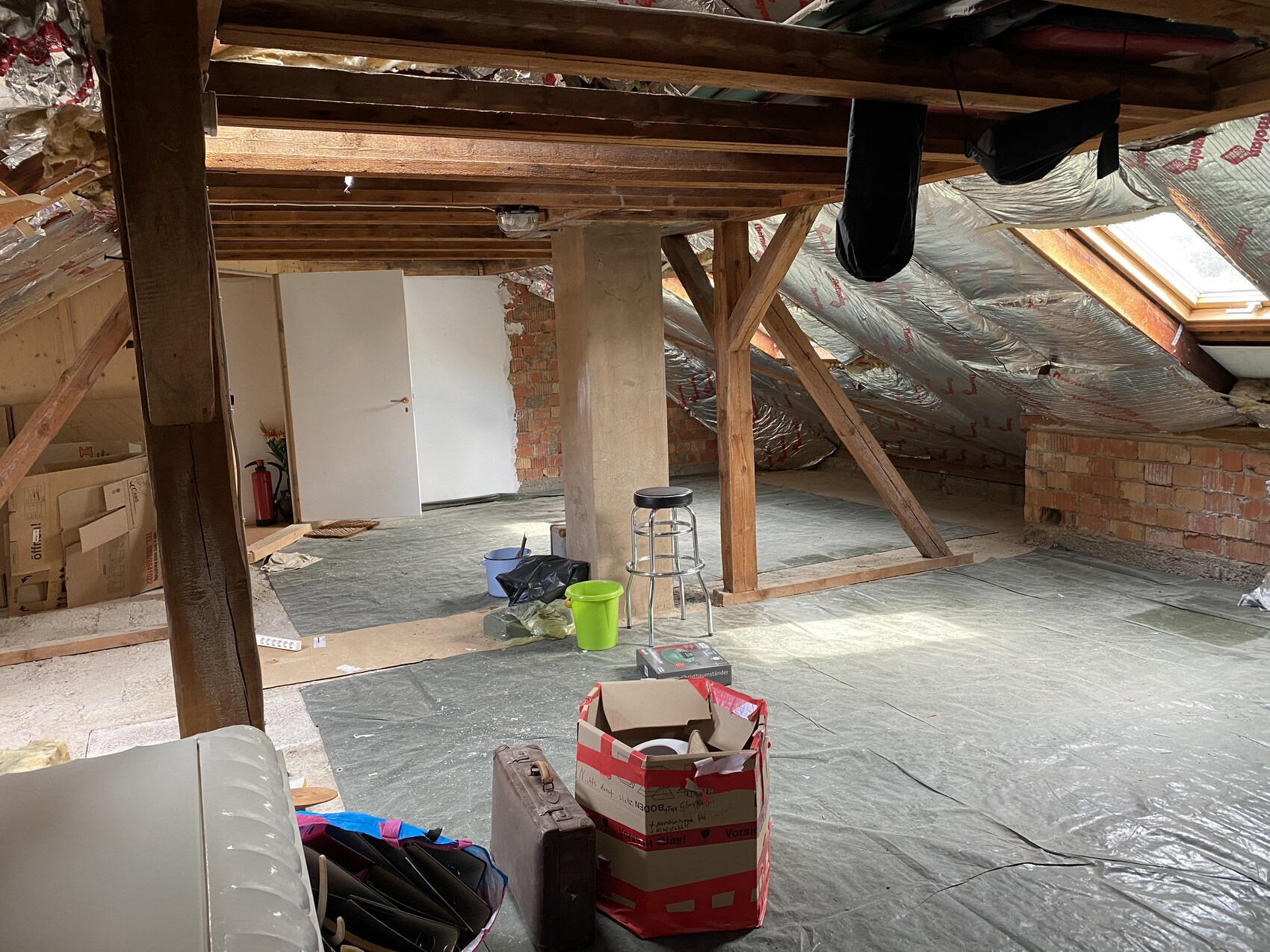
The existing floor is an uneven concrete surface.
My plan:
1. Level the concrete
2. Lay wood fiber boards (2 or 3 cm (1 inch) thick) on top as sound and impact noise insulation (there is no moisture from below, so no vapor barrier)
3. Install underfloor heating pipes
4. Pour screed
On top of that, either linoleum will be installed, ... or the screed will receive a floor-appropriate finish.
Since the floor will then be warm, I would also like a stone floor in a living space. I am getting used to concrete. White concrete can be easily colored ...
... and I have read that underfloor heating can also provide some cooling within limits. The space will be well insulated, but it can get warm in summer.
Is this a good plan?
Or have I overlooked something?
We are considering installing underfloor heating in the attic, which will soon be converted.
The existing floor is an uneven concrete surface.
My plan:
1. Level the concrete
2. Lay wood fiber boards (2 or 3 cm (1 inch) thick) on top as sound and impact noise insulation (there is no moisture from below, so no vapor barrier)
3. Install underfloor heating pipes
4. Pour screed
On top of that, either linoleum will be installed, ... or the screed will receive a floor-appropriate finish.
Since the floor will then be warm, I would also like a stone floor in a living space. I am getting used to concrete. White concrete can be easily colored ...
... and I have read that underfloor heating can also provide some cooling within limits. The space will be well insulated, but it can get warm in summer.
Is this a good plan?
Or have I overlooked something?
The basic approach is understandable, but the spacing for installation and thus the heat input should be calculated based on the heating load required for each room. Using VA10 across the board only makes limited sense, as too much flow would need to be throttled again. Larger spacing in the basement can make sense, for example, if living areas are maintained at 22°C (72°F) while the basement is kept at only 19°C (66°F), or if large window surfaces on the ground floor result in higher heating demand. Relying on general rules or rough estimates is, however, only moderately effective in both cases.
S
Strahleman13 May 2021 13:16borxx schrieb:
Both options are rather so-so if you’re just making rough estimates or going by rule of thumb.If it’s just about that: The design was, of course, calculated by our building services engineer and coordinated with the HVAC/ heating contractor. I wouldn’t have put anything in based on suspicion either.Similar topics