
Hello,
It would be really great if everyone here could just post one or a few pictures showing the current state of their house.
I'll start right away.
For renovations, it’s best to provide a comparison of before and after the remodeling.
Before March 2014:
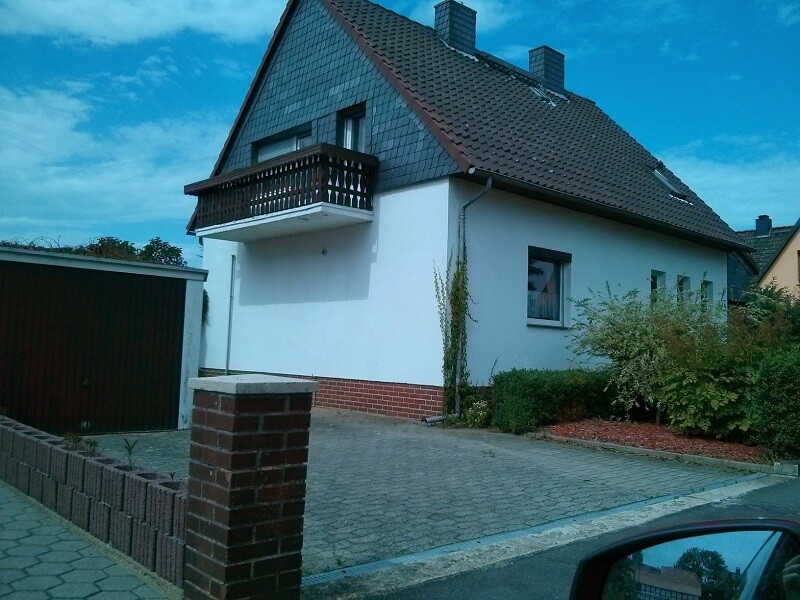
After May 2015:
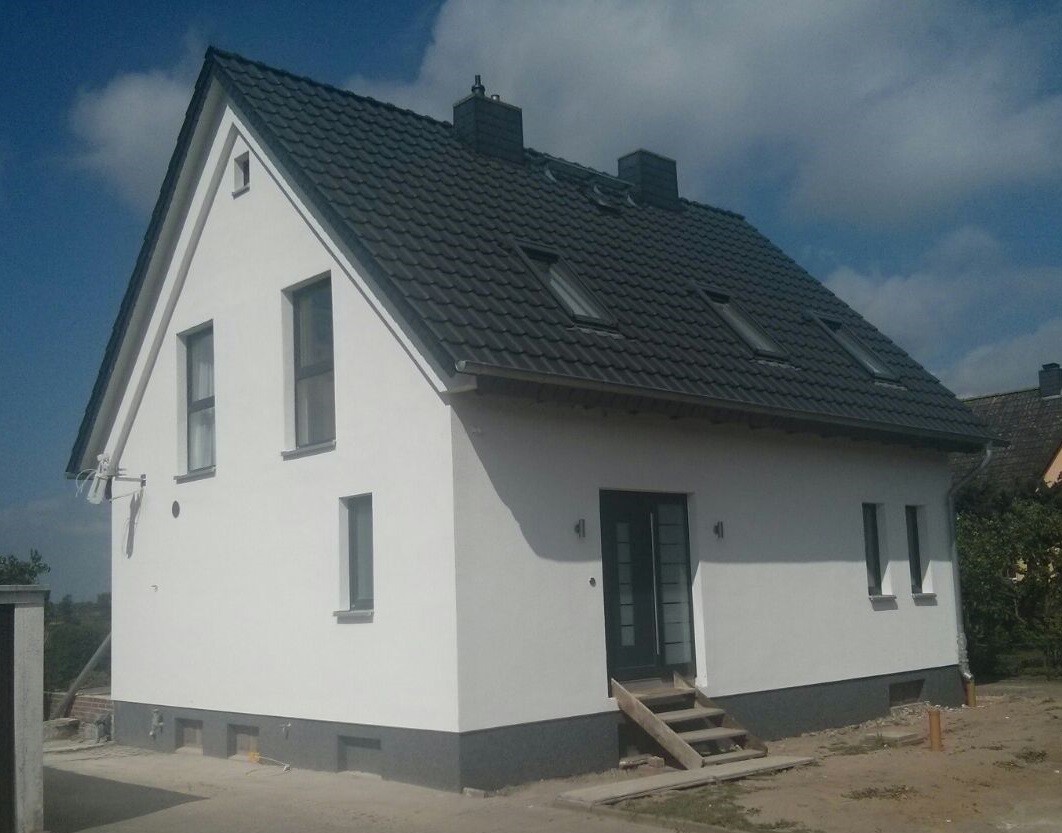
It would be really great if everyone here could just post one or a few pictures showing the current state of their house.
I'll start right away.
For renovations, it’s best to provide a comparison of before and after the remodeling.
Before March 2014:
After May 2015:

ruppsn schrieb:
How does aluminum in 7016 perform on large south-facing window surfaces in summer? No cracking noises? On that topic, I don’t recall any customer complaints, although "in my time in the industry" the 7016 shade was already very popular. However, intense sunlight and very dark colors are generally not an ideal combination—especially with wood-aluminum windows, even more so than with uPVC.
ruppsn schrieb:
Could you please highlight the advantages over uPVC for the McDonalds crowd among the forum users that justify the higher price in your opinion? Actually, it’s the other way around: how does uPVC justify its somewhat lower price? — the difference for good-quality windows is only about 20%, even though most people expect a bigger price advantage (because the uPVC market is dominated by DIY store and discount offers).
At our company headquarters, we installed our own products which, even after more than thirty years, still look like new. The uPVC windows I know, although visually almost indistinguishable when new, after fifteen to twenty years up close look like someone scrubbed their frames with abrasive cleaner.
Alex85 schrieb:
Or are there uPVC windows that you don’t consider “McDiscount”? I think the ones from Gealan are good. They aren’t foil-wrapped but receive their color layer by being “melted on.”
Alex85 schrieb:
What do you think is the reason why 90% of consumers have preferred uPVC windows for decades and what can an aluminum manufacturer learn and improve from that? I wouldn’t want to learn anything from that. Audi isn’t better than Seat; it’s just more expensive because they want customers with more money. I would never want to push uPVC to single-family home builders; simply because it’s a bargain-hunter market segment. You don’t make money there; you just move it around.
The reason so many people want uPVC windows is “historical,” and it is as much myth as the preference for solid construction with field-fired bricks from a local brickmaker.
About fifty years ago, the window market was reshaped—people wanted to move away from wood: the very close connection between maintenance and durability was seen as inconvenient. Aluminum windows of that era had a design flaw: they lacked separation between the outer and inner profile sides. Due to aluminum’s high thermal conductivity, many people developed the impression that aluminum profiles felt icy cold in winter. This also caused condensation on the panes of the still relatively new double glazing.
Two materials didn’t have these problems: expensive timber from Scandinavia and tropical regions, and uPVC. In the 1980s, demand for tropical woods collapsed. What remained was uPVC. It also benefited from the fact that uPVC processing was familiar to carpenters, so despite the material change, they didn’t have to give up their window-building business.
Nowadays, the demand for wood on the interior side is gaining strength again, for reasons of cozy natural interiors, etc. But without the need for painting—i.e., weather-resistant. The solution is seen as applying aluminum cladding as a protective layer. Unfortunately, this only “works” at discount prices if the aluminum cladding is misused to cover up wood qualities that alone would be unsuitable for window construction. But, as always, consumers usually only learn this lesson at their own expense.
https://www.instagram.com/11antgmxde/
https://www.linkedin.com/company/bauen-jetzt/
Interesting story, the reason why 90% of people choose plastic is probably because it costs at least 50% less while offering similar quality. Nowadays, plastic windows are very good.
We still went with aluminum-wood windows because wood looks nicer on the inside, and the price was not a concern for us.
We still went with aluminum-wood windows because wood looks nicer on the inside, and the price was not a concern for us.
@11ant
As a professional, how would you assess triple-glazed plastic windows (brown on the outside with aluminum cladding and white on the inside) from Internorm, which were installed about 35 years ago and are still reportedly in perfect condition according to a window sealing expert?
As a professional, how would you assess triple-glazed plastic windows (brown on the outside with aluminum cladding and white on the inside) from Internorm, which were installed about 35 years ago and are still reportedly in perfect condition according to a window sealing expert?
Garten2 schrieb:
How do you, as a professional, assess triple-glazed PVC windows (brown on the outside with aluminum cladding and white on the inside) from Internorm that were installed about 35 years ago? Without seeing them in person, I can’t really say. I don’t personally know any projects using this manufacturer’s products, but they seem to be among the quality suppliers. Because of the aluminum cladding, I would expect the material aging to be less advanced than without it.
Garten2 schrieb:
and according to a window sealing expert, they are still in perfect condition. I have not noticed any sealing issues with PVC windows, and I would not expect any either. In my opinion, they are adequately designed in terms of airtightness.
https://www.instagram.com/11antgmxde/
https://www.linkedin.com/company/bauen-jetzt/
11ant schrieb:
I have not noticed any air or water tightness issues with plastic windows and would not expect any; in my opinion, their design is adequate in this regard. Plastics emit gases through simple chemical processes. As a result of this off-gassing, the plastic shrinks and becomes brittle. The outcome is that the windows become leaky. I have already experienced this with windows after 20 years. This is one of the biggest disadvantages of plastic windows and a reason for their shorter service life compared to aluminum.
 Josephine24891 Oct 2018 23:07
Bookstar schrieb:
Plastics off-gas through simple chemical processes. As they release these gases, the plastic shrinks and becomes brittle. The result is that windows become drafty. I already noticed this effect on my windows after 20 years. This is one of the biggest disadvantages of plastic windows and a reason for their shorter lifespan compared to aluminum.So, roughly every 20 years you need new windows if things go badly. That’s acceptable; meanwhile, maintain the windows you have as well as possible and hope—somewhat like a miracle—that they last longer than the expected "discount quality" lifespan... :-S
Similar topics