
Hello,
It would be really great if everyone here could just post one or a few pictures showing the current state of their house.
I'll start right away.
For renovations, it’s best to provide a comparison of before and after the remodeling.
Before March 2014:
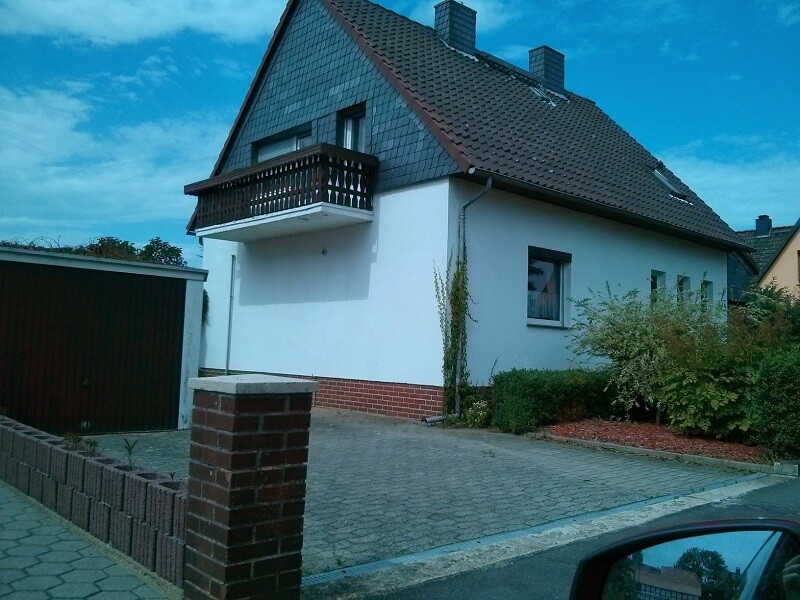
After May 2015:
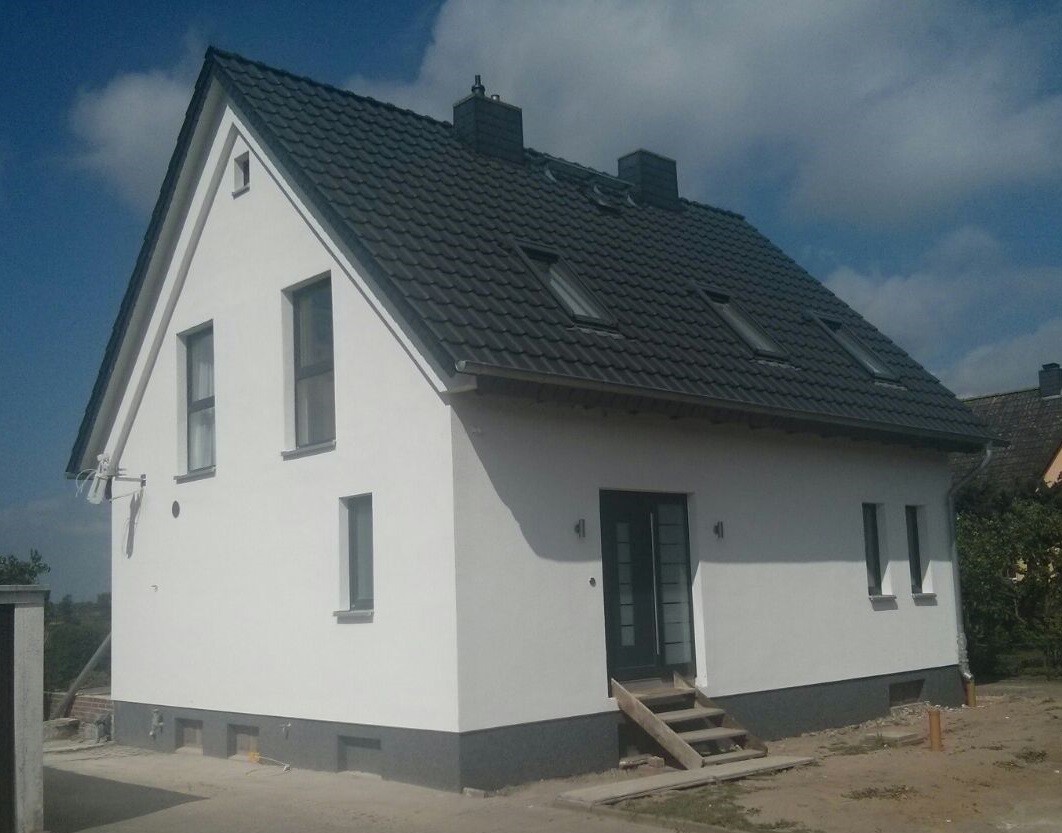
It would be really great if everyone here could just post one or a few pictures showing the current state of their house.
I'll start right away.
For renovations, it’s best to provide a comparison of before and after the remodeling.
Before March 2014:
After May 2015:
S
Stefan00117 Aug 2020 10:14Würfel* schrieb:
Then we were really lucky Oh, I guess I'm too German for that. I definitely couldn’t sleep afterwards. But I assume your fire insurance wouldn’t cover that anymore, right? That would probably be money thrown away.A
Alessandro17 Aug 2020 10:14At the moment, yes.
However, if the successor complies with the regulations, you will also need a spark guard.
You can have a glass plate made that you only place on top when the chimney sweep comes.
However, if the successor complies with the regulations, you will also need a spark guard.
You can have a glass plate made that you only place on top when the chimney sweep comes.

face26 schrieb:
2. The heating engineer will do it right.
Yes, many people think that, and the internet is full of users who are having problems. This is exactly my criticism of the heating manufacturers. They build a device that is supposed to cover a wide range of houses, performance levels, and so on.
It needs automation, for example, when I drive my car at 100 km/h (62 mph), the car decides at which point of the engine characteristic curve it operates to provide enough power efficiently.
The usage patterns of residents and the heating system of every house are so different that a fixed heating program can never achieve 100% accuracy.
And having to adjust heating curves myself is like playing the lottery; they might need to be adjusted differently every month.
Therefore, automatic control is necessary. The user sets their desired temperatures and schedules, and the heating system should find the 100% most efficient operating point on its own.
The system can learn the properties of the house (heat demand, idle periods, thermal inertia, ventilation behavior of the residents).
There is enormous potential in this.
Best regards, Nida
face26 schrieb:
I’d like to revisit this briefly—not because I want to claim anything was done wrong, but whether you follow the tips or advice is up to you. However, some readers here might still be in the planning stage and could benefit from thinking this through in advance.
1. "Thermostats on the wall"—don’t get the wrong idea. You can’t simply “turn up” the temperature that way. Your heating system is set to deliver a certain heating output. The wall thermostat acts as a room-by-room regulator. It ensures that once the temperature you set is reached, it shuts off the underfloor heating. In most cases, this makes little sense, but that’s another topic.
2. The heating installer will do it correctly.
Many think this way, but there are countless people online who have problems. Why is that? You can debate it, but in my opinion, a big part of the issue is that heating installers are not refrigeration specialists (a heat pump is basically a fridge turned upside down); rather, they come from the “fire-making” group. They know gas boilers and oil burners—systems running at high temperatures and don’t know where else to put all that heat. Accordingly, high flow temperatures and buffer tanks are seen as harmless or even advisable. But heat pumps work differently. They perform best with low flow temperatures. Most heating installers rely heavily on manufacturer specifications and designs, which of course have no problem selling you a larger heat pump model or a big buffer tank. What results is a standard design with a 35°C (95°F) flow temperature, which I believe is outdated. Then either the installer has installed too much buffering and you get warmth but also a high electricity bill, or your family complains that the bathroom is too cold and you have to turn up the heat.
Ideally, none of this happens, but you can’t rely on it. Especially when heating with a heat pump, I wouldn’t trust just good names and reputations—that’s just my opinion.
3. They will do it right.
To me, this is the most dangerous sentence in house building. You really need to keep an eye on what kind of house is being delivered. Either you get involved yourself in many aspects, at least enough to ask some “dumb questions,” or if you don’t want to (which is fine), you absolutely need someone to do it for you—an architect, an expert, or similar. Reputation aside, no company has everything under control all the time. Not necessarily intentionally, but so many things can go wrong and be botched on site. The worst part is that many of these problems can’t be fixed afterward without disproportionate effort.
Everyone can approach building their house their own way; you don’t have to follow recommendations given here on the forum, but many are not without reason. Of course, you can’t become a structural engineer or closely supervise every detail, but I strongly advise against the attitude of “I have a reputable construction company, it will be fine.”
Sorry, this is actually off-topic from house pictures, but it came up from one of the images here and I wanted to share it as well-meaning advice.I couldn’t have put it better myself, thank you for that!Every time I see those carefree, inexperienced homeowners in my neighborhood—good construction company, homeowner picks a few tile samples or stops by occasionally, moves in, done—I almost feel envious.
On the other hand, after our build, I could almost act as the construction manager myself. I actually wanted to behave more like the people above, but it wasn’t possible. Our construction company always works with the same subcontractors, but maybe the others simply didn’t have any problems or they don’t talk about them … only a few are honest enough to say: this or that is not right with the house, but if you listen closer, you realize it.
Our heating specialist is actually a top company in the region, all the homeowners are satisfied … including us at first. But after 10 visits from Novelan themselves and about 20 compressor starts per day, I can only recommend everyone to educate themselves about their heat pump.

kati1337 schrieb:
that this is definitely not an efficient setup with 35° Don’t get hung up on the term “efficient setup.” Simply put, 35 degrees is just not very good. The system can be customized and calculated any way you want, but as I said, if you don’t mind the electricity meter running a bit faster and costing you some extra money later, then it’s not a big deal.
kati1337 schrieb:
because our system can also achieve higher supply temperatures. I could complain if it didn’t get warm enough for us at 35° supply temperature, since we are paying for it to be designed specifically for that. Basically, any system can manage that... but it gets very expensive. You can raise a complaint later if it doesn’t perform as agreed. The question is: what was actually agreed? Did you set target temperatures for the rooms? Otherwise, some standard regulation (DIN or similar) might apply, which I don’t know by heart. And those temperatures might be fine for you, but they don’t have to be.
As I said, handle this however you want. I was just surprised by your “carefree” attitude, especially since you’ve been warned—warnings that I believe wouldn't have been hard to check. If you don’t want to deal with it, that’s your choice and not a problem at all. I only wanted to make clear that I wouldn’t recommend this approach to others.
Similar topics