
Hello,
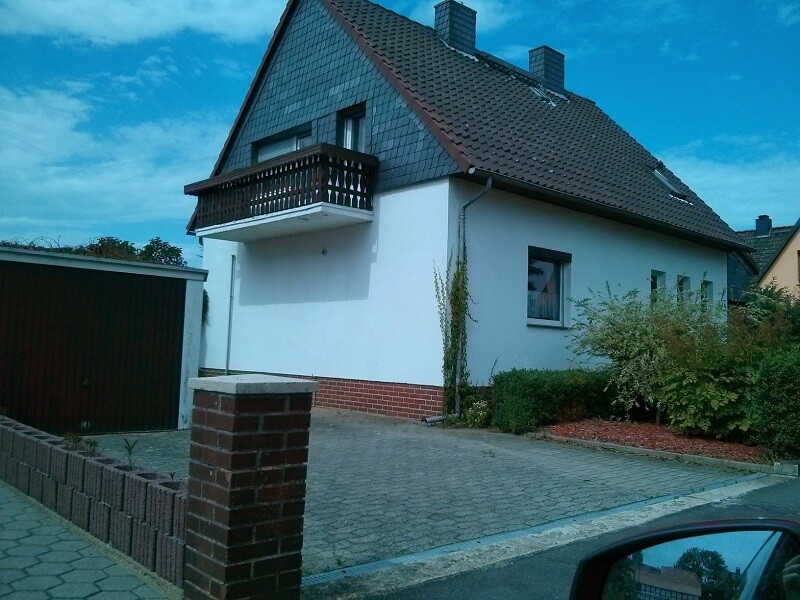
It would be really great if everyone here could just post one or a few pictures showing the current state of their house.
I'll start right away.
For renovations, it’s best to provide a comparison of before and after the remodeling.
Before March 2014:
After May 2015:
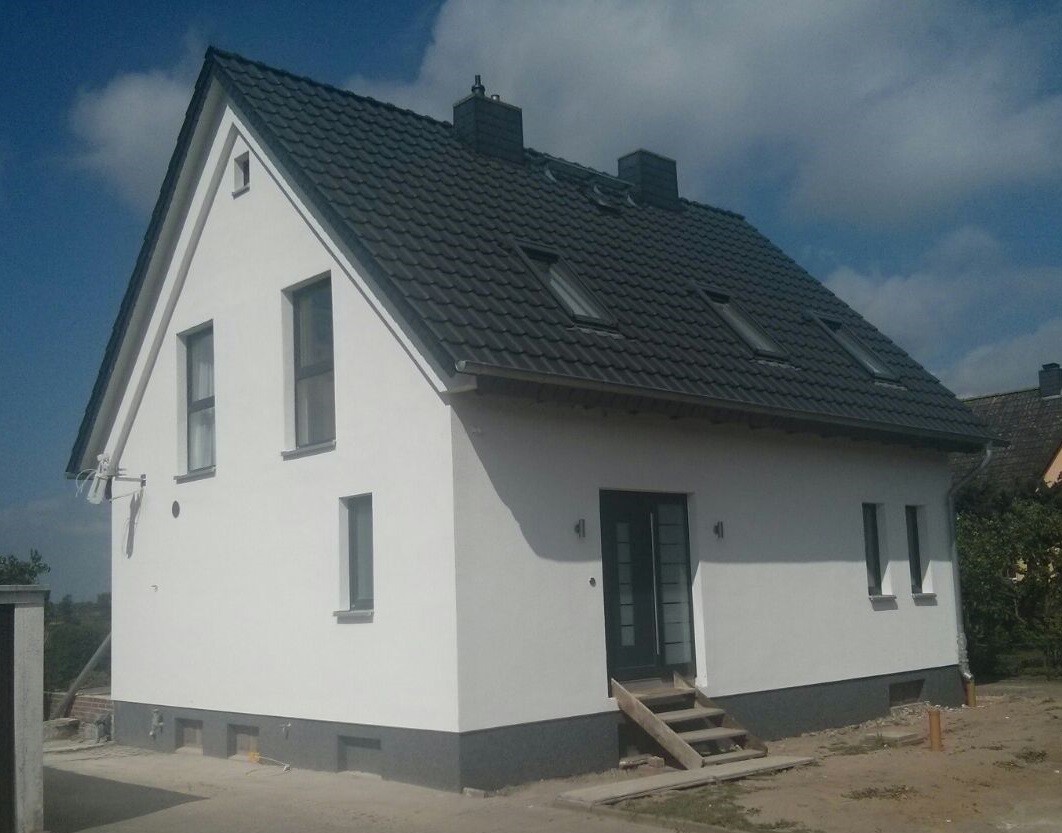
It would be really great if everyone here could just post one or a few pictures showing the current state of their house.
I'll start right away.
For renovations, it’s best to provide a comparison of before and after the remodeling.
Before March 2014:
After May 2015:
Zaba12 schrieb:
Open, so no windows and front door, but sealed with a roof – that is exactly what is good!Well, I am not confusing it, that is exactly what I mean. Maybe it came across unclearly.
Slava_S schrieb:
The roof and windows are scheduled for the end of January, as we expect the coldest temperatures in January.
From what I’ve heard, it’s the same as Lumpi said: the greater the temperature differences, the better. Although that is always a matter of belief. At that point, you can only continue to believe or just google it.
Basically, you can simply manage with an oversized tarp.
If it doesn’t rain or snow from now until the roof is installed, then Lumpi would, of course, be right.
As for me, I’m glad the roof will be framed tomorrow. The gable walls are being built today. Photos will follow tomorrow.
Zaba12 schrieb:
In that case, you just have to keep believing or simply google it.I never said what I believe. Of course, I wouldn’t have minded if the roof was installed before Christmas.
Slava_S schrieb:
I’ve heard the same as Lumpi wrote: the greater the temperature differences, the better. Although that is always somewhat a matter of opinion.The idea that a shell construction should stand through the winter to dry only works if there is no more water entering the building. However, if there is no roof, nothing will dry at all.
The concept that a shell needs to dry out is outdated. In the past, thick mortar beds were used, containing a lot of water that needed to evaporate. Nowadays, the blocks are larger and the adhesive (mortar) is applied with much less water, so there is nothing left to dry.
Most of the water is introduced into the building with interior plaster and screed, but by that point, the windows are already installed and the heating system is operational.
Temperature differences do help with drying because warm air can hold more moisture.
Let's assume the screed is completed in winter and needs to dry. You bring the dry, cold outside air into the building; as the air warms up inside, it absorbs a lot of moisture. Then you ventilate crosswise for 10 minutes to replace it with fresh dry cold air.
This is also why moisture is easier to remove from a house during winter.
M
Mottenhausen18 Dec 2018 13:15Even with the roof in place, moisture ingress through the window openings and the unplastered masonry on the weather-exposed side should not be underestimated. Friends of mine were often in their shell construction phase and had to shovel out snow. During heavy rain and wind, puddles regularly formed inside the house beneath the windows im. Of course, it dries out again, but the cycle starts over with the next rain.
P
pffreestyler18 Dec 2018 13:19And to prevent exactly this problem, window openings are sealed with construction foil, ensuring everything stays completely dry.
Similar topics