
Hello,
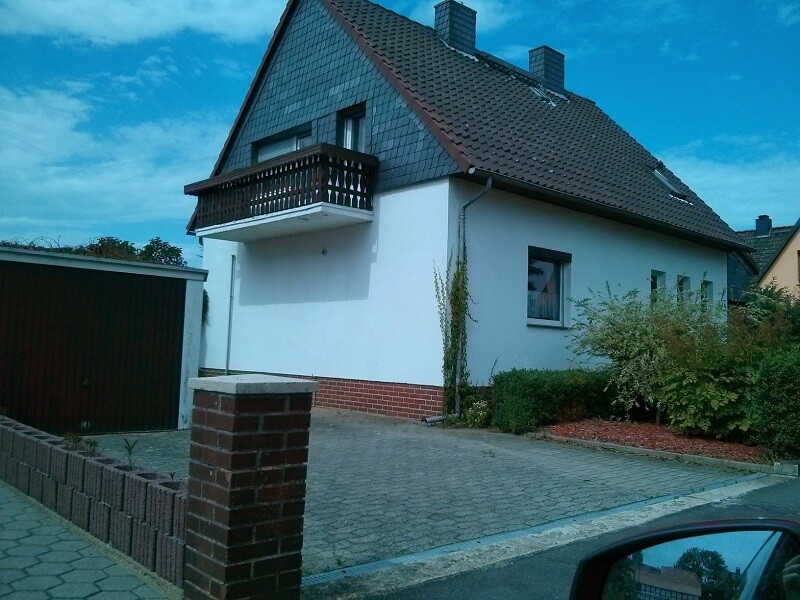
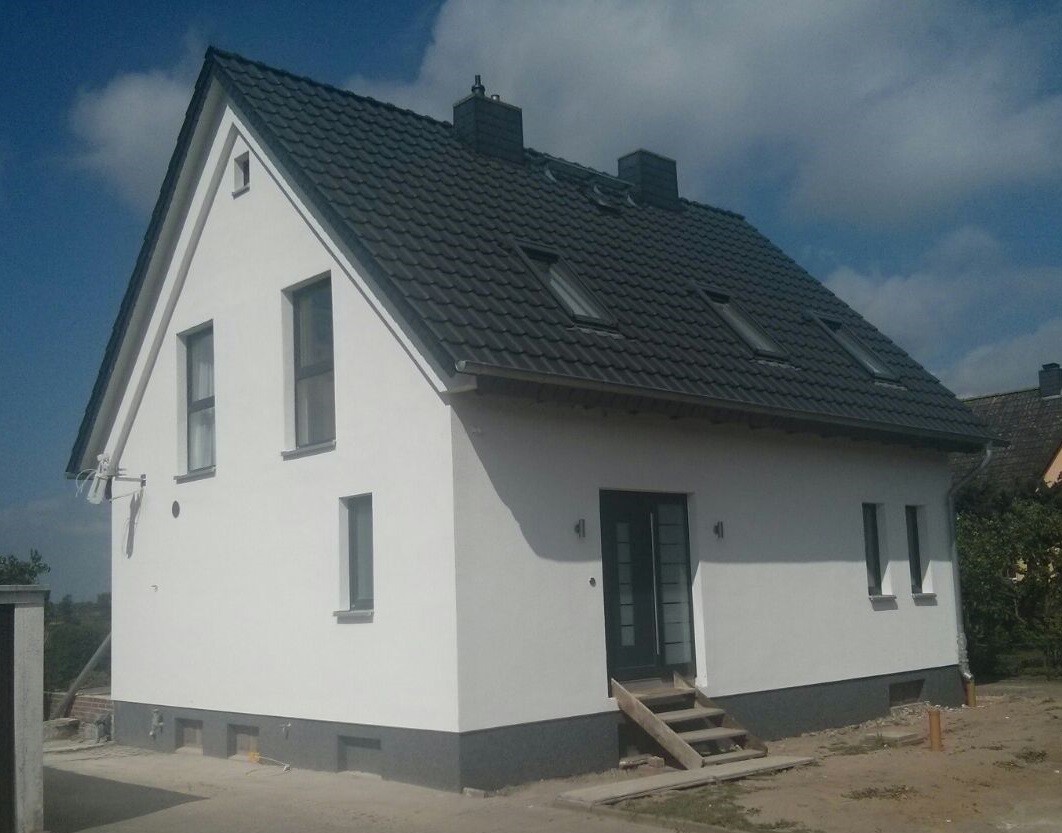
It would be really great if everyone here could just post one or a few pictures showing the current state of their house.
I'll start right away.
For renovations, it’s best to provide a comparison of before and after the remodeling.
Before March 2014:
After May 2015:
It would be really great if everyone here could just post one or a few pictures showing the current state of their house.
I'll start right away.
For renovations, it’s best to provide a comparison of before and after the remodeling.
Before March 2014:
After May 2015:
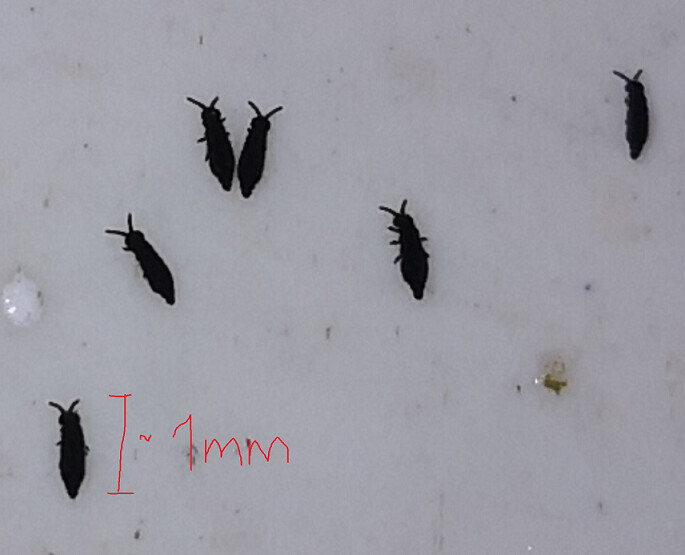
Since yesterday (snowmelt/rain), we have thousands of small new inhabitants on the exterior facade and in the light well 😱
Fortunately, only on the outside so far 😉
I’m a nature lover: can anyone here help identify what these are / whether they are pests / or just a temporary phenomenon?
Thank you very much!

Fortunately, only on the outside so far 😉
I’m a nature lover: can anyone here help identify what these are / whether they are pests / or just a temporary phenomenon?
Thank you very much!
 Holzhäuschen29 Jan 2021 12:49
dab_dab schrieb:
Since yesterday (snowmelt/rain), we have thousands of small new visitors on the exterior facade and in the light well 😱
Fortunately, so far only on the outside 😉
I’m a nature lover: can anyone possibly help identify what we have here / whether these are pests / or just a temporary phenomenon?
Many thanks!These are snow fleas 🙂
Hypogastrura nivicola
"On frost-free days from late January onwards, countless individuals gather in depressions on the snow. Densities of 1,000 to 10,000 animals per m² (10.8 ft²) are common for C. sigillata and H. socialis; Desoria and Vertagopus usually occur at densities of less than one animal per m² (10.8 ft²). In parts of their distribution area, such as subalpine coniferous forests, these species are restricted during the summer half-year to accumulations of moist needle litter. The migrations presumably serve to find new habitats, as food resources in such limited local habitats are quickly depleted by mass reproduction. For longer-distance movements, the equally smooth and moist snow surface is far better suited than any forest floor. Obstacles can be overcome more easily, and snow-free habitats can be reached quickly, where reproduction can start early in the season. For the species Ceratophysella sigillata, it has been shown that late winter and spring are used for dispersal, feeding, and reproduction, while summer and autumn are spent in dormancy. In addition to temperature, humidity, and light exposure, fluctuations in air pressure are also suspected to control these migrations. At temperatures below −3°C (27°F), D. hiemalis seeks shelter under the snow surface or in the soil; below −7°C (19°F), the species enters chill coma. Cold tolerance of winter-active springtails varies between −2 and −44°C (28 and −47°F), depending on the species." Wikipedia
They produce their own antifreeze from the algae they feed on – very interesting little creatures.

tomtom79 schrieb:
According to Golem and Heisse, there are very few women who want to become nerds :pBecause the nerds who are already wanted by women don’t have time to hang around on Golem and Heise feeling sorry for themselves. :P