
Hello,
It would be really great if everyone here could just post one or a few pictures showing the current state of their house.
I'll start right away.
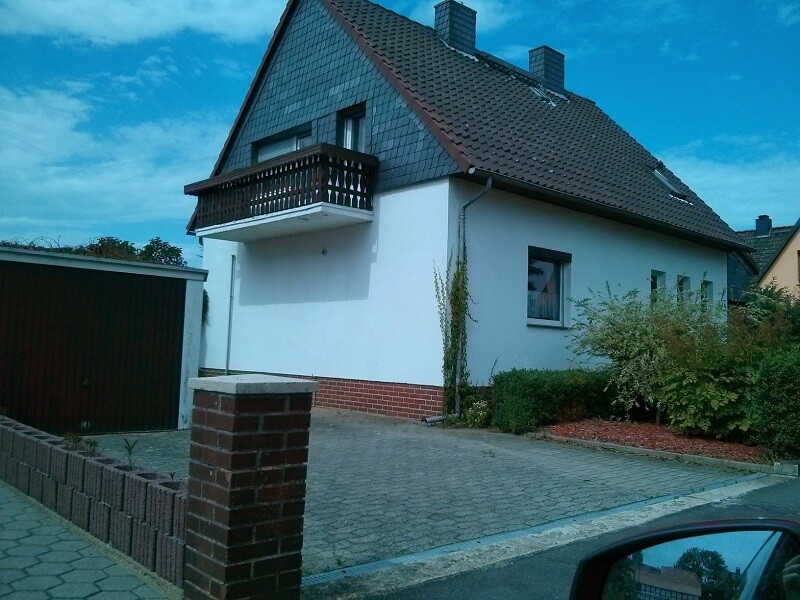
For renovations, it’s best to provide a comparison of before and after the remodeling.
Before March 2014:
After May 2015:
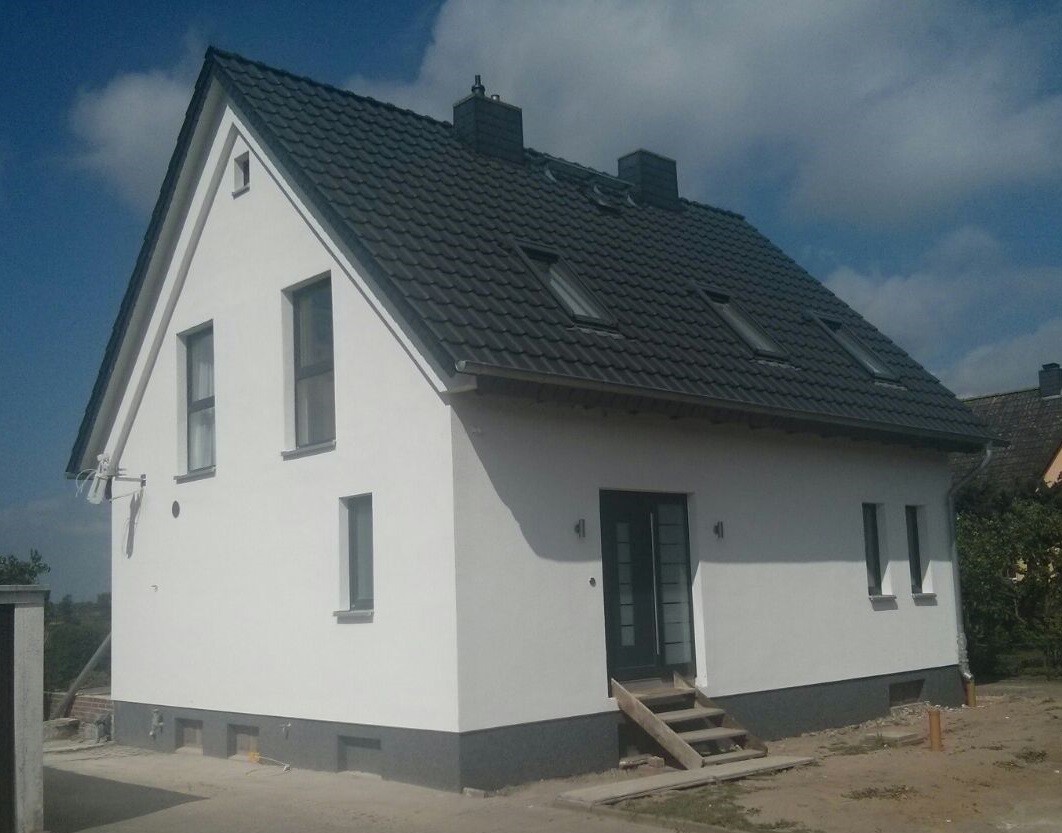
It would be really great if everyone here could just post one or a few pictures showing the current state of their house.
I'll start right away.
For renovations, it’s best to provide a comparison of before and after the remodeling.
Before March 2014:
After May 2015:
Wooden houses are often built in the far north. They handle temperature fluctuations from +25 to -50 degrees Celsius (77 to -58 degrees Fahrenheit) better.
Larch matches perfectly with white.
We built directly on the mountain, and the 13 meters (43 feet) pressing against the house have to hold. The structural engineer wouldn’t accept a timber frame.
We don’t have a photovoltaic system, solar panels, or storage yet. That will come in a few years. However, we also don’t have underfloor heating.
Larch matches perfectly with white.
We built directly on the mountain, and the 13 meters (43 feet) pressing against the house have to hold. The structural engineer wouldn’t accept a timber frame.
We don’t have a photovoltaic system, solar panels, or storage yet. That will come in a few years. However, we also don’t have underfloor heating.

Is this enough for KfW 40 Plus, or do they require a battery storage system?
Have you applied for the 10,000 Houses program?
They don’t need photovoltaic panels for KfW 40 because they have a passive house. That’s also why there is no underfloor heating.
They plan to install photovoltaic panels eventually, along with a battery storage system. Without storage, it’s not cost-effective.
At the moment, only the fridge and freezer use electricity. Even the air-to-water heat pump switches off and only runs at full capacity at night from around 1 a.m. until about 6 a.m. for roughly 2 hours.
Have you applied for the 10,000 Houses program?
They don’t need photovoltaic panels for KfW 40 because they have a passive house. That’s also why there is no underfloor heating.
They plan to install photovoltaic panels eventually, along with a battery storage system. Without storage, it’s not cost-effective.
At the moment, only the fridge and freezer use electricity. Even the air-to-water heat pump switches off and only runs at full capacity at night from around 1 a.m. until about 6 a.m. for roughly 2 hours.
haydee schrieb:
Is this enough for KfW 40 Plus, or do they insist on a storage system?A storage system is a requirement for KfW 40 Plus.
haydee schrieb:
Planning to install photovoltaic panels eventually, and then with storage. Without storage, it’s not profitable.Actually, it’s the other way around.
A photovoltaic system is profitable even with 100% feed-in, unless you end up with an unfavorable contract. Self-consumption is just the icing on the cake.
However, the planned solar thermal system can’t be regarded the same way. I would skip that if possible, or if there isn’t a particularly high hot water demand (pool, etc.).
We have good experience with thermal solar systems in our family and therefore want to use one ourselves. Even with relatively little sunlight, you always get enough hot water – especially in winter, when the photovoltaic system does not generate enough electricity to cover both water heating and power consumption. With a sufficiently large water storage tank, this basically works as an energy storage system. For us, being as self-sufficient as possible is the main priority, not so much when the investment pays off.
In summer, we plan to supply any excess electricity to my mother before feeding it into the grid (because you don’t get much compensation for it anyway).
Currently, battery storage is not an option. It’s too expensive for too little storage capacity. What I will always remember is a presentation at a trade fair where the speaker had 3 or 4 pieces of firewood next to him and asked if anyone would pay several thousand euros for that. That is roughly the amount of energy you get from a 10kW battery storage system… Everyone could really imagine how long and well you can heat with electricity from such a battery. Electricity can’t be stored indefinitely; I can’t charge my battery in summer and then use it at Christmas.
We will not get an air-to-water heat pump but will use geothermal energy instead. This is also a custom development by our home builder that convinced us: the coils are installed beneath the slab foundation. In summer, when there is surplus electricity, the excess energy (or at least part of it) is fed back into the ground, which then warms up again and serves as a long-term energy storage. This prevents the ground from cooling down. At first, we were not very convinced about geothermal energy because we know someone who has geothermal loops in their garden. That means, for example, I can’t plant anything with deep roots, and after 8 years you can clearly see in spring that their garden keeps snow longer than neighboring gardens. So the ground is noticeably cooled down. But with seasonal ground activation through the summer, this problem should be eliminated.
The basement will be heated almost for free all year round.
In summer, we plan to supply any excess electricity to my mother before feeding it into the grid (because you don’t get much compensation for it anyway).
Currently, battery storage is not an option. It’s too expensive for too little storage capacity. What I will always remember is a presentation at a trade fair where the speaker had 3 or 4 pieces of firewood next to him and asked if anyone would pay several thousand euros for that. That is roughly the amount of energy you get from a 10kW battery storage system… Everyone could really imagine how long and well you can heat with electricity from such a battery. Electricity can’t be stored indefinitely; I can’t charge my battery in summer and then use it at Christmas.
We will not get an air-to-water heat pump but will use geothermal energy instead. This is also a custom development by our home builder that convinced us: the coils are installed beneath the slab foundation. In summer, when there is surplus electricity, the excess energy (or at least part of it) is fed back into the ground, which then warms up again and serves as a long-term energy storage. This prevents the ground from cooling down. At first, we were not very convinced about geothermal energy because we know someone who has geothermal loops in their garden. That means, for example, I can’t plant anything with deep roots, and after 8 years you can clearly see in spring that their garden keeps snow longer than neighboring gardens. So the ground is noticeably cooled down. But with seasonal ground activation through the summer, this problem should be eliminated.
The basement will be heated almost for free all year round.
Similar topics