
Hello,
It would be really great if everyone here could just post one or a few pictures showing the current state of their house.
I'll start right away.
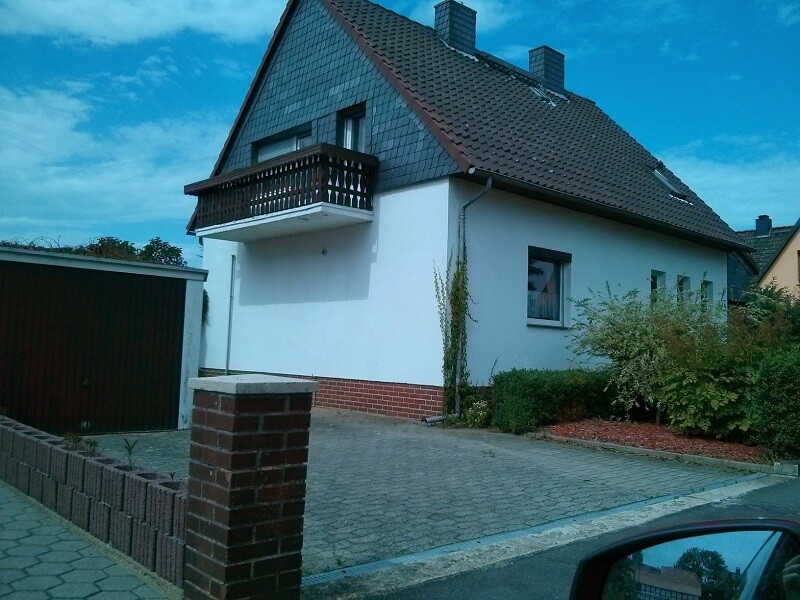
For renovations, it’s best to provide a comparison of before and after the remodeling.
Before March 2014:
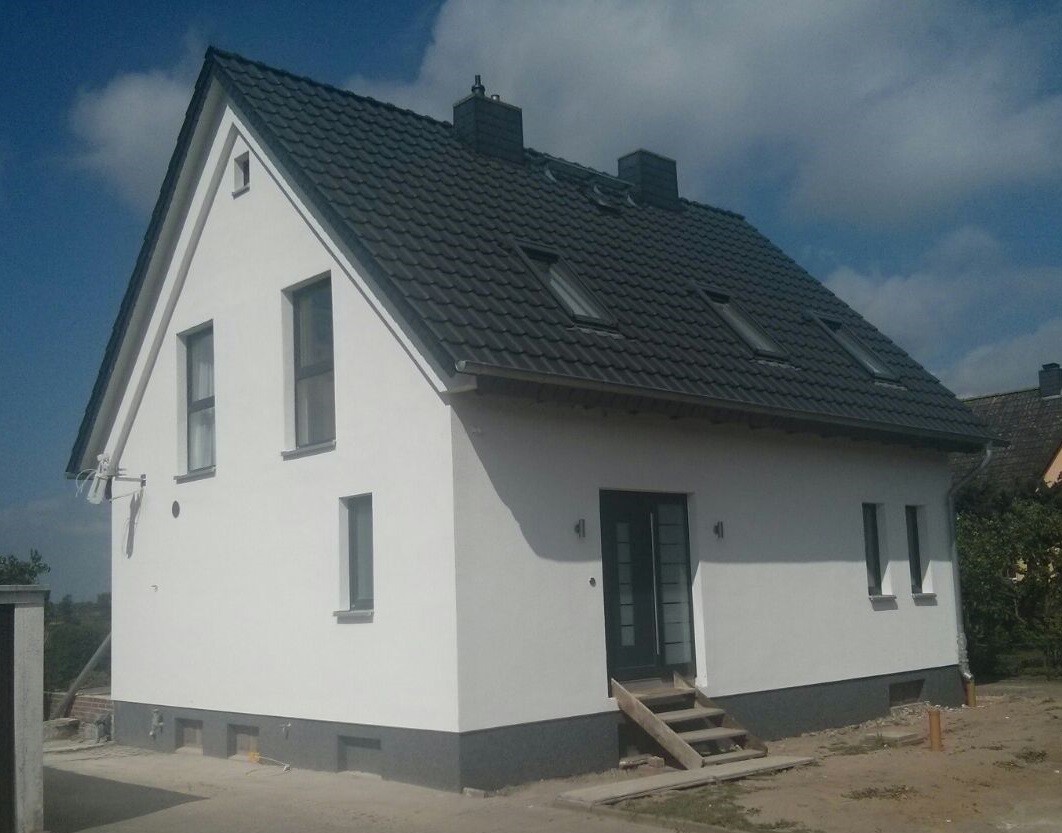
After May 2015:
It would be really great if everyone here could just post one or a few pictures showing the current state of their house.
I'll start right away.
For renovations, it’s best to provide a comparison of before and after the remodeling.
Before March 2014:
After May 2015:
R.Hotzenplotz schrieb:
Do not count defects that have existed in the past but have been resolved, as these are no longer considered defects.... That’s exactly right
R
R.Hotzenplotz26 Aug 2018 08:25Tom1607 schrieb:
What I’m really curious about is how water is getting through the Katja laid there?? At least in the picture, it looks like the mentioned Katja. Normally nothing passes through from below…I can’t explain it either. The only possible explanation might be that the concrete floor slab doesn’t meet WU (waterproof) standards and water is entering from underneath, seeping through micro-cracks in the Katja (?) and becoming visible on the surface. I find it hard to believe that water is coming through the in-situ concrete of the slab itself. But I currently don’t have any other theory since the walls and ceilings are completely dry. On the other hand, the damp spots don’t look like the result of 72 hours of continuous drying by the drying machine, which has completely removed much larger puddles before.
R
R.Hotzenplotz26 Aug 2018 08:48Tom1607 schrieb:
What kind of dehumidifier do you have and where does it blow the air out??I can’t say off the top of my head since I didn’t set it up myself.
It’s a box about 50cm (20 inches) high and 25–30cm (10–12 inches) deep. The day before yesterday it was in the utility room. Yesterday it was in the hallway. It blows air out the front.
But apparently, it completely dried up the large puddle at the other end of the basement in the ventilation equipment room!
The new damp spots are in different rooms than where I have seen the dehumidifier standing.
Tom1607 schrieb:
What I’m really curious about is how the water passes through the Katja lying there ?? At least in the picture it looks like that Katja. Normally, nothing passes through from below... As far as I remember, the Katja is not approved for this use. Katja is a vapor barrier but not certified as a waterproofing membrane. So, if he doesn’t have a watertight (WU) concrete slab, Katja would be the wrong choice!
It is possible that a WU concrete slab is not fully watertight, but I consider that very unlikely. Still, who knows... the big question is: where is the water coming from?
Similar topics