
I thought a garden chat and photo thread would be a good idea.
This way, we have a space to share current pictures and discuss dandelions and other plants.
This way, we have a space to share current pictures and discuss dandelions and other plants.
The larvae are often eaten by ants.
I have ladybugs, just not enough.
Don’t just criticize farmers. Farmers have to make sure they can feed the population. That won’t work without *cides.
Check your garden to see if you provide enough habitat and food.
And what about your neighbor?
Weed killers are still commonly used by private households. For what purpose?
For ornamental flower beds, I use plain cardboard and remove any shipping labels and stickers beforehand. It works and is certainly not more harmful than all the weed barriers and chemicals available in retail.
I have ladybugs, just not enough.
Don’t just criticize farmers. Farmers have to make sure they can feed the population. That won’t work without *cides.
Check your garden to see if you provide enough habitat and food.
And what about your neighbor?
Weed killers are still commonly used by private households. For what purpose?
For ornamental flower beds, I use plain cardboard and remove any shipping labels and stickers beforehand. It works and is certainly not more harmful than all the weed barriers and chemicals available in retail.

haydee schrieb:
Don’t just complain about the farmers. Farmers have to make sure they feed the population. That won’t work without pesticides.
Check your garden to see if you provide enough habitat and food.
And what about your neighbor?
No, this is not meant to bash farmers. The thing is, aside from the road, we are surrounded by farmland. So really, all around us. That’s why we suspect their chemicals have killed many things in our area. There is no poison in my garden—none at all. On the contrary, about 300sqm (3,230 sq ft) are left completely wild and natural, hoping that animals will feel comfortable there. There should be enough food, too: there’s a special insect meadow, a bird protection hedge with flowers that also support insects, a small water source, fruit and deciduous trees. All just for the wildlife—we hardly harvest anything ourselves. We’re too slow. 😀
haydee schrieb:
Check your garden to see if you have enough habitat and food.
And what about your neighbor?
Herbicides are still commonly used by homeowners. But for what purpose? I’m not sure if that was directed at me, but I wasn’t talking about herbicides as chemical sprays or anything like that. Maybe I didn’t express myself clearly.
I meant an electric device that destroys weeds using heat! Nothing sprayed!
 Holzhäuschen8 Jun 2022 13:45
I bought a few perennials and planted them in my containers that have been in my Berlin garden for years.
Turkish poppy, burning bush, Macedonian widow flower, Byzantine woolly mullein, scabiosa columbaria, sage, cranesbill, and a garden mallow.
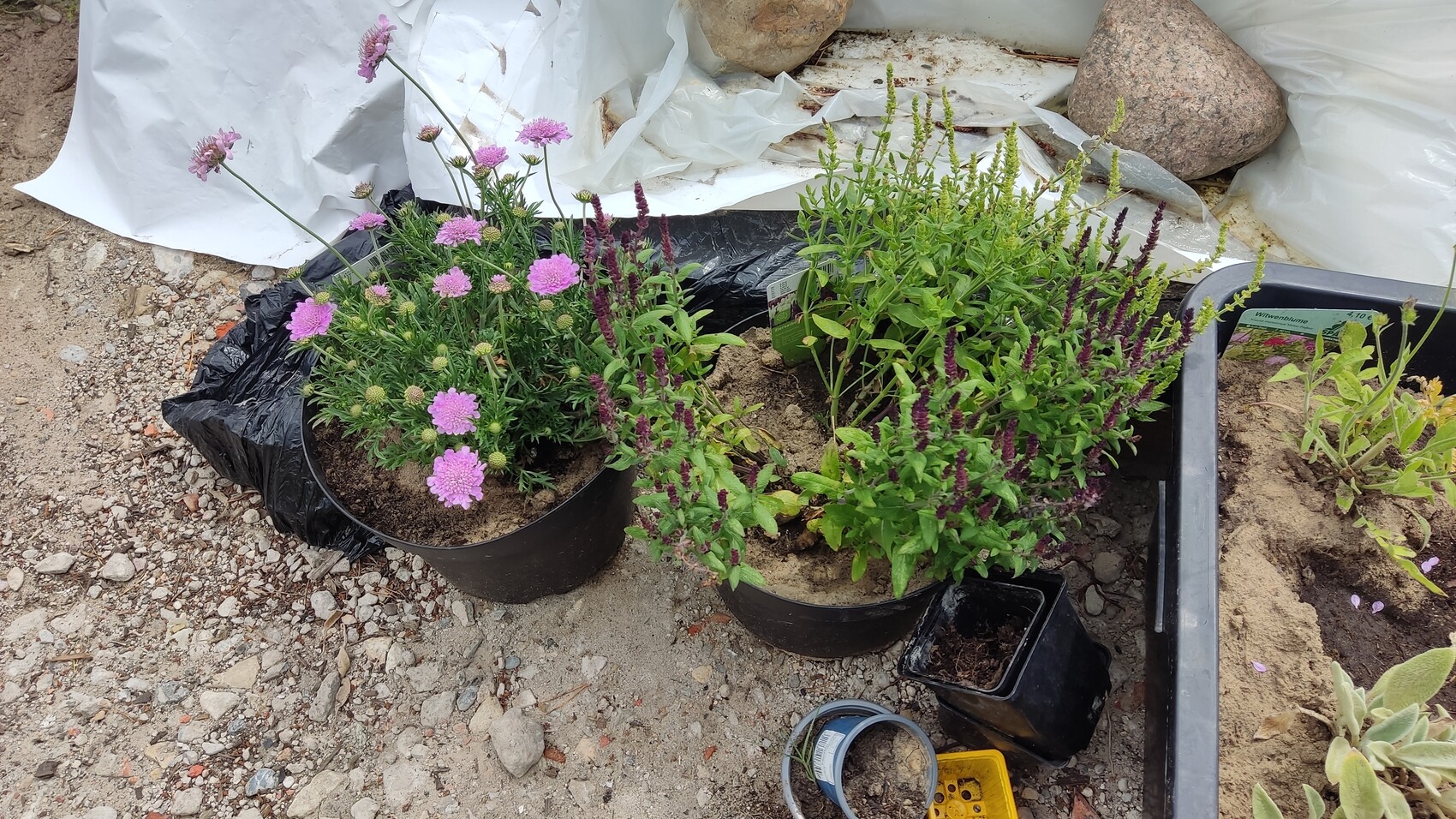
The scabiosa columbaria and the sage
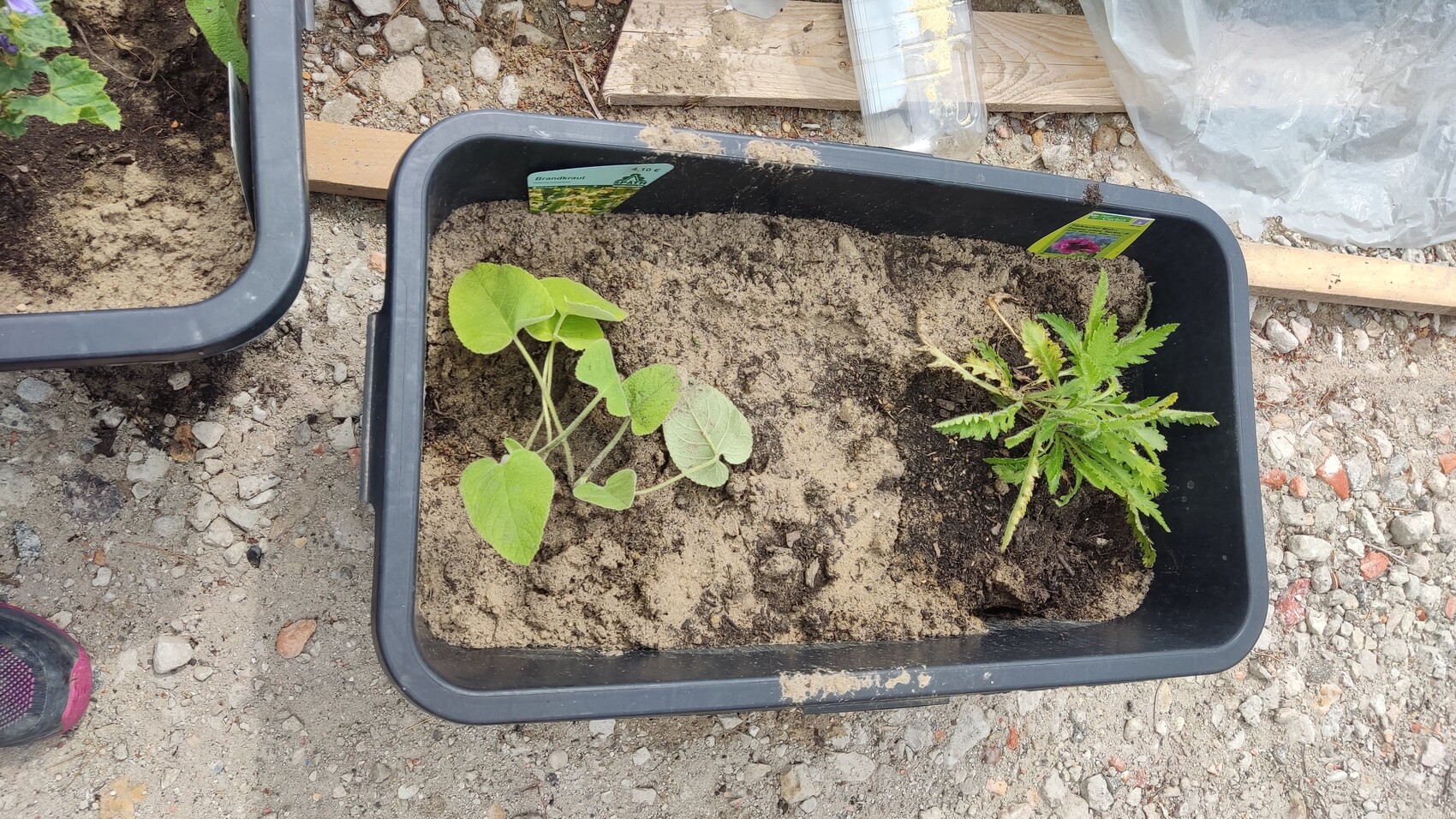
Burning bush and poppy in more nutrient-rich substrate
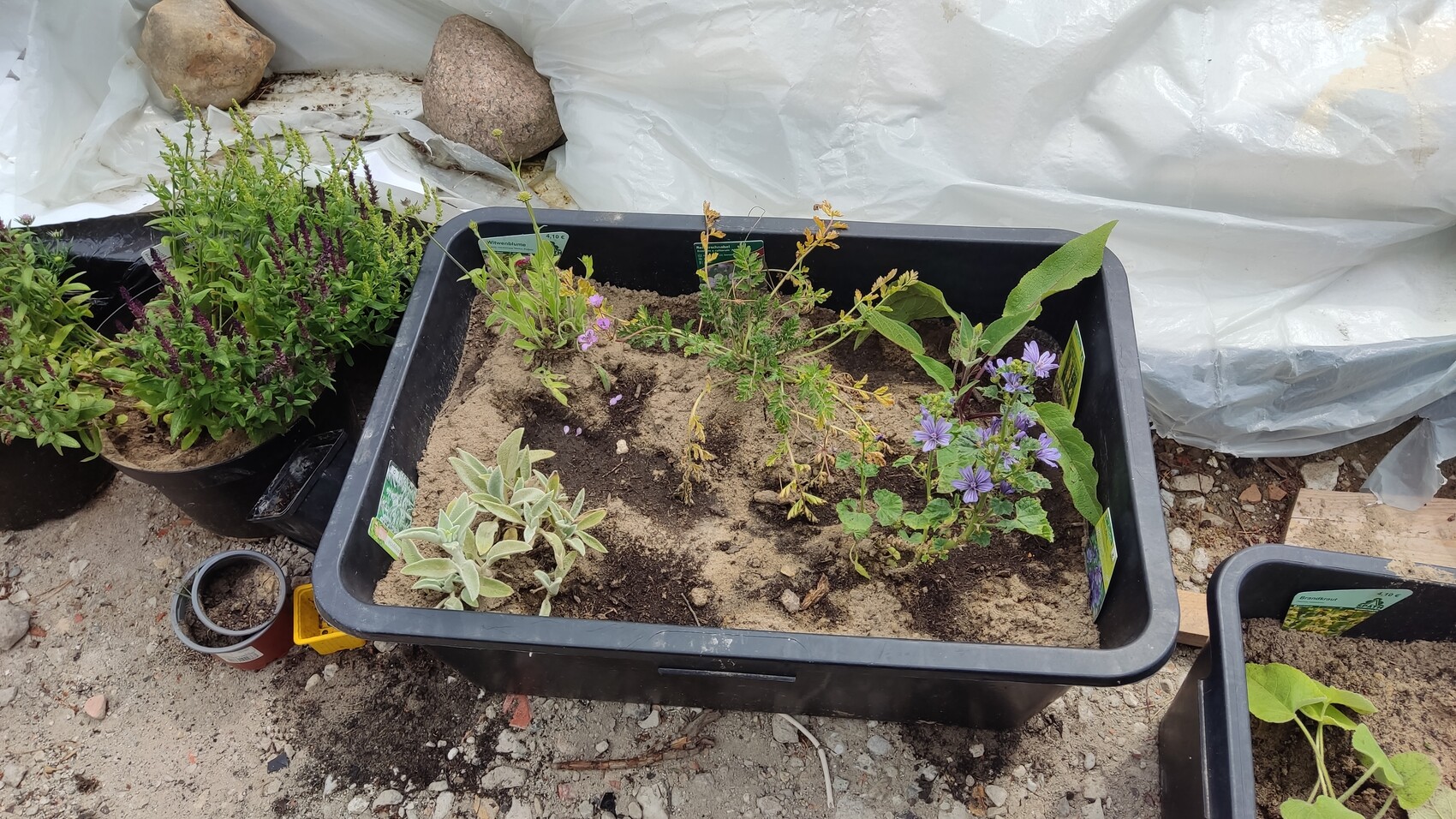
The rest in nutrient-poor substrate.
In the wildflower meadow, which I barely seeded and have not tended at all, some plants have come back.
Especially the mallows.
And we already have many animal visitors (although the deer prefer to eat the fresh shoots of fruit trees and the flowers of the hemp agrimony).
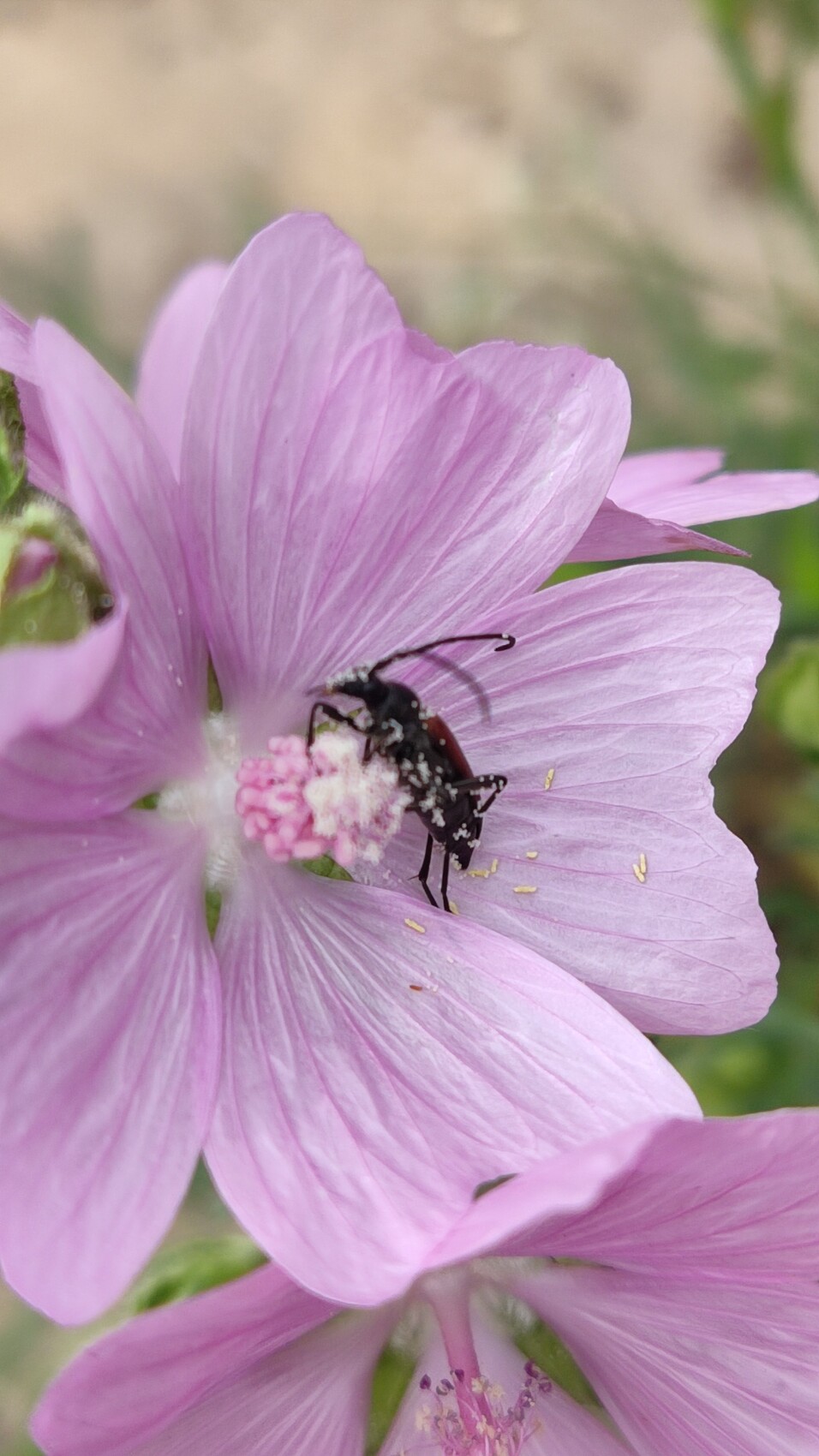
The mallows
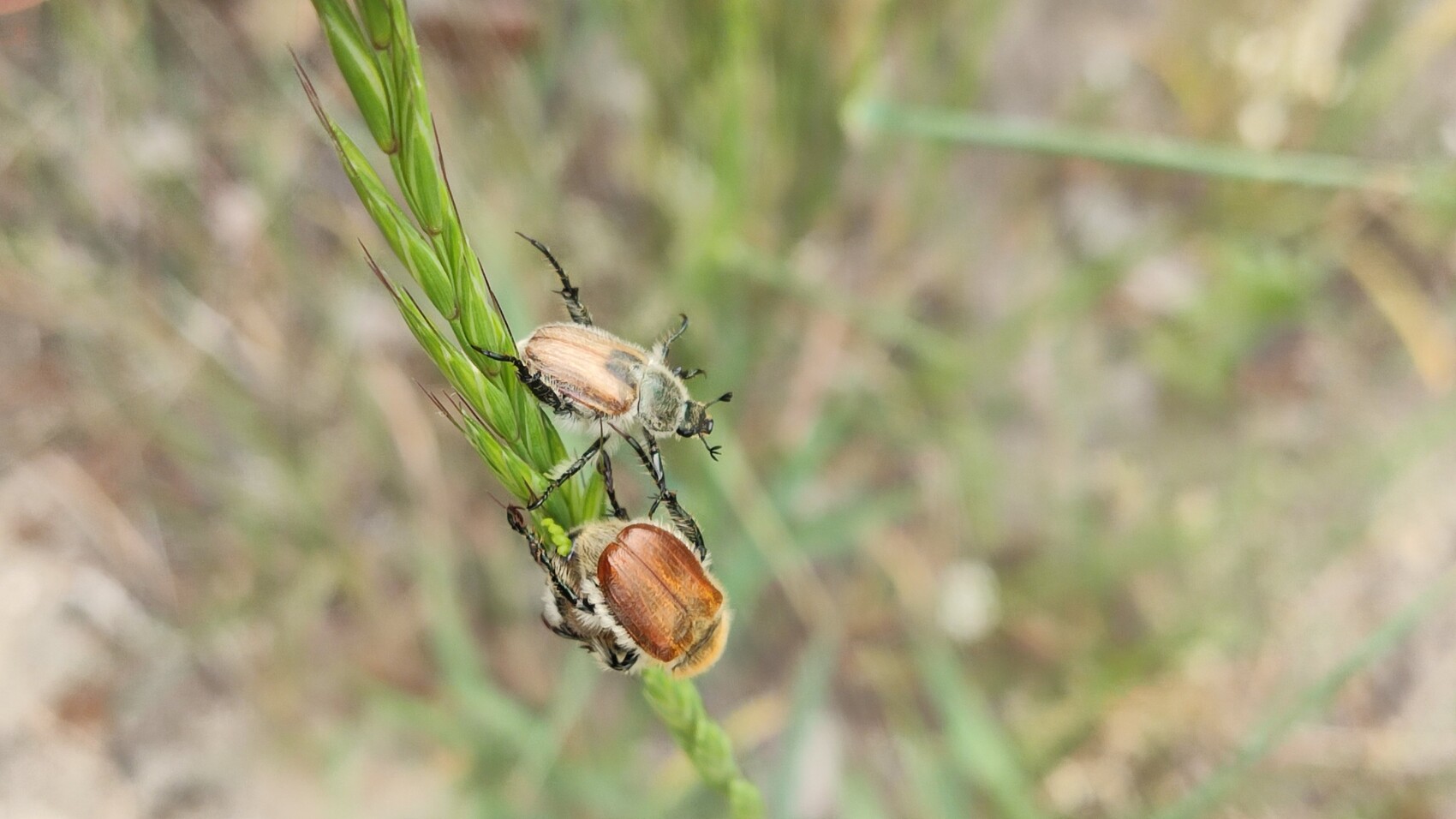
Leaf beetles on a not-so-family-friendly date
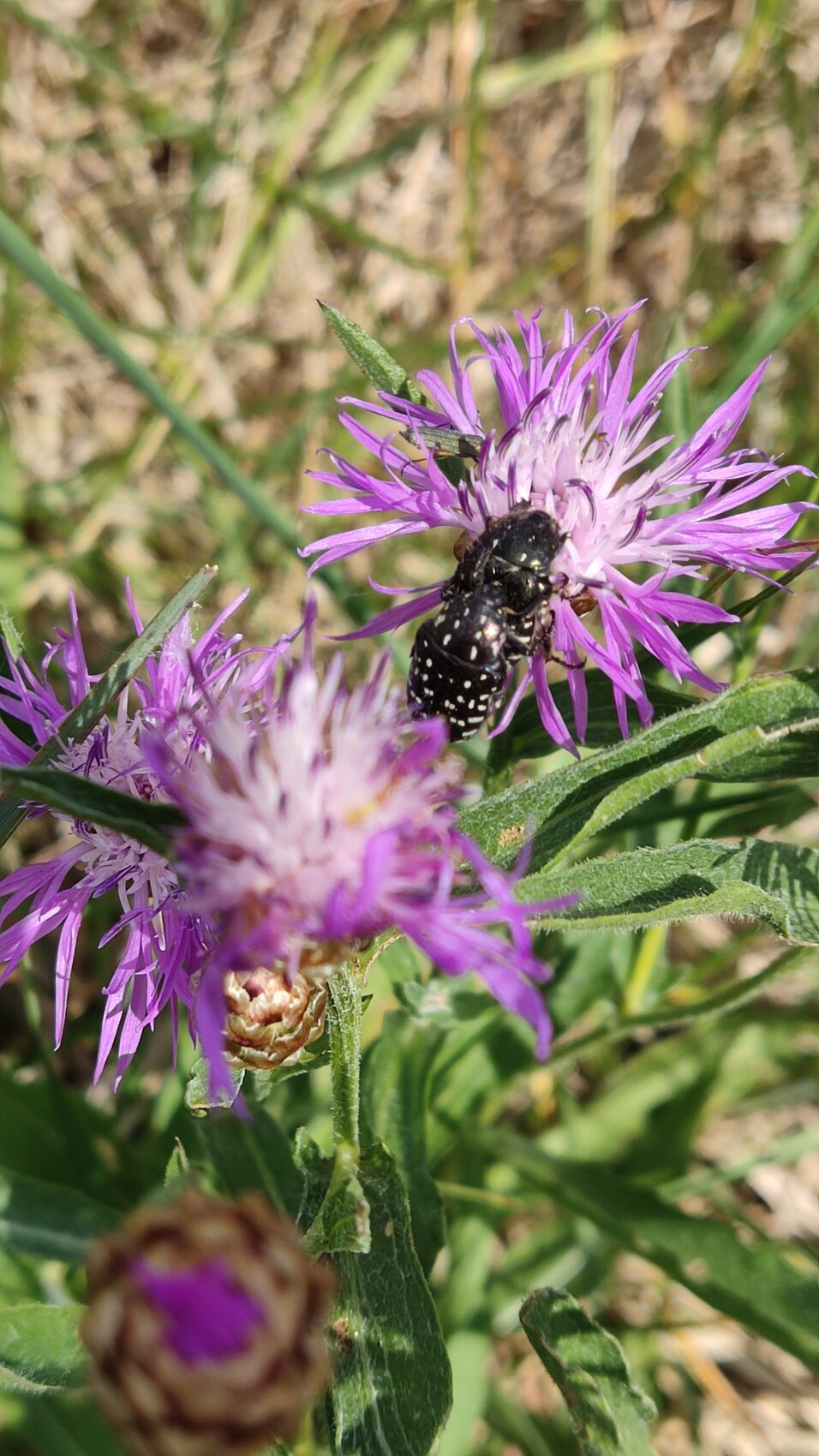
Rose chafer beetles on a not-so-family-friendly date on a knapweed flower

Cranesbill

And this huge viper’s bugloss, which self-seeded.
My hawthorns have already arrived. I’m a bit annoyed with Pflanzmich, where I placed a large order for my wildlife protection hedge. End of April, with a requested delivery date last week. Since May 25, the order supposedly has been packed.
Some are bare-rooted, and now I’m worried they will all die because our water connection is delayed.
Well, fingers crossed.
One-flowered hawthorn, first planted in a container so the neighbor can water it, and a cinnamon rose:
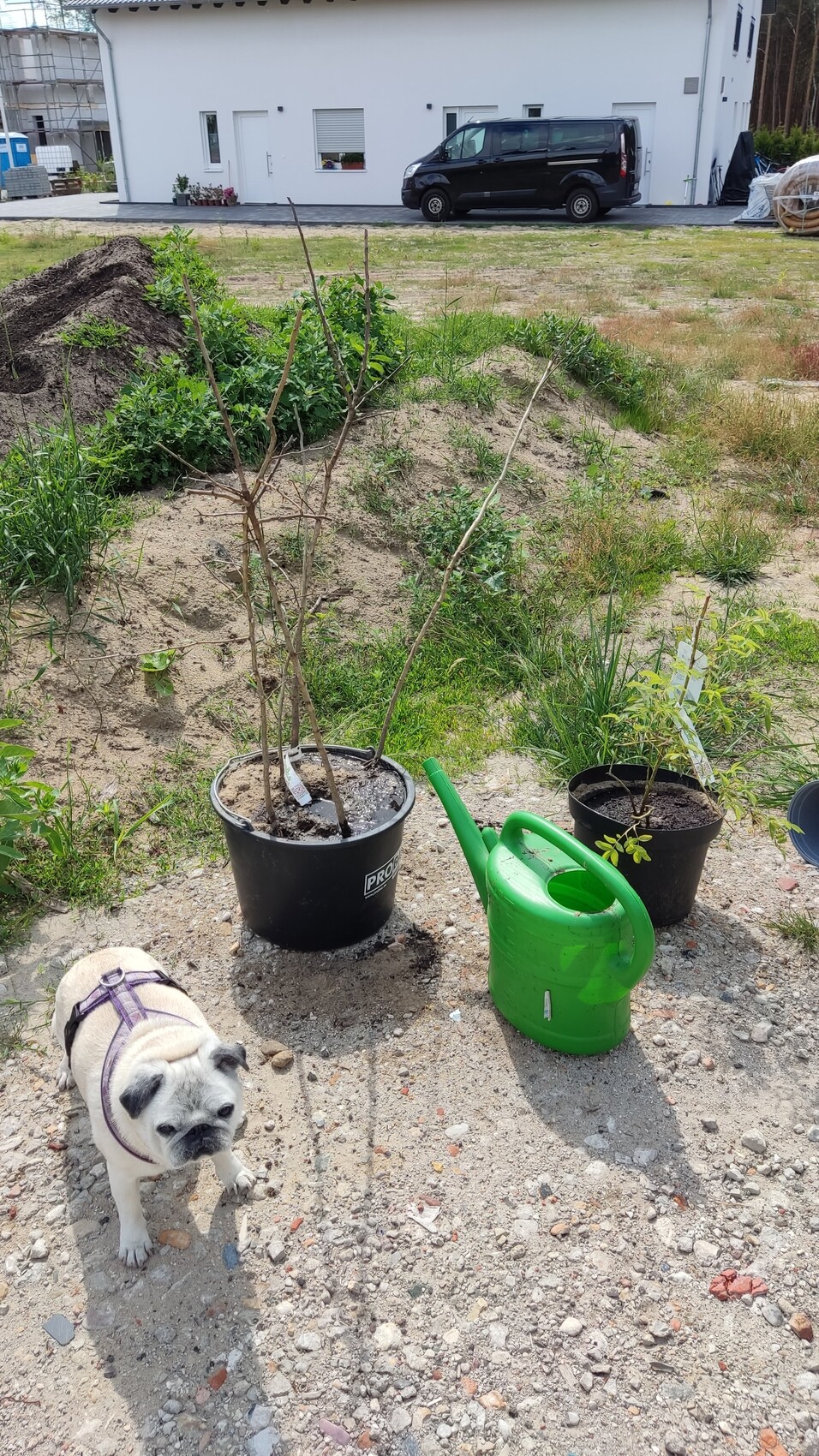
And of course, Lotta.
Turkish poppy, burning bush, Macedonian widow flower, Byzantine woolly mullein, scabiosa columbaria, sage, cranesbill, and a garden mallow.
The scabiosa columbaria and the sage
Burning bush and poppy in more nutrient-rich substrate
The rest in nutrient-poor substrate.
In the wildflower meadow, which I barely seeded and have not tended at all, some plants have come back.
Especially the mallows.
And we already have many animal visitors (although the deer prefer to eat the fresh shoots of fruit trees and the flowers of the hemp agrimony).
The mallows
Leaf beetles on a not-so-family-friendly date
Rose chafer beetles on a not-so-family-friendly date on a knapweed flower
Cranesbill
And this huge viper’s bugloss, which self-seeded.
My hawthorns have already arrived. I’m a bit annoyed with Pflanzmich, where I placed a large order for my wildlife protection hedge. End of April, with a requested delivery date last week. Since May 25, the order supposedly has been packed.
Some are bare-rooted, and now I’m worried they will all die because our water connection is delayed.
Well, fingers crossed.
One-flowered hawthorn, first planted in a container so the neighbor can water it, and a cinnamon rose:
And of course, Lotta.
Similar topics