
I thought a garden chat and photo thread would be a good idea.
This way, we have a space to share current pictures and discuss dandelions and other plants.
This way, we have a space to share current pictures and discuss dandelions and other plants.

kati1337 schrieb:
That is such a beautiful house (and garden) at Steffi’s 😱Thank you very much for the lovely compliment 🙂Is there a mnemonic or a symbol on a plant label that helps me distinguish annuals from perennials?
When I search online, I only find many pages explaining the difference. But nothing about whether there is a quick way to recognize this when I am at the garden center. I don’t want to have to google every plant variety all the time.
When I search online, I only find many pages explaining the difference. But nothing about whether there is a quick way to recognize this when I am at the garden center. I don’t want to have to google every plant variety all the time.
M
motorradsilke15 Jul 2023 22:45kati1337 schrieb:
Is there a simple trick or a symbol on a plant label that helps me tell annual plants from perennials?
When I search online, I only find many pages explaining the difference, but not how to quickly recognize it when I'm at the garden center. I don't want to have to look up every plant variety.For example, when you buy plants at a garden center in a hardware store, the perennial plants are labeled as "perennials" or sometimes "herbaceous perennials." You can recognize them by that. It should be the same in garden centers. Or you can just ask.W
WilderSueden16 Jul 2023 00:40There are actually symbols indicating the lifespan. You can definitely find them in plant identification books, but I would have serious doubts about seeing them in a garden center.

Even if the symbols were there, it’s unfortunately not that simple. First, the distinction is not as clear-cut as one might think. Many plants that are technically annual can behave as biennials or even perennials under certain conditions. Viper’s bugloss is an example of this. Secondly, many “summer flowers” are actually perennials but do not survive local winters, so in practice they are treated as annuals.
One more note: annual does not necessarily mean the plant disappears completely afterwards. Annual plants produce seeds and can reappear the following year if conditions are suitable (especially bare soil). However, many cultivated varieties are sterile.
Even if the symbols were there, it’s unfortunately not that simple. First, the distinction is not as clear-cut as one might think. Many plants that are technically annual can behave as biennials or even perennials under certain conditions. Viper’s bugloss is an example of this. Secondly, many “summer flowers” are actually perennials but do not survive local winters, so in practice they are treated as annuals.
One more note: annual does not necessarily mean the plant disappears completely afterwards. Annual plants produce seeds and can reappear the following year if conditions are suitable (especially bare soil). However, many cultivated varieties are sterile.
M
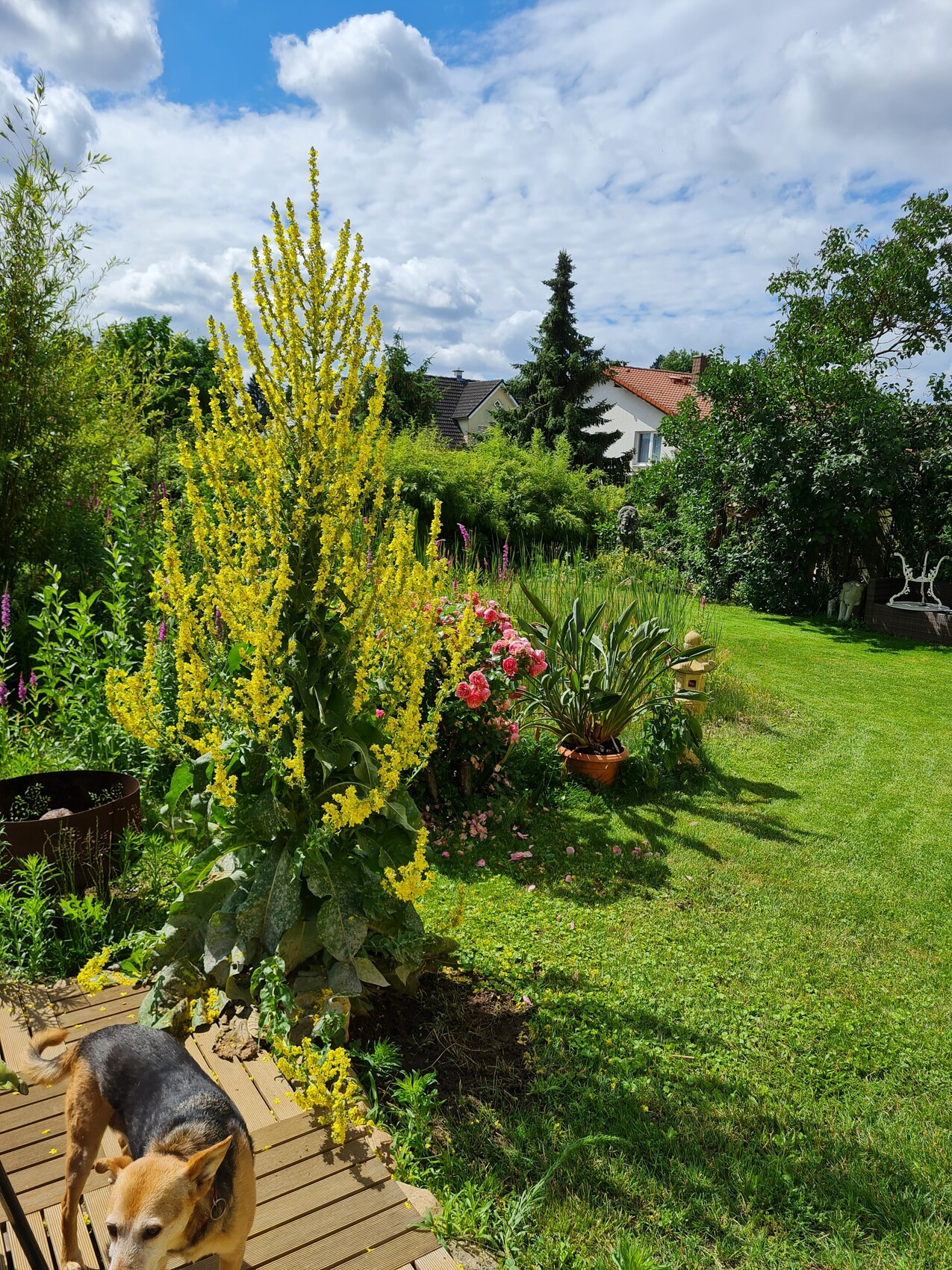
motorradsilke16 Jul 2023 06:33Here is an example of a two-year-old plant that was allowed to grow freely on its own and has reached over 2 m (6.5 ft) in height. It has been blooming for four weeks now.
In our area, there is always a plant exchange event in April and September, where private individuals sell their cuttings or plants they no longer want. You can always get some advice there and build a basic collection at a low cost. Maybe there is something similar near you. Alternatively, classified ads are also a good option for getting plants cheaply.
In our area, there is always a plant exchange event in April and September, where private individuals sell their cuttings or plants they no longer want. You can always get some advice there and build a basic collection at a low cost. Maybe there is something similar near you. Alternatively, classified ads are also a good option for getting plants cheaply.