
Hello everyone,
we purchased the wall cabinet Godmorgon from IKEA as well as a countertop (which is 1.36m (4 ft 6 in) long), into which our built-in washbasin will be installed later. Our wall is made of hollow brick Unipor and has a thickness of 17.5cm (7 inches) in the installation area in the rough construction stage, plus plaster.
Now, like many others, I am wondering:
I really appreciate any tips or experiences you can share.
we purchased the wall cabinet Godmorgon from IKEA as well as a countertop (which is 1.36m (4 ft 6 in) long), into which our built-in washbasin will be installed later. Our wall is made of hollow brick Unipor and has a thickness of 17.5cm (7 inches) in the installation area in the rough construction stage, plus plaster.
Now, like many others, I am wondering:
- Which screws and wall plugs (anchors) do I need to securely mount the Godmorgon cabinet to the wall?
- Once the countertop with the built-in washbasin is installed on top, should it be additionally supported with brackets (heavy-duty brackets)? If so, which kind?
I really appreciate any tips or experiences you can share.
B
Bertram10010 Jul 2020 15:17You can tell your wife that retractable towel racks are annoying. Who wants to keep pulling those things out all the time? If she really wants one, you can find those at better kitchen supply or kitchen equipment stores. But don’t say later that no one warned you that these retractable racks can be frustrating.
P
pagoni202010 Jul 2020 15:50Items that are extendable usually start to wobble over time. This is less of an issue for kitchen towels, though.
For example, an IKEA kitchen is hung on a rail. You can definitely use the same system for this purpose. Just cut the rail to the right length, hang the cabinet, and that's it.
Nothing will fall down from below as long as you don’t overload it excessively. Wall cabinets in kitchens are usually mounted on the wall (often just double-layer drywall), and they hold many plates and other items.
Personally, I prefer installations without any wobble, so I always use runners or, if possible, some kind of support surface.
But you can also buy a reinforced bracket or have one made by a metalworker. The trick is to find the right fit.
For example, an IKEA kitchen is hung on a rail. You can definitely use the same system for this purpose. Just cut the rail to the right length, hang the cabinet, and that's it.
Nothing will fall down from below as long as you don’t overload it excessively. Wall cabinets in kitchens are usually mounted on the wall (often just double-layer drywall), and they hold many plates and other items.
Personally, I prefer installations without any wobble, so I always use runners or, if possible, some kind of support surface.
But you can also buy a reinforced bracket or have one made by a metalworker. The trick is to find the right fit.
G
Grillhendl20 Jul 2020 08:52We still had some small brackets left over from assembling the IKEA kitchen, which we screwed together with the board and the cabinet. Although the board is quite small, it is fairly heavy... Let’s see if our construction is still holding up when we return to the building site.
We no longer attached the board directly to the wall.
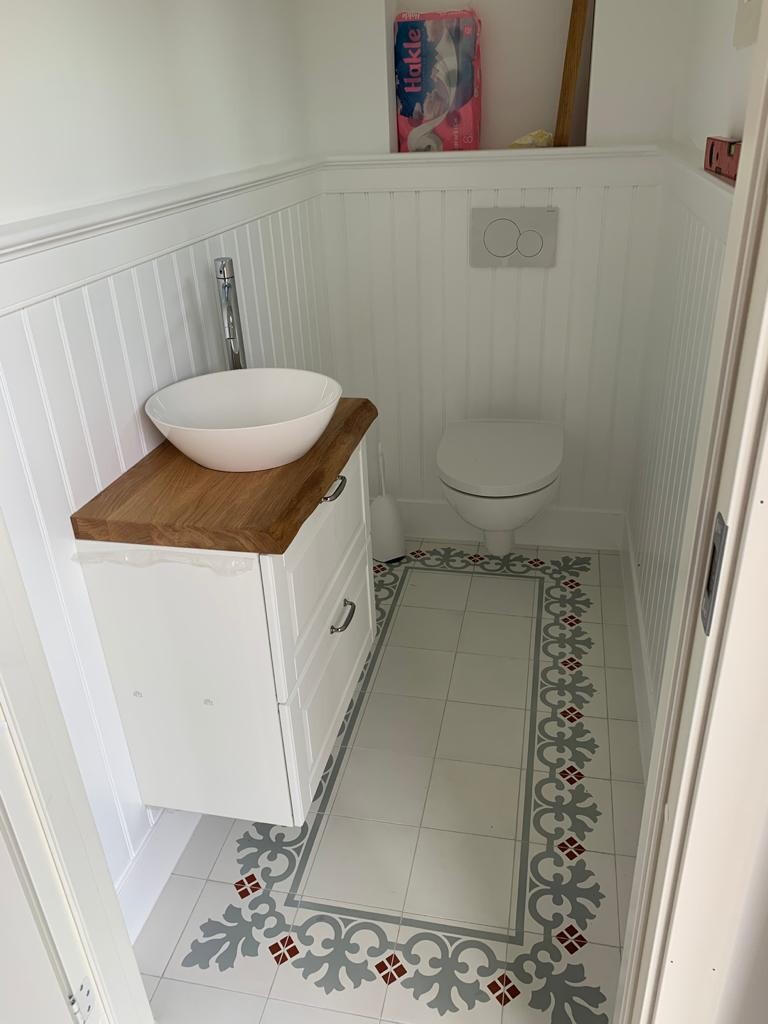
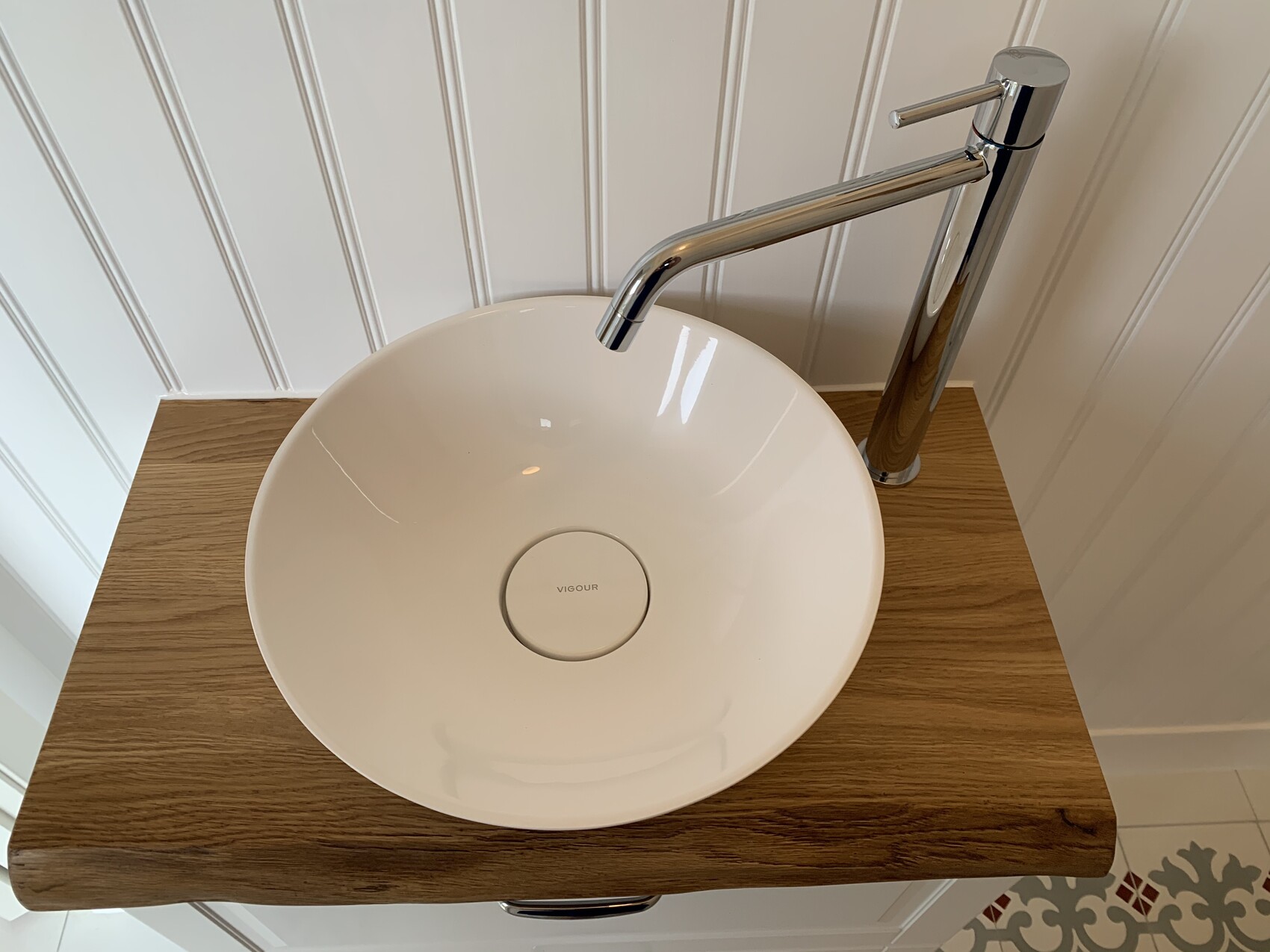
We no longer attached the board directly to the wall.
P
pagoni202020 Jul 2020 08:58Grillhendl schrieb:
whether our structure will still be standing when we return to the construction site.What does the experienced craftsman say about this concern...? "Where do you think this is going?"Similar topics