
ᐅ Retrofitting Insulation in a Condominium with Mold-Prone Areas
Created on: 19 Dec 2020 14:39
D
DaSch17
Hello everyone,
I actually registered here to gather valuable information for our new construction project and to exchange ideas with other homeowners.
Today, however, I have a different question concerning our owner-occupied condominium.
We moved in in April 2018 and are now experiencing our second winter in this apartment.
Already last winter, we dealt with a mold problem at the external wall corners (where the two exterior walls meet) in the bedroom (a typical structural thermal bridge). We had a building expert specialized in mold damage inspect the issue. He could not detect any structural defects or elevated moisture levels.
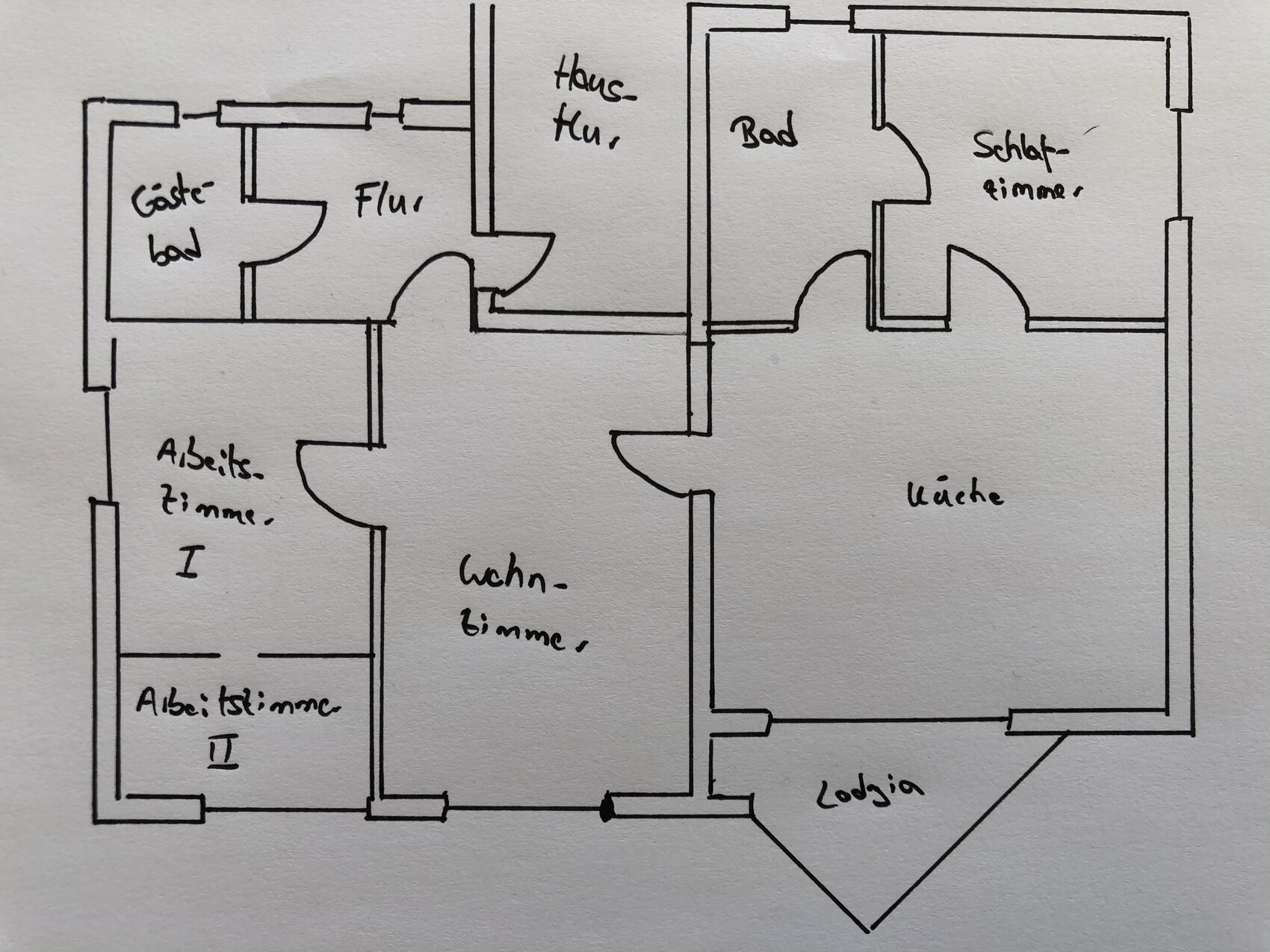
The problem, however, is the location of the bedroom within the apartment. The kitchen and master bathroom are directly adjacent and each connected to the bedroom by a door (see floor plan).
The master bathroom also has a window that is too small (because the bathroom was enlarged later). As a result, some of the moisture from the warmest room (bathroom) tends to move into the coldest room (bedroom).
The conclusion: ventilate more and pay even more attention to humidity levels. We did just that and ensured that the indoor humidity never remained above 55%.
The mold from 2019 was then professionally removed.
Additionally, in October 2020, we installed a bathroom extractor fan to vent excess moisture outside.
We thought that these measures had solved the problem.
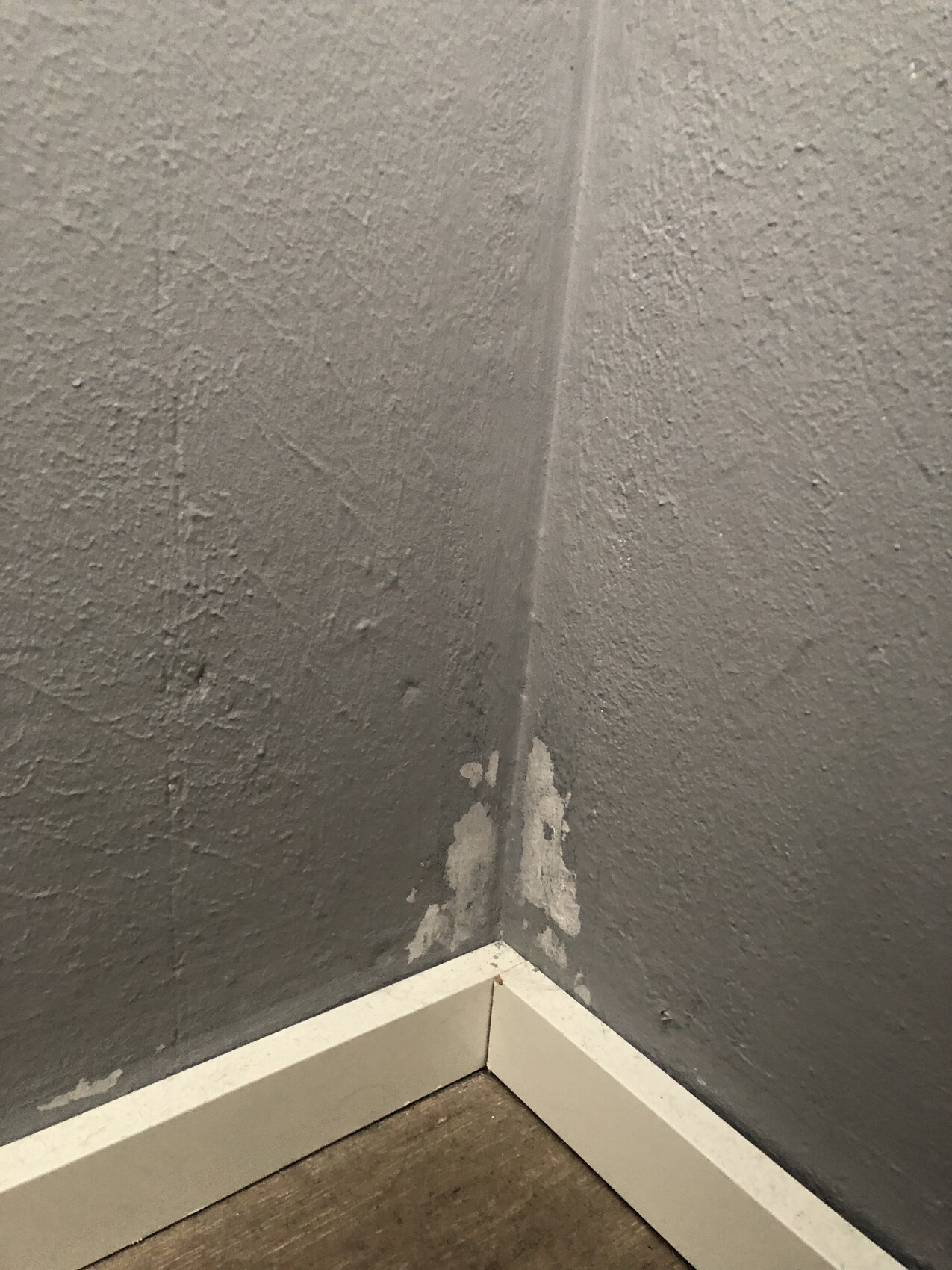
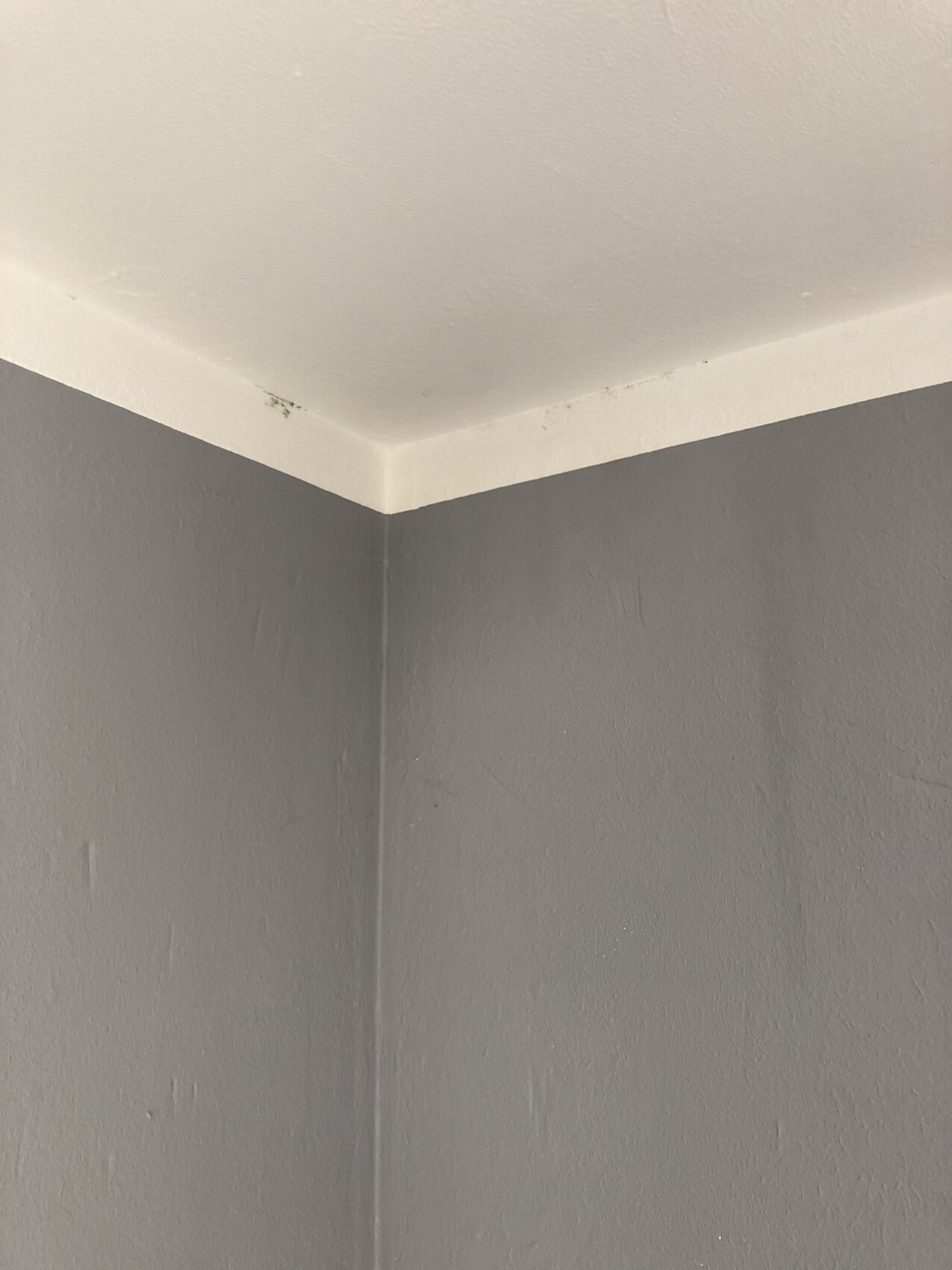
But today, we discovered mold again in this corner (see pictures).
Lower external corner:
Upper external corner:
Now to my question: Do you have any ideas on how to fix the cause and keep this corner permanently mold-free with minimal structural effort?
We suspect it might also be related to the wall treatment: before moving in, we removed the textured wallpaper, applied a primer, and then a mineral-based paint plaster. Unfortunately, we then painted over this with standard paint (Alpine White).
Our idea is therefore:
1. Replaster all walls and the ceiling with an interior thermal insulating plaster
2. Cover with a non-woven painting fleece
3. Paint with lime-based, silicate, or mold-resistant paint
We would like to avoid installing silicate insulation boards if possible due to effort and cost!
Thanks for reading and for your help!
I actually registered here to gather valuable information for our new construction project and to exchange ideas with other homeowners.
Today, however, I have a different question concerning our owner-occupied condominium.
We moved in in April 2018 and are now experiencing our second winter in this apartment.
Already last winter, we dealt with a mold problem at the external wall corners (where the two exterior walls meet) in the bedroom (a typical structural thermal bridge). We had a building expert specialized in mold damage inspect the issue. He could not detect any structural defects or elevated moisture levels.
The problem, however, is the location of the bedroom within the apartment. The kitchen and master bathroom are directly adjacent and each connected to the bedroom by a door (see floor plan).
The master bathroom also has a window that is too small (because the bathroom was enlarged later). As a result, some of the moisture from the warmest room (bathroom) tends to move into the coldest room (bedroom).
The conclusion: ventilate more and pay even more attention to humidity levels. We did just that and ensured that the indoor humidity never remained above 55%.
The mold from 2019 was then professionally removed.
Additionally, in October 2020, we installed a bathroom extractor fan to vent excess moisture outside.
We thought that these measures had solved the problem.
But today, we discovered mold again in this corner (see pictures).
Lower external corner:
Upper external corner:
Now to my question: Do you have any ideas on how to fix the cause and keep this corner permanently mold-free with minimal structural effort?
We suspect it might also be related to the wall treatment: before moving in, we removed the textured wallpaper, applied a primer, and then a mineral-based paint plaster. Unfortunately, we then painted over this with standard paint (Alpine White).
Our idea is therefore:
1. Replaster all walls and the ceiling with an interior thermal insulating plaster
2. Cover with a non-woven painting fleece
3. Paint with lime-based, silicate, or mold-resistant paint
We would like to avoid installing silicate insulation boards if possible due to effort and cost!
Thanks for reading and for your help!

Bertram100 schrieb:
I once had a similar situation where the bedroom was along the north-facing exterior wall. I also had mold. Besides airing out and some heating, I managed to control it by introducing more fabric into the room.
By chance, I discovered (discarded a laminated wardrobe and replaced it with an untreated solid wood shelf with curtains) that wood and/or fabric helped regulate moisture.
They apparently absorbed enough moisture to remove the conditions mold needs to grow.
It might not be a permanent solution, but at least it helped. That’s basically not a bad idea and might temporarily solve the problem with even more heating (ok, sleep quality would suffer a lot).
However, since we want to rent out the apartment in 1-2 years, the root cause needs to be addressed. I can’t really write into the rental agreement that tenants have to come home at lunch to ventilate and also keep the heating at a minimum of 24 degrees Celsius (75°F). Also, only solid wood furniture would be allowed...
That’s just our problem :/
halmi schrieb:
Is my impression wrong, or does the wall already look really saturated? You say it’s a typical thermal bridge, but the expert didn’t find anything?
With 20 degrees Celsius (68°F) and airing twice a day, that’s unlikely to solve it. More heating and ventilation are needed here. No, it’s not my impression. Those are water stains from the last time we painted, which become more or less visible depending on the humidity level in the bedroom. The spots themselves are dry; I measured this with a moisture meter. It’s only about 0.5 square meters (5.4 square feet) of wall area on the exterior wall.
According to the expert, these corners are always the coldest due to building physics and thermal conditions. So this is not considered a defect, but “normal.”
Regarding heating and more ventilation, see above. Future tenants definitely won’t do that.
We need to get to the core of the problem instead of relying on various measures that might be reasonable for an owner-occupier but not for a future tenant.
What do you think about insulating plaster + wallpaper + additionally insulating paint or lime/silicate paint?
B
Bertram10020 Dec 2020 11:45My apartment is located directly under the roof. After the roof was insulated, the situation actually got worse. Without being an expert in insulation, I would say that insulation has to be treated as a complete project for the entire apartment. Otherwise, you create thermal bridges elsewhere.
I told my tenant that it’s best not to place any furniture against the affected wall, and if they do, to keep a sufficient distance from the wall.
I told my tenant that it’s best not to place any furniture against the affected wall, and if they do, to keep a sufficient distance from the wall.

DaSch17 schrieb:
We moved in here in April 2018But based on the floor plan, that can’t also be the year of construction (???)https://www.instagram.com/11antgmxde/
https://www.linkedin.com/company/bauen-jetzt/
Bertram100 schrieb:
My flat is located under the roof. After the insulation was installed, the situation only got worse. Without being an expert in insulation, I would say that insulating needs to be a comprehensive project for the entire flat. Otherwise, you create cold bridges elsewhere.
I told my tenant not to place any furniture against the affected wall, or if they do, to keep enough distance from the wall. There is no furniture in the affected corner.
11ant schrieb:
Based on the floor plan, is that also the construction year (??? ) Construction year 1992. Originally two residential units were planned (which can still be quite clearly seen on the floor plan). Later, it was converted into a single residential unit.
Nordlys schrieb:
Bathroom. Helios exhaust fan. Keeps our bathroom very dry.
Kitchen, cooker hood must vent cooking fumes. Out of the house. We already have both in the bathroom and kitchen.
BobRoss schrieb:
Has the wall temperature in the corner been measured in different spots using an infrared thermometer and compared to the other exterior walls relative to the respective room temperature? That might provide additional insights. The expert did that. He found no structural defects in the affected corner. However, the dew point is apparently quite high there, so moisture condenses quickly.
Similar topics