
ᐅ Retrofitting Insulation in a Condominium with Mold-Prone Areas
Created on: 19 Dec 2020 14:39
D
DaSch17
Hello everyone,
I actually registered here to gather valuable information for our new construction project and to exchange ideas with other homeowners.
Today, however, I have a different question concerning our owner-occupied condominium.
We moved in in April 2018 and are now experiencing our second winter in this apartment.
Already last winter, we dealt with a mold problem at the external wall corners (where the two exterior walls meet) in the bedroom (a typical structural thermal bridge). We had a building expert specialized in mold damage inspect the issue. He could not detect any structural defects or elevated moisture levels.
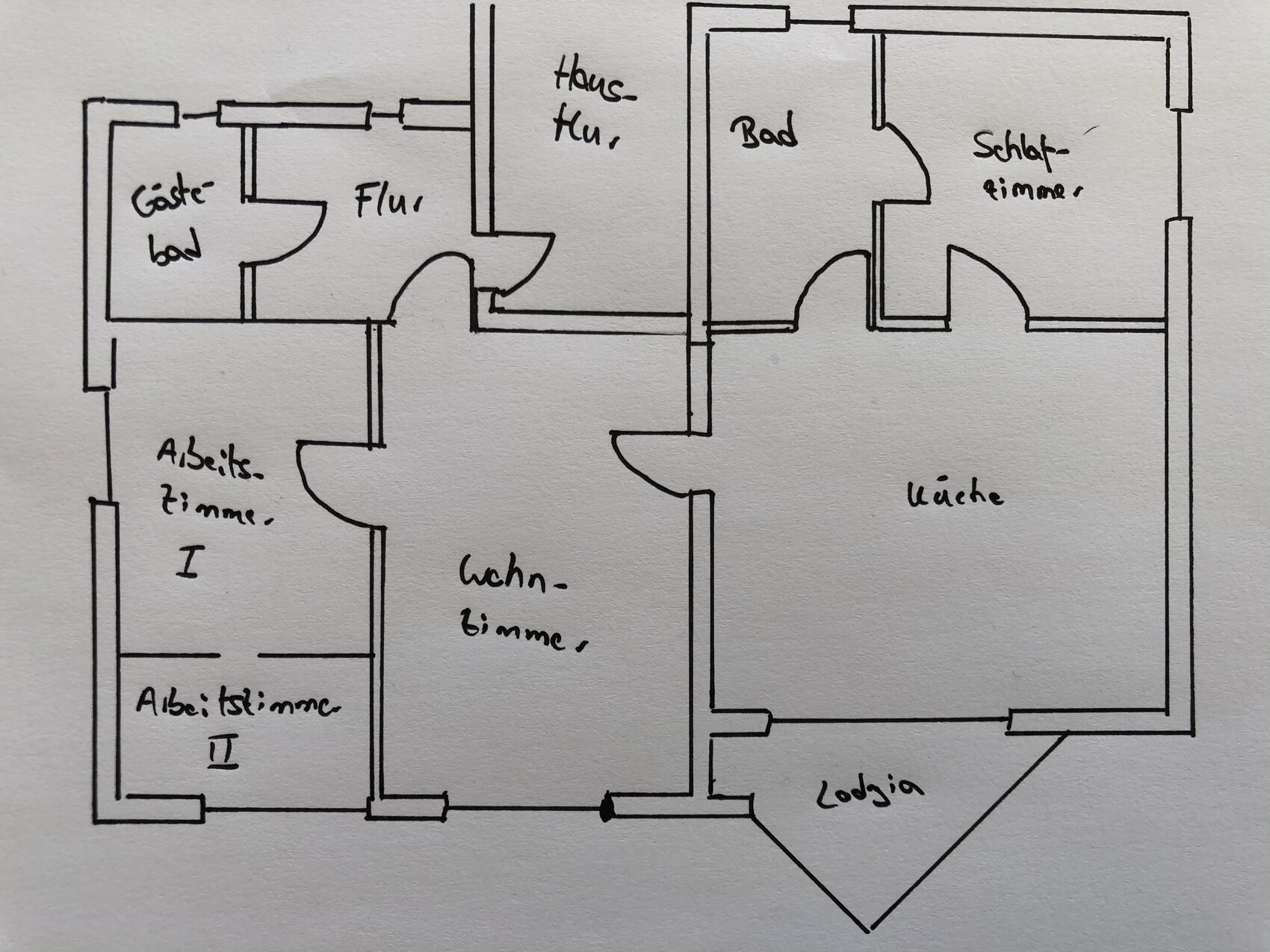
The problem, however, is the location of the bedroom within the apartment. The kitchen and master bathroom are directly adjacent and each connected to the bedroom by a door (see floor plan).
The master bathroom also has a window that is too small (because the bathroom was enlarged later). As a result, some of the moisture from the warmest room (bathroom) tends to move into the coldest room (bedroom).
The conclusion: ventilate more and pay even more attention to humidity levels. We did just that and ensured that the indoor humidity never remained above 55%.
The mold from 2019 was then professionally removed.
Additionally, in October 2020, we installed a bathroom extractor fan to vent excess moisture outside.
We thought that these measures had solved the problem.
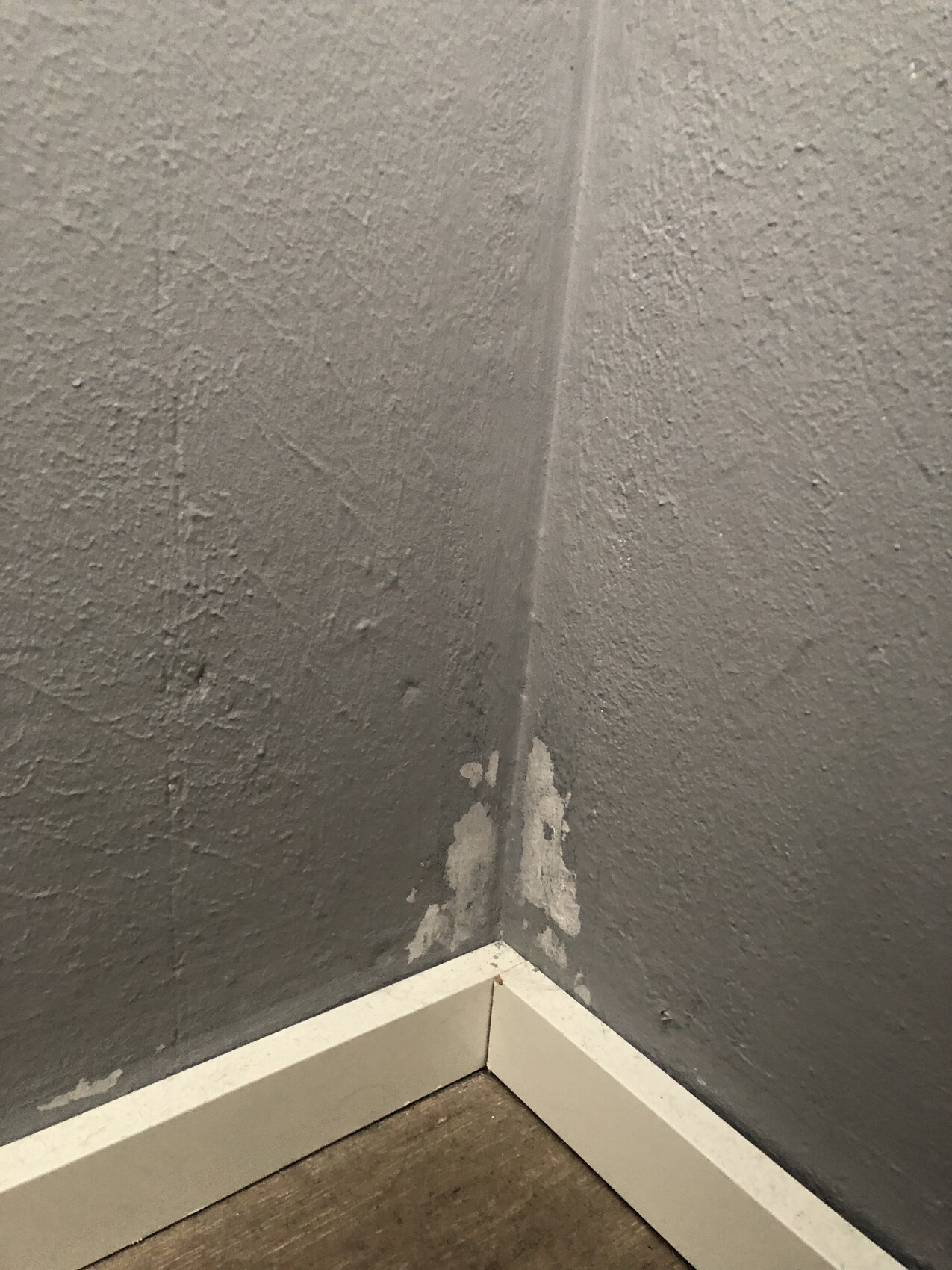
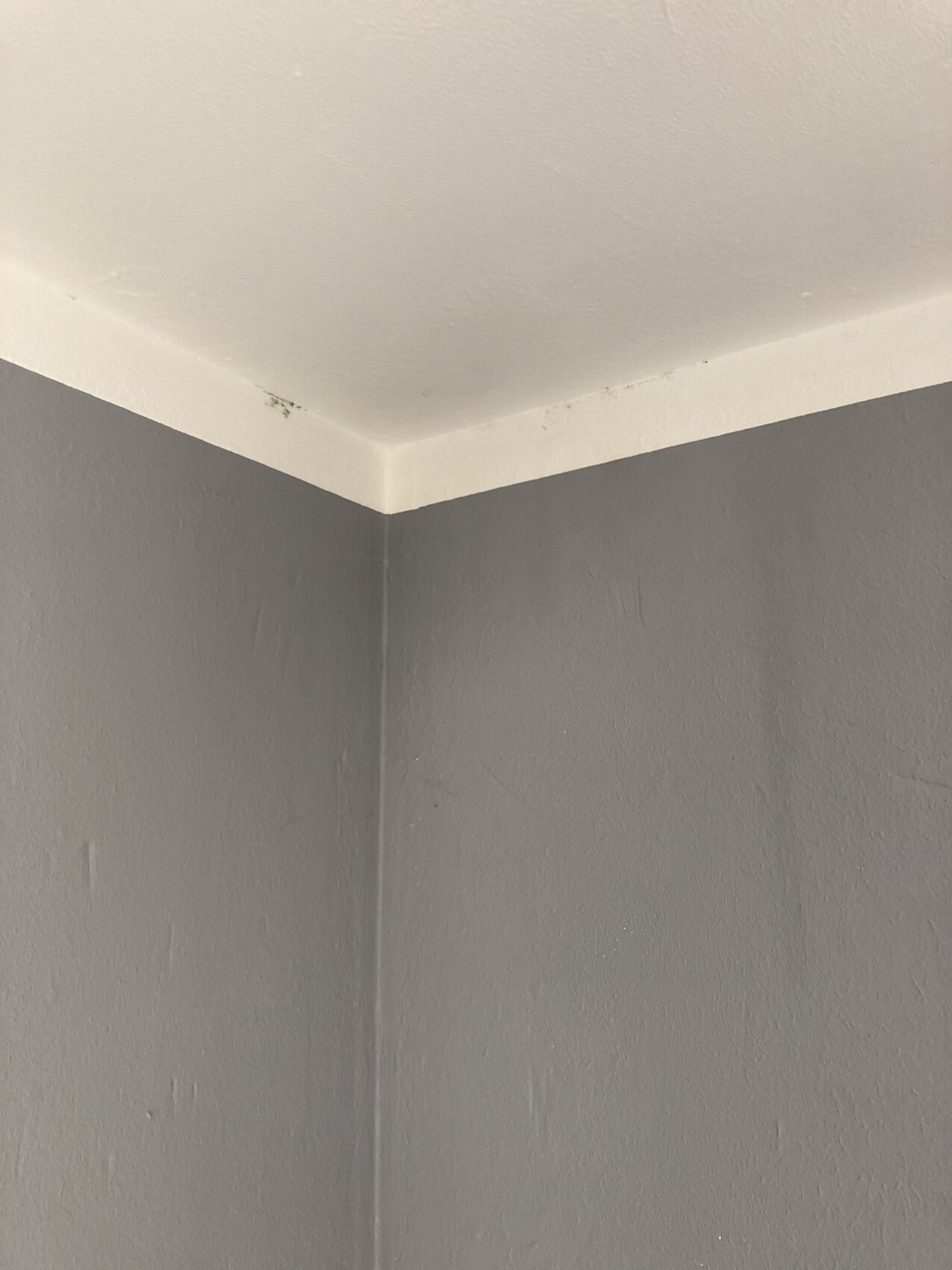
But today, we discovered mold again in this corner (see pictures).
Lower external corner:
Upper external corner:
Now to my question: Do you have any ideas on how to fix the cause and keep this corner permanently mold-free with minimal structural effort?
We suspect it might also be related to the wall treatment: before moving in, we removed the textured wallpaper, applied a primer, and then a mineral-based paint plaster. Unfortunately, we then painted over this with standard paint (Alpine White).
Our idea is therefore:
1. Replaster all walls and the ceiling with an interior thermal insulating plaster
2. Cover with a non-woven painting fleece
3. Paint with lime-based, silicate, or mold-resistant paint
We would like to avoid installing silicate insulation boards if possible due to effort and cost!
Thanks for reading and for your help!
I actually registered here to gather valuable information for our new construction project and to exchange ideas with other homeowners.
Today, however, I have a different question concerning our owner-occupied condominium.
We moved in in April 2018 and are now experiencing our second winter in this apartment.
Already last winter, we dealt with a mold problem at the external wall corners (where the two exterior walls meet) in the bedroom (a typical structural thermal bridge). We had a building expert specialized in mold damage inspect the issue. He could not detect any structural defects or elevated moisture levels.
The problem, however, is the location of the bedroom within the apartment. The kitchen and master bathroom are directly adjacent and each connected to the bedroom by a door (see floor plan).
The master bathroom also has a window that is too small (because the bathroom was enlarged later). As a result, some of the moisture from the warmest room (bathroom) tends to move into the coldest room (bedroom).
The conclusion: ventilate more and pay even more attention to humidity levels. We did just that and ensured that the indoor humidity never remained above 55%.
The mold from 2019 was then professionally removed.
Additionally, in October 2020, we installed a bathroom extractor fan to vent excess moisture outside.
We thought that these measures had solved the problem.
But today, we discovered mold again in this corner (see pictures).
Lower external corner:
Upper external corner:
Now to my question: Do you have any ideas on how to fix the cause and keep this corner permanently mold-free with minimal structural effort?
We suspect it might also be related to the wall treatment: before moving in, we removed the textured wallpaper, applied a primer, and then a mineral-based paint plaster. Unfortunately, we then painted over this with standard paint (Alpine White).
Our idea is therefore:
1. Replaster all walls and the ceiling with an interior thermal insulating plaster
2. Cover with a non-woven painting fleece
3. Paint with lime-based, silicate, or mold-resistant paint
We would like to avoid installing silicate insulation boards if possible due to effort and cost!
Thanks for reading and for your help!
According to the floor plan, the bedroom is located next to the rooms with the highest humidity in the apartment. You mention that the bedroom is cold? Then the exterior walls must also be cold.
Try ventilating by opening the windows wide in the morning, and make sure the doors to the other rooms are closed. Also, turn on the heating! Possibly ventilate again briefly during the day.
I find 55% humidity quite high.
Try ventilating by opening the windows wide in the morning, and make sure the doors to the other rooms are closed. Also, turn on the heating! Possibly ventilate again briefly during the day.
I find 55% humidity quite high.
charli schrieb:
According to the floor plan, the bedroom is located next to the rooms with the highest humidity in the apartment. That’s correct, but unfortunately it cannot be used differently. I think this will also be the main issue.
charli schrieb:
You said the bedroom is cold? Then the exterior walls are cold as well. Cold in relation to the other rooms. The bedroom is always around 20–21°C (68–70°F). The bathroom is 22–23°C (72–73°F), and the other rooms usually around 22°C (72°F).
charli schrieb:
Try this: ventilate briefly in the morning and keep the doors to the other rooms closed. And turn on the heating! Possibly ventilate briefly again in between.
I find 55% humidity quite high. That’s what we do. We ventilate crosswise in the morning after getting up and again in the evening after work.
The door to the bathroom is usually closed. Of course, it is still used, so some moisture transfer, for example after showering, into the bedroom is unavoidable.
Keep in mind, this is not a new building. Also, it is never constantly 55%. In summer, we obviously have no problem here. But especially during transitional seasons in late autumn and spring, we struggle with this issue.
Mold only develops at a sustained humidity above 60%, which we have not had at any time, especially this year.
Bookstar schrieb:
What is the temperature of the wall? And the room temperature? You can calculate whether a wall will develop mold. According to the expert report, the exterior walls have a relatively high dew point at the critical spots, so moist air condenses quickly. However, this is not unusual at exterior wall corners, as these typically have thermal bridges.
The bedroom temperature is typically around 20°C (68°F) (20–21°C / 68–70°F).
B
Bertram10020 Dec 2020 08:21I once had a similar situation where the bedroom was located on the north-facing exterior wall. I also experienced mold. Besides airing out the room and heating it a bit, I managed to improve the situation by bringing more fabric into the room.
I discovered by chance (discarded a laminated wardrobe and replaced it with an untreated solid wood shelf with curtains) that wood and/or fabric helped regulate the moisture.
They apparently absorbed enough moisture to remove the conditions needed for mold to develop.
It may not be a substantial solution, but at least it helped.
I discovered by chance (discarded a laminated wardrobe and replaced it with an untreated solid wood shelf with curtains) that wood and/or fabric helped regulate the moisture.
They apparently absorbed enough moisture to remove the conditions needed for mold to develop.
It may not be a substantial solution, but at least it helped.
Does the picture deceive me, or does the wall already look quite damp? You say it is a typical thermal bridge, but the expert couldn’t find anything?
With 20 degrees Celsius (68 degrees Fahrenheit) and airing the room twice a day, this probably won’t be resolved. More heating and ventilation are necessary here.
With 20 degrees Celsius (68 degrees Fahrenheit) and airing the room twice a day, this probably won’t be resolved. More heating and ventilation are necessary here.
Similar topics