
ᐅ Retrofitting Insulation in a Condominium with Mold-Prone Areas
Created on: 19 Dec 2020 14:39
D
DaSch17
Hello everyone,
I actually registered here to gather valuable information for our new construction project and to exchange ideas with other homeowners.
Today, however, I have a different question concerning our owner-occupied condominium.
We moved in in April 2018 and are now experiencing our second winter in this apartment.
Already last winter, we dealt with a mold problem at the external wall corners (where the two exterior walls meet) in the bedroom (a typical structural thermal bridge). We had a building expert specialized in mold damage inspect the issue. He could not detect any structural defects or elevated moisture levels.
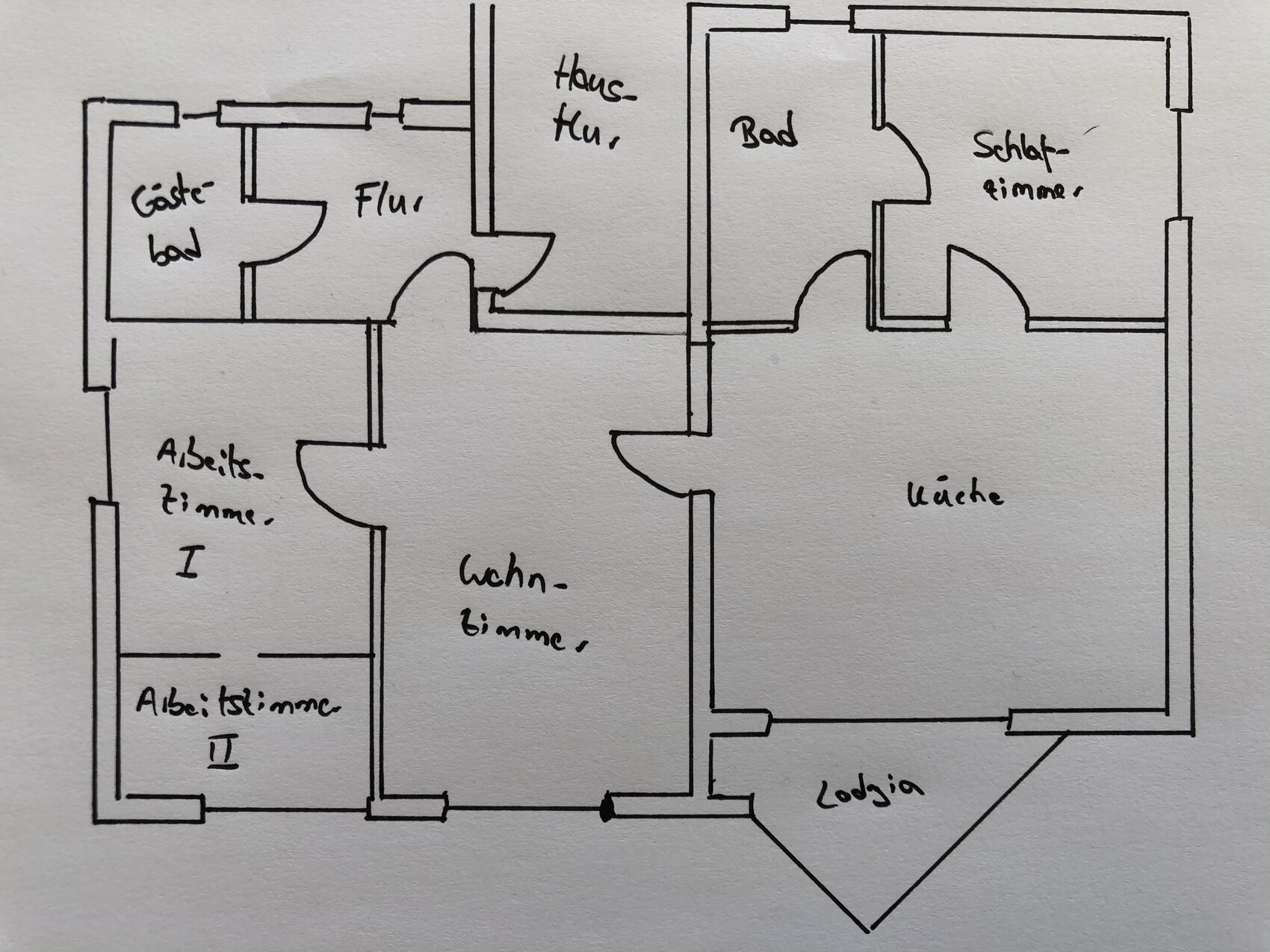
The problem, however, is the location of the bedroom within the apartment. The kitchen and master bathroom are directly adjacent and each connected to the bedroom by a door (see floor plan).
The master bathroom also has a window that is too small (because the bathroom was enlarged later). As a result, some of the moisture from the warmest room (bathroom) tends to move into the coldest room (bedroom).
The conclusion: ventilate more and pay even more attention to humidity levels. We did just that and ensured that the indoor humidity never remained above 55%.
The mold from 2019 was then professionally removed.
Additionally, in October 2020, we installed a bathroom extractor fan to vent excess moisture outside.
We thought that these measures had solved the problem.
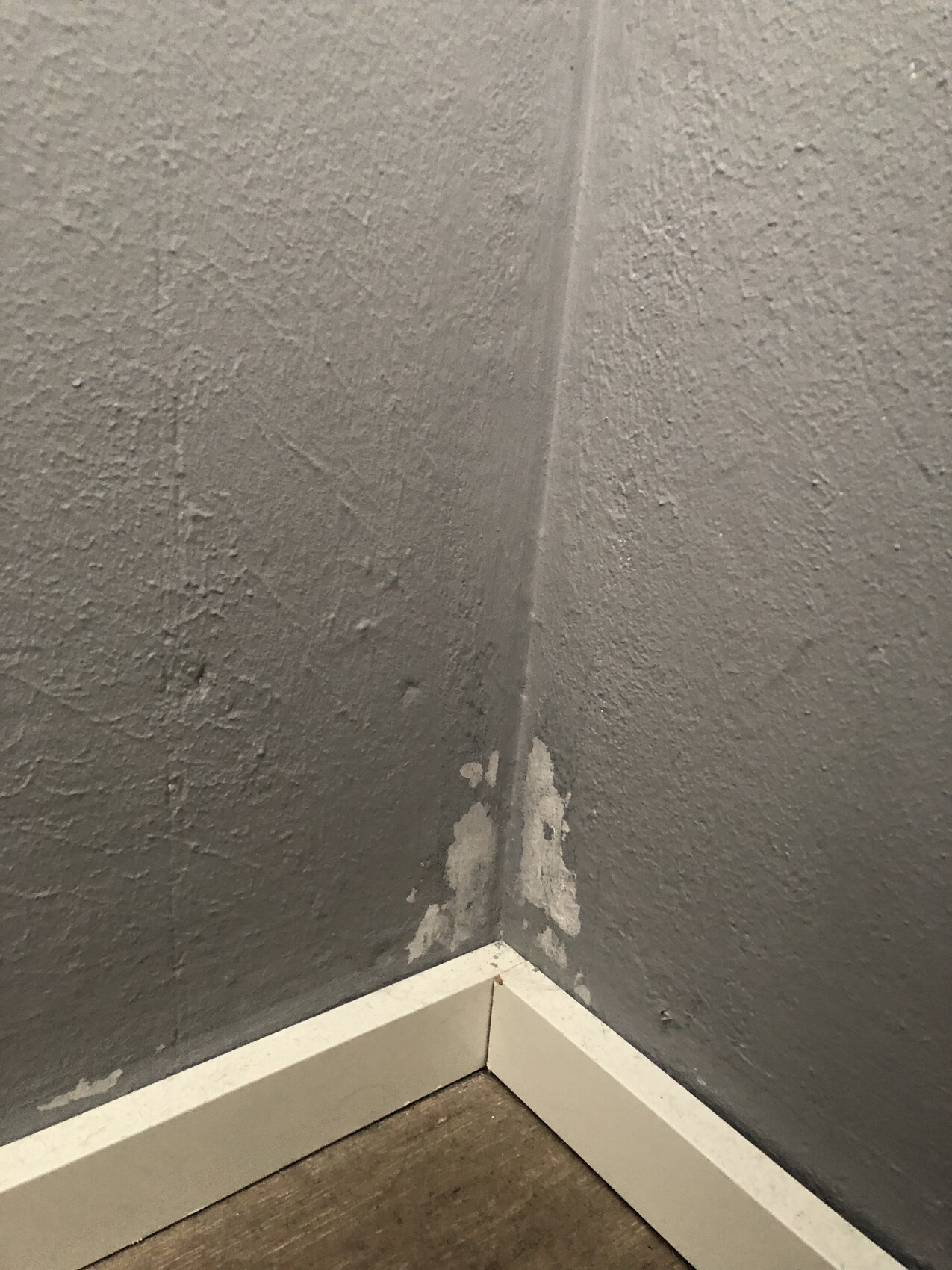
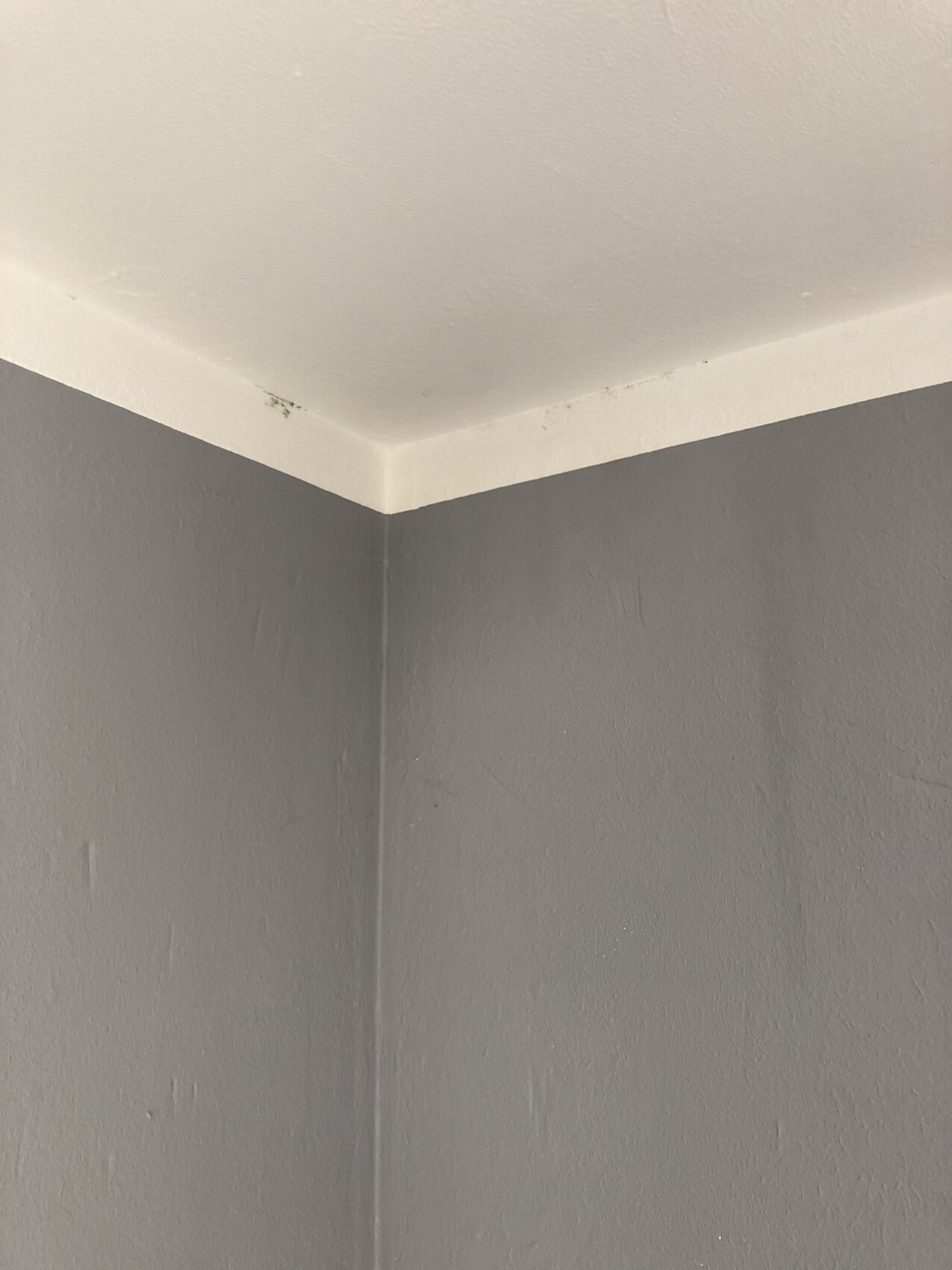
But today, we discovered mold again in this corner (see pictures).
Lower external corner:
Upper external corner:
Now to my question: Do you have any ideas on how to fix the cause and keep this corner permanently mold-free with minimal structural effort?
We suspect it might also be related to the wall treatment: before moving in, we removed the textured wallpaper, applied a primer, and then a mineral-based paint plaster. Unfortunately, we then painted over this with standard paint (Alpine White).
Our idea is therefore:
1. Replaster all walls and the ceiling with an interior thermal insulating plaster
2. Cover with a non-woven painting fleece
3. Paint with lime-based, silicate, or mold-resistant paint
We would like to avoid installing silicate insulation boards if possible due to effort and cost!
Thanks for reading and for your help!
I actually registered here to gather valuable information for our new construction project and to exchange ideas with other homeowners.
Today, however, I have a different question concerning our owner-occupied condominium.
We moved in in April 2018 and are now experiencing our second winter in this apartment.
Already last winter, we dealt with a mold problem at the external wall corners (where the two exterior walls meet) in the bedroom (a typical structural thermal bridge). We had a building expert specialized in mold damage inspect the issue. He could not detect any structural defects or elevated moisture levels.
The problem, however, is the location of the bedroom within the apartment. The kitchen and master bathroom are directly adjacent and each connected to the bedroom by a door (see floor plan).
The master bathroom also has a window that is too small (because the bathroom was enlarged later). As a result, some of the moisture from the warmest room (bathroom) tends to move into the coldest room (bedroom).
The conclusion: ventilate more and pay even more attention to humidity levels. We did just that and ensured that the indoor humidity never remained above 55%.
The mold from 2019 was then professionally removed.
Additionally, in October 2020, we installed a bathroom extractor fan to vent excess moisture outside.
We thought that these measures had solved the problem.
But today, we discovered mold again in this corner (see pictures).
Lower external corner:
Upper external corner:
Now to my question: Do you have any ideas on how to fix the cause and keep this corner permanently mold-free with minimal structural effort?
We suspect it might also be related to the wall treatment: before moving in, we removed the textured wallpaper, applied a primer, and then a mineral-based paint plaster. Unfortunately, we then painted over this with standard paint (Alpine White).
Our idea is therefore:
1. Replaster all walls and the ceiling with an interior thermal insulating plaster
2. Cover with a non-woven painting fleece
3. Paint with lime-based, silicate, or mold-resistant paint
We would like to avoid installing silicate insulation boards if possible due to effort and cost!
Thanks for reading and for your help!

Small update:
The officially appointed expert from the renovation company was here on Friday. He measured the temperatures at the outer corners. These were around 12 degrees Celsius (54°F) wall temperature each (outside 0 degrees Celsius (32°F); inside 21 degrees Celsius (70°F)). So, additional internal insulation is necessary.
According to the offer, insulation will be done with 3 cm (1.2 inches) thick climate boards. The cost for 1.8 sqm (19.4 sq ft) of ceiling area and 21.5 sqm (231.6 sq ft) of wall area with a Q2 finish (ready for wallpaper) is 4,600 EUR including VAT.
Additionally, the adjustment of the wall heating system including connections will be moved 3 cm (1.2 inches) inward: estimated cost around 500 EUR including VAT.
The wallpapering and painting of 55 sqm (592 sq ft) of wall area and 18 sqm (194 sq ft) of ceiling area is expected to be done by ourselves.
The officially appointed expert from the renovation company was here on Friday. He measured the temperatures at the outer corners. These were around 12 degrees Celsius (54°F) wall temperature each (outside 0 degrees Celsius (32°F); inside 21 degrees Celsius (70°F)). So, additional internal insulation is necessary.
According to the offer, insulation will be done with 3 cm (1.2 inches) thick climate boards. The cost for 1.8 sqm (19.4 sq ft) of ceiling area and 21.5 sqm (231.6 sq ft) of wall area with a Q2 finish (ready for wallpaper) is 4,600 EUR including VAT.
Additionally, the adjustment of the wall heating system including connections will be moved 3 cm (1.2 inches) inward: estimated cost around 500 EUR including VAT.
The wallpapering and painting of 55 sqm (592 sq ft) of wall area and 18 sqm (194 sq ft) of ceiling area is expected to be done by ourselves.
N
nordanney18 Jan 2021 23:38DaSch17 schrieb:
Insulation will be done according to the offer using 3cm (1.2 inches) thick climate boards. The cost for 1.8 sqm (19.4 sq ft) of ceiling area and 21.5 sqm (231.6 sq ft) of wall area with a Q2 finish (ready for wallpaper) is 4,600 EUR including VAT.
In addition, there is the relocation of the wall heating including connections, moved 3cm (1.2 inches) inward: estimated cost about 500 EUR including VAT.
Wallpapering and painting approximately 55 sqm (592 sq ft) of wall area and 18 sqm (194 sq ft) of ceiling area are expected to be done as a DIY task. Damn... But then the issue will be resolved.
It’s quite frustrating—especially since, from his perspective, this is a construction defect (probably no polystyrene insulation or similar at the affected spots). However, due to the building year being 1994, the construction company (which is, by the way, a very reputable local company) cannot be held responsible.
The property was viewed and purchased in the summer. There were no stains or anything similar at that time... C’est la vie.
We will handle it this way now and won’t have any trouble later when renting it out.
The property was viewed and purchased in the summer. There were no stains or anything similar at that time... C’est la vie.
We will handle it this way now and won’t have any trouble later when renting it out.
T
Trademark19 Jan 2021 15:28Annoying, no question. But certainly the right approach. Clearly, the hourly rate can give you a shock at first glance, but on the other hand, good professionals also want to earn good money.
In the end, you will see how many hours are listed. If it’s a fixed price, the company has probably included a certain risk margin in case there’s an unpleasant surprise.
In the end, you will see how many hours are listed. If it’s a fixed price, the company has probably included a certain risk margin in case there’s an unpleasant surprise.
