
ᐅ Retrofitting Insulation in a Condominium with Mold-Prone Areas
Created on: 19 Dec 2020 14:39
D
DaSch17
Hello everyone,
I actually registered here to gather valuable information for our new construction project and to exchange ideas with other homeowners.
Today, however, I have a different question concerning our owner-occupied condominium.
We moved in in April 2018 and are now experiencing our second winter in this apartment.
Already last winter, we dealt with a mold problem at the external wall corners (where the two exterior walls meet) in the bedroom (a typical structural thermal bridge). We had a building expert specialized in mold damage inspect the issue. He could not detect any structural defects or elevated moisture levels.
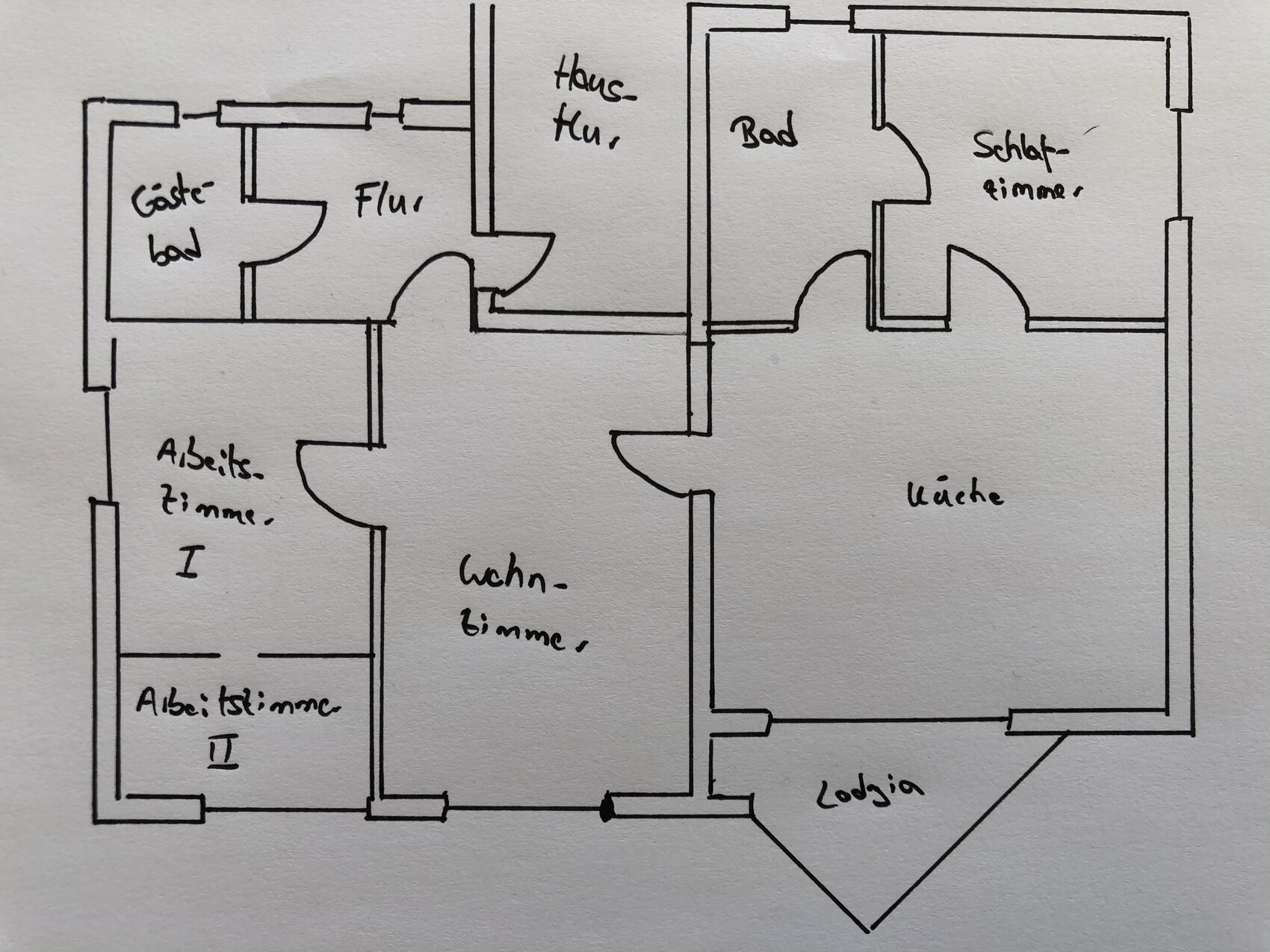
The problem, however, is the location of the bedroom within the apartment. The kitchen and master bathroom are directly adjacent and each connected to the bedroom by a door (see floor plan).
The master bathroom also has a window that is too small (because the bathroom was enlarged later). As a result, some of the moisture from the warmest room (bathroom) tends to move into the coldest room (bedroom).
The conclusion: ventilate more and pay even more attention to humidity levels. We did just that and ensured that the indoor humidity never remained above 55%.
The mold from 2019 was then professionally removed.
Additionally, in October 2020, we installed a bathroom extractor fan to vent excess moisture outside.
We thought that these measures had solved the problem.
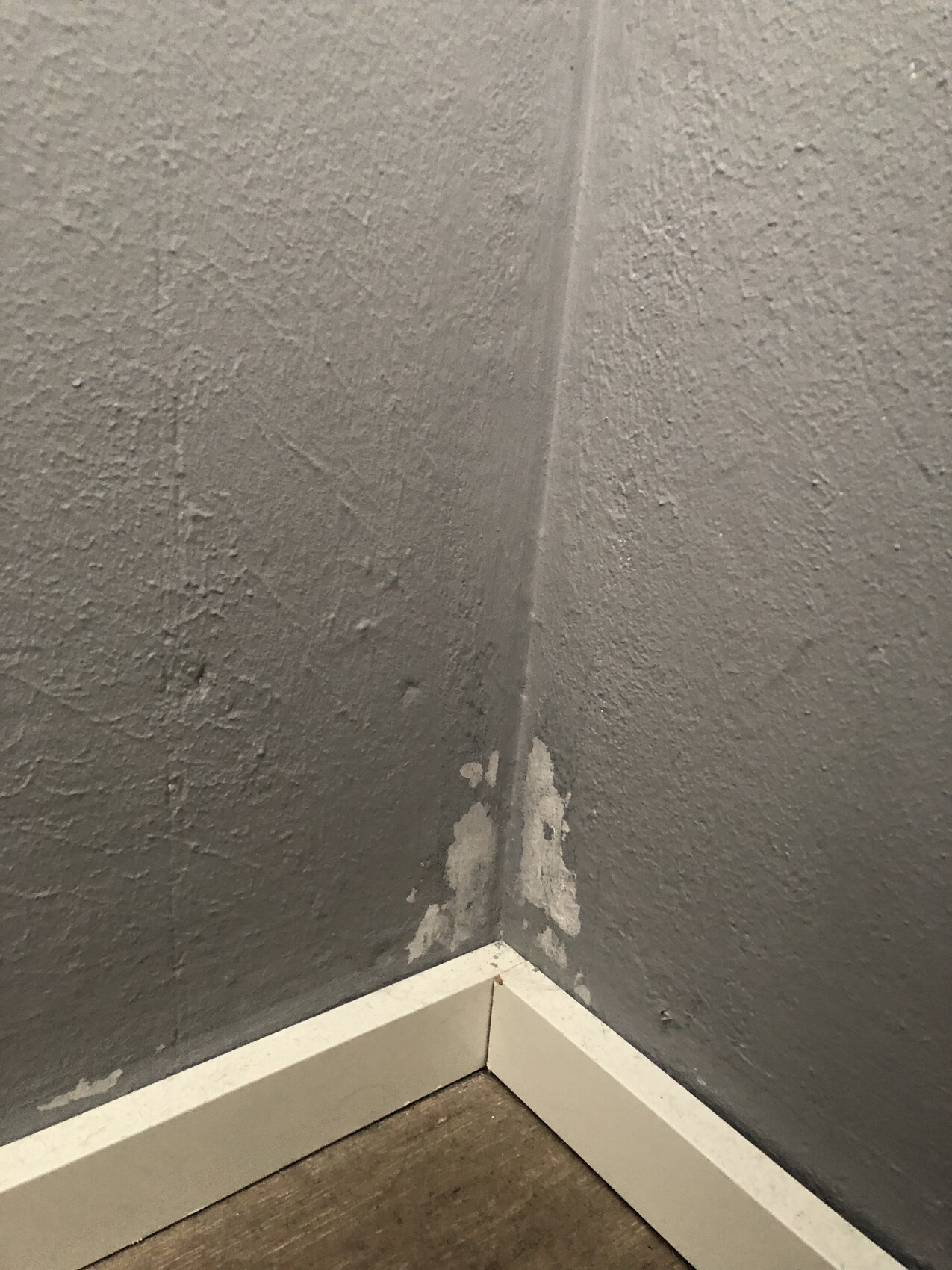
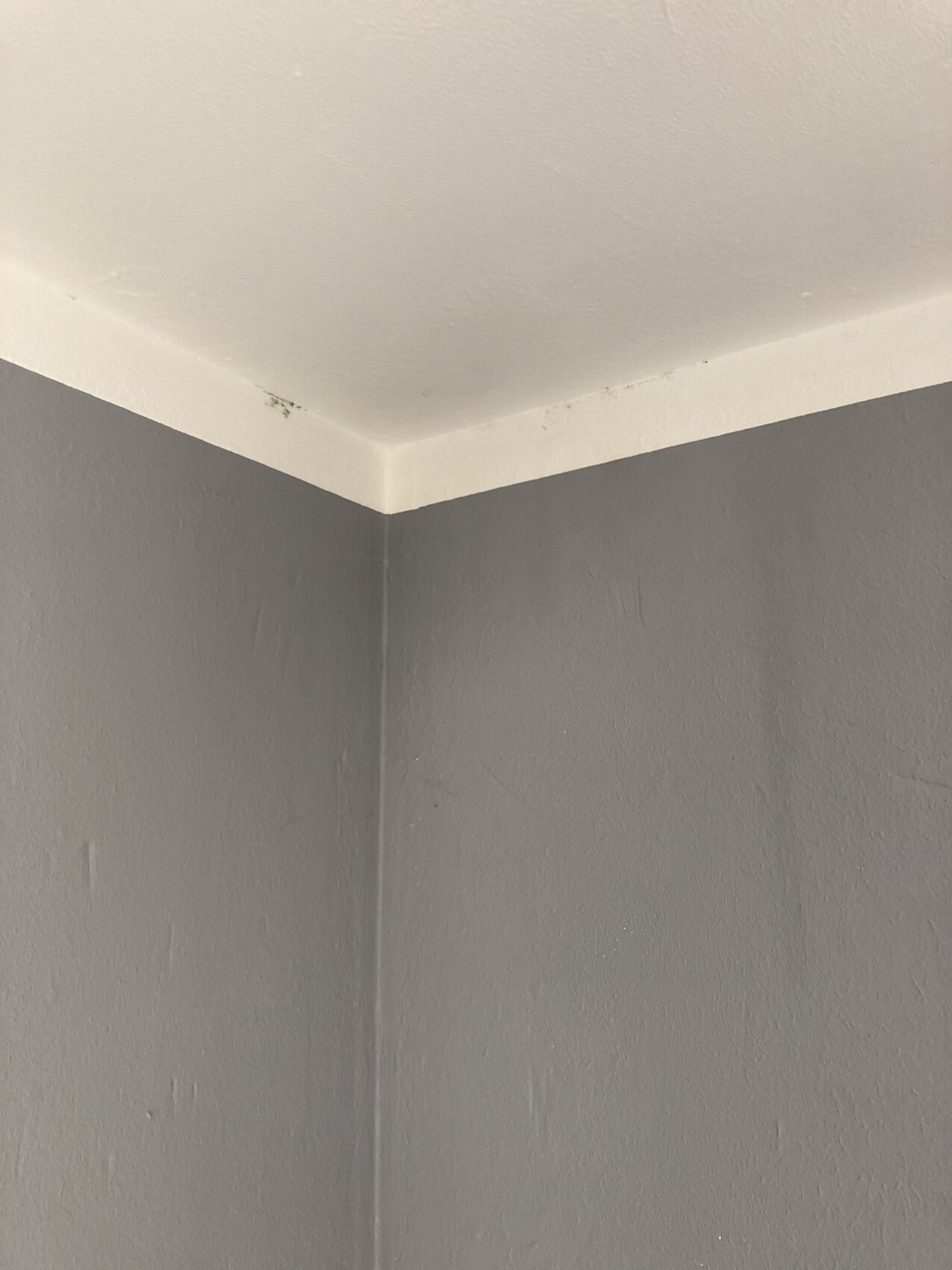
But today, we discovered mold again in this corner (see pictures).
Lower external corner:
Upper external corner:
Now to my question: Do you have any ideas on how to fix the cause and keep this corner permanently mold-free with minimal structural effort?
We suspect it might also be related to the wall treatment: before moving in, we removed the textured wallpaper, applied a primer, and then a mineral-based paint plaster. Unfortunately, we then painted over this with standard paint (Alpine White).
Our idea is therefore:
1. Replaster all walls and the ceiling with an interior thermal insulating plaster
2. Cover with a non-woven painting fleece
3. Paint with lime-based, silicate, or mold-resistant paint
We would like to avoid installing silicate insulation boards if possible due to effort and cost!
Thanks for reading and for your help!
I actually registered here to gather valuable information for our new construction project and to exchange ideas with other homeowners.
Today, however, I have a different question concerning our owner-occupied condominium.
We moved in in April 2018 and are now experiencing our second winter in this apartment.
Already last winter, we dealt with a mold problem at the external wall corners (where the two exterior walls meet) in the bedroom (a typical structural thermal bridge). We had a building expert specialized in mold damage inspect the issue. He could not detect any structural defects or elevated moisture levels.
The problem, however, is the location of the bedroom within the apartment. The kitchen and master bathroom are directly adjacent and each connected to the bedroom by a door (see floor plan).
The master bathroom also has a window that is too small (because the bathroom was enlarged later). As a result, some of the moisture from the warmest room (bathroom) tends to move into the coldest room (bedroom).
The conclusion: ventilate more and pay even more attention to humidity levels. We did just that and ensured that the indoor humidity never remained above 55%.
The mold from 2019 was then professionally removed.
Additionally, in October 2020, we installed a bathroom extractor fan to vent excess moisture outside.
We thought that these measures had solved the problem.
But today, we discovered mold again in this corner (see pictures).
Lower external corner:
Upper external corner:
Now to my question: Do you have any ideas on how to fix the cause and keep this corner permanently mold-free with minimal structural effort?
We suspect it might also be related to the wall treatment: before moving in, we removed the textured wallpaper, applied a primer, and then a mineral-based paint plaster. Unfortunately, we then painted over this with standard paint (Alpine White).
Our idea is therefore:
1. Replaster all walls and the ceiling with an interior thermal insulating plaster
2. Cover with a non-woven painting fleece
3. Paint with lime-based, silicate, or mold-resistant paint
We would like to avoid installing silicate insulation boards if possible due to effort and cost!
Thanks for reading and for your help!

Since yesterday, we have started by heating the bedroom during the day to 23-24 degrees Celsius (73-75°F), then airing it thoroughly before going to bed, and lowering the temperature to 20-21 degrees Celsius (68-70°F).
The mold growth is only superficial and covers just a few square centimeters. I plan to remove it tomorrow with isopropanol.
The solution with insulating plaster currently seems the most sensible. We wanted to have the bedroom replastered anyway.
The mold growth is only superficial and covers just a few square centimeters. I plan to remove it tomorrow with isopropanol.
The solution with insulating plaster currently seems the most sensible. We wanted to have the bedroom replastered anyway.
Joedreck schrieb:
That doesn’t feel like a good idea. Especially at night, there is a high level of moisture. And then you lower the temperature even more. You still have to be able to sleep in that room. The humid air is ventilated out in the morning. So it’s only in the air for a few hours at most.
DaSch17 schrieb:
You still need to be able to sleep in that room. The humid air will be ventilated out in the morning, so it’s only in the air for a few hours at most.Take a cold soda from the fridge and see how long it takes for condensation to form. It will take somewhat longer on the wall, but depending on the insulation standard, it could become problematic before morning. So, caution is still needed. As already mentioned: use an infrared thermometer to measure and compare wall temperatures. Also, set up a hygrometer to monitor humidity.Is there a possibility for decentralized ventilation? Especially since the exterior facade would be affected? There are also units available with heat recovery.
F
fach1werk21 Dec 2020 08:18Under the given conditions, I would not cover such a wall with anything that is not breathable. We don't know anything about the building envelope. I would renew the plaster in the affected areas, as mycelium is inside the wall and not on the surface, and afterwards, I would paint the bare plaster with lime paint. In this case, the tenant would also have to be obligated to follow this, otherwise, they might end up decorating it with latex paint.
Good luck, Gabriele
Good luck, Gabriele
Joedreck schrieb:
As already mentioned: measure and compare infrared thermometer readings and wall temperatures. The building expert already did this last winter. In his opinion, there were no particular irregularities except for the high dew point (which, however, is not uncommon for exterior wall corners).
Several unfavorable factors come together in our case:
1. The bedroom tends to be the coldest room, with direct access to the two most humid and warmest rooms in the apartment (bathroom and kitchen). Result: humidity automatically moves into the bedroom due to temperature differences. Measure: exhaust hood in the kitchen and bathroom fan in the bathroom.
2. Additional moisture is produced overnight in the bedroom.
3. Two of the four bedroom walls are exterior walls, and the corner where these two exterior walls meet is the coldest point, so condensation of moisture occurs there quickly.
Therefore, the idea is to lower the dew point by adding additional insulation from the inside, so moisture no longer condenses on the exterior walls. Of course, this would be carried out by a professional.
Joedreck schrieb:
And place a hygrometer for monitoring. They have already been in the bedroom, bathroom, and kitchen for one year. That’s why I know that the humidity in the bedroom never permanently exceeds 55%.
Joedreck schrieb:
Is decentralized ventilation possible? Especially since the exterior facade would be affected? There are devices with heat recovery for that as well. That’s clear. Either individual units, which are typically not powerful enough (e.g., Bavarian air ventilators), or a decentralized ventilation system, which would have to be installed in all rooms throughout the apartment. Cost approximately 7,000 to 9,000 EUR.
Therefore, like the calcium silicate board insulation, it would rather be a last resort.
fach1werk schrieb:
I wouldn’t cover such a wall under these conditions with anything that isn’t vapor permeable. We don’t know anything about the building envelope. I would renew the plaster in affected areas, as mycelium is inside the wall and not on top of it, and then paint the bare plaster with lime paint. The tenant would have to be obliged to do this, otherwise they might end up decorating it with latex paint. The specialist company would almost certainly remove the old plaster in the affected areas beforehand and then plaster with new insulating plaster. In my opinion, this eliminates the risk of mycelium remaining inside the wall.
Painting with lime or silicate paint would naturally be made mandatory in the lease agreement.
Well, honestly, I’m a bit at a loss as well. I don’t really want to hire another expert, since we had rather poor experiences with the last one (15-minute appointment and a bill for 400 EUR). I’ve now contacted a renovation specialist company. They will visit in the next few days and provide a cost estimate afterward. Let’s wait and see what they propose.
Similar topics