
ᐅ Underfloor heating with an air-to-water heat pump. House gets too warm when the sun is shining.
Created on: 4 Dec 2019 14:18
C
chewbacca123
Hello everyone,
I have a general question.
We moved into our new build four months ago. The living area on the ground floor has three large floor-to-ceiling windows facing south. We have underfloor heating and an air-to-water heat pump.
It provides a really comfortable temperature inside the house, but we have a problem – whenever the sun is shining in winter, even if it’s -2°C (28°F) outside, the temperature suddenly rises to 24°C (75°F) in the living room. It gets uncomfortably warm in here, and the underfloor heating can’t be turned down quickly.
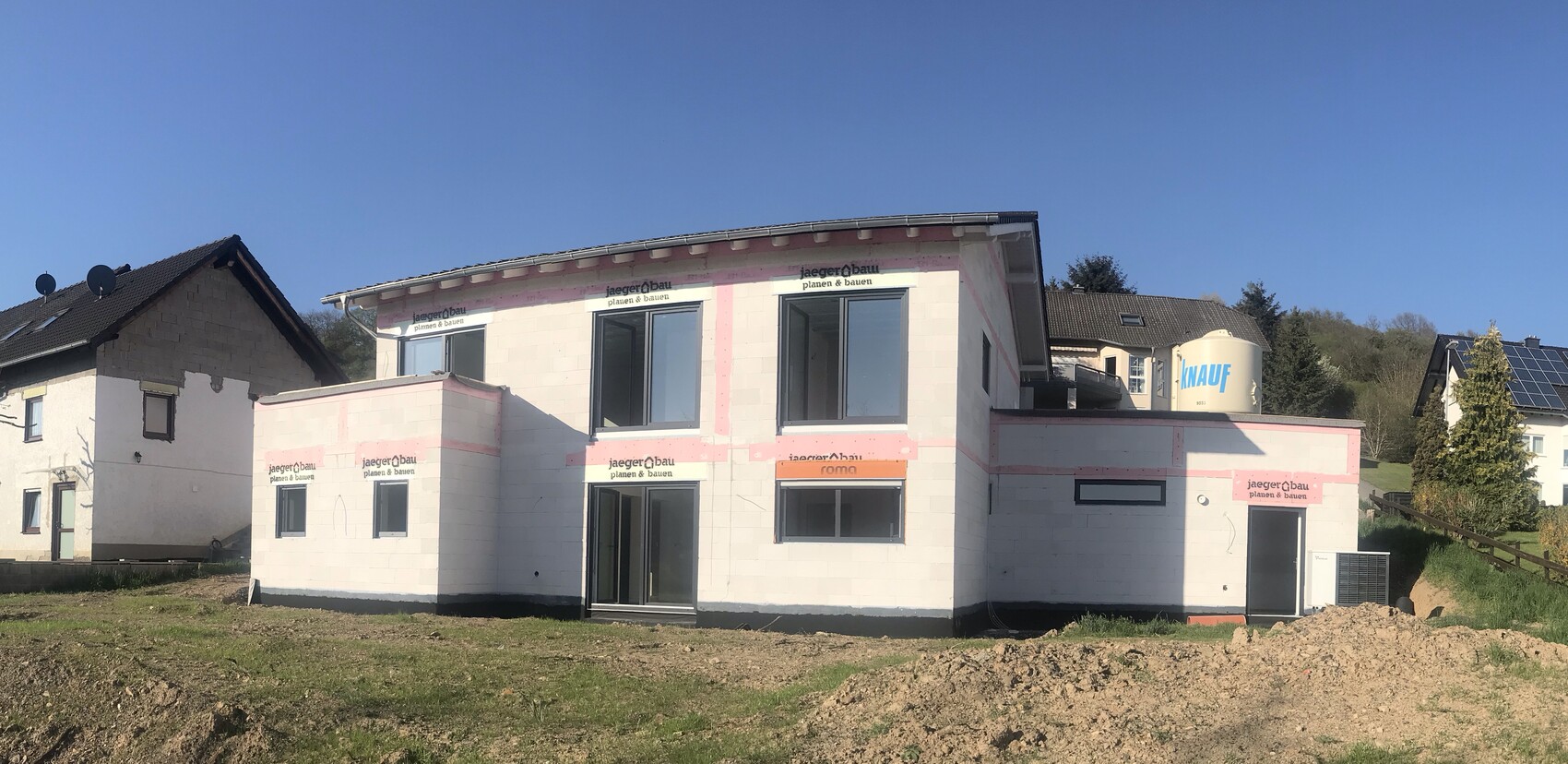
Should we assume that the large floor-to-ceiling windows are responsible for the heat gain? A photo of the south-facing side of the house is attached.
What would you do – always lower all the blinds as soon as sunlight is forecast? That seems quite annoying...
We have motorized blinds controlled by Somfy. Would you consider buying a sensor that automatically lowers the blinds at a certain temperature?
Thanks in advance for your replies.
I have a general question.
We moved into our new build four months ago. The living area on the ground floor has three large floor-to-ceiling windows facing south. We have underfloor heating and an air-to-water heat pump.
It provides a really comfortable temperature inside the house, but we have a problem – whenever the sun is shining in winter, even if it’s -2°C (28°F) outside, the temperature suddenly rises to 24°C (75°F) in the living room. It gets uncomfortably warm in here, and the underfloor heating can’t be turned down quickly.
Should we assume that the large floor-to-ceiling windows are responsible for the heat gain? A photo of the south-facing side of the house is attached.
What would you do – always lower all the blinds as soon as sunlight is forecast? That seems quite annoying...
We have motorized blinds controlled by Somfy. Would you consider buying a sensor that automatically lowers the blinds at a certain temperature?
Thanks in advance for your replies.

Daniel-Sp schrieb:
The bathroom door must remain open, that’s a requirement; the bedroom door should be closed. The bathroom doesn’t reach 21°C (70°F), but the hallway is significantly warmer. To reach 22°-23°C (72°-73°F) in a bathroom with three exterior walls, you’ll need the hallway temperature somewhere between 22.5° and 24°C (73°-75°F).
But I agree with you. Start with rough tuning first, then fine tuning later. I experimented for over two years because the adjustments you’re making now don’t have to be perfect during the coldest winter period.
I don’t know how it works with other heating systems, but on mine I can shift the heating curve up or down overall and adjust the steepness of the curve.
For example, the steepness was completely off for me. I started optimizing in autumn and found a good setting for all rooms. In winter, it suddenly became too warm, so I lowered the heating curve a bit. Then winter was right, but spring felt too cool again. So I raised the curve again and decreased the steepness somewhat. You can really test this properly only in the following winter.
As the indoor humidity decreased, I think the temperature behavior changed somewhat as well, especially since our ventilation losses also decreased.
 chewbacca12318 Dec 2019 13:03
Daniel-Sp schrieb:
Then I’ll wait for the table...
Regarding the bathroom again. I see this as problematic: 3 exterior walls, roof, and floor, hardly any adjacent heated space, and probably no underfloor heating beneath the bathtub and shower either. So there is very little heating surface for a room with the highest heat demand. A wall heating system should have been installed here to cover the heating needs. At least you can supplement the heating demand with the towel radiator. Do you leave the door to the hallway open? I would do that when the room is not in use, so warm air from the hallway can flow into the bathroom. I’m going to wait and see what the temperatures are like tomorrow. I was able to slightly adjust the bathroom thermostat again. I also made some changes to the heating curve. I’ll send another table tomorrow morning.
We usually keep the bathroom door closed. But you’re right—if the hallway is currently at 23°C (73°F), it’s best to leave the door open.
chewbacca12318 Dec 2019 14:04Daniel-Sp schrieb:
The thermometer just arrived. Where exactly should I use it now? What do I need to measure?chewbacca12318 Dec 2019 14:07Musketier schrieb:
To reach 22°-23°C (72°-73°F) in a bathroom with three exterior walls, you’ll probably need to set the hallway temperature somewhere between 22.5° and 24°C (73°-75°F).
But I agree with you. Start with rough tuning first, then fine-tune later. I experimented for over two years because the settings you adjust now might not be suitable at all during the coldest winter months.
I don't know how other heating systems work, but with mine, I can shift the heating curve up or down and adjust its slope. For example, the slope of the curve didn’t work well at all for me. I started optimizing in autumn and found a setting that worked well for all rooms. Then in winter, it suddenly felt too warm. So I shifted the heating curve down a bit. That made winter comfortable, but spring became too cool. So I raised the curve again and reduced the slope slightly. You can only really test this properly in the following winter.
In my opinion, as the humidity in the house decreased, the temperature also changed somewhat, especially since our ventilation losses were reduced as well.I also think that it will take about 12 to 24 months for everything to really settle. But I’m glad to have a better understanding of the topic now, thanks to you all. I will keep experimenting and see how the curve affects each room.The curve was originally set to 40 20 0. That made the bathroom quite cozy. But since I set all the individual room thermostats to the highest level and adjusted the heating curve to 29 22 0, I immediately noticed how the volume flows here. Hallway too much, bathroom too little, living room could be more. Now it’s time for fine-tuning.
chewbacca12318 Dec 2019 15:00Here is the current approximate volume setting. The main bathroom float was completely out again?! Really strange, isn’t it? Well, there were definitely 2 liters earlier. I have recorded that as well.
For the living room on the ground floor, one of the tubes is black, so I assume 2 liters, since the living room and kitchen also have 2 liters each and these three form one large space. I set the flow rate at about 1338 l/h (liters per hour).
1600 would be better, right?
Maybe I can still get more in the living room and bathroom; the heating technician is coming tomorrow.
For the living room on the ground floor, one of the tubes is black, so I assume 2 liters, since the living room and kitchen also have 2 liters each and these three form one large space. I set the flow rate at about 1338 l/h (liters per hour).
1600 would be better, right?
Maybe I can still get more in the living room and bathroom; the heating technician is coming tomorrow.
Do you use the guest room regularly because you have two there?
For me, that’s the room where I still have an ERV running. The door is mostly kept closed, and the ERV is set to a low level. It’s only increased when guests come over or when our child wants to set up their racetrack there for a longer time.
For me, that’s the room where I still have an ERV running. The door is mostly kept closed, and the ERV is set to a low level. It’s only increased when guests come over or when our child wants to set up their racetrack there for a longer time.
Similar topics