
ᐅ Underfloor heating with an air-to-water heat pump. House gets too warm when the sun is shining.
Created on: 4 Dec 2019 14:18
C
chewbacca123
Hello everyone,
I have a general question.
We moved into our new build four months ago. The living area on the ground floor has three large floor-to-ceiling windows facing south. We have underfloor heating and an air-to-water heat pump.
It provides a really comfortable temperature inside the house, but we have a problem – whenever the sun is shining in winter, even if it’s -2°C (28°F) outside, the temperature suddenly rises to 24°C (75°F) in the living room. It gets uncomfortably warm in here, and the underfloor heating can’t be turned down quickly.
Should we assume that the large floor-to-ceiling windows are responsible for the heat gain? A photo of the south-facing side of the house is attached.
What would you do – always lower all the blinds as soon as sunlight is forecast? That seems quite annoying...
We have motorized blinds controlled by Somfy. Would you consider buying a sensor that automatically lowers the blinds at a certain temperature?
Thanks in advance for your replies.
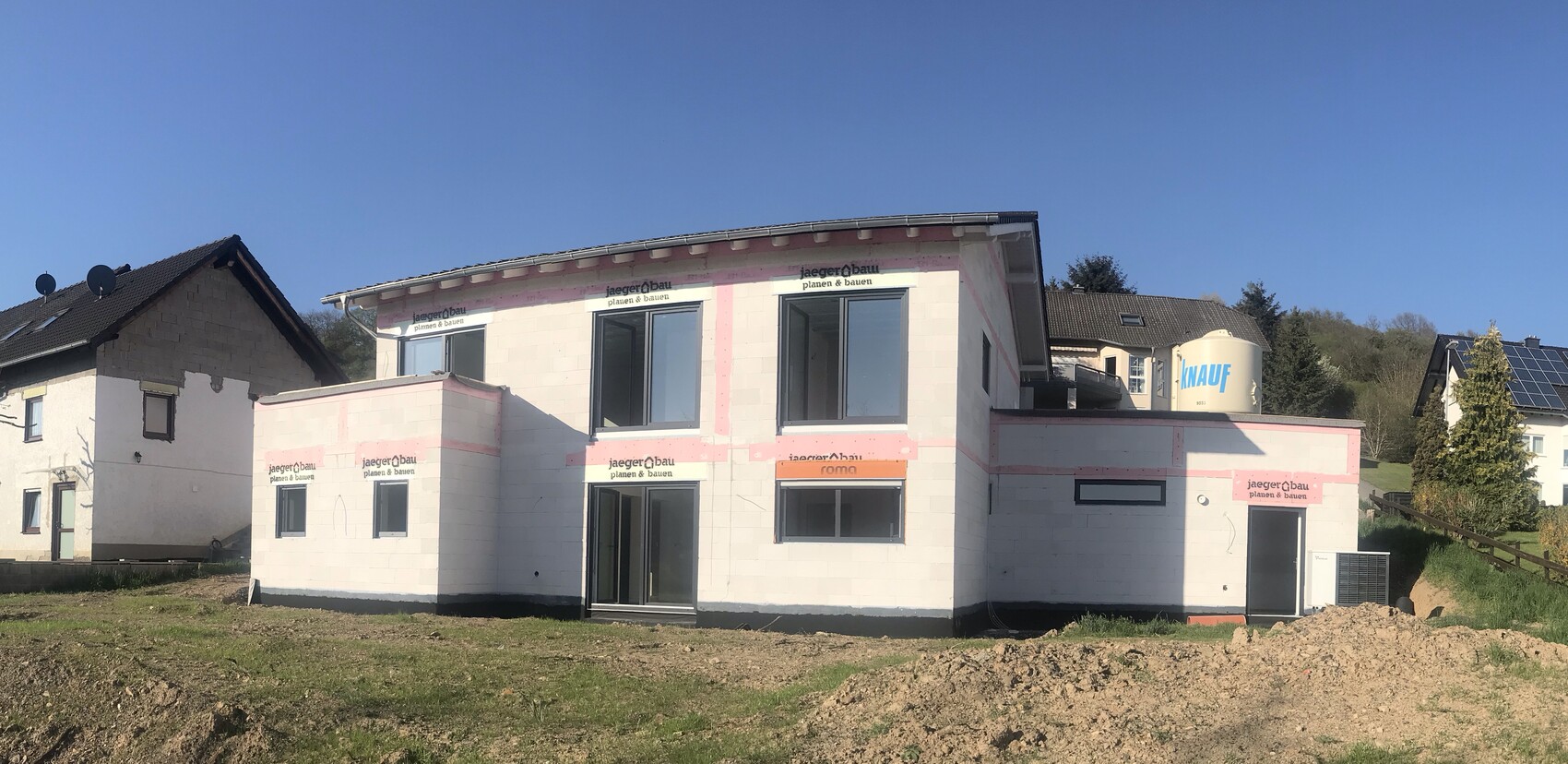
I have a general question.
We moved into our new build four months ago. The living area on the ground floor has three large floor-to-ceiling windows facing south. We have underfloor heating and an air-to-water heat pump.
It provides a really comfortable temperature inside the house, but we have a problem – whenever the sun is shining in winter, even if it’s -2°C (28°F) outside, the temperature suddenly rises to 24°C (75°F) in the living room. It gets uncomfortably warm in here, and the underfloor heating can’t be turned down quickly.
Should we assume that the large floor-to-ceiling windows are responsible for the heat gain? A photo of the south-facing side of the house is attached.
What would you do – always lower all the blinds as soon as sunlight is forecast? That seems quite annoying...
We have motorized blinds controlled by Somfy. Would you consider buying a sensor that automatically lowers the blinds at a certain temperature?
Thanks in advance for your replies.
 chewbacca1236 Dec 2019 15:09
Bookstar schrieb:
Is this an older building, or why is the VLT so high? Everything is set wrong here.It’s a new build; we only moved in four months ago. I don’t think they adjusted anything at all, oh man… Wait, I’ll go back to the system and run some analyses, if I’m able to.chewbacca1236 Dec 2019 15:15guckuck2 schrieb:
The commissioning is missing. It looks like the factory settings.
Do you have a picture of the current temperatures?Hey, please see the attachedchewbacca1236 Dec 2019 15:19Bookstar schrieb:
Is this an old building, or why is the VLT so high? Everything seems incorrectly set. Take a look at the evaluation pictures; this is a new build. What can I optimize and how? Or rather: how many kilowatt-hours of electricity should the system consume per month? Just roughly. We have 170 m² (1830 sq ft) of living space that is heated, except for the hallways where the heating is off. Let’s say about 155 m² (1668 sq ft) of heated area.
ludwig88sta schrieb:
Isn't there a "not" missing? No, the 100 kg (220 lb) installer handled it quite comfortably. It can also support the window cleaner.
chewbacca123 schrieb:
Take a look at the analysis images, it’s a new buildThe heating curve looks quite normal, it’s very strange that it shows you any flow temperatures of 65°C (149°F)…An endpoint temperature of 40°C (104°F) is not normal; it should be a maximum of 35°C (95°F), assuming this refers to the supply temperature. If it is the return temperature, 40°C (104°F) would be significantly too high; 29-30°C (84-86°F) should be sufficient in that case.
The mention of 65-70°C (149-158°F) might only indicate a system maximum limit. This doesn’t necessarily mean the temperature actually reaches that high. To clarify, you would need to know the control system better.
Another notable point is the 49°C (120°F) for domestic hot water, which is quite high and therefore energy-intensive. Around 45°C (113°F) should be enough, or even less depending on the size of the storage tank and usage patterns.
The mention of 65-70°C (149-158°F) might only indicate a system maximum limit. This doesn’t necessarily mean the temperature actually reaches that high. To clarify, you would need to know the control system better.
Another notable point is the 49°C (120°F) for domestic hot water, which is quite high and therefore energy-intensive. Around 45°C (113°F) should be enough, or even less depending on the size of the storage tank and usage patterns.
Similar topics