
ᐅ Underfloor heating with an air-to-water heat pump. House gets too warm when the sun is shining.
Created on: 4 Dec 2019 14:18
C
chewbacca123
Hello everyone,
I have a general question.
We moved into our new build four months ago. The living area on the ground floor has three large floor-to-ceiling windows facing south. We have underfloor heating and an air-to-water heat pump.
It provides a really comfortable temperature inside the house, but we have a problem – whenever the sun is shining in winter, even if it’s -2°C (28°F) outside, the temperature suddenly rises to 24°C (75°F) in the living room. It gets uncomfortably warm in here, and the underfloor heating can’t be turned down quickly.
Should we assume that the large floor-to-ceiling windows are responsible for the heat gain? A photo of the south-facing side of the house is attached.
What would you do – always lower all the blinds as soon as sunlight is forecast? That seems quite annoying...
We have motorized blinds controlled by Somfy. Would you consider buying a sensor that automatically lowers the blinds at a certain temperature?
Thanks in advance for your replies.
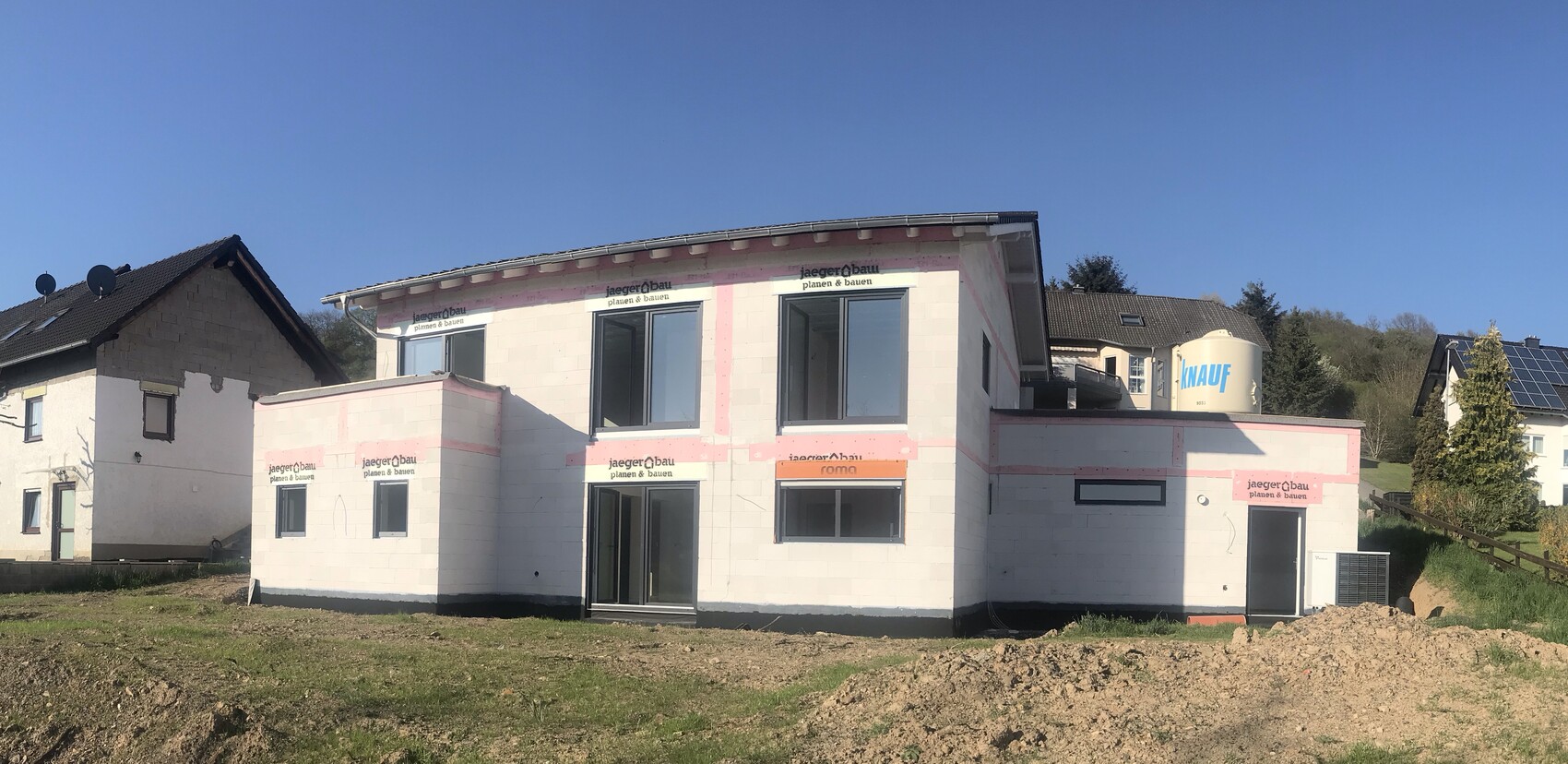
I have a general question.
We moved into our new build four months ago. The living area on the ground floor has three large floor-to-ceiling windows facing south. We have underfloor heating and an air-to-water heat pump.
It provides a really comfortable temperature inside the house, but we have a problem – whenever the sun is shining in winter, even if it’s -2°C (28°F) outside, the temperature suddenly rises to 24°C (75°F) in the living room. It gets uncomfortably warm in here, and the underfloor heating can’t be turned down quickly.
Should we assume that the large floor-to-ceiling windows are responsible for the heat gain? A photo of the south-facing side of the house is attached.
What would you do – always lower all the blinds as soon as sunlight is forecast? That seems quite annoying...
We have motorized blinds controlled by Somfy. Would you consider buying a sensor that automatically lowers the blinds at a certain temperature?
Thanks in advance for your replies.

 chewbacca1234 Dec 2019 15:03
boxandroof schrieb:
Make sure the underfloor heating runs at the lowest possible temperature by default. This is more effective than using a thermostat, because physically the underfloor heating then cannot overheat the room when the sun is shining.Thank you for your reply. We have a heating system from the brand Novelan. But if we lower the temperature by, for example, 0.5 degrees, will the water not heat up more slowly as well? Please see the attached picture; this is the current setting:
chewbacca1234 Dec 2019 15:04haydee schrieb:
Windows open. It can be quite nice sometimes – even in winter.We have a mechanical ventilation system, so the windows are usually kept closed.B
boxandroof4 Dec 2019 15:07The flow temperature is centrally controlled by the heat pump via the heating curve set there and is not defined by the thermostat. The thermostat may only reduce the temperature, and the underfloor heating will initially remain warm. Thermostats are generally not useful in new buildings – but that is a different topic.
Underfloor heating basically has little effect on overheating caused by sunlight.
Underfloor heating basically has little effect on overheating caused by sunlight.
Roller blinds and/or Venetian blinds at the bottom are not a good solution for us in rooms where you spend time because we like to have an unobstructed view outside, and both options interfere with that. Venetian blinds are probably slightly better than roller blinds in this respect, but it still doesn’t look great from the inside when they are lowered. When you are away, of course, the best solution is to close everything up tightly to prevent heat buildup.
We have now built a patio roof over most of the south-facing side with an extendable awning underneath. When the sun is strong, we simply extend the awning... you can no longer look directly up, but you have a completely clear view straight ahead, and the sun doesn’t enter the windows, while the interior still remains pleasantly bright. Since the awning extends 4.5m (15 feet) deep when fully extended, we can almost always shade the windows from the outside regardless of the sun’s position, if necessary.
Regarding the mechanical ventilation system: we have one as well, but if more energy enters from outside than is needed inside... what’s wrong with opening the windows? You can’t get rid of heat faster, and it doesn’t bother the ventilation system at all.
We have now built a patio roof over most of the south-facing side with an extendable awning underneath. When the sun is strong, we simply extend the awning... you can no longer look directly up, but you have a completely clear view straight ahead, and the sun doesn’t enter the windows, while the interior still remains pleasantly bright. Since the awning extends 4.5m (15 feet) deep when fully extended, we can almost always shade the windows from the outside regardless of the sun’s position, if necessary.
Regarding the mechanical ventilation system: we have one as well, but if more energy enters from outside than is needed inside... what’s wrong with opening the windows? You can’t get rid of heat faster, and it doesn’t bother the ventilation system at all.
chewbacca1234 Dec 2019 15:14boxandroof schrieb:
The flow temperature is centrally controlled by the heat pump according to the heating curve set there and is not defined at the thermostat. With the thermostat, you might only restrict it, but the underfloor heating will initially stay warm. Thermostats are generally not useful in new buildings – but that is a different issue.
Underfloor heating basically has little influence on overheating caused by the sun.How can I check the heating curve?
Our plumber is not responding at the moment; they are all overloaded. I have already asked a few times how the heating curve is set.
We have a NOVELAN heating system.
Similar topics