
ᐅ Underfloor heating with an air-to-water heat pump. House gets too warm when the sun is shining.
Created on: 4 Dec 2019 14:18
C
chewbacca123
Hello everyone,
I have a general question.
We moved into our new build four months ago. The living area on the ground floor has three large floor-to-ceiling windows facing south. We have underfloor heating and an air-to-water heat pump.
It provides a really comfortable temperature inside the house, but we have a problem – whenever the sun is shining in winter, even if it’s -2°C (28°F) outside, the temperature suddenly rises to 24°C (75°F) in the living room. It gets uncomfortably warm in here, and the underfloor heating can’t be turned down quickly.
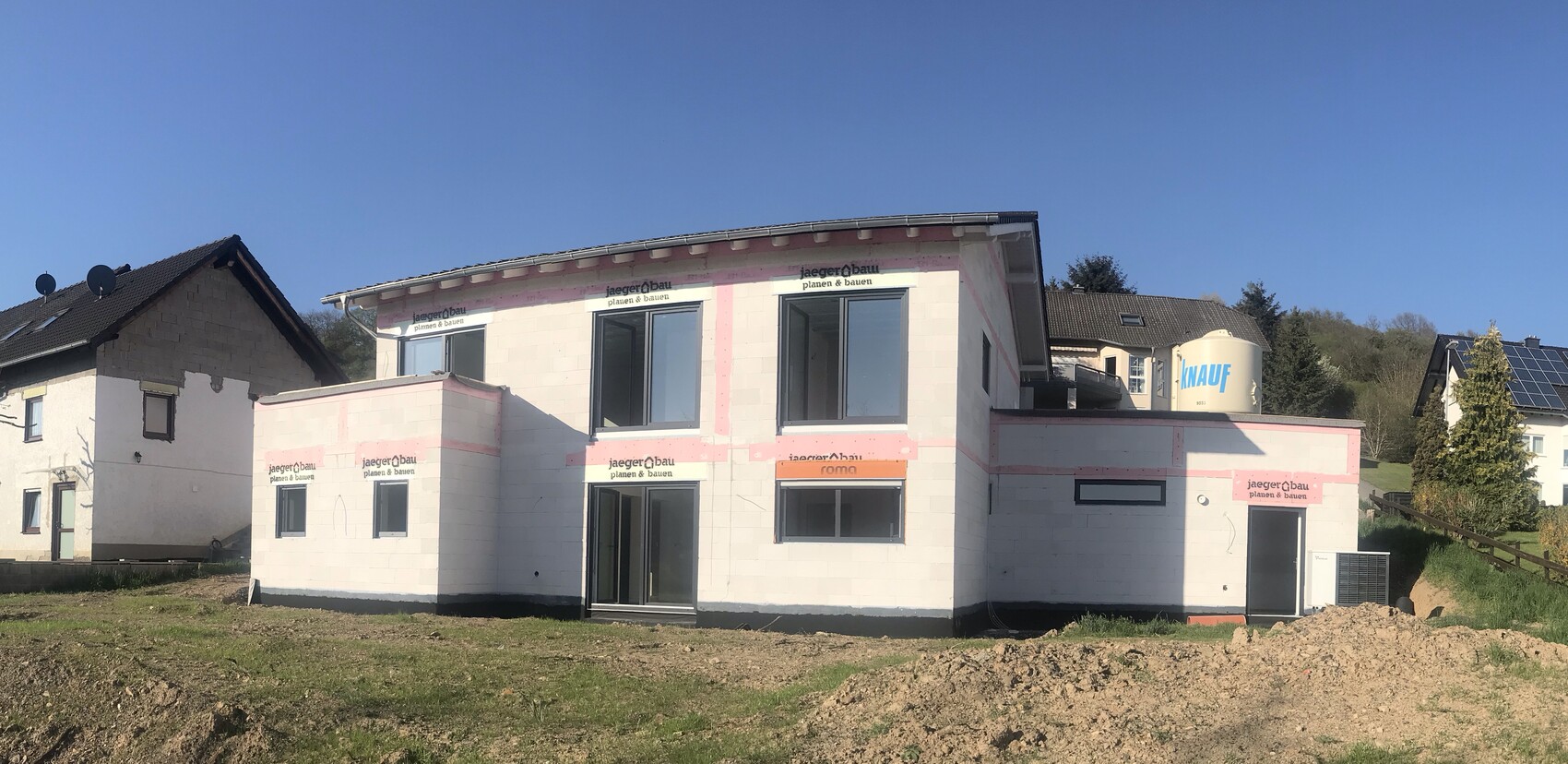
Should we assume that the large floor-to-ceiling windows are responsible for the heat gain? A photo of the south-facing side of the house is attached.
What would you do – always lower all the blinds as soon as sunlight is forecast? That seems quite annoying...
We have motorized blinds controlled by Somfy. Would you consider buying a sensor that automatically lowers the blinds at a certain temperature?
Thanks in advance for your replies.
I have a general question.
We moved into our new build four months ago. The living area on the ground floor has three large floor-to-ceiling windows facing south. We have underfloor heating and an air-to-water heat pump.
It provides a really comfortable temperature inside the house, but we have a problem – whenever the sun is shining in winter, even if it’s -2°C (28°F) outside, the temperature suddenly rises to 24°C (75°F) in the living room. It gets uncomfortably warm in here, and the underfloor heating can’t be turned down quickly.
Should we assume that the large floor-to-ceiling windows are responsible for the heat gain? A photo of the south-facing side of the house is attached.
What would you do – always lower all the blinds as soon as sunlight is forecast? That seems quite annoying...
We have motorized blinds controlled by Somfy. Would you consider buying a sensor that automatically lowers the blinds at a certain temperature?
Thanks in advance for your replies.
chewbacca123 schrieb:
But I thought it absolutely shouldn’t be fully closed off?Yes, you're right about that, but I have my bedroom completely closed off... I don’t want any temperature changes in there...
D
Daniel-Sp18 Dec 2019 10:15bortel schrieb:
Yes, you are right about that, but I have completely closed off my bedroom as well... I don’t want any temperature there... I even maintain a small minimum flow in the utility room where the heating system, washing machine, and freezer are located, although it wouldn’t be necessary.
The hydraulic setup by Chewbacca123 is somewhat borderline; every heating circuit, even if just slightly open, is needed.
D
Daniel-Sp18 Dec 2019 10:54You prevent the unheated room from drawing heat away from the others. Therefore, a minimum flow is necessary to supply the energy that the room loses to the outside directly into the room through the underfloor heating. However, for example, in the bedroom, no more heat should be supplied to avoid overheating. The goal is to minimize heat flow between rooms.
To stay with the example of Chewbacca’s house: if the hallway and bedroom are not heated, heat will flow from the bathroom through the hallway to the living room, making the bathroom even colder. This results in increasing the heating curve and therefore higher heating costs without effectively adding more warmth to the rooms. It’s possible to do this, but why waste money?
That is why, through the hydraulic balancing of the underfloor heating with the lowest possible heating curve, you ultimately save money. In the case of an undersized bathroom heating surface, I would even consider using the hallway to transfer heat to the bathroom. So, do not set the hallway temperature too low and keep the bathroom door open.
To stay with the example of Chewbacca’s house: if the hallway and bedroom are not heated, heat will flow from the bathroom through the hallway to the living room, making the bathroom even colder. This results in increasing the heating curve and therefore higher heating costs without effectively adding more warmth to the rooms. It’s possible to do this, but why waste money?
That is why, through the hydraulic balancing of the underfloor heating with the lowest possible heating curve, you ultimately save money. In the case of an undersized bathroom heating surface, I would even consider using the hallway to transfer heat to the bathroom. So, do not set the hallway temperature too low and keep the bathroom door open.

Daniel-Sp schrieb:
In the case of an undersized bathroom heating surface, I might even consider using the hallway to bring warmth into the bathroom. So, keep the hallway at a moderate temperature and leave the bathroom door open. However, this only works if the bathroom temperature is lower than the hallway temperature when the doors are closed. This also means the hallway temperature would actually need to be significantly higher than your desired temperature and higher than the desired temperature of the other rooms. By doing this, you end up heating all the other rooms through the hallway, likely resulting in higher temperatures in every room than wanted. This in turn causes greater heat loss through the exterior walls.
Then the question arises whether this approach is more sensible than simply shifting the heating curve up by 1–2°C (2–4°F) to reach the desired bathroom temperature without overheating all the rooms more than necessary.
On the other hand, if you have to significantly increase the supply temperature, your approach of supplemental heating via the hallway might be better.
D
Daniel-Sp18 Dec 2019 11:32The bathroom door must remain open; that is the requirement, while the bedroom door should be closed. The bathroom does not reach 21°C (70°F), but the hallway is noticeably warmer. However, I would first check where it ends up after balancing; there might still be some adjustment possible. There are still flow reserves in the bedroom, utility room, and hallway. Only once the balancing is complete can a decision be made about what to do with the bathroom.
Similar topics