
ᐅ Underfloor heating with an air-to-water heat pump. House gets too warm when the sun is shining.
Created on: 4 Dec 2019 14:18
C
chewbacca123 chewbacca1234 Dec 2019 14:18
Hello everyone,
I have a general question.
We moved into our new build four months ago. The living area on the ground floor has three large floor-to-ceiling windows facing south. We have underfloor heating and an air-to-water heat pump.
It provides a really comfortable temperature inside the house, but we have a problem – whenever the sun is shining in winter, even if it’s -2°C (28°F) outside, the temperature suddenly rises to 24°C (75°F) in the living room. It gets uncomfortably warm in here, and the underfloor heating can’t be turned down quickly.
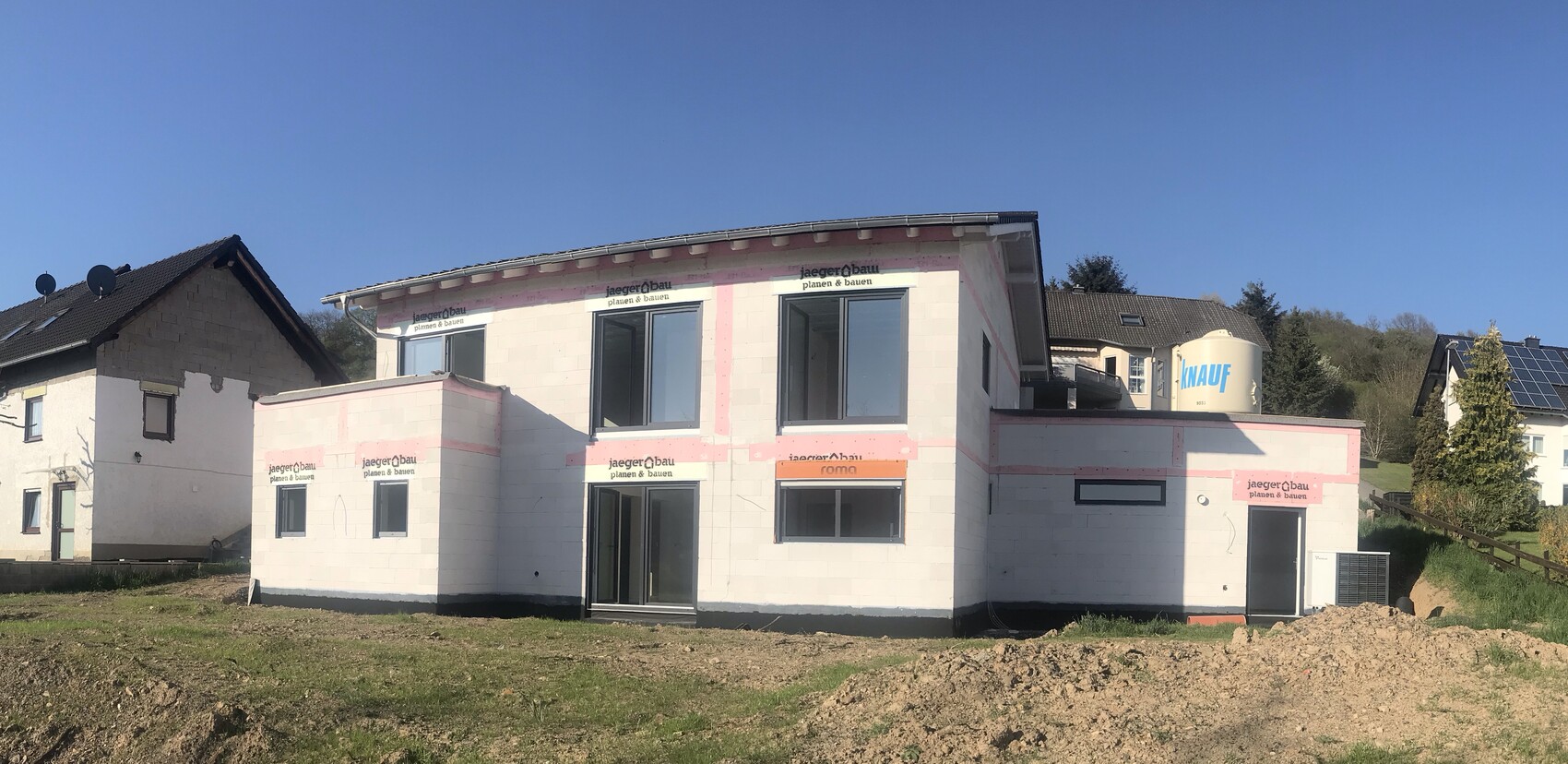
Should we assume that the large floor-to-ceiling windows are responsible for the heat gain? A photo of the south-facing side of the house is attached.
What would you do – always lower all the blinds as soon as sunlight is forecast? That seems quite annoying...
We have motorized blinds controlled by Somfy. Would you consider buying a sensor that automatically lowers the blinds at a certain temperature?
Thanks in advance for your replies.
I have a general question.
We moved into our new build four months ago. The living area on the ground floor has three large floor-to-ceiling windows facing south. We have underfloor heating and an air-to-water heat pump.
It provides a really comfortable temperature inside the house, but we have a problem – whenever the sun is shining in winter, even if it’s -2°C (28°F) outside, the temperature suddenly rises to 24°C (75°F) in the living room. It gets uncomfortably warm in here, and the underfloor heating can’t be turned down quickly.
Should we assume that the large floor-to-ceiling windows are responsible for the heat gain? A photo of the south-facing side of the house is attached.
What would you do – always lower all the blinds as soon as sunlight is forecast? That seems quite annoying...
We have motorized blinds controlled by Somfy. Would you consider buying a sensor that automatically lowers the blinds at a certain temperature?
Thanks in advance for your replies.
N
nordanney4 Dec 2019 14:40chewbacca123 schrieb:
As soon as the sun shines outside in winter, even when it’s -2°C (28°F), the living room suddenly heats up to 24°C (75°F). It gets incredibly warm in here, and you can’t lower the underfloor heating that quickly.Just wait for summer then. The cause is simply the windows and good insulation in modern houses. It’s independent of the heating system.
Nowadays, you not only have to manage your heating system but also plan for efficient shading (which is kind of ironic).
Guckuck2 has already mentioned something about this. Air conditioning in summer can also help.
chewbacca123 schrieb:
Should we assume that the floor-to-ceiling windows are responsible for the heat?I can confirm that. It’s the same for us.
chewbacca123 schrieb:
What would you do, always keep all the shutters down as soon as sunshine is forecast?Nothing. Aside from the fact that the shutters were installed for sun protection (this was mandatory for us), we enjoy the warmth and the sunlight that the sun provides. That’s exactly why we built those windows facing south.
B
boxandroof4 Dec 2019 14:47If it gets too warm in winter, automated shading is especially useful during the summer. Venetian blinds would of course be more comfortable in that case. In winter, I would use sensors based on sunlight or temperature, while in summer I find time control more convenient so that the shading doesn’t keep moving up and down constantly.
Try to see if shading just 1-2 windows at most in winter when the sun is shining is sufficient. This way, you still have natural light and do not completely block the sun, which helps with heating support. Lower the room temperature by about 1 degree Celsius (1.8°F) in general, and the house can absorb more heat without becoming too warm.
Unfortunately, we have only one such south-facing window in the living area. It only gets too warm there from mid-September on during several days of peak weather, and not at all in October.
Make sure the underfloor heating runs at the lowest possible temperature as a rule. This is more effective than any thermostat, because physically the underfloor system will no longer be able to overheat the room when the sun is shining.
If necessary, consider applying a heat protection coating as a film. This may be more sensible than blocking the sun in winter and can also help during the summer.
Try to see if shading just 1-2 windows at most in winter when the sun is shining is sufficient. This way, you still have natural light and do not completely block the sun, which helps with heating support. Lower the room temperature by about 1 degree Celsius (1.8°F) in general, and the house can absorb more heat without becoming too warm.
Unfortunately, we have only one such south-facing window in the living area. It only gets too warm there from mid-September on during several days of peak weather, and not at all in October.
Make sure the underfloor heating runs at the lowest possible temperature as a rule. This is more effective than any thermostat, because physically the underfloor system will no longer be able to overheat the room when the sun is shining.
If necessary, consider applying a heat protection coating as a film. This may be more sensible than blocking the sun in winter and can also help during the summer.
Similar topics