
Hi everyone,
I had the facade of my house painted by a professional company, using silicone resin paint as stated in the quote.
After the first coat, I noticed many cracks in the paint. It was painted two more times, but without any improvement. Previously, the facade had no cracks.
The facade has many indentations due to the plaster. The paint was applied with a roller.
Now the company says these are just air bubbles and that this does not affect the quality.
I don’t believe that.
What do you think about this?
Best regards,
Ulfi
I’ve attached a photo!
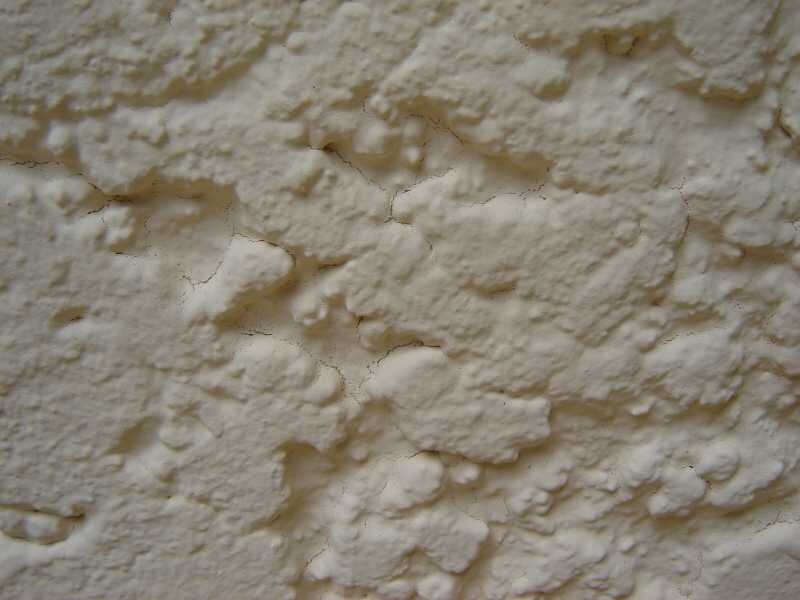
I had the facade of my house painted by a professional company, using silicone resin paint as stated in the quote.
After the first coat, I noticed many cracks in the paint. It was painted two more times, but without any improvement. Previously, the facade had no cracks.
The facade has many indentations due to the plaster. The paint was applied with a roller.
Now the company says these are just air bubbles and that this does not affect the quality.
I don’t believe that.
What do you think about this?
Best regards,
Ulfi
I’ve attached a photo!
@schwarzmeier Regarding your statements, Nikolaus, Easter Bunny Pope, I have nothing to say. I actually thought I could discuss a problem or disagreement here. But you probably belong to the type of master craftsman who does not accept any opinion other than his own. Under the motto "I am the master and you have to obey." I have met a few like that. Just as a reminder, even if you have been a master for 36 years, that doesn’t necessarily mean you are the better craftsman. After all, it is the journeymen who do the work, and in most cases not the master. If you consider the work in the picture completely correct and qualified, I wouldn’t even hire you to paint a basement.
Now, about the other forum. It was also noted there that cracks appear where the paint was applied too thickly. One says “absolutely no defect,” then “I would also be dissatisfied with the appearance at first, and therefore I am interested in where to set the priorities.”
The company did the work properly! These are perfectly normal drying cracks that occur with the somewhat thicker paint filling in the recesses! Maybe the coating could be rolled on a little thinner, but then the protective effect of the paint on the plaster would also be reduced.
I say that with two coats, the same layer thickness could have been achieved.
Then again, “We are in Germany here, and everything is looked at VERY carefully.”
Why not??????
Finally, it is explained again how the cracks occur and the spraying method is mentioned, which I had already discussed in a post.
I just want to remind everyone that the reason for the cracks is well known. It’s really just about how the paint can be applied better so that these cracks simply do not occur.
I would like to see a prospective master painter present a test piece (facade) and say “Perfectly normal drying cracks.”
As I have already written, for me there is no surface that shows cracks after any kind of coating—that’s something all colleagues should keep in mind, whether master or journeyman.
Now, about the other forum. It was also noted there that cracks appear where the paint was applied too thickly. One says “absolutely no defect,” then “I would also be dissatisfied with the appearance at first, and therefore I am interested in where to set the priorities.”
The company did the work properly! These are perfectly normal drying cracks that occur with the somewhat thicker paint filling in the recesses! Maybe the coating could be rolled on a little thinner, but then the protective effect of the paint on the plaster would also be reduced.
I say that with two coats, the same layer thickness could have been achieved.
Then again, “We are in Germany here, and everything is looked at VERY carefully.”
Why not??????
Finally, it is explained again how the cracks occur and the spraying method is mentioned, which I had already discussed in a post.
I just want to remind everyone that the reason for the cracks is well known. It’s really just about how the paint can be applied better so that these cracks simply do not occur.
I would like to see a prospective master painter present a test piece (facade) and say “Perfectly normal drying cracks.”
As I have already written, for me there is no surface that shows cracks after any kind of coating—that’s something all colleagues should keep in mind, whether master or journeyman.
S
schwarzmeier2 Jul 2009 14:32I respect your opinion, but you cannot classify this as a defect, even if you write it in BIG RED letters.
If you are spraying in an urban area where houses are close together and traffic passes right by, and the wind carries the spray onto neighboring houses and vehicles, what do you say to those affected? Furthermore, this does not prevent increased material accumulation in the grooves of a roughcast finish. If the temperature is appropriate with low humidity or warm wind, you will get a very fast skin or film formation that dries from the surface towards the base coat, causing such marks. What I see in the photo is the only basis for my assessment, and it is absolutely acceptable and not a defect. You always talk about cracks, which are actually only film marks and do not even penetrate the final coating.
The substrate appears to be fully wetted as far as can be seen in the photo. The coating is technically fully functional. Again, slowly: I am paraphrasing my colleague Martin Kempf:
"The area to be assessed should be viewed from common usage distance under normal lighting conditions. For facades, common usage distance means, for example, the opposite side of the street."
This can be found in detail in BAU E, section Interior and Exterior Plasters, an expert article by Martin Kempf.
I add from:
“Guideline for the Visual Assessment of Coated Surfaces” by the Working Group of Experts in the Bavarian Painting and Decorating Trade.
On page 30 it states:
“Faint visible drying shrinkage cracks in the recesses of strongly textured surfaces must be accepted as long as they do not impair technical functionality. An exception is coating systems designed to eliminate cracks in the substrate. Fine cracks in these areas are accepted irregularities.”
Assessment principles: page 8
“The inspection is generally to be carried out at the distance corresponding to normal use. Normal use does not necessarily correspond to actual use. If possible, a distance of at least 1 meter (3 feet) should not be undercut during evaluation. When assessing, it should be considered that irregularities are unavoidable in any manual workmanship.”
That should be enough for now—are you going to question the guidelines as well? In that case, the authors of this work would apparently be even less competent than you.
If you are spraying in an urban area where houses are close together and traffic passes right by, and the wind carries the spray onto neighboring houses and vehicles, what do you say to those affected? Furthermore, this does not prevent increased material accumulation in the grooves of a roughcast finish. If the temperature is appropriate with low humidity or warm wind, you will get a very fast skin or film formation that dries from the surface towards the base coat, causing such marks. What I see in the photo is the only basis for my assessment, and it is absolutely acceptable and not a defect. You always talk about cracks, which are actually only film marks and do not even penetrate the final coating.
The substrate appears to be fully wetted as far as can be seen in the photo. The coating is technically fully functional. Again, slowly: I am paraphrasing my colleague Martin Kempf:
"The area to be assessed should be viewed from common usage distance under normal lighting conditions. For facades, common usage distance means, for example, the opposite side of the street."
This can be found in detail in BAU E, section Interior and Exterior Plasters, an expert article by Martin Kempf.
I add from:
“Guideline for the Visual Assessment of Coated Surfaces” by the Working Group of Experts in the Bavarian Painting and Decorating Trade.
On page 30 it states:
“Faint visible drying shrinkage cracks in the recesses of strongly textured surfaces must be accepted as long as they do not impair technical functionality. An exception is coating systems designed to eliminate cracks in the substrate. Fine cracks in these areas are accepted irregularities.”
Assessment principles: page 8
“The inspection is generally to be carried out at the distance corresponding to normal use. Normal use does not necessarily correspond to actual use. If possible, a distance of at least 1 meter (3 feet) should not be undercut during evaluation. When assessing, it should be considered that irregularities are unavoidable in any manual workmanship.”
That should be enough for now—are you going to question the guidelines as well? In that case, the authors of this work would apparently be even less competent than you.
Of course, I assumed a two-coat painting process! I am not the type of painter who applies one thick coat and calls it done, even though you seem to want to imply to everyone reading that all painters, except yourself of course, belong to that category of craftsmen! Broadly speaking, you could even consider it a three-coat process with me if you count the waterproof primer coat before a subsequent silicone resin coat as a separate layer, or the priming with silicate primer before a following silicate topcoat. When spraying, a second person must roll the surface afterward, and in hot weather it is not guaranteed that this will prevent surface drying cracks!
S
schwarzmeier3 Jul 2009 08:53Correct, Netzer!
Apparently, we professional painters are still a bit behind the seven mountains, and Thommi is showing us the right way.
Apparently, we professional painters are still a bit behind the seven mountains, and Thommi is showing us the right way.
schwarzmeier schrieb:
I respect your opinion, but you cannot classify this as a defect, no matter how BIG and RED you write it.
If you want to spray in an urban area where houses stand close together and streets have traffic passing by, and the wind carries the spray so that neighboring houses and vehicles get splattered, what do you say to those affected? Furthermore, this does not prevent increased material build-up in the recesses of a textured plaster finish. If the temperature is suitable with low humidity or warm wind, you will get very fast skinning or film formation that dries from the surface towards the plaster, causing such marks. What I see in the picture is the only thing I can assess, and it is absolutely acceptable and not a defect. You always talk about cracks, which are actually only film blisters and do not even penetrate the final coating.
The substrate is fully wetted as far as can be seen in the picture. The coating is technically fully functional. Once again, slowly, I will quote my colleague Martin Kempf in essence:
“The area to be assessed should be viewed from the usual distance under normal lighting. The usual distance for facades, for example, means the opposite side of the street!”
This can be read in full in BAU E, section on interior and exterior plaster, specialist article by Martin Kempf.
I add from:
“Guidelines for the Visual Assessment of Coated Surfaces” from
the Working Group of Experts in the Bavarian Painting and Decorating Trade.
On page 30 it says:
“Faint visible drying shrinkage cracks in the recesses of highly textured surfaces are to be accepted as long as they do not impair technical functionality.
An exception is coating systems designed to eliminate cracks in the substrate.
Fine cracks in these areas are to be regarded as acceptable irregularities.
Assessment Principles: page 8
“The inspection should usually be performed at a distance corresponding to normal use.
Normal use does not always mean the actual use. If possible, the inspection distance should not be less than 1 meter (3 feet).
It must be taken into account that irregularities are inevitable in any craftwork.”
That should be enough now, or will you also question these guidelines? Then the authors of this work are apparently less competent than you. Bavaria sends greetings to the rest of the world,
these are just guidelines after all. But where does technical functionality begin and end? For me, it ends where moisture can settle in cracks and freeze in winter. Likewise, dirt and dust will accumulate there, which cannot be washed away by normal rainwater. I spoke again with our supervisor this morning, and he said he would not enter a legal dispute over a facade delivered like that. By the way, you all need to agree on from what distance completed work is to be inspected. You said 2-3 meters (6-10 feet), but the experts from the Bavarian Painting and Decorating Trade say 1 meter (3 feet). Also, they mention “faint visible drying shrinkage cracks.” I do not believe what I see in the picture, even if strongly magnified, qualifies as that.
Netzer schrieb:
Of course, I assumed a two-coat application! I’m definitely not one of those painters who just slap on one thick layer and call it done, even though you seem to want to convince everyone reading that all painters—except you, of course—belong to that type of tradesperson! More broadly, you could even say I apply three coats when you consider a hydroprimer under a silicone resin topcoat as separate coats, or a silicate primer under a silicate finish. When spraying, by the way, a second person must follow up with back-rolling, and in hot weather, it’s not guaranteed that superficial drying cracks can be avoided!Hello Netzer, I certainly don’t exclude that, nor do I want to generalize everyone. I mentioned that in my first post, by the way!!!!!!! But that’s just how it is in the tough market competition. Either you have loyal customers, or the price governs the contracts. If I paint a wall once and it looks good, why would I paint it a second time? I assume it’s the same for you, right? Besides, we’re also supposed to work cost-effectively (for the company). After all, your employees want to be paid properly at the end of the month, says my boss. There are many things customers don’t even see, but if a layperson points out mistakes, they’re usually correct. And then someone has to take responsibility. By the way, we only paint or spray facades in the shade, and if possible, not during midsummer.
Best regards,
thommi
Similar topics