
Hi everyone,
I had the facade of my house painted by a professional company, using silicone resin paint as stated in the quote.
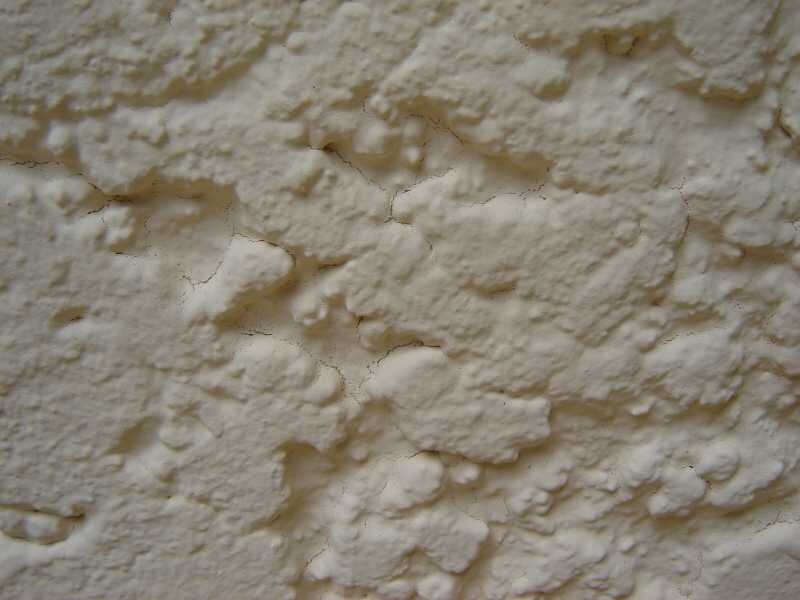
After the first coat, I noticed many cracks in the paint. It was painted two more times, but without any improvement. Previously, the facade had no cracks.
The facade has many indentations due to the plaster. The paint was applied with a roller.
Now the company says these are just air bubbles and that this does not affect the quality.
I don’t believe that.
What do you think about this?
Best regards,
Ulfi
I’ve attached a photo!
I had the facade of my house painted by a professional company, using silicone resin paint as stated in the quote.
After the first coat, I noticed many cracks in the paint. It was painted two more times, but without any improvement. Previously, the facade had no cracks.
The facade has many indentations due to the plaster. The paint was applied with a roller.
Now the company says these are just air bubbles and that this does not affect the quality.
I don’t believe that.
What do you think about this?
Best regards,
Ulfi
I’ve attached a photo!
I don’t think the representative will admit that the paint is bad. If they start with the rail and say the plaster is too rough or whatever else might be the issue, you can mention that it’s also possible to coat a facade using airless spray equipment. In that case, the paint—assuming the operator knows how to handle it—can be applied very evenly. Don’t let them take advantage of you. Maybe one of the civil engineers who are moderators here could provide some insight on how to proceed. Have you already paid? If not, they should figure out where to get their money from. Then they would have to bring in a court-ordered expert report. You don’t need to go to any expert on your own; that won’t count if it comes down to it. Which manufacturer is the paint from?
Regards, Thommi
Regards, Thommi
A portion has already been paid for the work the company completed properly. But I’m afraid the company will want payment for the rest as well. I took photos of the issue to a representative of the company STO. They said these are normal drying cracks and everything is fine.
My paint is from a company called Contilack in Oberhausen. I will see what the representative says about it. But I fear it will be the same response as from STO.
I will keep you updated.
Regards,
Ulfi
My paint is from a company called Contilack in Oberhausen. I will see what the representative says about it. But I fear it will be the same response as from STO.
I will keep you updated.
Regards,
Ulfi
S
schwarzmeier27 Jun 2009 13:41Cracks in the Paint Surface of the Plaster Depths
What are you expecting?
Do you want to turn a completely normal physical behavior of the additional material applied in the plaster depths into a defect that simply isn’t one? Since the company Sto already provides this explanation, what do you expect the technical advisor from Contilack to say, something contradictory??? The assessment here is hardly a deeply academic or scientific one.
I had the same situation with a similarly stubborn customer 12 years ago, and that smart aleck who wanted to make easy money ended up badly losing. The lawyer and expert witness fees, plus court costs, amounted to about half of the painter’s invoice. But of course, everyone can do whatever they want with their own money.
By all means, keep it up — those who won’t listen have to pay in the end.
By the way, this facade is still standing strong today like a solid pane!
What are you expecting?
Do you want to turn a completely normal physical behavior of the additional material applied in the plaster depths into a defect that simply isn’t one? Since the company Sto already provides this explanation, what do you expect the technical advisor from Contilack to say, something contradictory??? The assessment here is hardly a deeply academic or scientific one.
I had the same situation with a similarly stubborn customer 12 years ago, and that smart aleck who wanted to make easy money ended up badly losing. The lawyer and expert witness fees, plus court costs, amounted to about half of the painter’s invoice. But of course, everyone can do whatever they want with their own money.
By all means, keep it up — those who won’t listen have to pay in the end.
By the way, this facade is still standing strong today like a solid pane!
From what I’ve gathered, parts of the facade have been properly painted, which clearly shows that it can be done correctly! So, the issue is definitely not with the paint or the plaster itself, but rather with the “excessive application of material in the plaster thickness,” meaning the painters applied the paint too thickly, causing it to crack as it dried. Why does the company still paint over everything twice if it’s completely “NORMAL” for the paint to crack? As a foreman, I wouldn’t have simply accepted the additional costs for labor and materials without question.
S
schwarzmeier29 Jun 2009 08:54Surface Cracks in Organic Exterior Coatings
You might want to consult a good technical book on organic exterior coatings and their drying behavior. Looking at the picture, please explain to me where the defect is supposed to be? You’ve taken something a layperson wrote to you and now want to give a professional opinion? That’s quite bold, in my view. I can only judge based on the picture. What do you see in the image that could be considered a defect? Even on the raised plaster surfaces, the plaster grains are properly coated with the finish. How can you tell that the coating has been applied too thickly? Did you measure the layer thickness? The superficial surface cracks in the organic coating do not penetrate through the entire layer. How would you proceed to prevent this? Would you try to touch up the plaster depths with a paintbrush? Don’t pretend to be more knowledgeable than you are and keep things in perspective!
You might want to consult a good technical book on organic exterior coatings and their drying behavior. Looking at the picture, please explain to me where the defect is supposed to be? You’ve taken something a layperson wrote to you and now want to give a professional opinion? That’s quite bold, in my view. I can only judge based on the picture. What do you see in the image that could be considered a defect? Even on the raised plaster surfaces, the plaster grains are properly coated with the finish. How can you tell that the coating has been applied too thickly? Did you measure the layer thickness? The superficial surface cracks in the organic coating do not penetrate through the entire layer. How would you proceed to prevent this? Would you try to touch up the plaster depths with a paintbrush? Don’t pretend to be more knowledgeable than you are and keep things in perspective!
Hey Schwarzmeier, the defect is obvious!!! The cracks in the paint. Besides, it is clearly a visual defect. A properly coated surface simply must not show any cracks. There is no need to talk here about organic facade coatings and drying behavior; the fact is undeniable. As a professional, you should know that applying material too thickly (e.g., gypsum fillers and also paint) can cause cracks during drying. I base my judgment on 30 years of professional experience as a painter. I actually didn’t want to bring this up here, but I’ve been through the same situation before. However, it was with Brillux paint. The sales representative (master painter) came and showed us how it’s done. Achieve the right viscosity, apply the paint evenly and smoothly, do it twice to ensure full coverage, and voilà—there were no more cracks. At first, we also complained about the paint and plaster, but we had to admit we were wrong. It was quite embarrassing. It takes longer, but it works. Dirt will always settle in the cracks. In my opinion, the Sto representative is either corrupt or clueless. These are just normal drying cracks—he must be out of his mind.
Similar topics