
Hello
we are planning a new semi-detached house.
We want to install a photovoltaic system later on.
We will get the right half shown in the photo. Orientation is southwest.
The photovoltaic system will of course be installed on the southwest side facing the garden.
The black area is the 3x5 m (10x16 ft) terrace, which will later be covered with a fixed terrace roof measuring 4 m (13 ft) deep and 5.5 m (18 ft) wide.
My question is whether it will still be possible to install a photovoltaic system on the roof once the fixed terrace roof is there?
If the terrace roof is on the southwest side in the garden, it will no longer be possible to set up scaffolding.
For maintenance or in case of problems, access to the photovoltaic system will be necessary later on (is access without scaffolding not possible?)
Or can the photovoltaic system be installed without scaffolding?
The house will have a gable roof and 2.5 full stories.
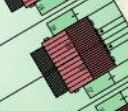
we are planning a new semi-detached house.
We want to install a photovoltaic system later on.
We will get the right half shown in the photo. Orientation is southwest.
The photovoltaic system will of course be installed on the southwest side facing the garden.
The black area is the 3x5 m (10x16 ft) terrace, which will later be covered with a fixed terrace roof measuring 4 m (13 ft) deep and 5.5 m (18 ft) wide.
My question is whether it will still be possible to install a photovoltaic system on the roof once the fixed terrace roof is there?
If the terrace roof is on the southwest side in the garden, it will no longer be possible to set up scaffolding.
For maintenance or in case of problems, access to the photovoltaic system will be necessary later on (is access without scaffolding not possible?)
Or can the photovoltaic system be installed without scaffolding?
The house will have a gable roof and 2.5 full stories.
 KingJulien17 Jan 2022 01:21
Durran schrieb:
Correct, the lost feed-in tariff for about 3000 kWh would theoretically be around 200 euros. It can be ignored. However, I have planned several measures to optimize consumption, especially regarding the photovoltaic battery storage. I use a simple 80L (21 gallons) water heater for hot water generation.
This will now be replaced with a Wi-Fi enabled device. It will then only be charged by photovoltaic output. Once heated, it can keep warm for two days.
The kitchen, as mentioned, is optimized with a wood-burning kitchen stove that has an oven. It runs anyway in winter and is used for cooking. In summer, we naturally use the electric stove. Then the wife has to cook when the sun is shining. The same applies to ironing, washing machine, dishwasher, etc.
The base load in the evening and at night is then covered by the battery. If I’ve calculated correctly, you’re assuming a self-sufficiency rate of only 35% without storage?
With the optimization you describe, you should achieve well over 50% even without storage.
Is a battery really worth it for the last few percent? It seems more like something for people who like to do laundry at night 😉
PS: Don’t get me wrong, I’m not trying to dissuade you. I’m not deeply knowledgeable enough about this topic. I’m just questioning the numbers for myself.

Durran sometimes struggles with numbers, especially when I think about the kitchen story 😉
If you search for "self-sufficiency calculator" and click on the first link, you can get a rough overview of what level of self-sufficiency you can achieve with different configurations of kWp, consumption, and storage.
If you search for "self-sufficiency calculator" and click on the first link, you can get a rough overview of what level of self-sufficiency you can achieve with different configurations of kWp, consumption, and storage.

I found all the calculations for the house (heat loss, heating load, photovoltaic yield, etc.) really interesting and detailed. And after the first year of practical use, they were generally quite accurate.
The big exception is the autonomy "calculators" of any kind (there are several). The HTW Berlin calculator showed 83% for me, while the state of NRW even indicated 90%. In reality, it was 70% last year, with a peak score of 78% in mid-November. Perhaps these tools are more realistic when they don’t include battery data—adding a battery seems more like wishful thinking.
The big exception is the autonomy "calculators" of any kind (there are several). The HTW Berlin calculator showed 83% for me, while the state of NRW even indicated 90%. In reality, it was 70% last year, with a peak score of 78% in mid-November. Perhaps these tools are more realistic when they don’t include battery data—adding a battery seems more like wishful thinking.
D
Deliverer17 Jan 2022 19:28Self-sufficiency is ultimately a completely irrelevant metric. The real question is what I can do for the environment and for my budget. Maximum self-sufficiency is, at least for the budget, very, very bad...
Here’s the calculation again.
The photovoltaic system with 7.2 kWp should generate about 8,000 kWh per year.
I can use 2,000 kWh of that myself.
2,000 kWh go into the storage system.
So, 4,000 kWh are consumed directly by myself, with a total consumption of 5,000 kWh.
Starting this year, instead of paying 1,850 euros for electricity, I’ll only pay 370 euros to the energy supplier.
With further increases in electricity prices, the savings will of course be even greater. I am counting on a service life of 20 years or more.
I will retire in 8 years, so every euro counts for me.
I calculated with a self-sufficiency rate (autonomy rate) of 72 percent and a self-consumption rate of 50 percent. These numbers are very conservative.
I’m picking up the storage system on Saturday, a Huawei Luna with 10 kW. The price is reasonable. Soon there will hardly be any left. The BYD and LG storages are currently barely available. This will still become very problematic.
And before my money just sits idle in the bank account, I’d rather invest it sensibly. As always, everything is fully paid, with no financing costs.
By the way, about the constant criticism coming from the kitchen…
There are still pictures. Don’t worry. My old laptop broke, and I bought a new one. The pictures are on the old computer’s hard drive. I still need to transfer them to the new one. But the pictures will come, I promise.
The photovoltaic system with 7.2 kWp should generate about 8,000 kWh per year.
I can use 2,000 kWh of that myself.
2,000 kWh go into the storage system.
So, 4,000 kWh are consumed directly by myself, with a total consumption of 5,000 kWh.
Starting this year, instead of paying 1,850 euros for electricity, I’ll only pay 370 euros to the energy supplier.
With further increases in electricity prices, the savings will of course be even greater. I am counting on a service life of 20 years or more.
I will retire in 8 years, so every euro counts for me.
I calculated with a self-sufficiency rate (autonomy rate) of 72 percent and a self-consumption rate of 50 percent. These numbers are very conservative.
I’m picking up the storage system on Saturday, a Huawei Luna with 10 kW. The price is reasonable. Soon there will hardly be any left. The BYD and LG storages are currently barely available. This will still become very problematic.
And before my money just sits idle in the bank account, I’d rather invest it sensibly. As always, everything is fully paid, with no financing costs.
By the way, about the constant criticism coming from the kitchen…
There are still pictures. Don’t worry. My old laptop broke, and I bought a new one. The pictures are on the old computer’s hard drive. I still need to transfer them to the new one. But the pictures will come, I promise.
@Durran : Have you also taken into account that most of your 2000 kWh falls in winter, when sunlight is usually limited? Why do you want such a large battery storage that you probably will never fully charge with the system (except maybe during an exceptionally strong summer)? I believe you don’t have a heat pump, right?
Similar topics