
Hello
we are planning a new semi-detached house.
We want to install a photovoltaic system later on.
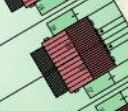
We will get the right half shown in the photo. Orientation is southwest.
The photovoltaic system will of course be installed on the southwest side facing the garden.
The black area is the 3x5 m (10x16 ft) terrace, which will later be covered with a fixed terrace roof measuring 4 m (13 ft) deep and 5.5 m (18 ft) wide.
My question is whether it will still be possible to install a photovoltaic system on the roof once the fixed terrace roof is there?
If the terrace roof is on the southwest side in the garden, it will no longer be possible to set up scaffolding.
For maintenance or in case of problems, access to the photovoltaic system will be necessary later on (is access without scaffolding not possible?)
Or can the photovoltaic system be installed without scaffolding?
The house will have a gable roof and 2.5 full stories.
we are planning a new semi-detached house.
We want to install a photovoltaic system later on.
We will get the right half shown in the photo. Orientation is southwest.
The photovoltaic system will of course be installed on the southwest side facing the garden.
The black area is the 3x5 m (10x16 ft) terrace, which will later be covered with a fixed terrace roof measuring 4 m (13 ft) deep and 5.5 m (18 ft) wide.
My question is whether it will still be possible to install a photovoltaic system on the roof once the fixed terrace roof is there?
If the terrace roof is on the southwest side in the garden, it will no longer be possible to set up scaffolding.
For maintenance or in case of problems, access to the photovoltaic system will be necessary later on (is access without scaffolding not possible?)
Or can the photovoltaic system be installed without scaffolding?
The house will have a gable roof and 2.5 full stories.
D
Deliverer15 Sep 2021 22:54Ah, you probably meant the size of the battery storage. Misread that. Sorry.
I still want to come back to the size of the photovoltaic system: If you want to charge a medium-sized electric car in winter (and yes, in about 10 years, everyone here will want to), it takes a full two days in poor weather with a 50 kWp system. It doesn’t matter whether there is a battery storage in the basement or not.
So, if you are considering photovoltaic panels, don’t bother with small 10 kWp setups—fully utilize the roof space.
I still want to come back to the size of the photovoltaic system: If you want to charge a medium-sized electric car in winter (and yes, in about 10 years, everyone here will want to), it takes a full two days in poor weather with a 50 kWp system. It doesn’t matter whether there is a battery storage in the basement or not.
So, if you are considering photovoltaic panels, don’t bother with small 10 kWp setups—fully utilize the roof space.
Deliverer schrieb:
Ah, you probably meant the size of the battery. Misread. Sorry.No. The heating requires 12 kWh on a winter day plus 5–8 kWh for household use.I would like to see the price range (cost) of the system (modules/appropriate battery/installation/other…maintenance…) for my off-grid house.
Semi-detached house with approximately 100 sqm (1,076 sq ft) of roof area (50 sqm (538 sq ft) at 15 degrees, 50 sqm (538 sq ft) at 25 degrees south)
R
RotorMotor16 Sep 2021 07:50driver55 schrieb:
No. The heating requires 12 kWh on a winter day plus 5-8 kWh for household consumption.
I would like to see the price range (costs) of the system (modules / suitable storage / installation / other… maintenance…) for my off-grid house.
Semi-detached house with approximately 100 m² (1,076 ft²) of roof area (50 m² (538 ft²) at 15 degrees, 50 m² (538 ft²) at 25 degrees south) 100 m² (1,076 ft²) is not enough for an off-grid house.
Have you checked exactly how much photovoltaic capacity you can install?
Roughly estimated, you'd end up with 15-20 kWp. That’s not bad, but still quite far from being fully off-grid.
So there is a good chance that the battery won’t be fully charged during winter!
D
Deliverer16 Sep 2021 08:14driver55 schrieb:
I would like to see the rough costs of the system (modules/appropriate storage/installation/other…maintenance…) for my off-grid house.Quite demanding. But here you go: A rule of thumb is 1000 EUR per installed kWp as well as per installed kWh of storage. Currently, due to material shortages, about 10–20% more expensive. There is no single suitable storage system, as that concept doesn’t really make sense. Installation is included. Other costs depend on your house, so it’s best to discuss them directly with the solar technician. Maintenance, given your low roof pitch, would likely only involve cleaning every few years.D
Deliverer16 Sep 2021 09:12Fuchur schrieb:
This is not a sprint. That way, the battery simply lasts longer.Unfortunately, it is more like a race against the failure of the battery electronics. As we see in the automotive sector, the battery cells themselves are not the problem. Optimistic estimates therefore assume a battery lifespan of 15 years. During that time, it should at least break even financially. While this means it hasn’t contributed much beyond environmental impact, at least you haven’t lost money.Well, this is only possible if the battery is fully charged and fully discharged about 200 times per year. The former requires a photovoltaic system that is at least three times larger (in kWp) than the battery capacity (in kWh). The latter usually happens only with unrealistically high nighttime consumption during summer.
D
Deliverer16 Sep 2021 09:18I already mentioned this: You can’t imagine HOW LITTLE power actually reaches you when the weather is really bad! And unfortunately, that happens quite often (at least this summer...).
I have a 28 kWp system on the roof, it’s quarter past 9, and in my opinion, it’s still not autumn:

I have a 28 kWp system on the roof, it’s quarter past 9, and in my opinion, it’s still not autumn:
Similar topics