
Hello
we are planning a new semi-detached house.
We want to install a photovoltaic system later on.
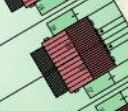
We will get the right half shown in the photo. Orientation is southwest.
The photovoltaic system will of course be installed on the southwest side facing the garden.
The black area is the 3x5 m (10x16 ft) terrace, which will later be covered with a fixed terrace roof measuring 4 m (13 ft) deep and 5.5 m (18 ft) wide.
My question is whether it will still be possible to install a photovoltaic system on the roof once the fixed terrace roof is there?
If the terrace roof is on the southwest side in the garden, it will no longer be possible to set up scaffolding.
For maintenance or in case of problems, access to the photovoltaic system will be necessary later on (is access without scaffolding not possible?)
Or can the photovoltaic system be installed without scaffolding?
The house will have a gable roof and 2.5 full stories.
we are planning a new semi-detached house.
We want to install a photovoltaic system later on.
We will get the right half shown in the photo. Orientation is southwest.
The photovoltaic system will of course be installed on the southwest side facing the garden.
The black area is the 3x5 m (10x16 ft) terrace, which will later be covered with a fixed terrace roof measuring 4 m (13 ft) deep and 5.5 m (18 ft) wide.
My question is whether it will still be possible to install a photovoltaic system on the roof once the fixed terrace roof is there?
If the terrace roof is on the southwest side in the garden, it will no longer be possible to set up scaffolding.
For maintenance or in case of problems, access to the photovoltaic system will be necessary later on (is access without scaffolding not possible?)
Or can the photovoltaic system be installed without scaffolding?
The house will have a gable roof and 2.5 full stories.

Durran schrieb:
A grid feed-in is waived. Zero feed-in.I don’t even begin to understand why anyone would do that. Why waste the 3000 kWh? At least use the small business regulation to minimize administrative effort.
D
Deliverer15 Jan 2022 11:41They are not even necessary if you simply do without feeding in.
D
Deliverer15 Jan 2022 12:05You don’t have to feed in everything. Only what you would otherwise have to reduce. A small, self-built system can pay off just through self-consumption, you are right about that. But that doesn’t mean you have to waste surplus electricity.
B
barfly66615 Jan 2022 12:17Deliverer schrieb:
You don’t have to feed everything into the grid. Just what you would otherwise reduce. A small, self-built system can pay off just from self-consumption, you’re right about that. But that doesn’t mean you have to waste excess electricity. By “not feeding in,” he means simply that all the electricity produced is used on site. With the small system he has, including storage, he will never have to waste green electricity…
The best way to make photovoltaics profitable is through self-consumption! A DIY battery storage system costs significantly less than a ready-made one, which can make storage economically viable.

barfly666 schrieb:
By “not feeding in,” he just means that all the electricity produced is used on-site. With the small system he has, including storage, he will hardly ever have to waste any renewable energy…In summer, even with such a small system, you can probably generate more than 50 kWh on sunny days. Unless the electric vehicle is parked empty and ready to charge, I would be surprised if all of it can be consumed directly.
Similar topics