
Hello
we are planning a new semi-detached house.
We want to install a photovoltaic system later on.
We will get the right half shown in the photo. Orientation is southwest.
The photovoltaic system will of course be installed on the southwest side facing the garden.
The black area is the 3x5 m (10x16 ft) terrace, which will later be covered with a fixed terrace roof measuring 4 m (13 ft) deep and 5.5 m (18 ft) wide.
My question is whether it will still be possible to install a photovoltaic system on the roof once the fixed terrace roof is there?
If the terrace roof is on the southwest side in the garden, it will no longer be possible to set up scaffolding.
For maintenance or in case of problems, access to the photovoltaic system will be necessary later on (is access without scaffolding not possible?)
Or can the photovoltaic system be installed without scaffolding?
The house will have a gable roof and 2.5 full stories.
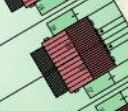
we are planning a new semi-detached house.
We want to install a photovoltaic system later on.
We will get the right half shown in the photo. Orientation is southwest.
The photovoltaic system will of course be installed on the southwest side facing the garden.
The black area is the 3x5 m (10x16 ft) terrace, which will later be covered with a fixed terrace roof measuring 4 m (13 ft) deep and 5.5 m (18 ft) wide.
My question is whether it will still be possible to install a photovoltaic system on the roof once the fixed terrace roof is there?
If the terrace roof is on the southwest side in the garden, it will no longer be possible to set up scaffolding.
For maintenance or in case of problems, access to the photovoltaic system will be necessary later on (is access without scaffolding not possible?)
Or can the photovoltaic system be installed without scaffolding?
The house will have a gable roof and 2.5 full stories.
I never claimed otherwise. I only mentioned that the value applied per kWh is the same as in the simplified profit and loss statement (EÜR) and, of course, lower than the one used for VAT purposes.
The question was whether this is part of the profit forecast and, if not, where this is documented.
I referred to the EÜR to illustrate that a negative forecast also results in tax losses, which is why it would be more advantageous to report these losses instead of classifying the activity as a hobby (hobby farming).
The question was whether this is part of the profit forecast and, if not, where this is documented.
I referred to the EÜR to illustrate that a negative forecast also results in tax losses, which is why it would be more advantageous to report these losses instead of classifying the activity as a hobby (hobby farming).
Fuchur schrieb:
I never claimed otherwise. I just mentioned that the value per kWh is the same as in the simplified profit and loss statement (EÜR) and lower than for VAT purposes.
The question was whether this is part of the profit forecast, and if not, where this is stated.
I referenced the EÜR to illustrate that a negative forecast also leads to tax losses and that it would therefore be more advantageous to report these losses instead of opting for hobby loss rules. You can quite easily determine the value you use to credit your own electricity consumption yourself, depending on the approach you want to take. In other words, the rate you apply for your own consumption can vary anywhere between, say, 9 cents and 20 cents. That obviously has a huge impact on the result.
In our case, own consumption is no longer queried at all. I still need to find out up to which size this procedure applies.
The pitfalls if you want to depreciate the system can be quite tricky. My future tax advisor told me a bit about this. Among other things, you can face additional payments if you want to switch after the depreciation period ends. But there apparently are many other issues as well. I can’t quite remember them all. If you are well versed in taxes (including for the self-employed), it should be manageable. However, most people aren’t familiar with this, so they need an advisor, who of course is not free.

Fuchur schrieb:
I assume we mean the same thing. €410 according to § 46 para. 2 no. 1 of the Income Tax Act. However, as mentioned, this is only a tax-exempt threshold for simplification purposes, not a tax allowance.You’re right, my egocentrism tricked me 🙂 Since I am an employee, it’s effectively the same for us because we never exceed €820 (about $890) with the photovoltaic system and have no additional side income. For self-employed individuals or employees with other sources of side income, the situation is unfortunately different.
Hello everyone,
I have a question for the group. I am considering installing a photovoltaic system. Currently, there is the 10 kWhp limit concerning this small-scale regulation. As I understand it, I do not need to report earnings from the feed-in tariff to the tax authorities. How does it work with self-consumption, though? Do I still have to pay VAT on that, or is it also exempt?
If both are exempt, would the income tax assistance association be allowed to handle this for me again? I have been using their services for over 10 years since I don’t understand taxes at all and, to be honest, tend to avoid the whole tax topic.
I have a question for the group. I am considering installing a photovoltaic system. Currently, there is the 10 kWhp limit concerning this small-scale regulation. As I understand it, I do not need to report earnings from the feed-in tariff to the tax authorities. How does it work with self-consumption, though? Do I still have to pay VAT on that, or is it also exempt?
If both are exempt, would the income tax assistance association be allowed to handle this for me again? I have been using their services for over 10 years since I don’t understand taxes at all and, to be honest, tend to avoid the whole tax topic.
If you choose the hobby option, you don’t need to report anything from it on your income tax, so you can have the club prepare the declaration again. It’s really not complicated, especially if you use last year’s declaration and just update it. The club’s fee is often higher than any potential savings you might get. But everyone can decide for themselves.
For VAT, everything stays the same. If you choose the small business regulation, you won’t get the VAT on the purchase back, but you also don’t have to pay VAT. If you choose regular taxation, you get the VAT on the purchase refunded, but VAT must be collected and paid to the network operator, and VAT must be paid on your own consumption.
For VAT, everything stays the same. If you choose the small business regulation, you won’t get the VAT on the purchase back, but you also don’t have to pay VAT. If you choose regular taxation, you get the VAT on the purchase refunded, but VAT must be collected and paid to the network operator, and VAT must be paid on your own consumption.
gmt94 schrieb:
Hello everyone,
I have a question for the group. I’m considering installing a photovoltaic system. Currently, there is the 10 kWp (kilowatt peak) limit for this hobby-related regulation. From what I understand, I don’t have to report income from feed-in tariffs to the tax authorities. But what about self-consumption? Do I still have to pay VAT on that, or is it exempt as well?
If both are exempt, can the income tax assistance association start working for me again? I’ve been using their services for over 10 years because I don’t understand taxes at all and, frankly, would rather avoid dealing with tax matters. Additional note: Exceeding 10 kWp (kilowatt peak) does not automatically mean you have to pay income tax (in your tax return). It only means that the tax office might request a profit forecast to determine if your activity is intended to generate a profit. You might want to ask them whether they require this if you’re slightly over the limit. Many people avoid the effort and simply assume hobby status without further checks.