
Hello
we are planning a new semi-detached house.
We want to install a photovoltaic system later on.
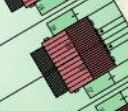
We will get the right half shown in the photo. Orientation is southwest.
The photovoltaic system will of course be installed on the southwest side facing the garden.
The black area is the 3x5 m (10x16 ft) terrace, which will later be covered with a fixed terrace roof measuring 4 m (13 ft) deep and 5.5 m (18 ft) wide.
My question is whether it will still be possible to install a photovoltaic system on the roof once the fixed terrace roof is there?
If the terrace roof is on the southwest side in the garden, it will no longer be possible to set up scaffolding.
For maintenance or in case of problems, access to the photovoltaic system will be necessary later on (is access without scaffolding not possible?)
Or can the photovoltaic system be installed without scaffolding?
The house will have a gable roof and 2.5 full stories.
we are planning a new semi-detached house.
We want to install a photovoltaic system later on.
We will get the right half shown in the photo. Orientation is southwest.
The photovoltaic system will of course be installed on the southwest side facing the garden.
The black area is the 3x5 m (10x16 ft) terrace, which will later be covered with a fixed terrace roof measuring 4 m (13 ft) deep and 5.5 m (18 ft) wide.
My question is whether it will still be possible to install a photovoltaic system on the roof once the fixed terrace roof is there?
If the terrace roof is on the southwest side in the garden, it will no longer be possible to set up scaffolding.
For maintenance or in case of problems, access to the photovoltaic system will be necessary later on (is access without scaffolding not possible?)
Or can the photovoltaic system be installed without scaffolding?
The house will have a gable roof and 2.5 full stories.
Evolith schrieb:
Profit here is narrowly defined as whether I break even or make money by selling electricity. Since most of the profit actually comes from self-consumption, any typical private system can easily be calculated as running at a loss.Where do you get the idea that private consumption is excluded when aiming for profit? According to all the information I have, it must definitely be taken into account. Of course, only to the extent of the "loss of revenue" and therefore significantly less than for VAT purposes. That means it should be accounted for exactly as it is recorded in the income and expense statement. But I have not found any justification anywhere for simply ignoring it.
Strictly speaking, the withdrawal should be calculated based on the total construction costs to be determined (i.e., depreciation through total revenue). But just for fun, let’s assume 8 cents per kilowatt-hour for compensation and withdrawal. For a 10 kWp system producing about 10,000 kWh, that would mean an income of €800 per year. Linear depreciation on a purchase price of €14,000 equals €700. From a tax perspective, the remaining profit is €100. If desired, even tax advisor fees, insurance, maintenance, and so on could be deducted from this amount. In any case, this is well below the exemption limit and therefore considered a hobby activity, which means you avoid the tax office hassle.
Completely independent of this is the actual economic efficiency, where self-consumption naturally appears significantly more favorable due to higher electricity prices.
Completely independent of this is the actual economic efficiency, where self-consumption naturally appears significantly more favorable due to higher electricity prices.
That’s exactly what I mean. €14,000 net for 10 kWp is already quite expensive, and even then it’s still not enough.
Hangman schrieb:Are you sure? This is a tax exemption limit up to which no income tax is payable, but it still counts as profit.
In any case, well below the allowance threshold and therefore considered a hobby activity
Fuchur schrieb:
Are you sure? This is a tax exemption threshold up to which no income tax is payable, but the profit remains. There is a tax-free allowance for secondary business activities (I am an employee) that is somewhere around 400 for singles / 800 for couples. If you already run a business as your main occupation, it’s different – in that case, this allowance is hopefully already used up by the main business.
Fuchur schrieb:
Where do you get the idea that private withdrawals are excluded when the intention is to generate profit? According to all the information I have, these must definitely be taken into account. Of course, only to the extent of the “loss of earnings,” which is therefore significantly lower than for sales tax purposes. In other words, at the same level as you would record in the income and expense statement. However, I couldn’t find any justification for simply ignoring them altogether. You are effectively correct, but only partially. When forecasting, you will of course present the “loss” in a way that it does not have any positive effect. According to our tax office, there are recognized standard amounts for this. They are quite negligible. I once calculated this for my 24 kWp (kilowatt peak) system. Even after 20 years, I was still in the red.