
Hello
we are planning a new semi-detached house.
We want to install a photovoltaic system later on.
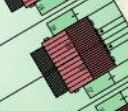
We will get the right half shown in the photo. Orientation is southwest.
The photovoltaic system will of course be installed on the southwest side facing the garden.
The black area is the 3x5 m (10x16 ft) terrace, which will later be covered with a fixed terrace roof measuring 4 m (13 ft) deep and 5.5 m (18 ft) wide.
My question is whether it will still be possible to install a photovoltaic system on the roof once the fixed terrace roof is there?
If the terrace roof is on the southwest side in the garden, it will no longer be possible to set up scaffolding.
For maintenance or in case of problems, access to the photovoltaic system will be necessary later on (is access without scaffolding not possible?)
Or can the photovoltaic system be installed without scaffolding?
The house will have a gable roof and 2.5 full stories.
we are planning a new semi-detached house.
We want to install a photovoltaic system later on.
We will get the right half shown in the photo. Orientation is southwest.
The photovoltaic system will of course be installed on the southwest side facing the garden.
The black area is the 3x5 m (10x16 ft) terrace, which will later be covered with a fixed terrace roof measuring 4 m (13 ft) deep and 5.5 m (18 ft) wide.
My question is whether it will still be possible to install a photovoltaic system on the roof once the fixed terrace roof is there?
If the terrace roof is on the southwest side in the garden, it will no longer be possible to set up scaffolding.
For maintenance or in case of problems, access to the photovoltaic system will be necessary later on (is access without scaffolding not possible?)
Or can the photovoltaic system be installed without scaffolding?
The house will have a gable roof and 2.5 full stories.
So, if we have a sunny day in April or May, the photovoltaic system will first start charging. The battery storage should, of course, be charged first. It is fully charged within 2 hours.
The photovoltaic output is from 8:00 a.m. to 4:00 p.m. So, on a sunny day, ideally about 50 kWh (7 kW x 8 hours). During this time, everything needs to be done: laundry and dishwashing, cooking, vacuuming, etc.
The next day is rainy. Then the battery storage covers the base load. We do not need to run the laundry and dishwasher every day. According to my calculations, the 7.2 kWp photovoltaic system should be ideal for the 10 kW battery. If it turns out not to be enough, a few more panels will have to be added to the roof.
The photovoltaic output is from 8:00 a.m. to 4:00 p.m. So, on a sunny day, ideally about 50 kWh (7 kW x 8 hours). During this time, everything needs to be done: laundry and dishwashing, cooking, vacuuming, etc.
The next day is rainy. Then the battery storage covers the base load. We do not need to run the laundry and dishwasher every day. According to my calculations, the 7.2 kWp photovoltaic system should be ideal for the 10 kW battery. If it turns out not to be enough, a few more panels will have to be added to the roof.
D
Deliverer18 Jan 2022 09:08Durran schrieb:
According to my calculations, the 7.2 kWp photovoltaic system should be ideal for the 10 kW battery. If it turns out to be insufficient, a few more panels can simply be added to the roof. There are two factors to consider to determine if a battery storage system is cost-effective:
It needs to fully charge as often as possible throughout the year. For this, a panel-to-battery ratio of about 3:1 is recommended.
It also needs to discharge as often as possible throughout the year. For this, either a smaller battery or a very high unavoidable electricity consumption during the night is necessary.
If this results in more than 200 full charge-discharge cycles per year and the system was purchased at a reasonable price, the battery will probably break even financially. It could be better if electricity prices soar, or worse if the battery fails. ;-) The risk remains.
What reduces the profitability of battery storage are heat pumps and electric vehicles (because they are prioritized to avoid storage losses). It should be clear that within the lifespan of a photovoltaic system, it is unlikely to avoid these two technologies altogether.
But since you are building yourself, if I remember correctly, you can retrofit easily. It may be sensible to keep this in mind when pulling conduit, buying inverters, or placing panels on the roof, so you don’t limit your options later.
R
RotorMotor18 Jan 2022 09:16@Durran your figures don’t add up very well.
The battery is too large and the photovoltaic system too small to be particularly economical or environmentally friendly.
As has been said several times already, in summer you won’t use up the 10kWh at night, and in winter you won’t fully charge it.
However, I think it’s very commendable that you want to adjust your lifestyle according to the sun.
But this doesn’t really have anything to do with the battery.
And once again, why is it so hard to distinguish between kW and kWh?
Most people manage with meters and kilometers or m/s and km/h just fine.
It’s not about being a know-it-all; it’s just often very confusing what exactly is meant.
The battery is too large and the photovoltaic system too small to be particularly economical or environmentally friendly.
As has been said several times already, in summer you won’t use up the 10kWh at night, and in winter you won’t fully charge it.
However, I think it’s very commendable that you want to adjust your lifestyle according to the sun.
But this doesn’t really have anything to do with the battery.
And once again, why is it so hard to distinguish between kW and kWh?
Most people manage with meters and kilometers or m/s and km/h just fine.
It’s not about being a know-it-all; it’s just often very confusing what exactly is meant.
D
Deliverer18 Jan 2022 09:24RotorMotor schrieb:
or to be environmentally friendly.This is definitely not a home battery. It is simply another electrical consumer (and a significant one at that) that requires a large amount of energy to manufacture. Moreover, it prevents all neighbors from accessing high-quality green electricity directly from the local area, almost without loss.
There are usable calculation models for the price of one kWh from the storage system over its (realistic!) lifetime. Based on these, you decide whether it is worthwhile. Environmental aspects of the hardware aside. Currently, it is likely moving in that direction, but still below economic profitability.
 KingJulien18 Jan 2022 10:32
Durran schrieb:
All of this has to happen during that time. Laundry and dishwashing, cooking, vacuuming, etc.I’m telling you, with your behavior, you probably wouldn’t even need a storage system. If you invest the saved money into additional space, the roof will still supply enough on rainy days.
And as someone once wrote in the photovoltaic store:
Grid consumption is not a disease 😉
Similar topics