
Hello
we are planning a new semi-detached house.
We want to install a photovoltaic system later on.
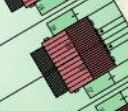
We will get the right half shown in the photo. Orientation is southwest.
The photovoltaic system will of course be installed on the southwest side facing the garden.
The black area is the 3x5 m (10x16 ft) terrace, which will later be covered with a fixed terrace roof measuring 4 m (13 ft) deep and 5.5 m (18 ft) wide.
My question is whether it will still be possible to install a photovoltaic system on the roof once the fixed terrace roof is there?
If the terrace roof is on the southwest side in the garden, it will no longer be possible to set up scaffolding.
For maintenance or in case of problems, access to the photovoltaic system will be necessary later on (is access without scaffolding not possible?)
Or can the photovoltaic system be installed without scaffolding?
The house will have a gable roof and 2.5 full stories.
we are planning a new semi-detached house.
We want to install a photovoltaic system later on.
We will get the right half shown in the photo. Orientation is southwest.
The photovoltaic system will of course be installed on the southwest side facing the garden.
The black area is the 3x5 m (10x16 ft) terrace, which will later be covered with a fixed terrace roof measuring 4 m (13 ft) deep and 5.5 m (18 ft) wide.
My question is whether it will still be possible to install a photovoltaic system on the roof once the fixed terrace roof is there?
If the terrace roof is on the southwest side in the garden, it will no longer be possible to set up scaffolding.
For maintenance or in case of problems, access to the photovoltaic system will be necessary later on (is access without scaffolding not possible?)
Or can the photovoltaic system be installed without scaffolding?
The house will have a gable roof and 2.5 full stories.
Durran schrieb:
So, if we have a sunny day in April or May, the photovoltaic system will start charging first.
The battery should, of course, be prioritized. It fills up within 2 hours.
Photovoltaic output is from 8:00 am to 4:00 pm. So on a sunny day, at best, around 50 kWh (7 kW x 8 hours).
All activities like laundry, dishwasher, cooking, vacuuming, etc., have to happen during this time.
The next day is rainy. Then the battery covers the base load. We don’t need to run laundry and dishwasher every day.
According to my calculations, a 7.2 kWp photovoltaic system should be optimal for a 10 kWh battery. If it turns out to be insufficient, a few more panels will simply be added to the roof. If I think about what I’ve seen in the photovoltaic forum for systems under 10 kWp during winter... they would need several days to fully charge the battery. In the evening, it’s empty after 1–2 hours, since the heat pump alone is a significant consumer.
If you run the dryer during the day and have two days of home office, the situation is even worse.
I don’t have personal experience with this yet, but judging from the yields, you will barely use your battery in winter and fill it up fully in summer (including charge-discharge losses) but won’t be able to empty it again.
I had considered installing a 5 kW battery for roughly 12 kWp at our place. But even that doesn’t really pay off (we have a heat pump), since it never gets fully charged during the crucial season.
It’s true that I don’t fully drain the battery at night—but I don’t need to.
My calculation assumes zero solar yield from mid-November to mid-February, meaning full grid consumption during this period. In that case, the system size doesn’t really matter.
I don’t have a heat pump or an electric vehicle, nor do I plan to. I bought my old oil boiler second-hand for about 20 euros, and it still works perfectly with excellent performance. So, I can still buy a lot of heating oil. I only need about 1000 liters (220 gallons) per year.
The rest is covered by the kitchen wood stove, and when it gets really cold, I fill the living room fireplace. It has a power output of 21 kW (71,600 BTU). At minus 20°C (-4°F), I actually turn off the heating system.
I am planning to build a covered terrace with glass sliding panels. That will probably require an air conditioning unit as well. But you only need that when the sun is shining in the summer. Well, if there is enough electricity, you’ll find something to use it for.
As I mentioned, since I built the system myself, the construction costs are still reasonable. Overall, the project, including a 10 kW battery storage system, costs me less than 11,000 euros. Many homeowners pay twice that amount and don’t even have a battery. In those cases, it doesn’t really make sense.
With a backup box, I’m also capable of emergency power supply. That gets me through a few hours or even days without grid power.
My calculation assumes zero solar yield from mid-November to mid-February, meaning full grid consumption during this period. In that case, the system size doesn’t really matter.
I don’t have a heat pump or an electric vehicle, nor do I plan to. I bought my old oil boiler second-hand for about 20 euros, and it still works perfectly with excellent performance. So, I can still buy a lot of heating oil. I only need about 1000 liters (220 gallons) per year.
The rest is covered by the kitchen wood stove, and when it gets really cold, I fill the living room fireplace. It has a power output of 21 kW (71,600 BTU). At minus 20°C (-4°F), I actually turn off the heating system.
I am planning to build a covered terrace with glass sliding panels. That will probably require an air conditioning unit as well. But you only need that when the sun is shining in the summer. Well, if there is enough electricity, you’ll find something to use it for.
As I mentioned, since I built the system myself, the construction costs are still reasonable. Overall, the project, including a 10 kW battery storage system, costs me less than 11,000 euros. Many homeowners pay twice that amount and don’t even have a battery. In those cases, it doesn’t really make sense.
With a backup box, I’m also capable of emergency power supply. That gets me through a few hours or even days without grid power.
Since many people here rely on various calculators and make forecasts for the future, here are our actual figures from last year. It was widely known to be a very poor year for photovoltaic systems, but these are real numbers without any fine print.
Photovoltaic system: 28.35 kWp
Orientation: East, West, West
Storage capacity: 10.2 kWh
229 full cycles
15.0% storage losses (in/out)
64.7% self-sufficiency
30.9% self-consumption rate
Photovoltaic system: 28.35 kWp
Orientation: East, West, West
Storage capacity: 10.2 kWh
229 full cycles
15.0% storage losses (in/out)
64.7% self-sufficiency
30.9% self-consumption rate
D
Deliverer18 Jan 2022 17:00Fuchur schrieb:
229 full cyclesImpressive. May I ask what is causing your storage to drain so frequently?
Fuchur schrieb:
Since many people here rely on various calculators and make forecasts for the future...Actually, only our expert on everything does that here. The rest just try to talk him out of it 😉
There are a few minor optimizations. But the main issue with full cycles is more about charging than discharging. In this case, a large system and an east/west orientation help.
The heat pump, cooling, domestic hot water, and a very high household electricity consumption (the cause of which I honestly haven’t really identified yet) also draw a lot from the storage even in summer.
Self-sufficiency is certainly not a very meaningful metric, since in autumn there are hardly any sunny days, and at the beginning of the year the roof is covered with snow for several weeks, resulting in zero yield.
The heat pump, cooling, domestic hot water, and a very high household electricity consumption (the cause of which I honestly haven’t really identified yet) also draw a lot from the storage even in summer.
Self-sufficiency is certainly not a very meaningful metric, since in autumn there are hardly any sunny days, and at the beginning of the year the roof is covered with snow for several weeks, resulting in zero yield.
Similar topics