
Hello everyone,
In our new build (moved in November 2020), we have noticed that the ceiling in the bathroom is damp in the middle. Yesterday, the builder sent someone to remove the drywall at that spot. Water had accumulated under the vapor barrier and soaked the drywall. Unfortunately, I have no idea how the moisture got there. The area above the vapor barrier was completely dry. Is it possible that moisture from showering could get in through recessed ceiling lights if there is a small gap, or how else could this happen?
Second issue:
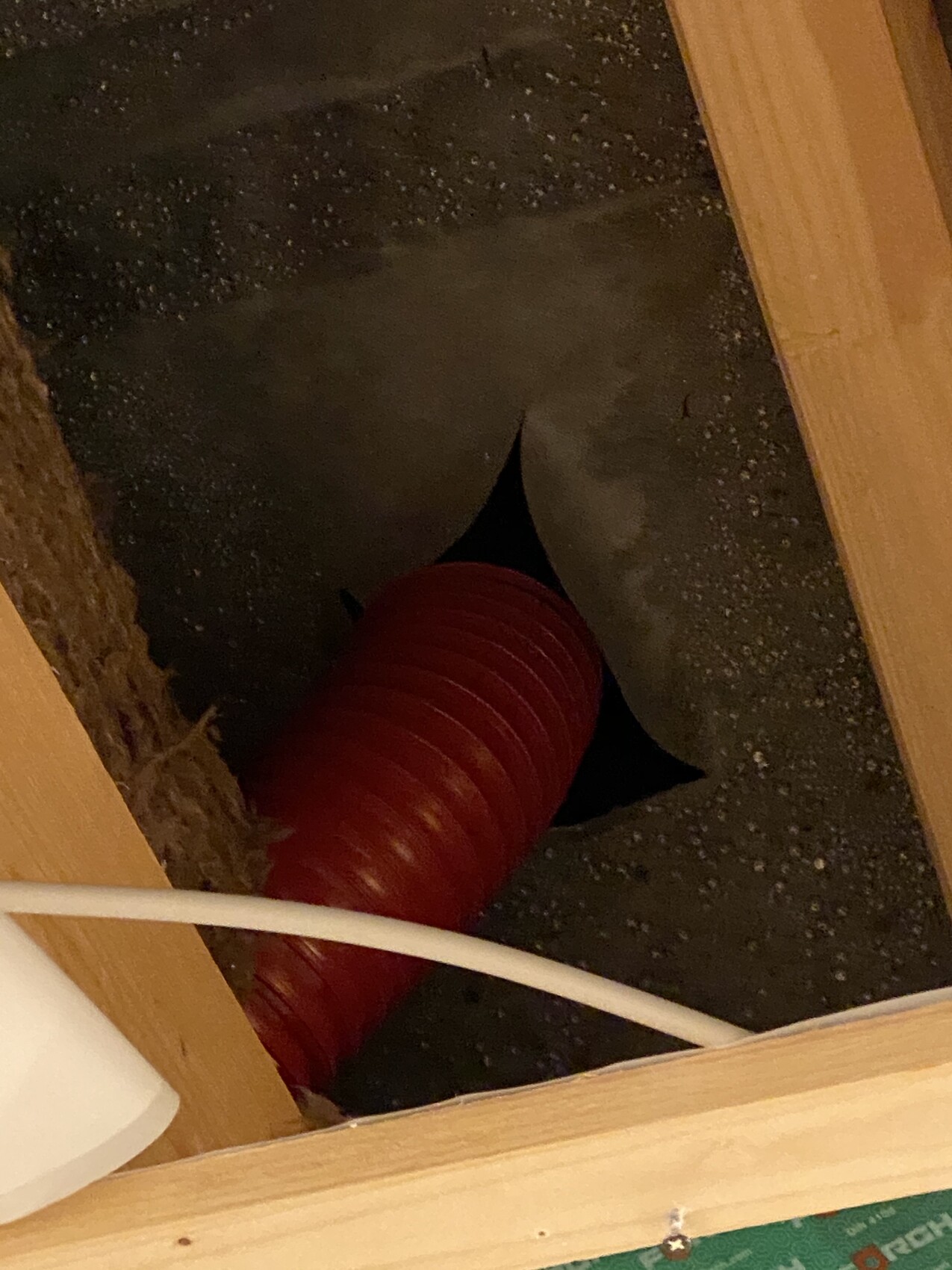
After opening the ceiling, it was noticed that the ventilation pipe was not insulated, which caused a lot of condensation moisture to form on the breathable membrane in the cold roof area. The drywall installer is coming today to insulate the pipe and redo the ceiling at that spot. However, everything still looks very damp. He said it will dry out... is it okay to proceed like this, or should everything be left to dry for a few days first?
I’m quite puzzled. Thanks
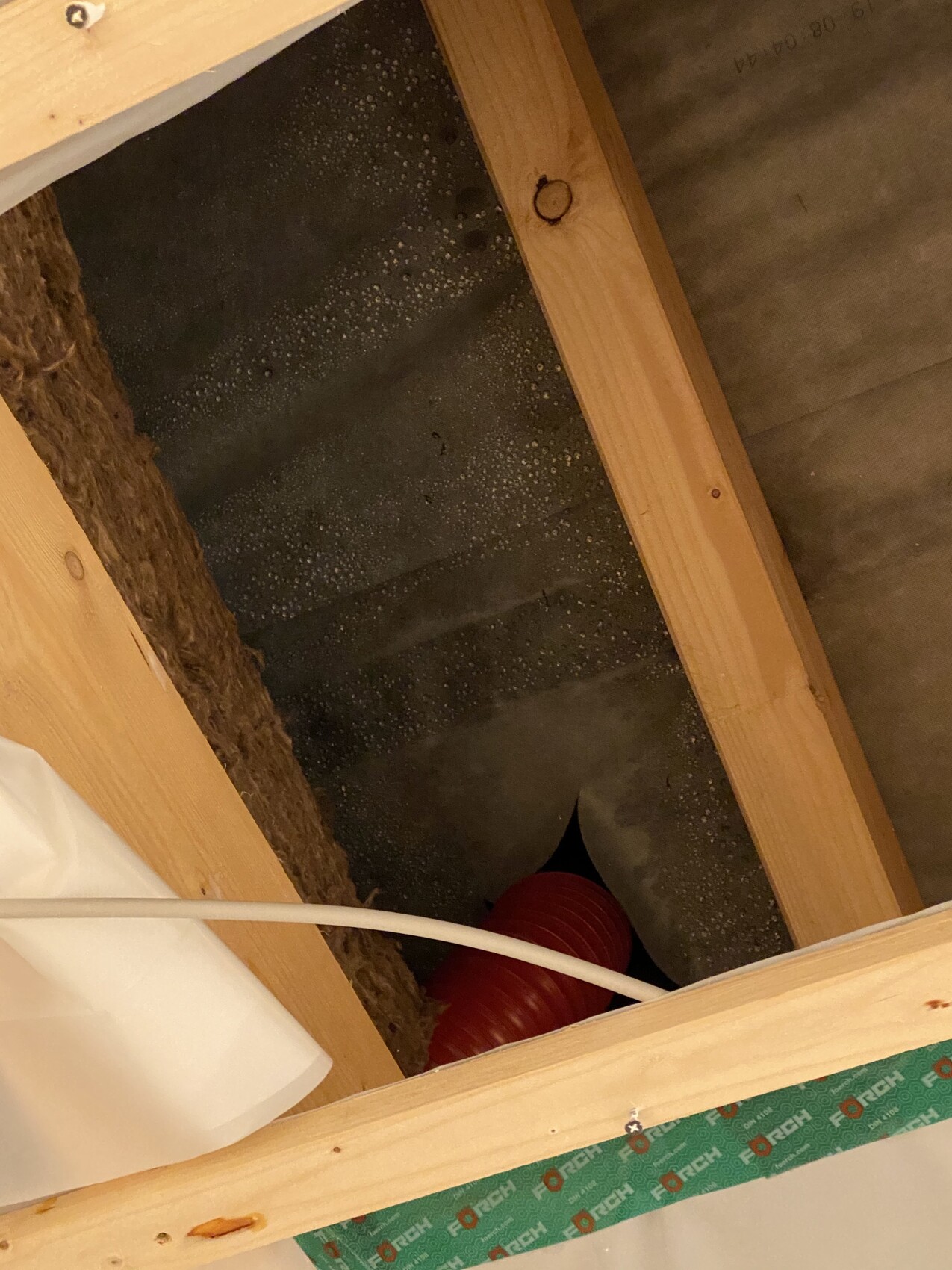
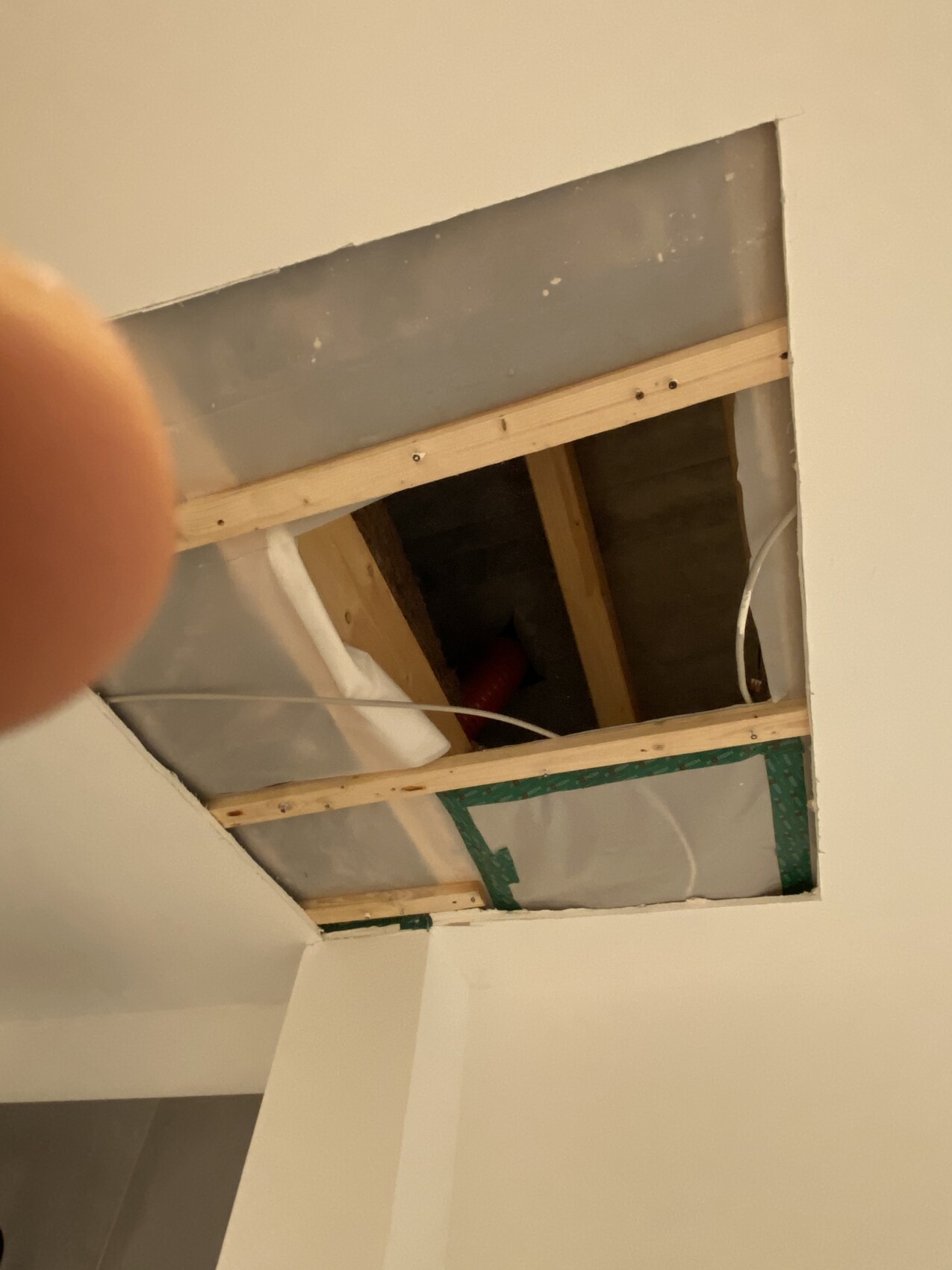
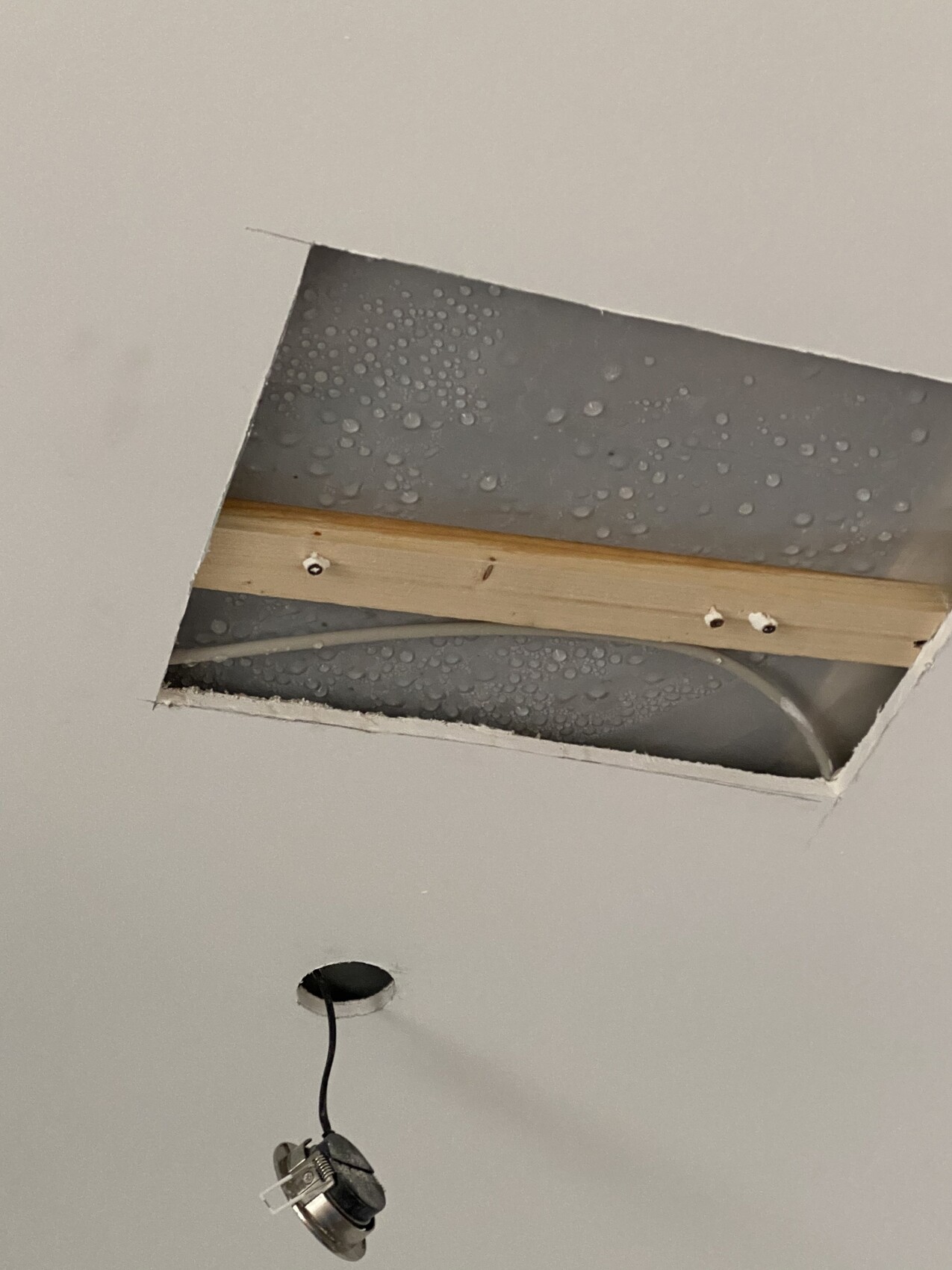
In our new build (moved in November 2020), we have noticed that the ceiling in the bathroom is damp in the middle. Yesterday, the builder sent someone to remove the drywall at that spot. Water had accumulated under the vapor barrier and soaked the drywall. Unfortunately, I have no idea how the moisture got there. The area above the vapor barrier was completely dry. Is it possible that moisture from showering could get in through recessed ceiling lights if there is a small gap, or how else could this happen?
Second issue:
After opening the ceiling, it was noticed that the ventilation pipe was not insulated, which caused a lot of condensation moisture to form on the breathable membrane in the cold roof area. The drywall installer is coming today to insulate the pipe and redo the ceiling at that spot. However, everything still looks very damp. He said it will dry out... is it okay to proceed like this, or should everything be left to dry for a few days first?
I’m quite puzzled. Thanks
K
knalltüte11 Jan 2021 10:00Oh my gosh. If the insulation is wet as well (that’s how it looks to me), I’ve heard it has to be disposed of (its insulation effect then equals zero). Mold will eventually follow. To me, this seems more like a systematic error. Was the pipe just "forgotten" at this one spot to be sealed? I don’t believe that for a second. If it wasn’t done here, it wasn’t done anywhere in the house.
Fortunately, the insulation wool is still dry. At least, I couldn’t really feel any dampness. However, the water would have to drip down from the waterproof membrane onto the insulation wool, which would normally cause it to get wet. I just hope that it was only forgotten here.
W
Wintersonne11 Jan 2021 12:51Does the vapor retarder’s sd-value match the overall wall assembly? I vaguely remember there being something important to consider. I think this was once a topic discussed here in the forum.
 Schimi179111 Jan 2021 12:59
Unbelievable that something like this can happen nowadays in a new build ...
W
Wintersonne11 Jan 2021 13:19Schimi1791 schrieb:
Unbelievable that something like this can happen nowadays in a new build... I think people often don’t realize what they’ve actually bought if they weren’t involved during the construction (just speaking in general). As long as it never causes obvious problems, you’ll never find out what’s going on behind the scenes.
Similar topics