
Hello everyone,
In our new build (moved in November 2020), we have noticed that the ceiling in the bathroom is damp in the middle. Yesterday, the builder sent someone to remove the drywall at that spot. Water had accumulated under the vapor barrier and soaked the drywall. Unfortunately, I have no idea how the moisture got there. The area above the vapor barrier was completely dry. Is it possible that moisture from showering could get in through recessed ceiling lights if there is a small gap, or how else could this happen?
Second issue:
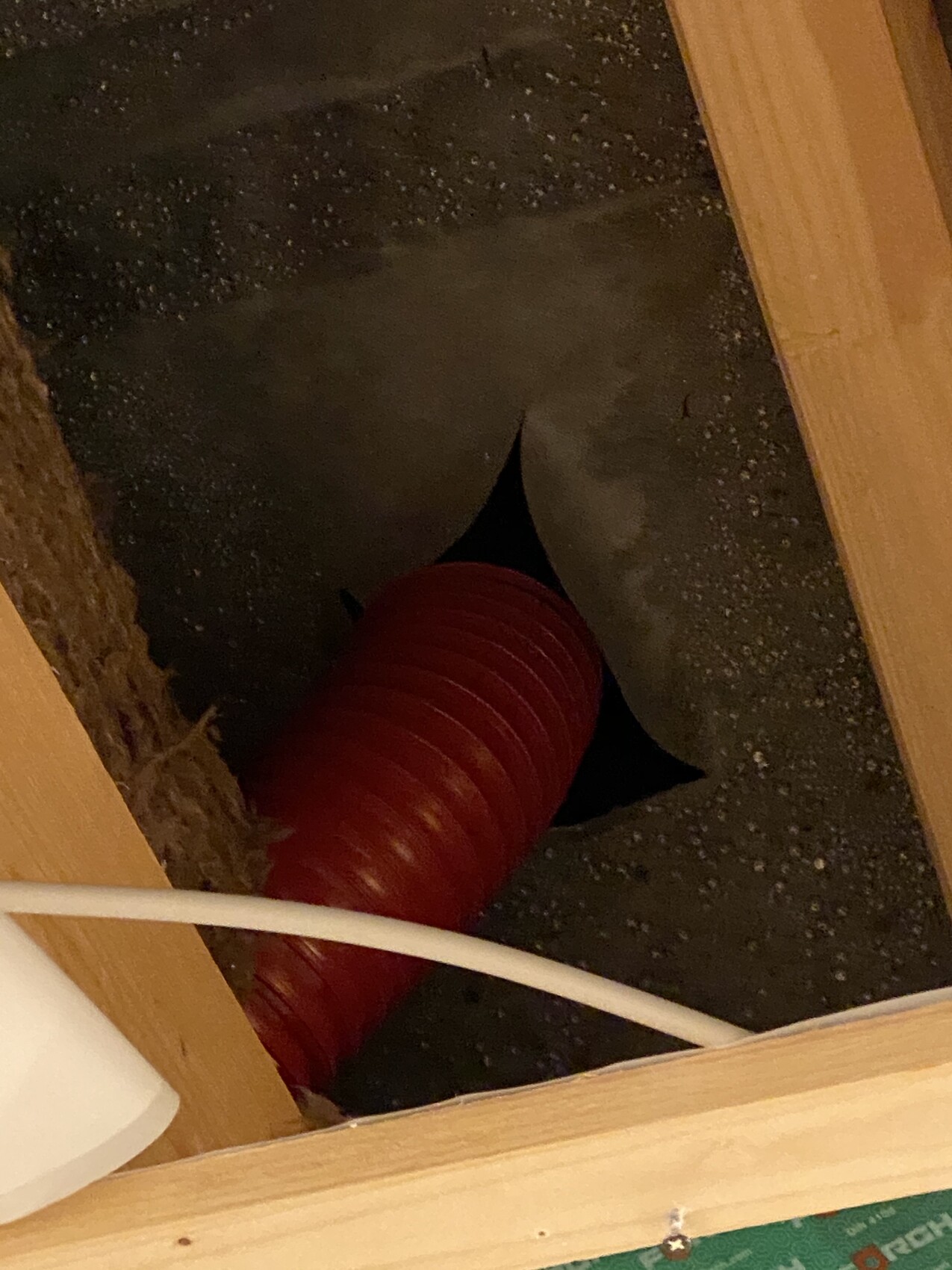
After opening the ceiling, it was noticed that the ventilation pipe was not insulated, which caused a lot of condensation moisture to form on the breathable membrane in the cold roof area. The drywall installer is coming today to insulate the pipe and redo the ceiling at that spot. However, everything still looks very damp. He said it will dry out... is it okay to proceed like this, or should everything be left to dry for a few days first?
I’m quite puzzled. Thanks
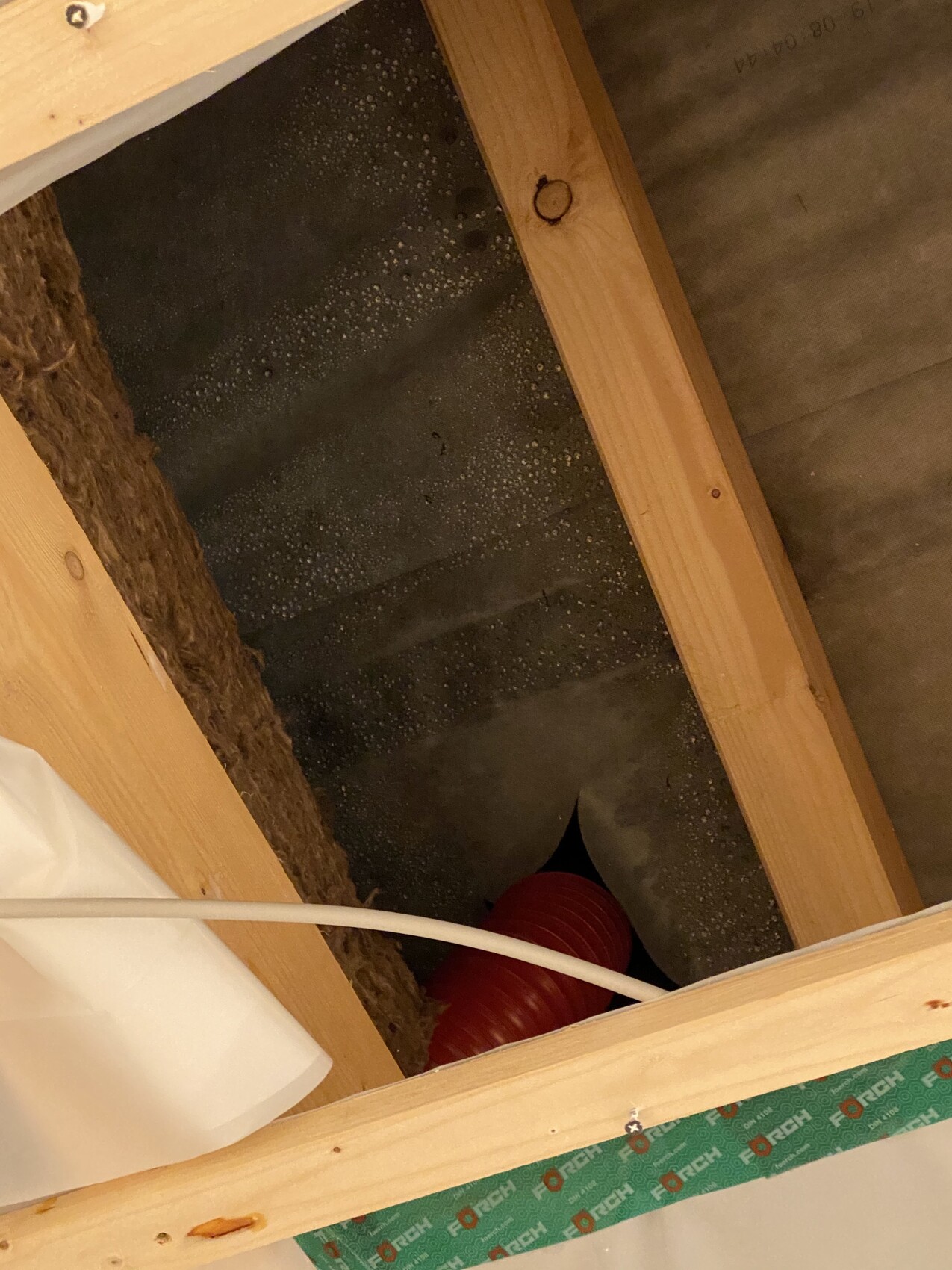
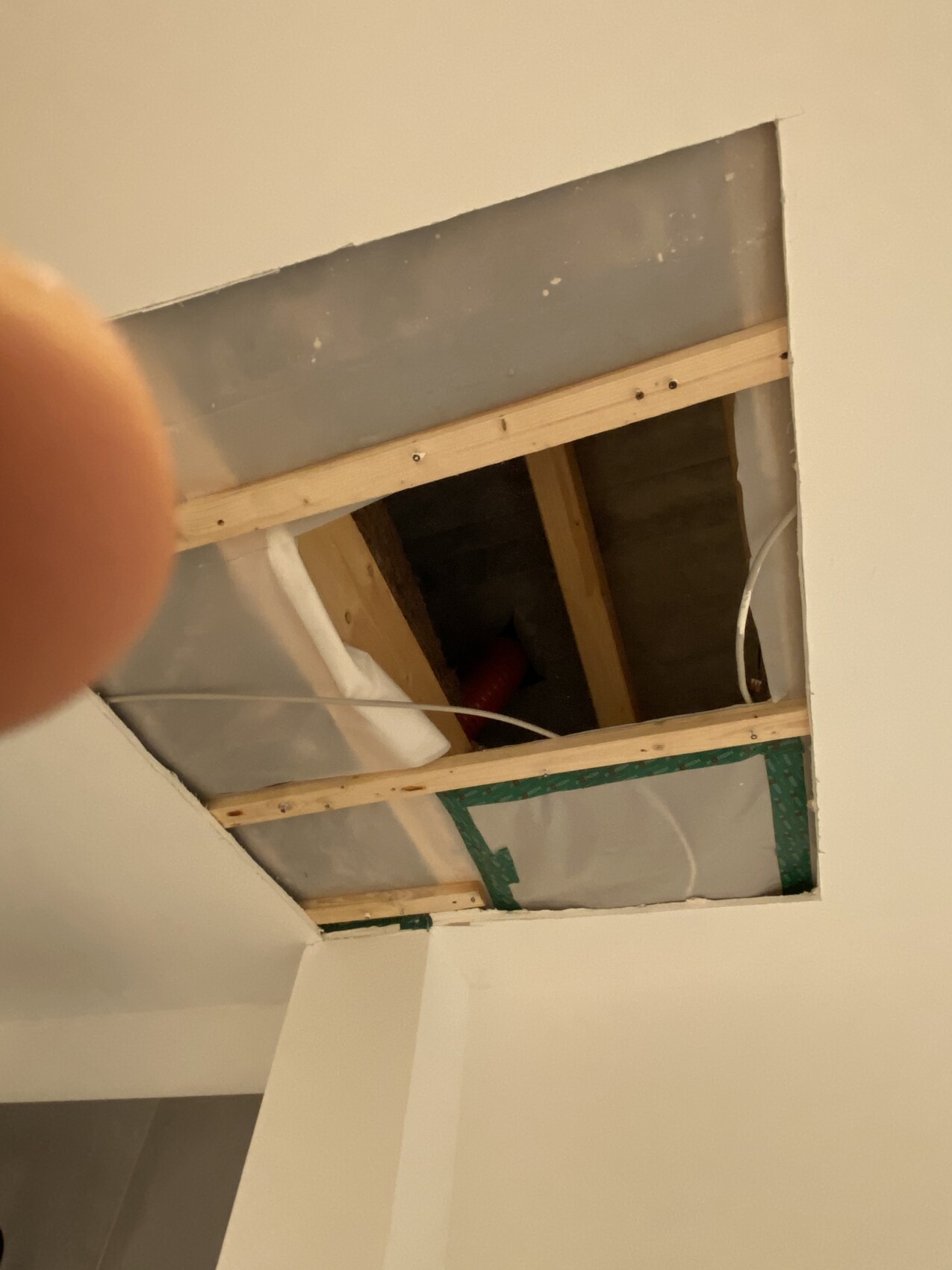
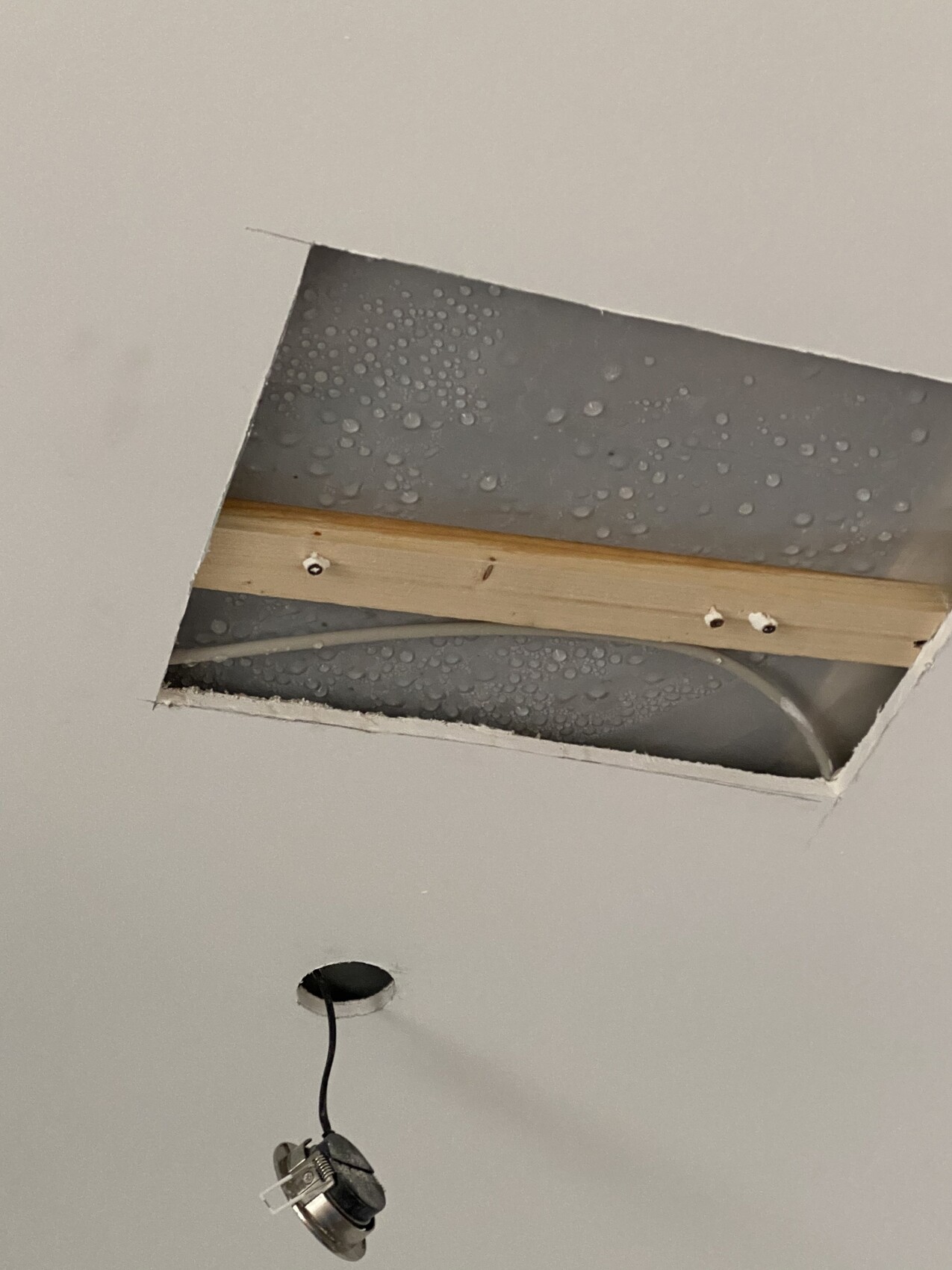
In our new build (moved in November 2020), we have noticed that the ceiling in the bathroom is damp in the middle. Yesterday, the builder sent someone to remove the drywall at that spot. Water had accumulated under the vapor barrier and soaked the drywall. Unfortunately, I have no idea how the moisture got there. The area above the vapor barrier was completely dry. Is it possible that moisture from showering could get in through recessed ceiling lights if there is a small gap, or how else could this happen?
Second issue:
After opening the ceiling, it was noticed that the ventilation pipe was not insulated, which caused a lot of condensation moisture to form on the breathable membrane in the cold roof area. The drywall installer is coming today to insulate the pipe and redo the ceiling at that spot. However, everything still looks very damp. He said it will dry out... is it okay to proceed like this, or should everything be left to dry for a few days first?
I’m quite puzzled. Thanks
It is clear that this is a cold roof and, based on what can be seen in the photos, it has been properly constructed.
The fact that the underlay membrane is not sealed tightly to the vent pipe only matters during severe storms with driving rain, when water is forced under the tiles. Similarly, insulating the pipe is not necessary since it is always warmer than the outside air, never colder.
Either there are serious issues here that cannot be seen in the photos, or there is simply no ventilation, which is usually the cause. If you take a hot shower for 10 minutes, you need to open the window fully for at least 5 minutes afterward if you don’t have a mechanical ventilation system. Do you do that?
The fact that the underlay membrane is not sealed tightly to the vent pipe only matters during severe storms with driving rain, when water is forced under the tiles. Similarly, insulating the pipe is not necessary since it is always warmer than the outside air, never colder.
Either there are serious issues here that cannot be seen in the photos, or there is simply no ventilation, which is usually the cause. If you take a hot shower for 10 minutes, you need to open the window fully for at least 5 minutes afterward if you don’t have a mechanical ventilation system. Do you do that?
We usually ventilate in the morning after showering for at least 10 minutes and again in the evening for 10-15 minutes. Always cross-ventilating the entire floor. In between, the bathroom is intermittently aired out during the day whenever the cats have used the litter box and there is an odor.
Of course, it would be possible to cross-ventilate again at midday, but it should actually be sufficient as is.
It’s possible that the moisture has been inside for a longer time. I know that after the screed was installed, ventilation was only done inadequately at times. Unfortunately, we had no control over that.
Of course, it would be possible to cross-ventilate again at midday, but it should actually be sufficient as is.
It’s possible that the moisture has been inside for a longer time. I know that after the screed was installed, ventilation was only done inadequately at times. Unfortunately, we had no control over that.
A
Alessandro12 Jan 2021 08:39In my case, the entire underlay membrane was also covered with water droplets. However, this happened during and after the screed drying process.
How long ago was that for you?
My suspicion is that the ceiling was closed up far too early. Have you noticed any mold on the roof beams?
How long ago was that for you?
My suspicion is that the ceiling was closed up far too early. Have you noticed any mold on the roof beams?
The screed was installed in June but dried without a heating program. The heating program was run at the end of August / beginning of September.
I felt a draft under the roof, so there is definitely some ventilation. I have no idea if the moisture can remain inside for that long (since the screed). Possibly there is not enough ventilation.
We will definitely have an access point created to the attic so we can monitor this in the future.
I felt a draft under the roof, so there is definitely some ventilation. I have no idea if the moisture can remain inside for that long (since the screed). Possibly there is not enough ventilation.
We will definitely have an access point created to the attic so we can monitor this in the future.
A
Alessandro12 Jan 2021 08:49For 100% certainty, I would place a data logger with an RH sensor at the top for one week. That way, you can see if the humidity rises after showering. If it doesn’t, then it’s residual moisture.
Similar topics