
Hello everyone,
In our new build (moved in November 2020), we have noticed that the ceiling in the bathroom is damp in the middle. Yesterday, the builder sent someone to remove the drywall at that spot. Water had accumulated under the vapor barrier and soaked the drywall. Unfortunately, I have no idea how the moisture got there. The area above the vapor barrier was completely dry. Is it possible that moisture from showering could get in through recessed ceiling lights if there is a small gap, or how else could this happen?
Second issue:
After opening the ceiling, it was noticed that the ventilation pipe was not insulated, which caused a lot of condensation moisture to form on the breathable membrane in the cold roof area. The drywall installer is coming today to insulate the pipe and redo the ceiling at that spot. However, everything still looks very damp. He said it will dry out... is it okay to proceed like this, or should everything be left to dry for a few days first?
I’m quite puzzled. Thanks
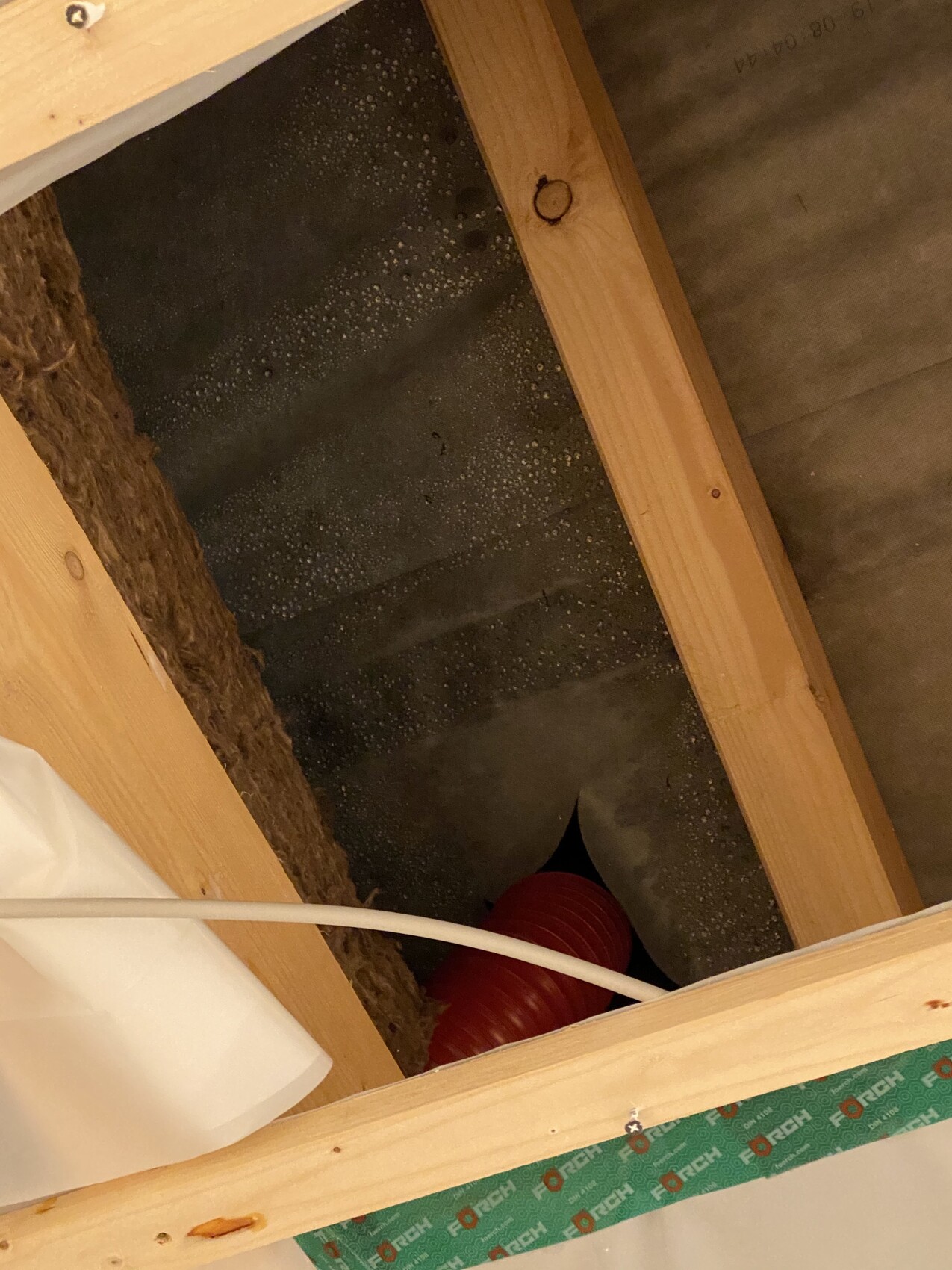
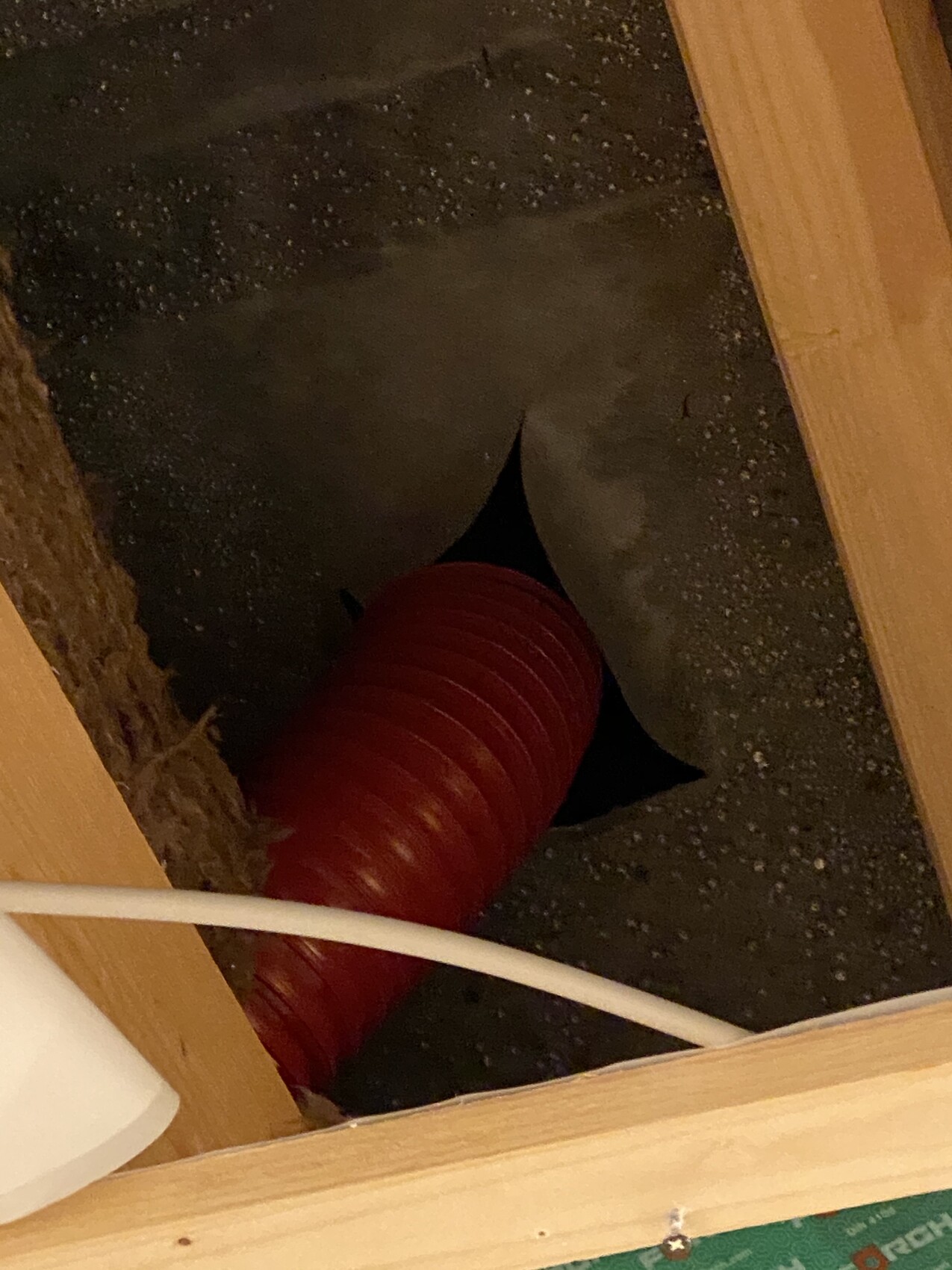
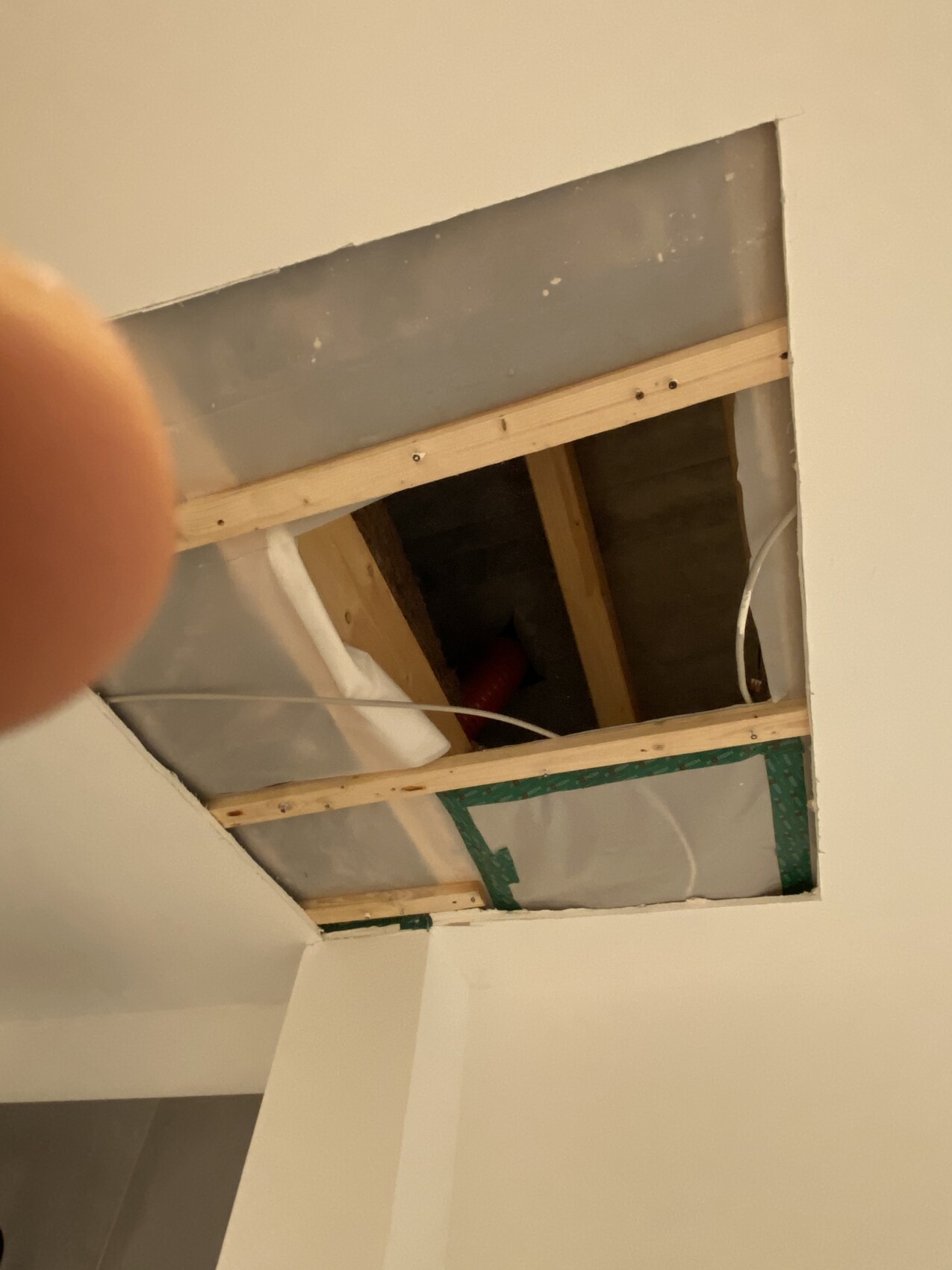
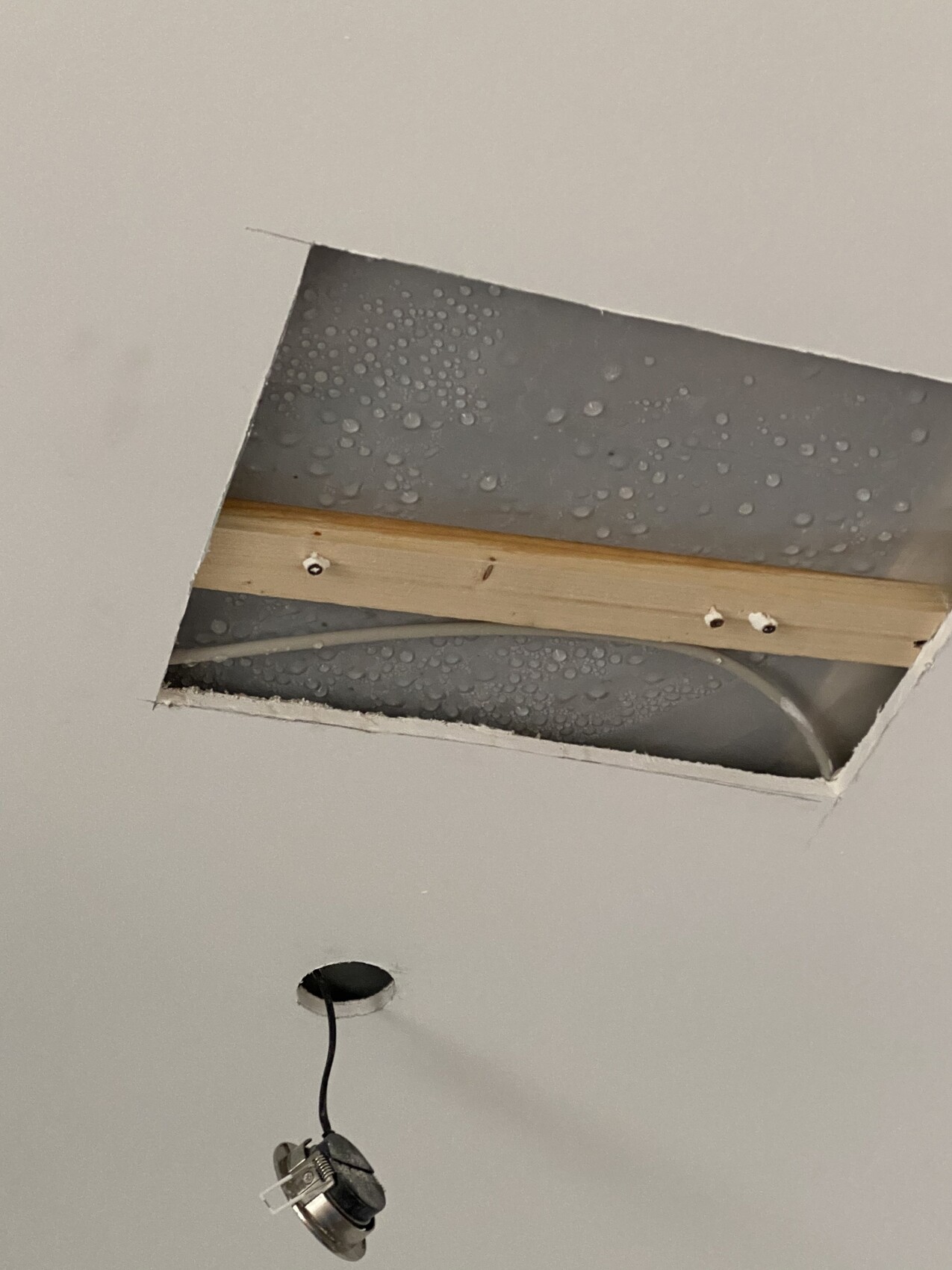
In our new build (moved in November 2020), we have noticed that the ceiling in the bathroom is damp in the middle. Yesterday, the builder sent someone to remove the drywall at that spot. Water had accumulated under the vapor barrier and soaked the drywall. Unfortunately, I have no idea how the moisture got there. The area above the vapor barrier was completely dry. Is it possible that moisture from showering could get in through recessed ceiling lights if there is a small gap, or how else could this happen?
Second issue:
After opening the ceiling, it was noticed that the ventilation pipe was not insulated, which caused a lot of condensation moisture to form on the breathable membrane in the cold roof area. The drywall installer is coming today to insulate the pipe and redo the ceiling at that spot. However, everything still looks very damp. He said it will dry out... is it okay to proceed like this, or should everything be left to dry for a few days first?
I’m quite puzzled. Thanks
W
Wintersonne11 Jan 2021 14:14Jonas90 schrieb:
Does anyone have an idea how moisture could have gotten between the drywall and the vapor barrier? Could it actually be coming from the recessed ceiling lights? Or through the joints between the wall and ceiling (sealed with acrylic, but cracked in a few places due to building movement)?
Maybe the cracks are only in the paint? Almost every house has that issue (well, my experience is limited to 3-4 houses of this construction type within my circle of acquaintances 😉).
Do you know the sd-value of your vapor retarder? Maybe it’s actually a vapor barrier? Vapor retarders are designed to allow some moisture to pass outward. There are also humidity-variable retarders. You might want to read up on that.
 Schimi179111 Jan 2021 14:15
In my opinion, it depends on what type of membrane it is. Is it a vapor retarder or a vapor barrier? A vapor retarder should be able to control water vapor, similar to a Gore-Tex membrane. With a vapor barrier—that is, a water vapor–impermeable membrane—condensation could occur on the membrane itself, as it does now. However, I am not an expert on this.
We installed an Isover KM Duplex UV membrane in the upper floor. This membrane can regulate moisture to some extent by opening or closing its pores. I was uncertain whether it was necessary, but ultimately decided to use it.
So far, we have had no visible moisture problems in the bathrooms, luckily, and we rely only on natural ventilation—meaning windows and the will to open them appropriately.
We installed an Isover KM Duplex UV membrane in the upper floor. This membrane can regulate moisture to some extent by opening or closing its pores. I was uncertain whether it was necessary, but ultimately decided to use it.
So far, we have had no visible moisture problems in the bathrooms, luckily, and we rely only on natural ventilation—meaning windows and the will to open them appropriately.
W
Wintersonne11 Jan 2021 14:16@Schimi1791: same thought 😀
Schimi179111 Jan 2021 14:22Shouldn't such work also be documented or at least included in the scope of work description?
Similar topics