
Hello everyone,
In our new build (moved in November 2020), we have noticed that the ceiling in the bathroom is damp in the middle. Yesterday, the builder sent someone to remove the drywall at that spot. Water had accumulated under the vapor barrier and soaked the drywall. Unfortunately, I have no idea how the moisture got there. The area above the vapor barrier was completely dry. Is it possible that moisture from showering could get in through recessed ceiling lights if there is a small gap, or how else could this happen?
Second issue:
After opening the ceiling, it was noticed that the ventilation pipe was not insulated, which caused a lot of condensation moisture to form on the breathable membrane in the cold roof area. The drywall installer is coming today to insulate the pipe and redo the ceiling at that spot. However, everything still looks very damp. He said it will dry out... is it okay to proceed like this, or should everything be left to dry for a few days first?
I’m quite puzzled. Thanks
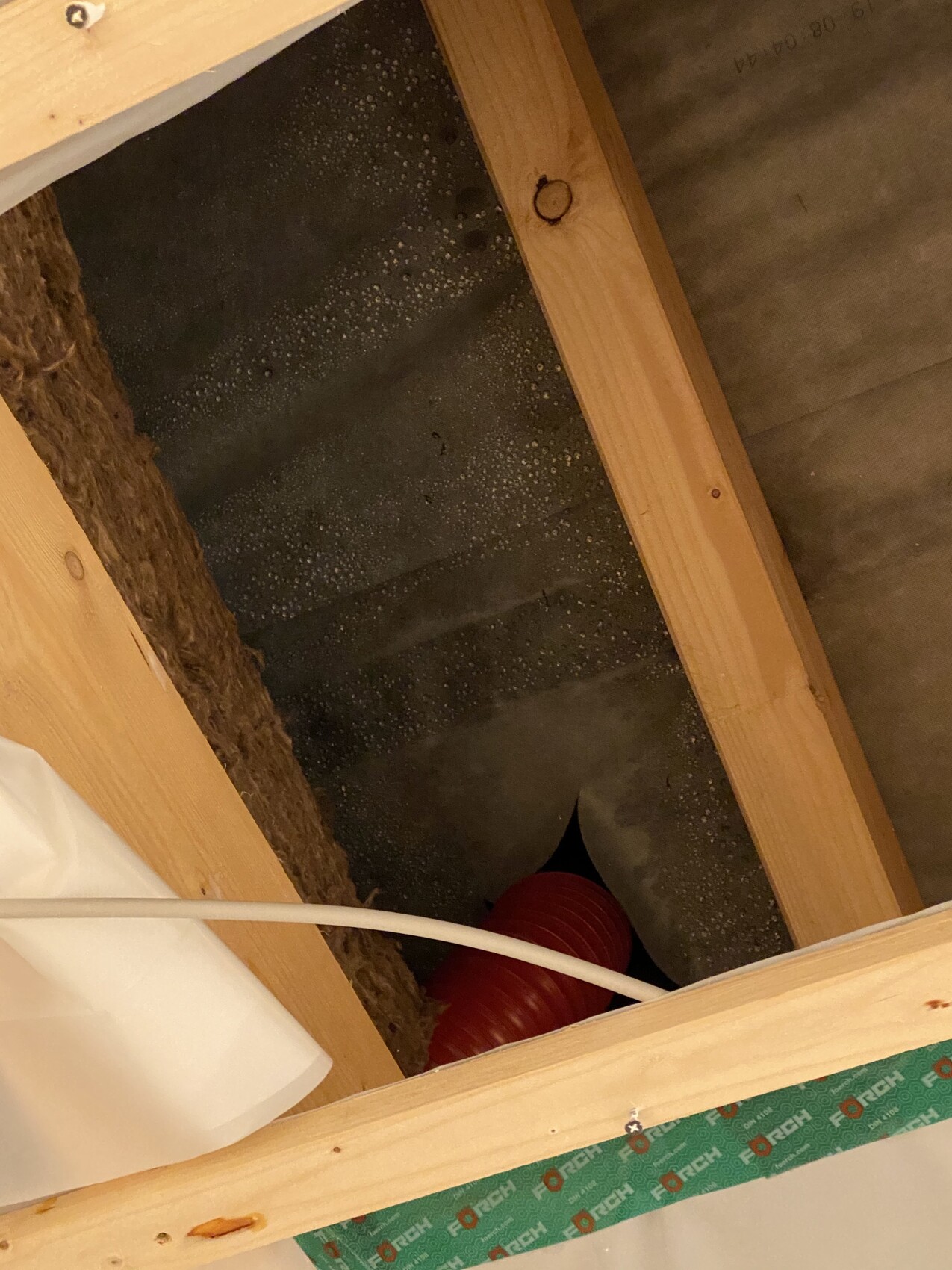
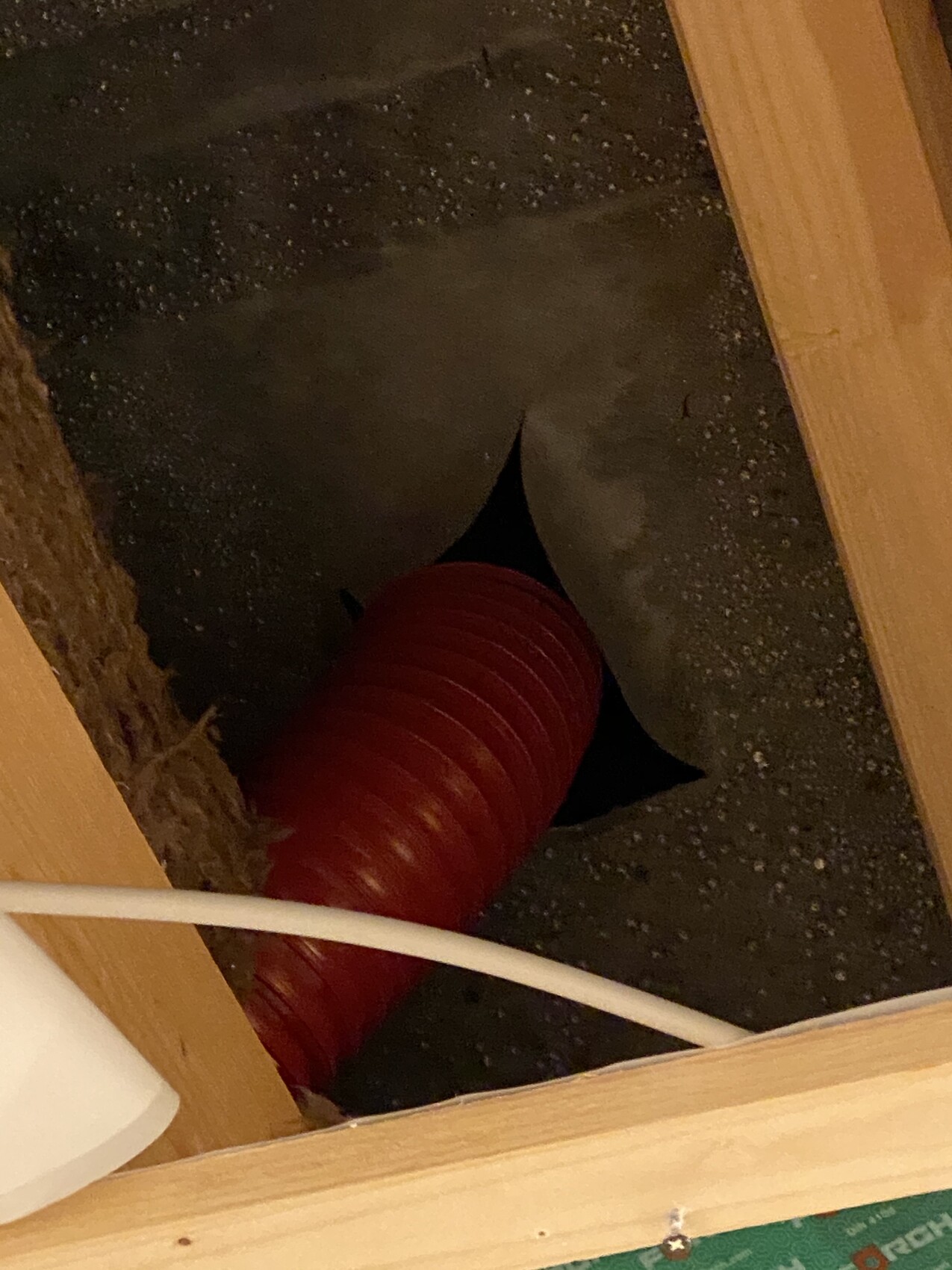
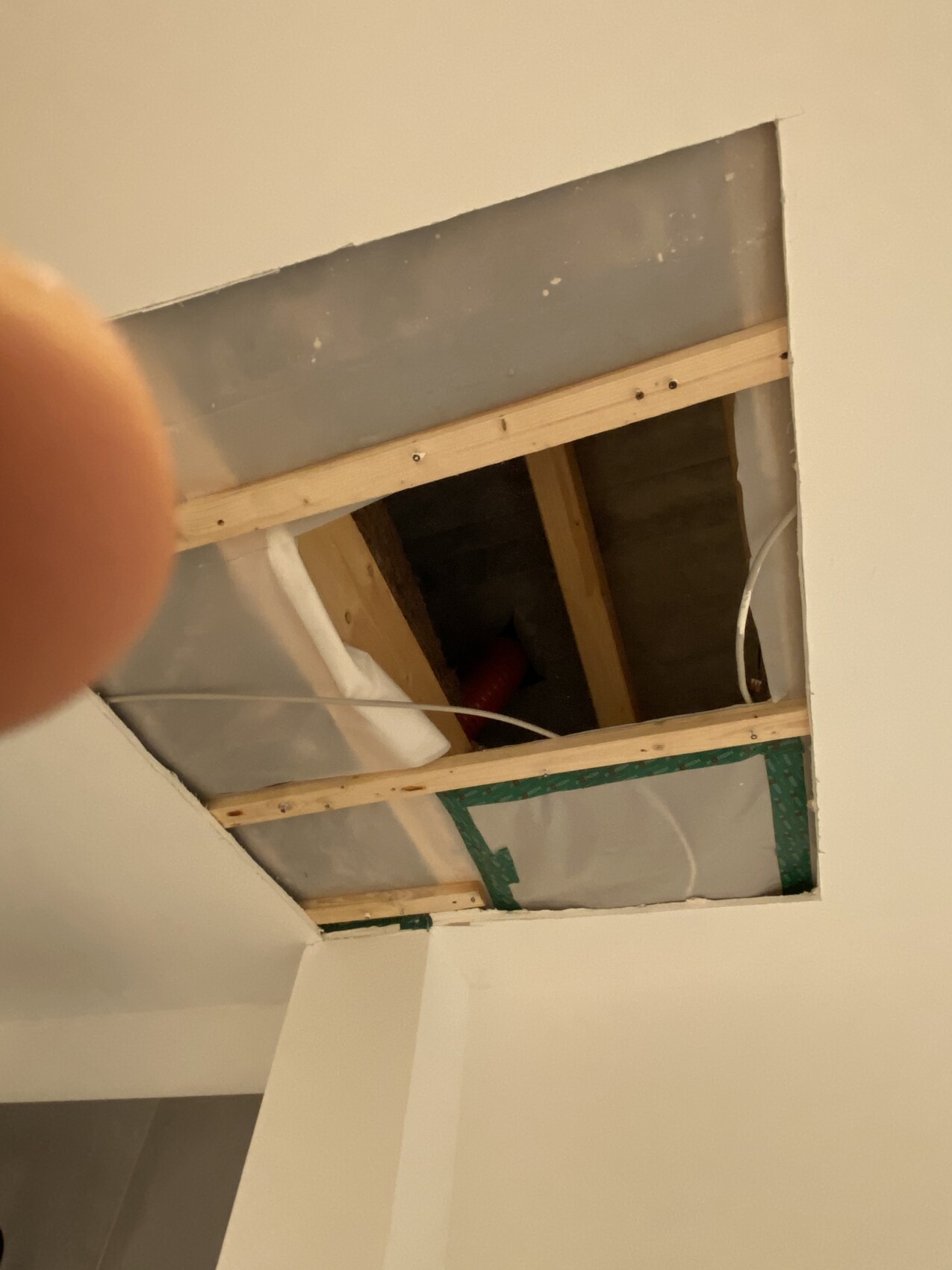
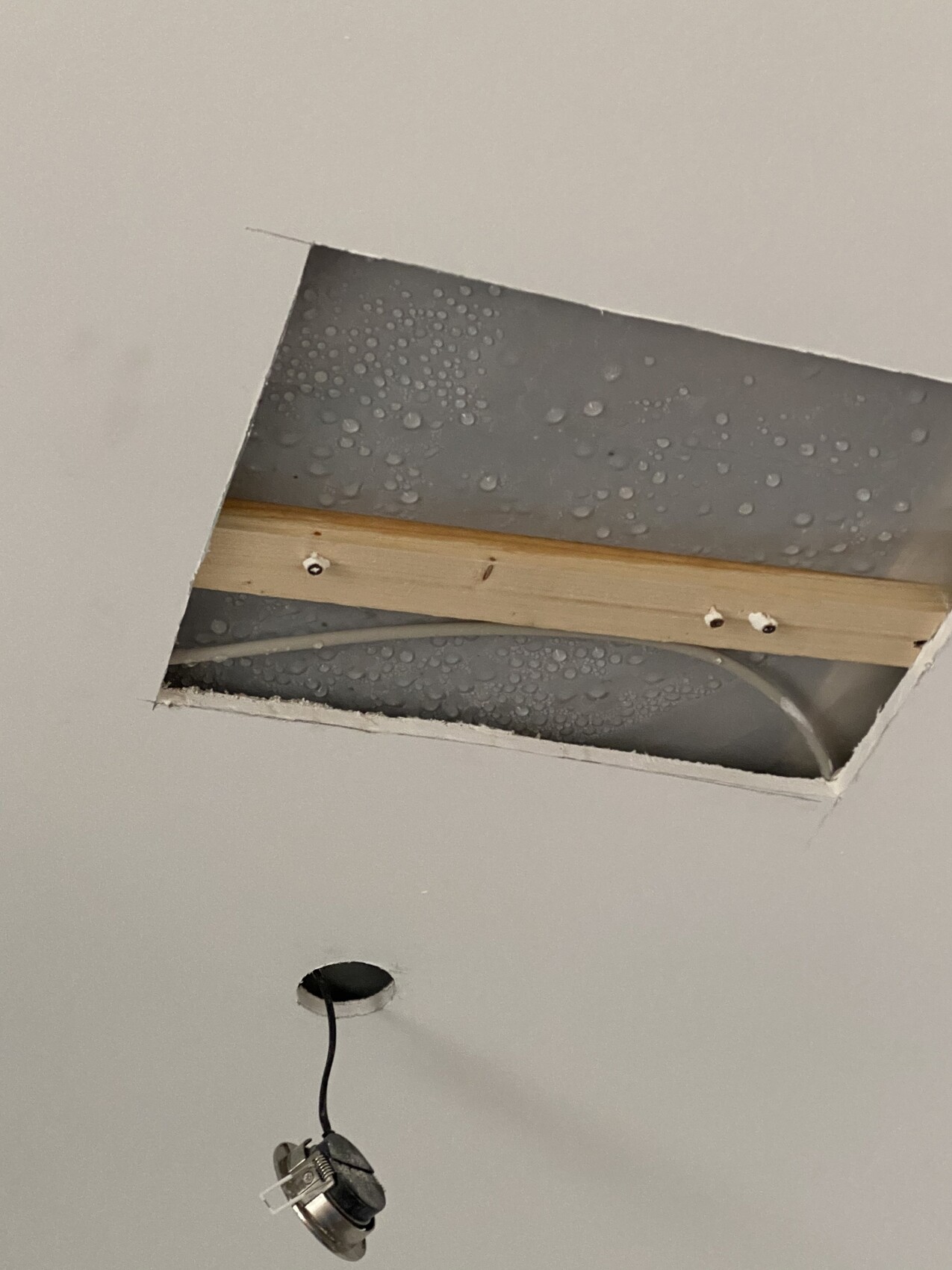
In our new build (moved in November 2020), we have noticed that the ceiling in the bathroom is damp in the middle. Yesterday, the builder sent someone to remove the drywall at that spot. Water had accumulated under the vapor barrier and soaked the drywall. Unfortunately, I have no idea how the moisture got there. The area above the vapor barrier was completely dry. Is it possible that moisture from showering could get in through recessed ceiling lights if there is a small gap, or how else could this happen?
Second issue:
After opening the ceiling, it was noticed that the ventilation pipe was not insulated, which caused a lot of condensation moisture to form on the breathable membrane in the cold roof area. The drywall installer is coming today to insulate the pipe and redo the ceiling at that spot. However, everything still looks very damp. He said it will dry out... is it okay to proceed like this, or should everything be left to dry for a few days first?
I’m quite puzzled. Thanks
 Schimi179111 Jan 2021 13:25
We have had a new bathroom on the upper floor for about 12 months. This is the only room where I didn’t document the renovation work completely and without gaps. Fortunately, no issues have occurred so far. I will assume that we are spared from such problems and hope, for the original poster, that the matter will be resolved amicably!
I hope that the issue is really resolved by letting it dry out first and then insulating. We will definitely have an access hatch installed to the attic so we can check it regularly in the future. During the construction phase, we thought we didn’t need it yet… well, now it would have been useful.
Does anyone have an idea how moisture could have gotten between the drywall and the vapor barrier? Could it actually come from the recessed ceiling lights? Or through the joints between the wall and ceiling (sealed with acrylic, but cracked in a few spots due to the house’s movement)?
The moisture definitely did not come from above; the vapor barrier was only wet from below.
I’m worried that if we close up the ceiling now, in two months we might have the same problem again.
Does anyone have an idea how moisture could have gotten between the drywall and the vapor barrier? Could it actually come from the recessed ceiling lights? Or through the joints between the wall and ceiling (sealed with acrylic, but cracked in a few spots due to the house’s movement)?
The moisture definitely did not come from above; the vapor barrier was only wet from below.
I’m worried that if we close up the ceiling now, in two months we might have the same problem again.
Schimi179111 Jan 2021 13:44As far as I know, gypsum plasterboard does not provide significant resistance to water vapor. Shouldn't excessive moisture be prevented by controlled ventilation systems?
Schimi179111 Jan 2021 14:00Yes, the green boards are designed for wet rooms. However, this does not mean they are waterproof or vapor-tight.
Similar topics