
Hello everyone,
In our new build (moved in November 2020), we have noticed that the ceiling in the bathroom is damp in the middle. Yesterday, the builder sent someone to remove the drywall at that spot. Water had accumulated under the vapor barrier and soaked the drywall. Unfortunately, I have no idea how the moisture got there. The area above the vapor barrier was completely dry. Is it possible that moisture from showering could get in through recessed ceiling lights if there is a small gap, or how else could this happen?
Second issue:
After opening the ceiling, it was noticed that the ventilation pipe was not insulated, which caused a lot of condensation moisture to form on the breathable membrane in the cold roof area. The drywall installer is coming today to insulate the pipe and redo the ceiling at that spot. However, everything still looks very damp. He said it will dry out... is it okay to proceed like this, or should everything be left to dry for a few days first?
I’m quite puzzled. Thanks
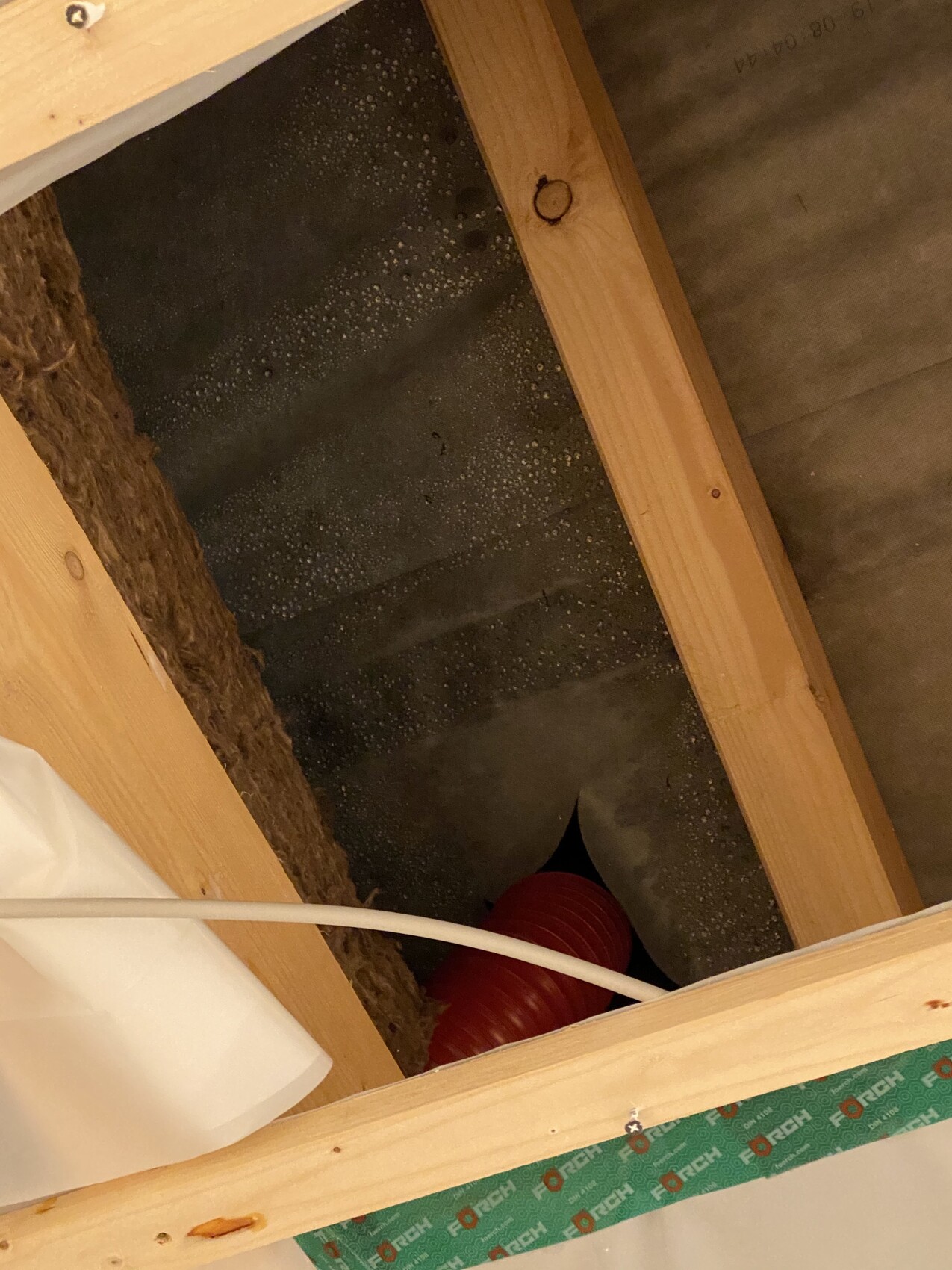
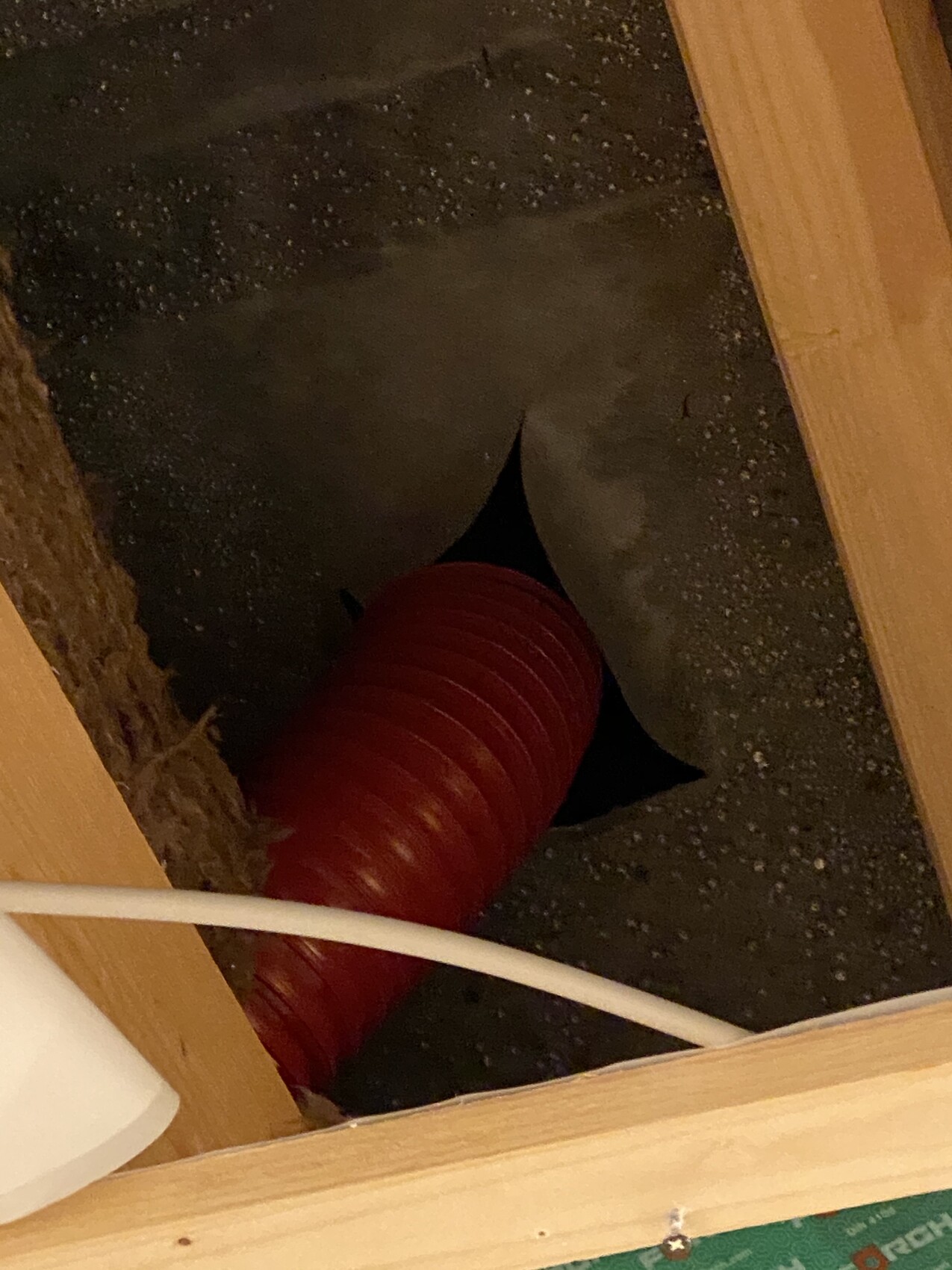
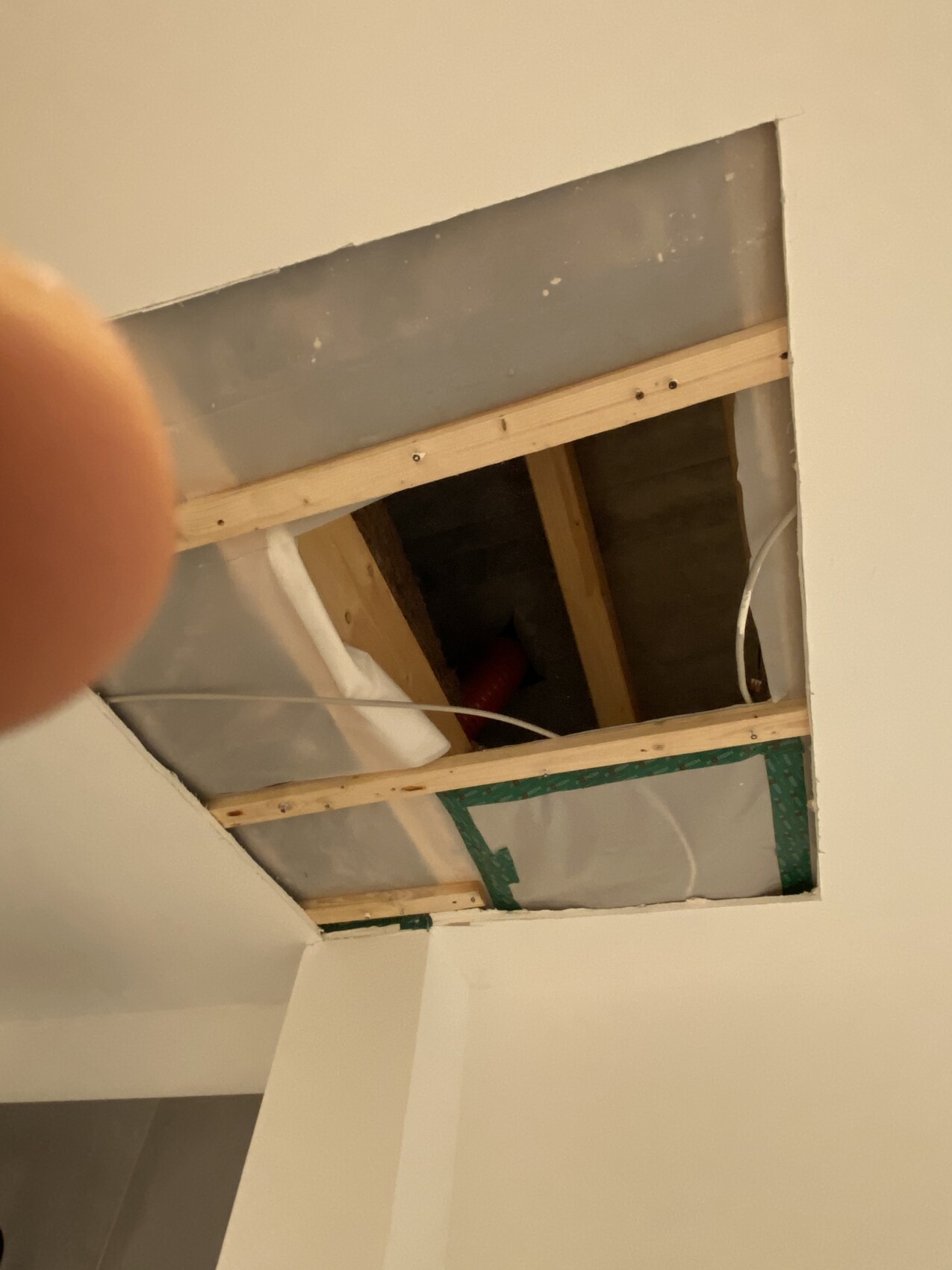
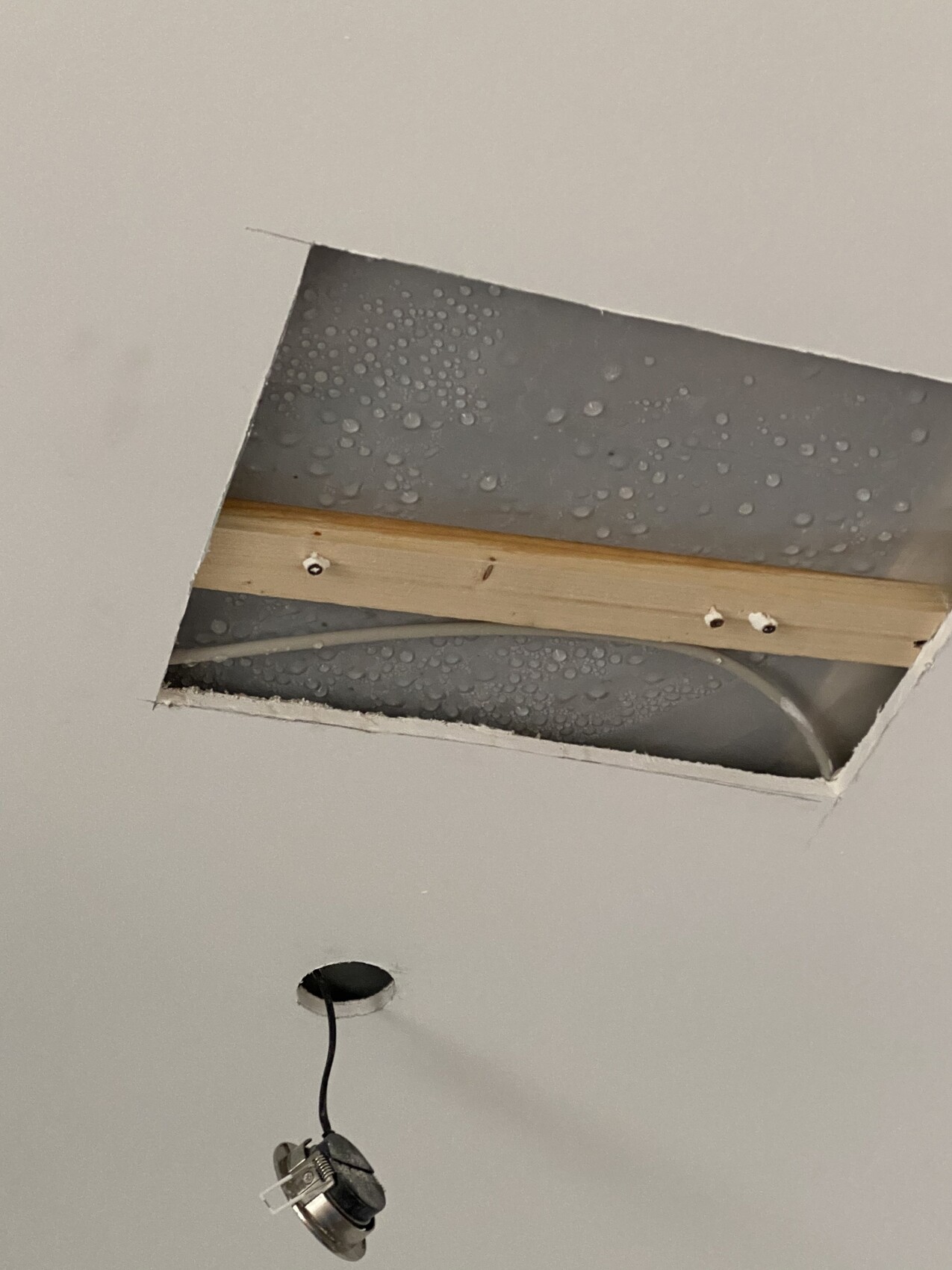
In our new build (moved in November 2020), we have noticed that the ceiling in the bathroom is damp in the middle. Yesterday, the builder sent someone to remove the drywall at that spot. Water had accumulated under the vapor barrier and soaked the drywall. Unfortunately, I have no idea how the moisture got there. The area above the vapor barrier was completely dry. Is it possible that moisture from showering could get in through recessed ceiling lights if there is a small gap, or how else could this happen?
Second issue:
After opening the ceiling, it was noticed that the ventilation pipe was not insulated, which caused a lot of condensation moisture to form on the breathable membrane in the cold roof area. The drywall installer is coming today to insulate the pipe and redo the ceiling at that spot. However, everything still looks very damp. He said it will dry out... is it okay to proceed like this, or should everything be left to dry for a few days first?
I’m quite puzzled. Thanks
 Schimi179111 Jan 2021 14:29
Jonas90 schrieb:
[...]
Vapor diffusion-tight membrane (sealed airtight) and
[...]I find the term "tight" here unfortunate!No, airtightness is not a disadvantage in this case.
From the pictures, there doesn’t seem to be any obvious error.
Whether the drywall or ceiling spotlight is airtight or not doesn’t matter, since the drywall does not serve as an airtight layer.
The most common mistake (though there can be many others) is user-related. Not having a controlled mechanical ventilation system is definitely a problem—if the bathroom is not ventilated thoroughly by hand after every shower, as well as in the morning, evening, and midday, this alone can be the cause.
From the pictures, there doesn’t seem to be any obvious error.
Whether the drywall or ceiling spotlight is airtight or not doesn’t matter, since the drywall does not serve as an airtight layer.
The most common mistake (though there can be many others) is user-related. Not having a controlled mechanical ventilation system is definitely a problem—if the bathroom is not ventilated thoroughly by hand after every shower, as well as in the morning, evening, and midday, this alone can be the cause.
First of all, thank you for your responses.
I have also done some additional reading. It seems that having a "tight" structure is not a bad idea here. I didn’t know that gypsum boards (drywall) are so permeable. So today, I will have the drywall installers dry everything out, add insulation, and redo the ceiling. I hope the problem won’t occur again.
Unfortunately, our builder did not offer a mechanical ventilation system with heat recovery. I hadn’t really looked into it before, but it seems to have many benefits. Maybe I will have it retrofitted in a few years.
I have also done some additional reading. It seems that having a "tight" structure is not a bad idea here. I didn’t know that gypsum boards (drywall) are so permeable. So today, I will have the drywall installers dry everything out, add insulation, and redo the ceiling. I hope the problem won’t occur again.
Unfortunately, our builder did not offer a mechanical ventilation system with heat recovery. I hadn’t really looked into it before, but it seems to have many benefits. Maybe I will have it retrofitted in a few years.
K
knalltüte11 Jan 2021 16:52Hi, if there is no mechanical ventilation system installed at the moment (it can also be done decentrally in individual rooms ;-) requiring only a tiny core drill hole + power supply), then at least a forced extraction/ventilation in the bathroom would be advisable. Just like in my student flat back in the day, connected to the light switch with a timer... This way, humid air is pushed out strongly for 10-15 minutes.
Schimi179111 Jan 2021 17:14superzapp schrieb:
[...]
only a tiny core drill hole + power supply required)
[...]Ideally, a 30 cm (12 inches) core drill hole. The fan can then be inserted there. The advantage of spending a bit more money here lies in heat recovery through a heat exchanger. Additionally, the "better" models can supply both exhaust and fresh air.Similar topics