
S
Schloesser6 Feb 2021 12:45Hello everyone,
First of all: I am absolutely not an expert, so sorry if some of the terms don’t sound professional.
We built a prefab house in 2015 (timber frame, panel construction) with a local company that is now insolvent, so there’s no one left for questions or warranty. However, this is not about blaming or warranty issues, but about getting help and finding solutions.
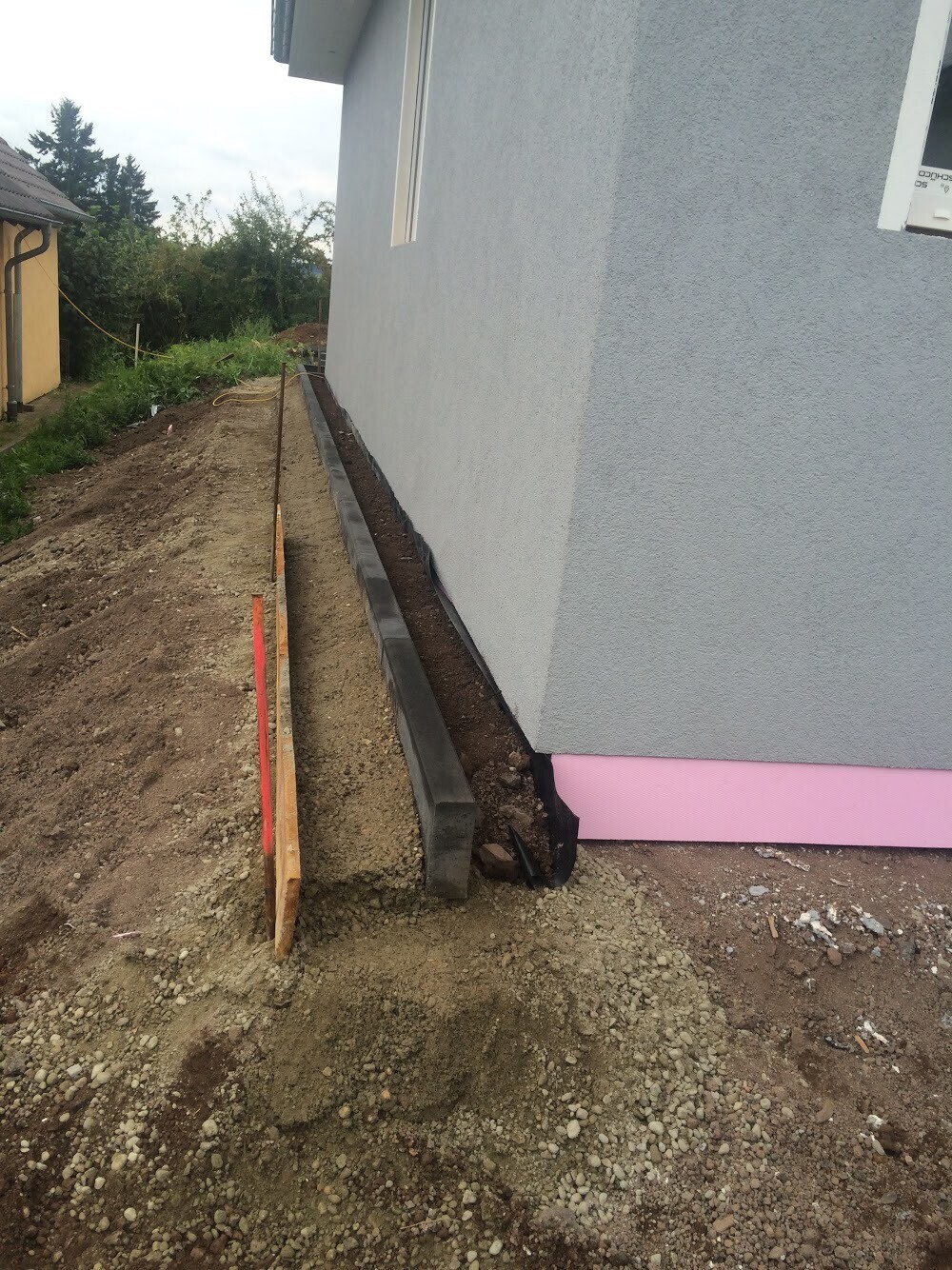
Last year, a painter came in the summer (a local company with a good reputation that still exists) and pointed out a missing waterproofing between the foundation slab and the base connection. He also noted that we don’t really have a proper base; the exterior wall of our bungalow without a basement simply extends all the way down. Back then we were told that bases are no longer done. Now I know: we should have had one... Normally, the gap between base connection and foundation slab would be sealed with a compressed sealing tape, which for us would apparently no longer be possible retroactively. As a solution, a rubber strip was glued externally to the lower edge of the exterior plaster and pulled down like a kind of “curtain” to the outside of the foundation slab. This was supposed to stop water from entering sideways. It sounded logical to us and even though it didn’t look good, the main thing was that it was sealed. Meanwhile, we have learned how important proper waterproofing is – unfortunately, back then we blindly trusted the prefab company.
This winter, we have the feeling that since the rubber strip was installed, MORE moisture is being drawn into the exterior wall. Now we are worried that we may have made things worse. After days and hours of internet research, we are at a loss. The fact is that our ground level is not 15cm (5 inches) below the lower edge of the exterior wall/base connection – we will try to correct this as best as possible with splash protection. Unfortunately, the landscaper did not point this out to us either.
Long story short, our questions are:
- Can it be that this rubber strip causes more moisture to be drawn upwards? If yes, could someone please explain why?
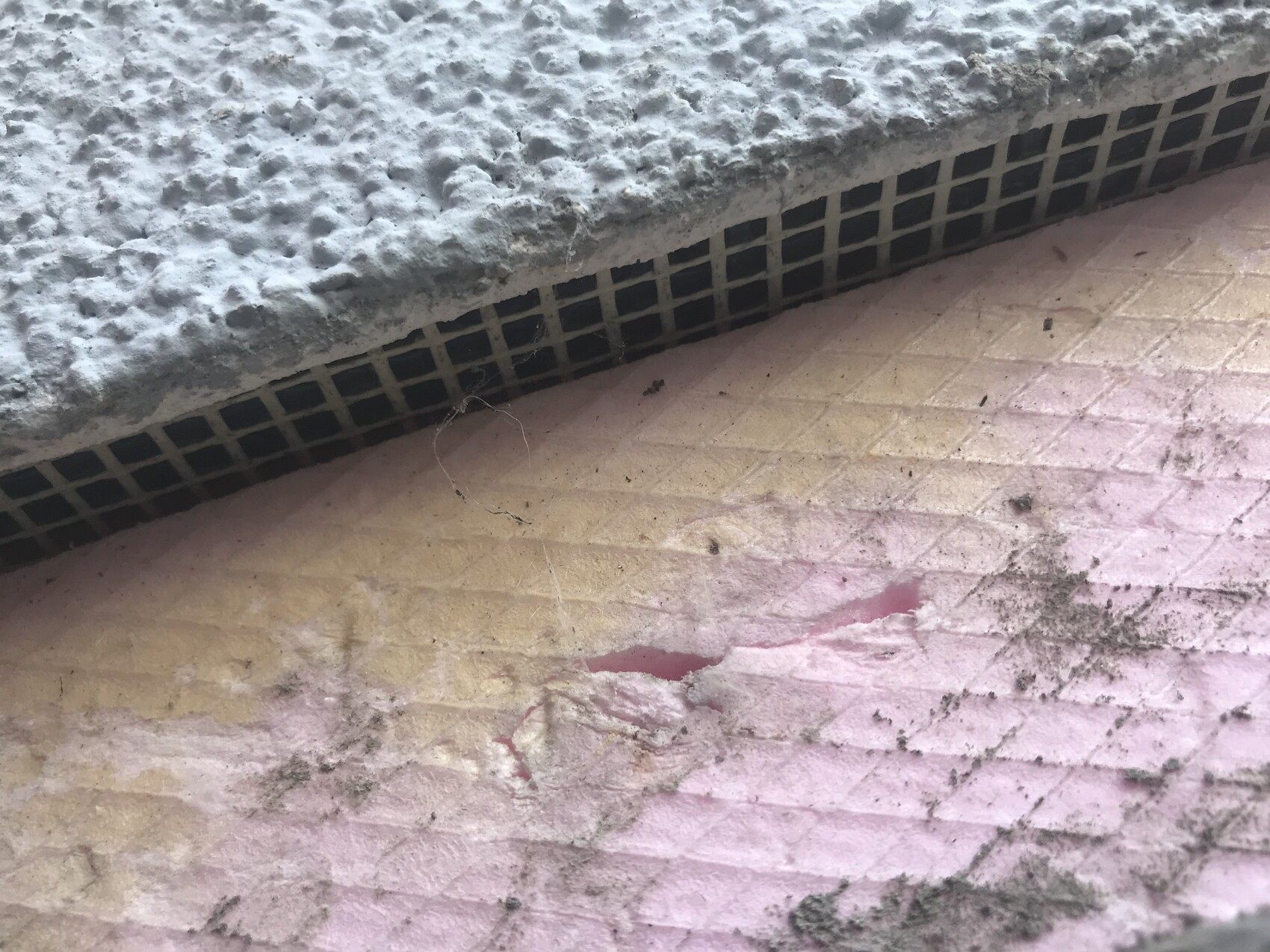
- The lower edge of the exterior wall is “open” – I am attaching a picture where I photographed upwards from the splash protection, showing the mesh at the lower edge before the rubber was installed. Behind the black rubber in the other pictures, this “openness” is still visible and from below the rubber is not sealed. I keep reading that the mesh wicks moisture capillary. So, it’s not just the gap between the foundation slab and the exterior wall, but also the lower edge of the exterior wall? If yes, how would one address this? I have read about base profiles, bitumen coating, or sealing tapes?
- Or does it have to remain open for ventilation, and is the rubber strip therefore actually wrong because it blocks air circulation?
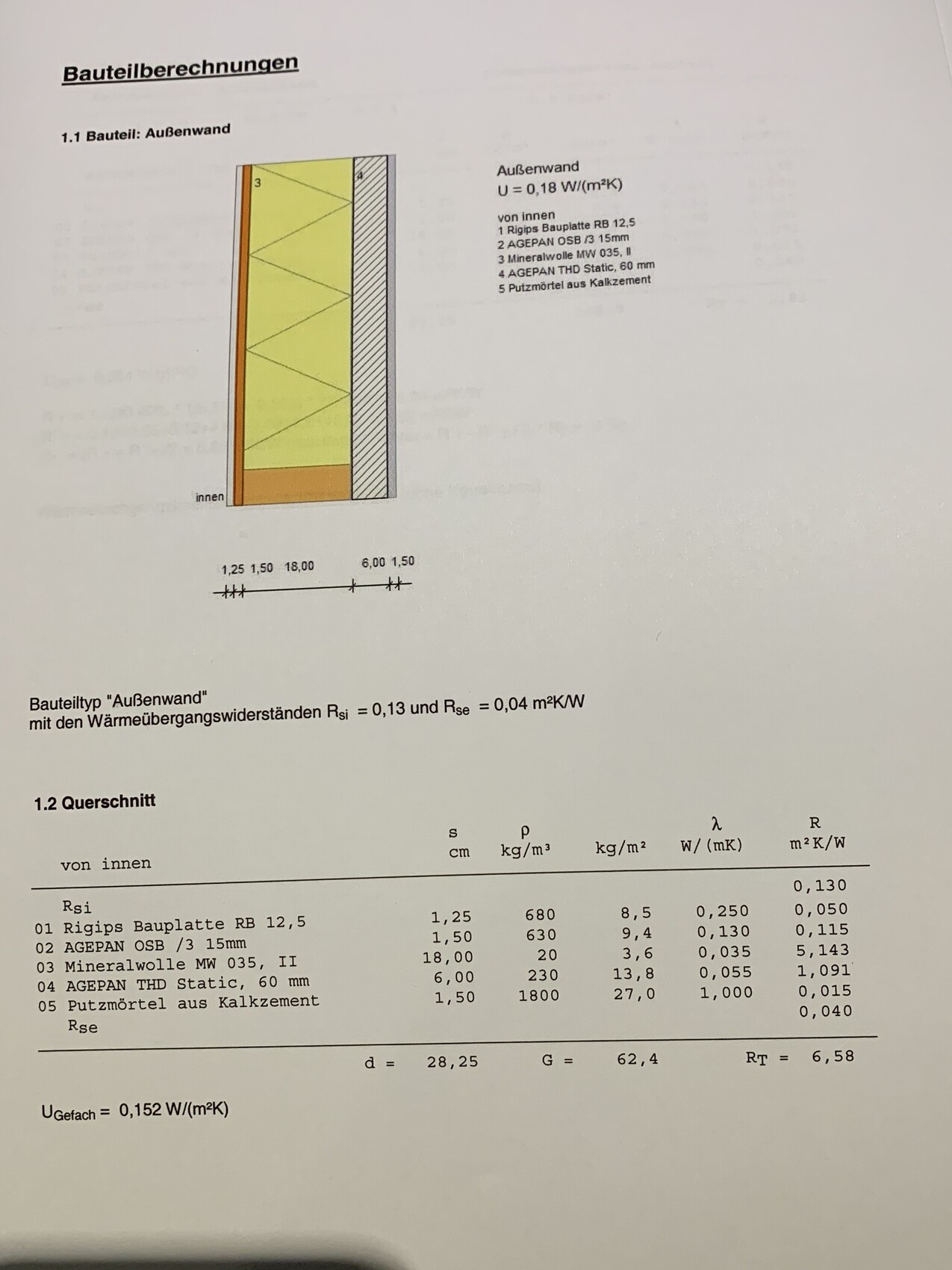
- How can we solve this properly without constantly fearing that the wood fiber insulation behind the plaster will absorb moisture, rot, and ultimately damage the timber itself?
Of course, we could expose the entire exterior wall around the house, remove the wood fiber boards, install rigid foam insulation, seal the gap between the wall and foundation slab with compressed sealing tape, apply a proper waterproofing layer, and finish with proper exterior plaster. That’s what the painter recommends. If nothing else works, so be it. It’s better to invest 5,000 to 10,000 euros once and have peace of mind instead of sooner or later facing serious problems. But of course, it would be better if there was a simpler good solution. And I know, everything is a mess and should have been done differently from the start, but we trusted and all the so-called experts at the time said nothing to the contrary, and now we can’t change those wrong decisions. We can only try to fix it now.
I hope my explanations make sense and I hope I will finally get some help. Thank you very much in advance!
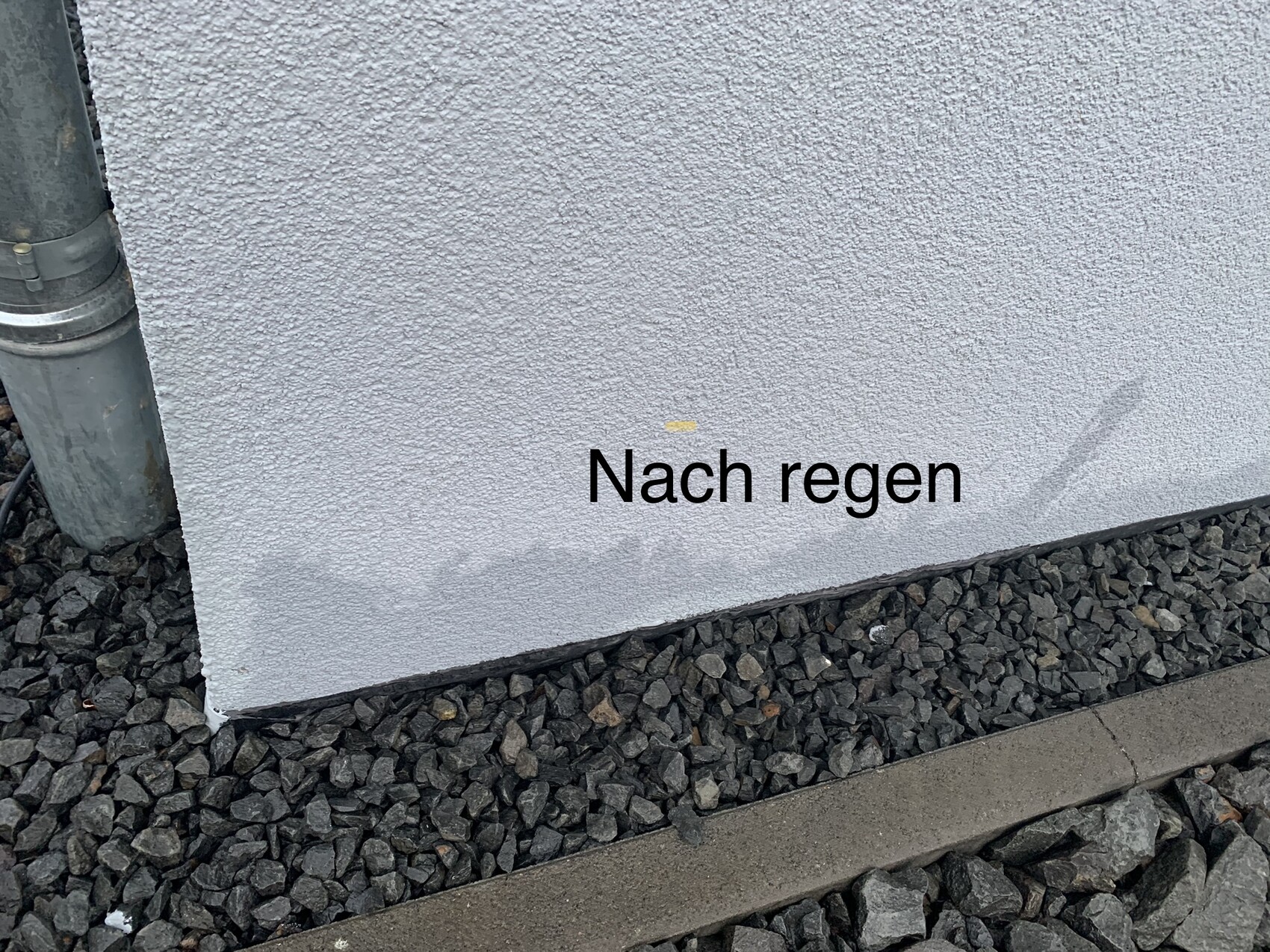
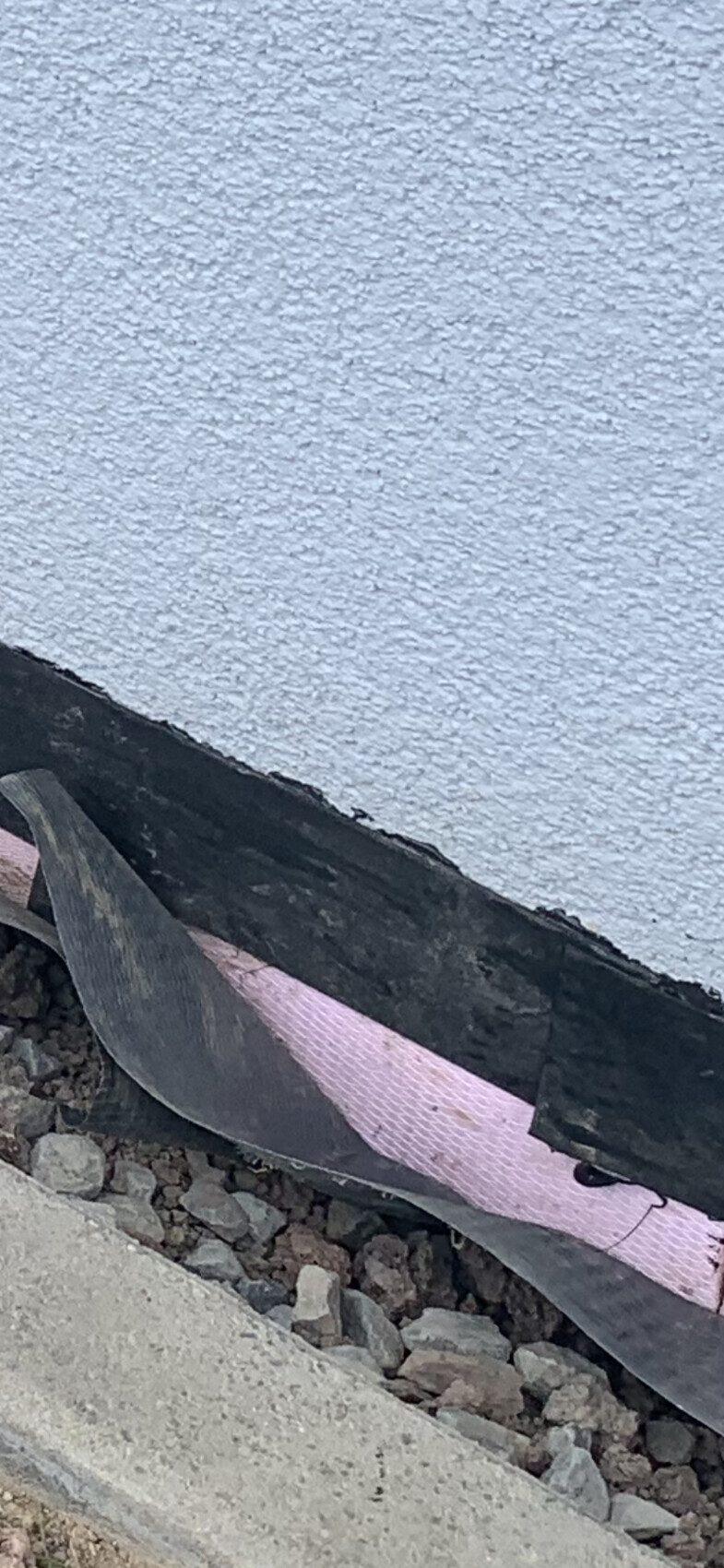
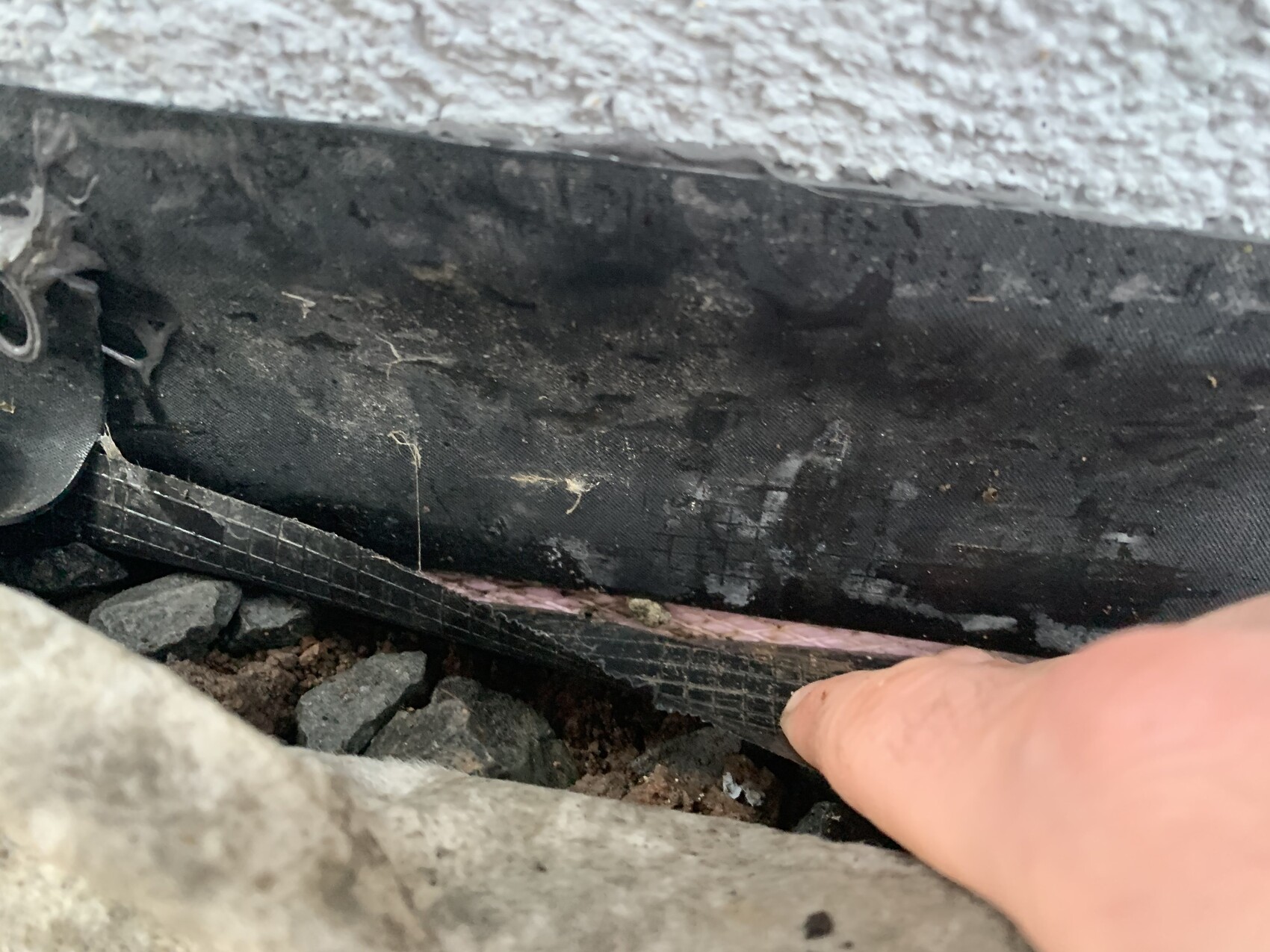
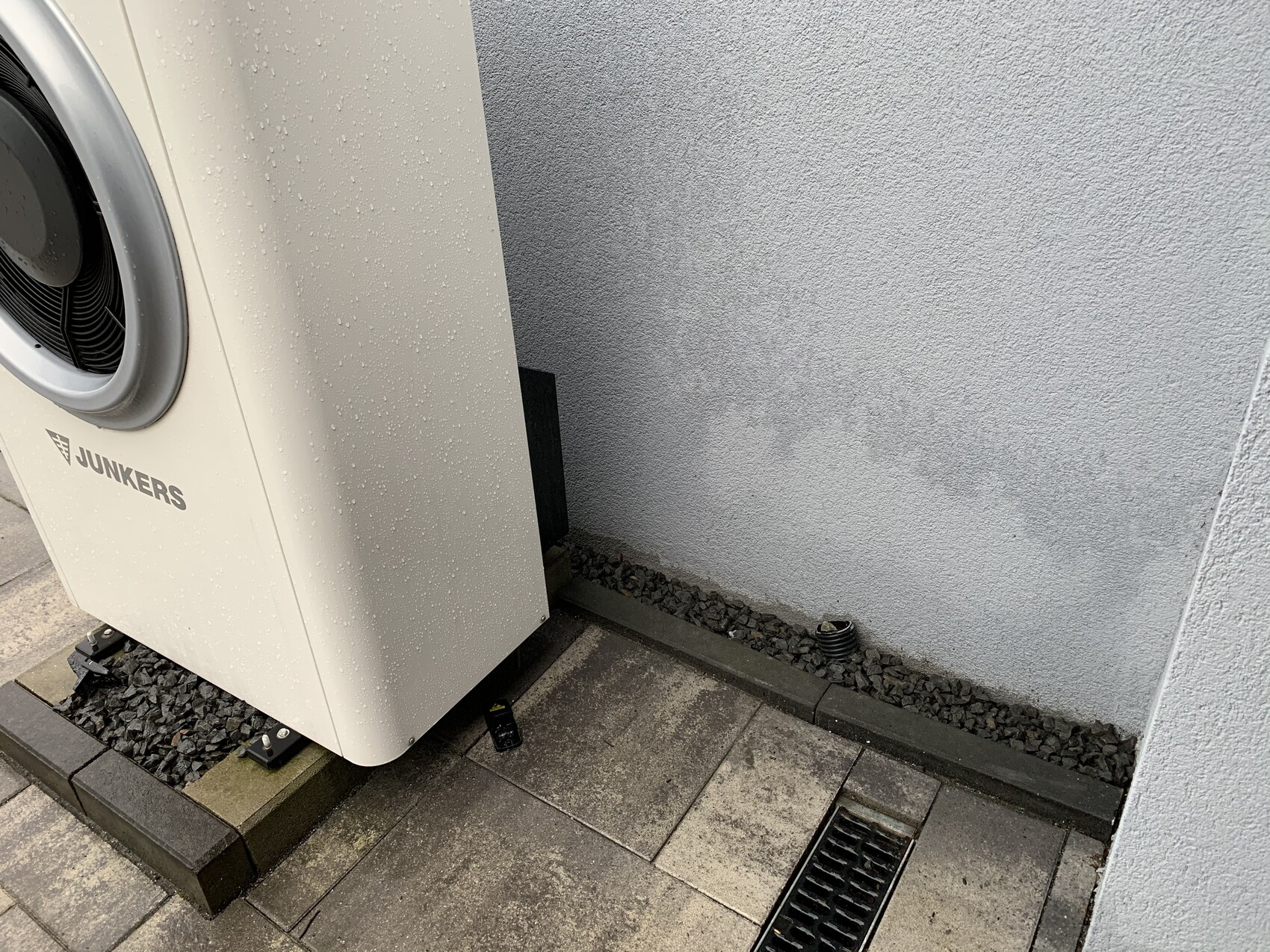
First of all: I am absolutely not an expert, so sorry if some of the terms don’t sound professional.
We built a prefab house in 2015 (timber frame, panel construction) with a local company that is now insolvent, so there’s no one left for questions or warranty. However, this is not about blaming or warranty issues, but about getting help and finding solutions.
Last year, a painter came in the summer (a local company with a good reputation that still exists) and pointed out a missing waterproofing between the foundation slab and the base connection. He also noted that we don’t really have a proper base; the exterior wall of our bungalow without a basement simply extends all the way down. Back then we were told that bases are no longer done. Now I know: we should have had one... Normally, the gap between base connection and foundation slab would be sealed with a compressed sealing tape, which for us would apparently no longer be possible retroactively. As a solution, a rubber strip was glued externally to the lower edge of the exterior plaster and pulled down like a kind of “curtain” to the outside of the foundation slab. This was supposed to stop water from entering sideways. It sounded logical to us and even though it didn’t look good, the main thing was that it was sealed. Meanwhile, we have learned how important proper waterproofing is – unfortunately, back then we blindly trusted the prefab company.
This winter, we have the feeling that since the rubber strip was installed, MORE moisture is being drawn into the exterior wall. Now we are worried that we may have made things worse. After days and hours of internet research, we are at a loss. The fact is that our ground level is not 15cm (5 inches) below the lower edge of the exterior wall/base connection – we will try to correct this as best as possible with splash protection. Unfortunately, the landscaper did not point this out to us either.
Long story short, our questions are:
- Can it be that this rubber strip causes more moisture to be drawn upwards? If yes, could someone please explain why?
- The lower edge of the exterior wall is “open” – I am attaching a picture where I photographed upwards from the splash protection, showing the mesh at the lower edge before the rubber was installed. Behind the black rubber in the other pictures, this “openness” is still visible and from below the rubber is not sealed. I keep reading that the mesh wicks moisture capillary. So, it’s not just the gap between the foundation slab and the exterior wall, but also the lower edge of the exterior wall? If yes, how would one address this? I have read about base profiles, bitumen coating, or sealing tapes?
- Or does it have to remain open for ventilation, and is the rubber strip therefore actually wrong because it blocks air circulation?
- How can we solve this properly without constantly fearing that the wood fiber insulation behind the plaster will absorb moisture, rot, and ultimately damage the timber itself?
Of course, we could expose the entire exterior wall around the house, remove the wood fiber boards, install rigid foam insulation, seal the gap between the wall and foundation slab with compressed sealing tape, apply a proper waterproofing layer, and finish with proper exterior plaster. That’s what the painter recommends. If nothing else works, so be it. It’s better to invest 5,000 to 10,000 euros once and have peace of mind instead of sooner or later facing serious problems. But of course, it would be better if there was a simpler good solution. And I know, everything is a mess and should have been done differently from the start, but we trusted and all the so-called experts at the time said nothing to the contrary, and now we can’t change those wrong decisions. We can only try to fix it now.
I hope my explanations make sense and I hope I will finally get some help. Thank you very much in advance!
S
Schloesser24 Feb 2021 09:21Thank you very much. I tried to make some modifications.
The gap between the concrete slab and the wall is our main concern – if water comes in from the side or rises up from below into the wall, the wood fiber insulation soaks it up like a sponge.
Currently, there is a black rubber strip hanging in front of the gap, but it does nothing or apparently traps the rising moisture and makes it worse. So it has to go.
It is clear that the ground level is too high.
Now, of course, companies come and say: Dig all around, lower the ground, break open the base, install XPS insulation, extend it over the gap up to under the floor edge, waterproof everything, and then plaster again. For every company, that sounds like a great business opportunity.
The problem is: we will do what absolutely has to be done before the house starts to rot, BUT I don’t want to tear everything up and then find out it was still done wrong.
Should it perhaps not be 100% airtight to allow the wall to “breathe”? Maybe it would be better to just lower the ground level and seal only the bottom edge of the wood fiber insulation so that no moisture can rise any further?
We have now spent countless hours reading, talking to several companies, and even had an expert on site, and everyone says something different... Back then, trusting the wrong advice was a mistake, and now it’s important to get it right. That’s the only point.

The gap between the concrete slab and the wall is our main concern – if water comes in from the side or rises up from below into the wall, the wood fiber insulation soaks it up like a sponge.
Currently, there is a black rubber strip hanging in front of the gap, but it does nothing or apparently traps the rising moisture and makes it worse. So it has to go.
It is clear that the ground level is too high.
Now, of course, companies come and say: Dig all around, lower the ground, break open the base, install XPS insulation, extend it over the gap up to under the floor edge, waterproof everything, and then plaster again. For every company, that sounds like a great business opportunity.
The problem is: we will do what absolutely has to be done before the house starts to rot, BUT I don’t want to tear everything up and then find out it was still done wrong.
Should it perhaps not be 100% airtight to allow the wall to “breathe”? Maybe it would be better to just lower the ground level and seal only the bottom edge of the wood fiber insulation so that no moisture can rise any further?
We have now spent countless hours reading, talking to several companies, and even had an expert on site, and everyone says something different... Back then, trusting the wrong advice was a mistake, and now it’s important to get it right. That’s the only point.
S
Schloesser24 Feb 2021 12:18The question is whether it needs to be ventilated from behind or if it is better to have it completely sealed.
Schloesser schrieb:
The question is whether it needs to be ventilated or better completely sealed.Why do people actually install ventilation grilles?Similar topics