
Hello everyone,
In our new build (moved in November 2020), we have noticed that the ceiling in the bathroom is damp in the middle. Yesterday, the builder sent someone to remove the drywall at that spot. Water had accumulated under the vapor barrier and soaked the drywall. Unfortunately, I have no idea how the moisture got there. The area above the vapor barrier was completely dry. Is it possible that moisture from showering could get in through recessed ceiling lights if there is a small gap, or how else could this happen?
Second issue:
After opening the ceiling, it was noticed that the ventilation pipe was not insulated, which caused a lot of condensation moisture to form on the breathable membrane in the cold roof area. The drywall installer is coming today to insulate the pipe and redo the ceiling at that spot. However, everything still looks very damp. He said it will dry out... is it okay to proceed like this, or should everything be left to dry for a few days first?
I’m quite puzzled. Thanks
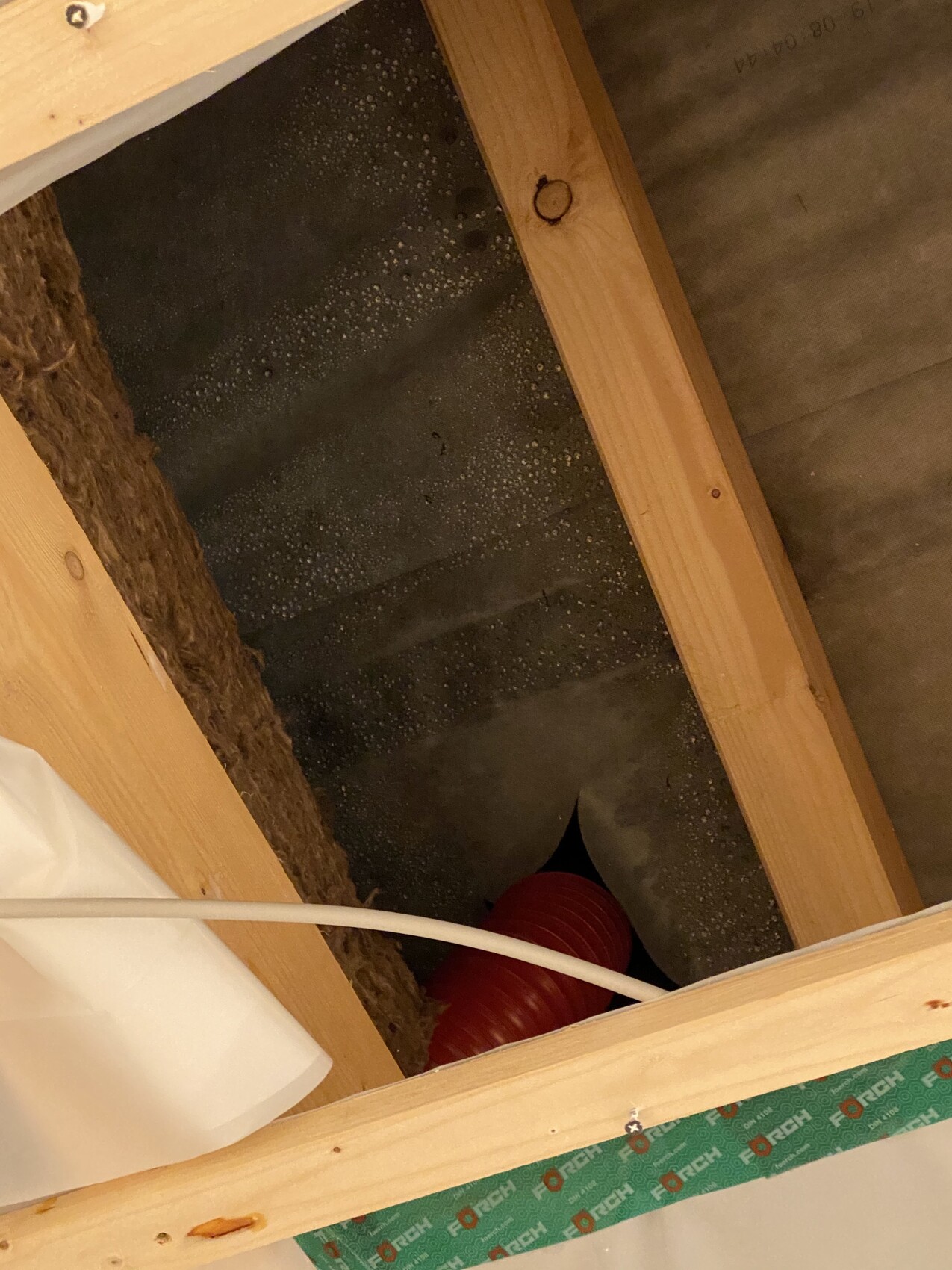
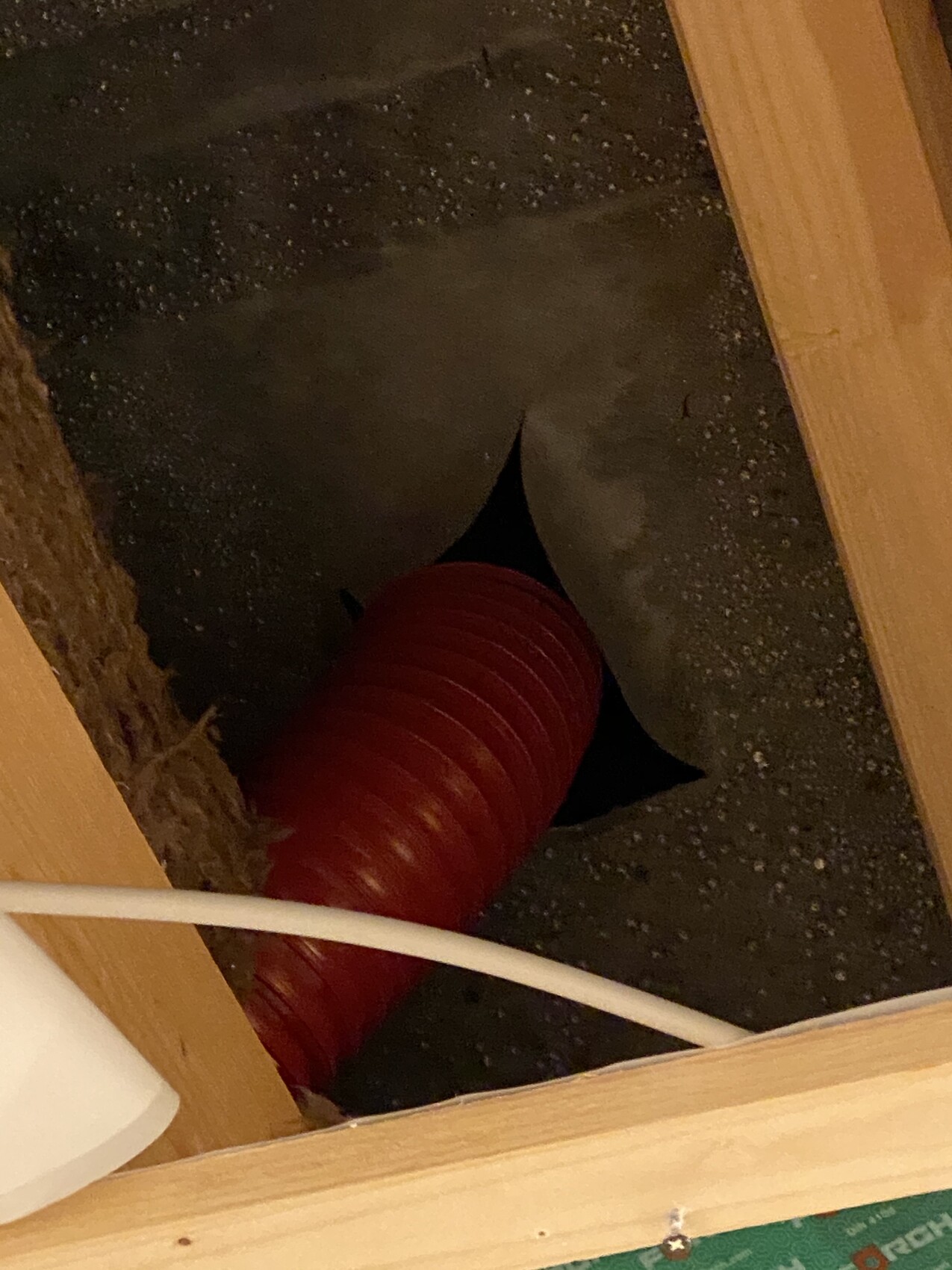
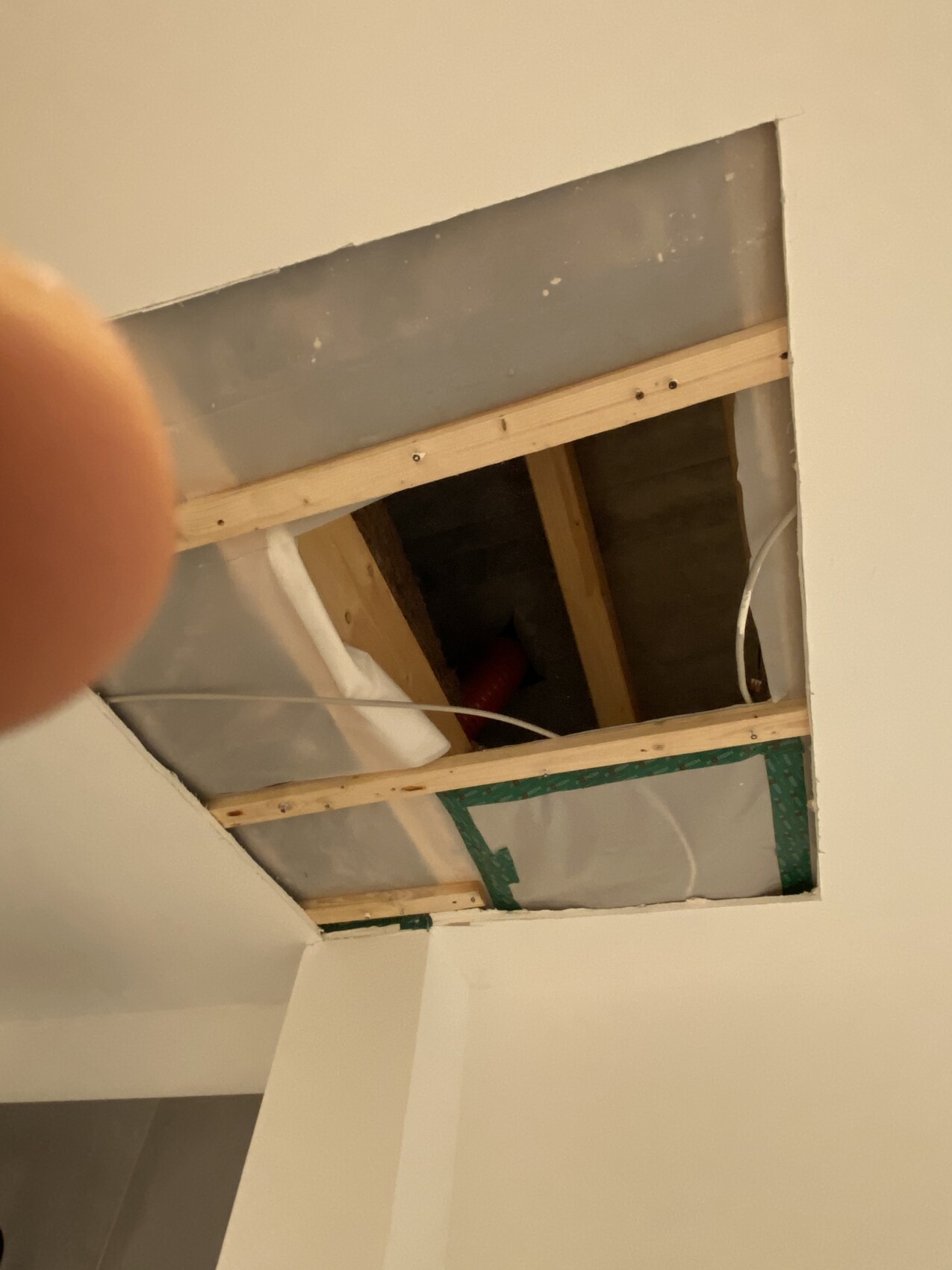
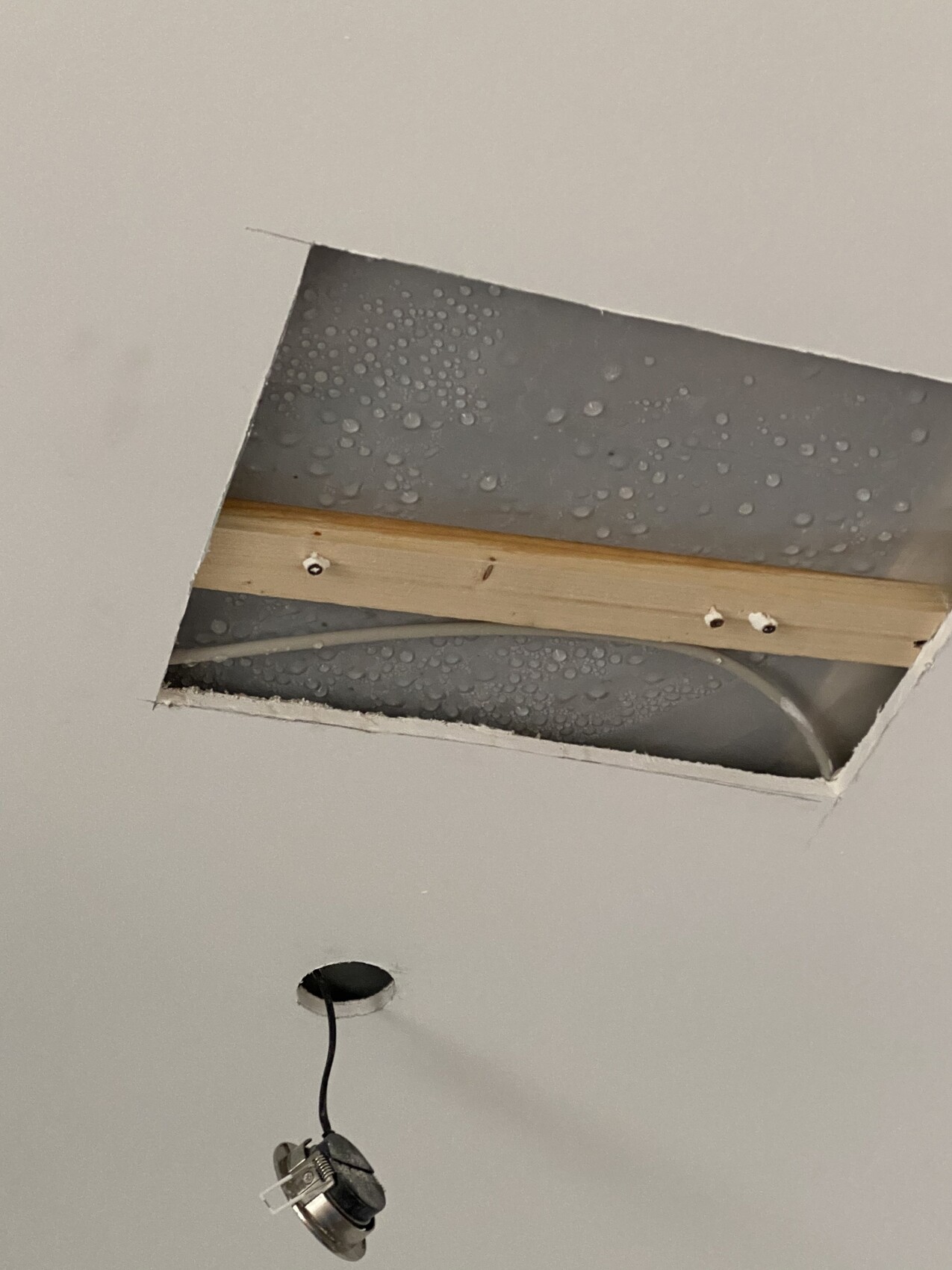
In our new build (moved in November 2020), we have noticed that the ceiling in the bathroom is damp in the middle. Yesterday, the builder sent someone to remove the drywall at that spot. Water had accumulated under the vapor barrier and soaked the drywall. Unfortunately, I have no idea how the moisture got there. The area above the vapor barrier was completely dry. Is it possible that moisture from showering could get in through recessed ceiling lights if there is a small gap, or how else could this happen?
Second issue:
After opening the ceiling, it was noticed that the ventilation pipe was not insulated, which caused a lot of condensation moisture to form on the breathable membrane in the cold roof area. The drywall installer is coming today to insulate the pipe and redo the ceiling at that spot. However, everything still looks very damp. He said it will dry out... is it okay to proceed like this, or should everything be left to dry for a few days first?
I’m quite puzzled. Thanks
Completely airtight construction is ALWAYS a bad idea. It is rarely done nowadays. A vapor retarder is preferable! With a vapor barrier, even the smallest mistake will cause problems immediately.
Also, don’t forget about vapor pressure. You can look it up online. A mechanical ventilation system with heat recovery won’t help with that at all. It only optimizes the immediate moisture balance.
Also, don’t forget about vapor pressure. You can look it up online. A mechanical ventilation system with heat recovery won’t help with that at all. It only optimizes the immediate moisture balance.
K
knalltüte11 Jan 2021 20:59Zaba12 schrieb:
This is not a cold roof. It’s a warm roof that hasn’t been properly sealed and insulated. That’s why all the condensation forms on the membrane. I would seriously take the advice about ventilation to heart, especially without a mechanical ventilation system. That means even if it’s -10°C (14°F) outside, you need to ventilate the place several times a day by opening windows briefly; otherwise, you won’t be able to live there free of mold for long.Wouldn’t it be more appropriate, while still under warranty, to consult an expert to check whether the roof’s insulation and sealing have been installed correctly? (I think: No) If not, an extensive dismantling of the drywall elements will be necessary. Water and wood do not get along just because they are close to each other in this house. 😎K
knalltüte11 Jan 2021 21:00Bookstar schrieb:
A completely airtight seal is ALWAYS problematic. Nowadays, it’s rarely done. Better to use a vapor retarder! With a vapor barrier, even the smallest mistake will cause issues immediately.
Also, don’t forget about vapor pressure. You can look it up online. Controlled mechanical ventilation doesn’t help with that at all. It only optimizes the immediate moisture balance.Early versions were called "smart foil." It lets in as much moisture as it lets out. It’s just vapor regulating...Hello everyone,
I checked at my place... so the ventilation pipe is fully insulated here.
Out of curiosity, right after I bathed the kids, I removed an LED spot and inspected the ceiling. Everything is dry, but we also have a mechanical ventilation system with heat recovery from Nilan (Compact P Air 9). Based on my own experience, I can recommend this to any homeowner. My construction manager is an expert... he’s visiting me tomorrow, and I will show him the pictures... I will get back to you...
I checked at my place... so the ventilation pipe is fully insulated here.
Out of curiosity, right after I bathed the kids, I removed an LED spot and inspected the ceiling. Everything is dry, but we also have a mechanical ventilation system with heat recovery from Nilan (Compact P Air 9). Based on my own experience, I can recommend this to any homeowner. My construction manager is an expert... he’s visiting me tomorrow, and I will show him the pictures... I will get back to you...
 Schimi179111 Jan 2021 21:46
So far, we have managed very well without a mechanical ventilation system, even without excessive airing. We have prepared for ventilation by making a small core drill hole in the ceiling leading to the attic. A plastic duct has already been installed there. Last winter, before the attic was insulated, it was easy to see how the rising moisture condensed toward the cold attic space.
I hope to install a ventilation system soon or have one professionally installed. Ideally, it will be done by a qualified specialist.
I hope to install a ventilation system soon or have one professionally installed. Ideally, it will be done by a qualified specialist.
Uhu2207 schrieb:
My construction manager is a certified expert... he’s coming to visit me tomorrow, I’ll show him the pictures... I’ll get back to you... Thank you
and thanks to everyone else as well.
We actually never really had problems with ventilation before. Of course, in a new build there is always some residual moisture at the start, but generally we do ventilate adequately.
Similar topics