
Hello everyone,
In our new build (moved in November 2020), we have noticed that the ceiling in the bathroom is damp in the middle. Yesterday, the builder sent someone to remove the drywall at that spot. Water had accumulated under the vapor barrier and soaked the drywall. Unfortunately, I have no idea how the moisture got there. The area above the vapor barrier was completely dry. Is it possible that moisture from showering could get in through recessed ceiling lights if there is a small gap, or how else could this happen?
Second issue:
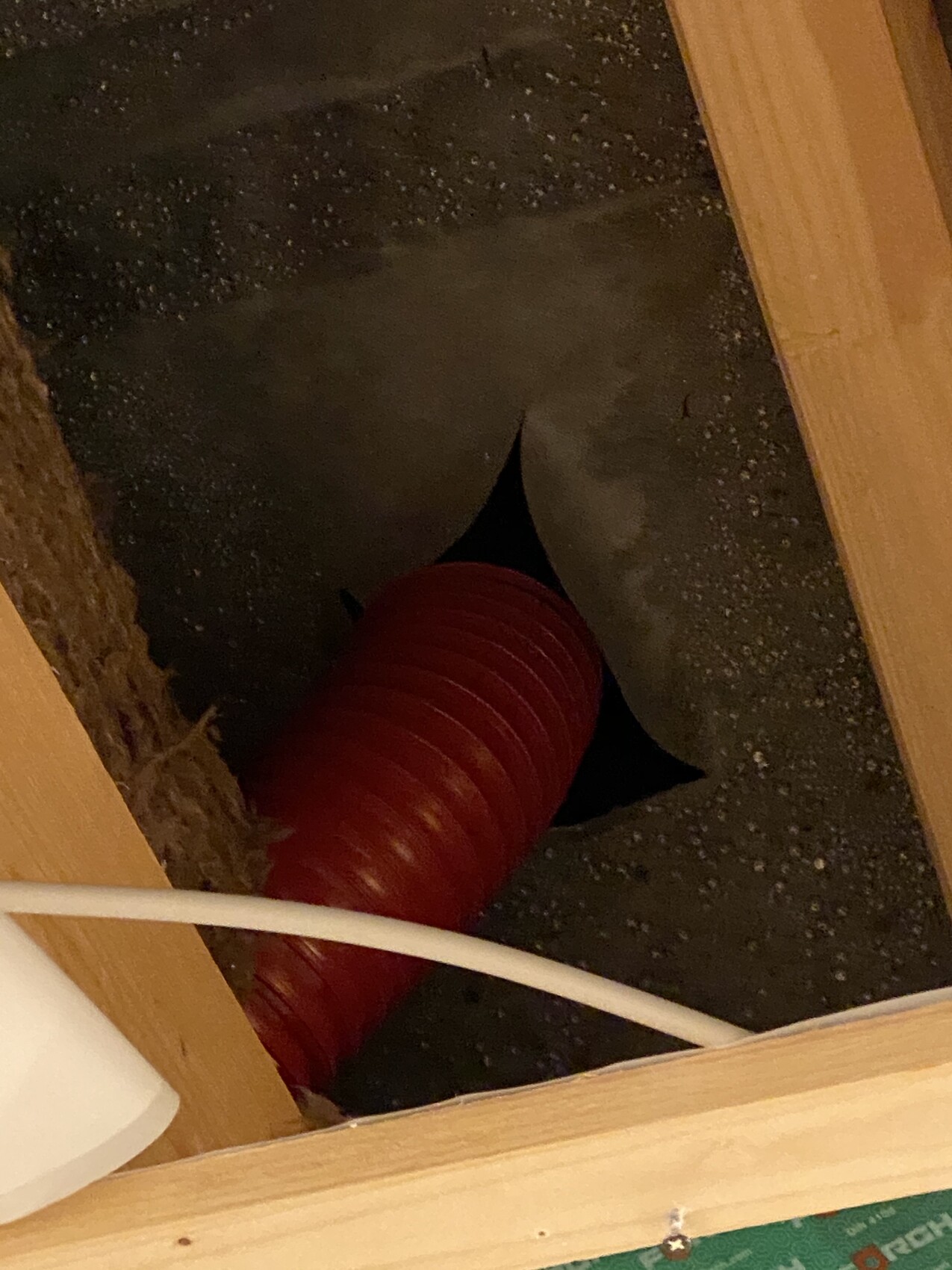
After opening the ceiling, it was noticed that the ventilation pipe was not insulated, which caused a lot of condensation moisture to form on the breathable membrane in the cold roof area. The drywall installer is coming today to insulate the pipe and redo the ceiling at that spot. However, everything still looks very damp. He said it will dry out... is it okay to proceed like this, or should everything be left to dry for a few days first?
I’m quite puzzled. Thanks
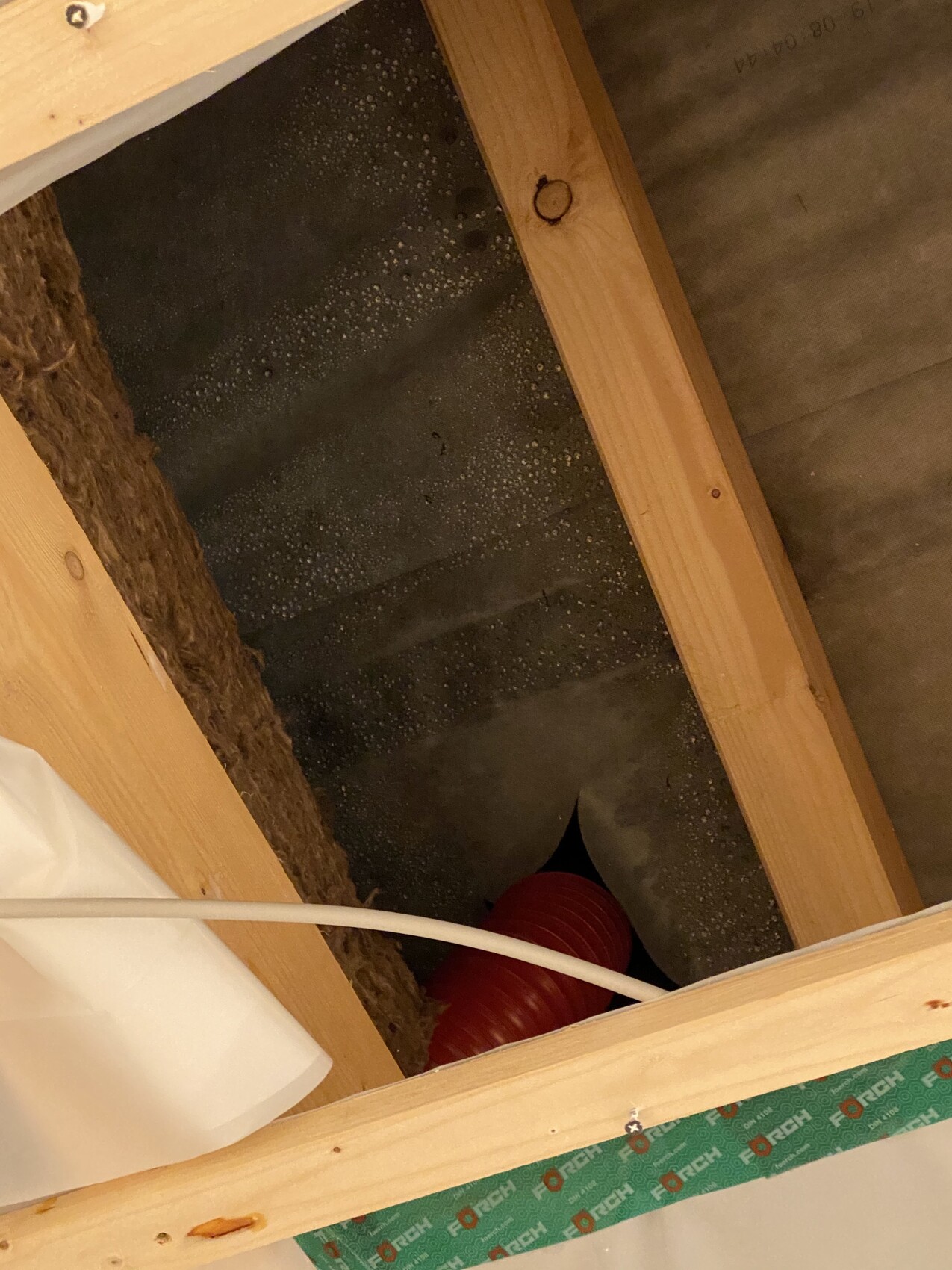
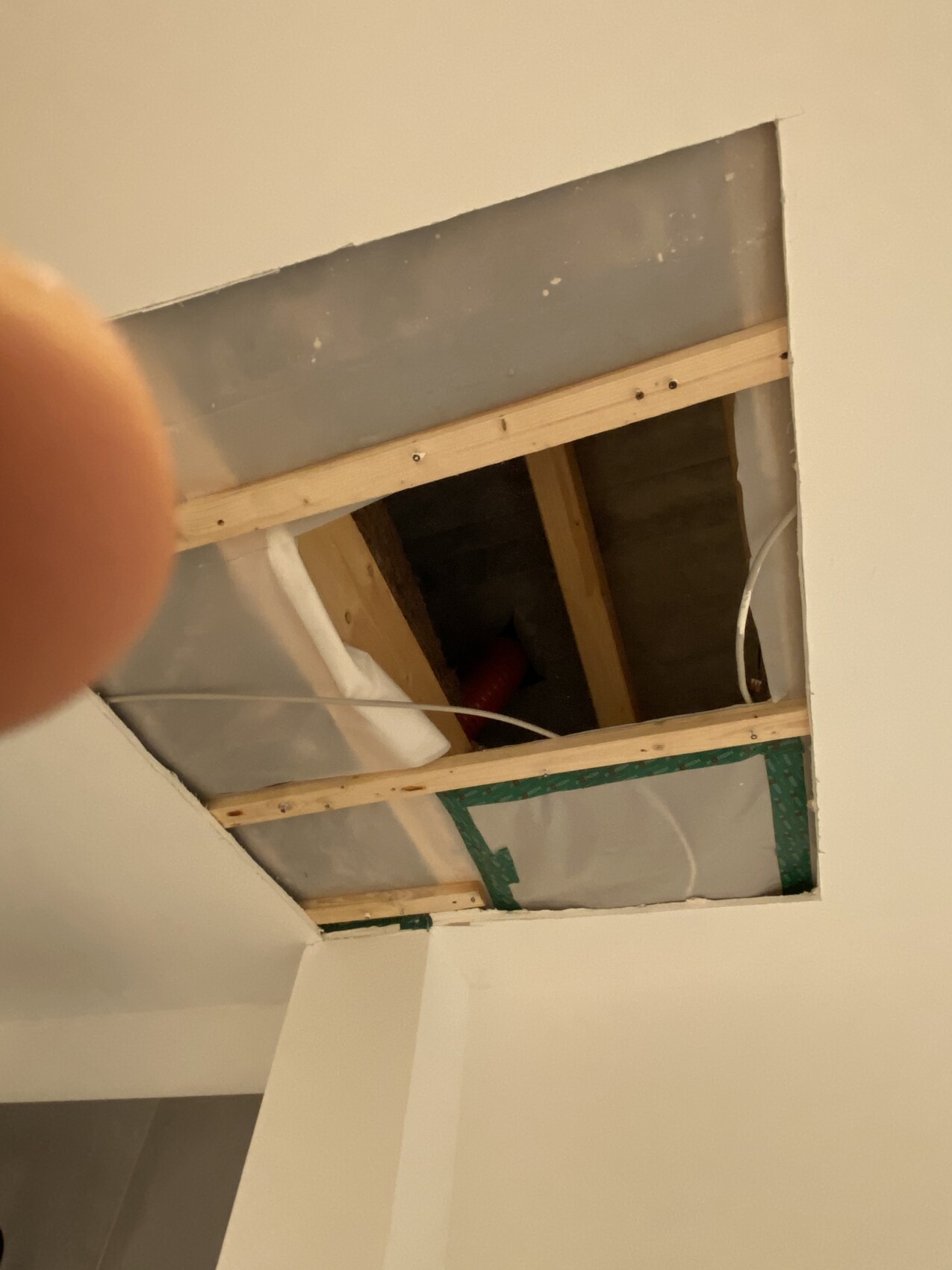
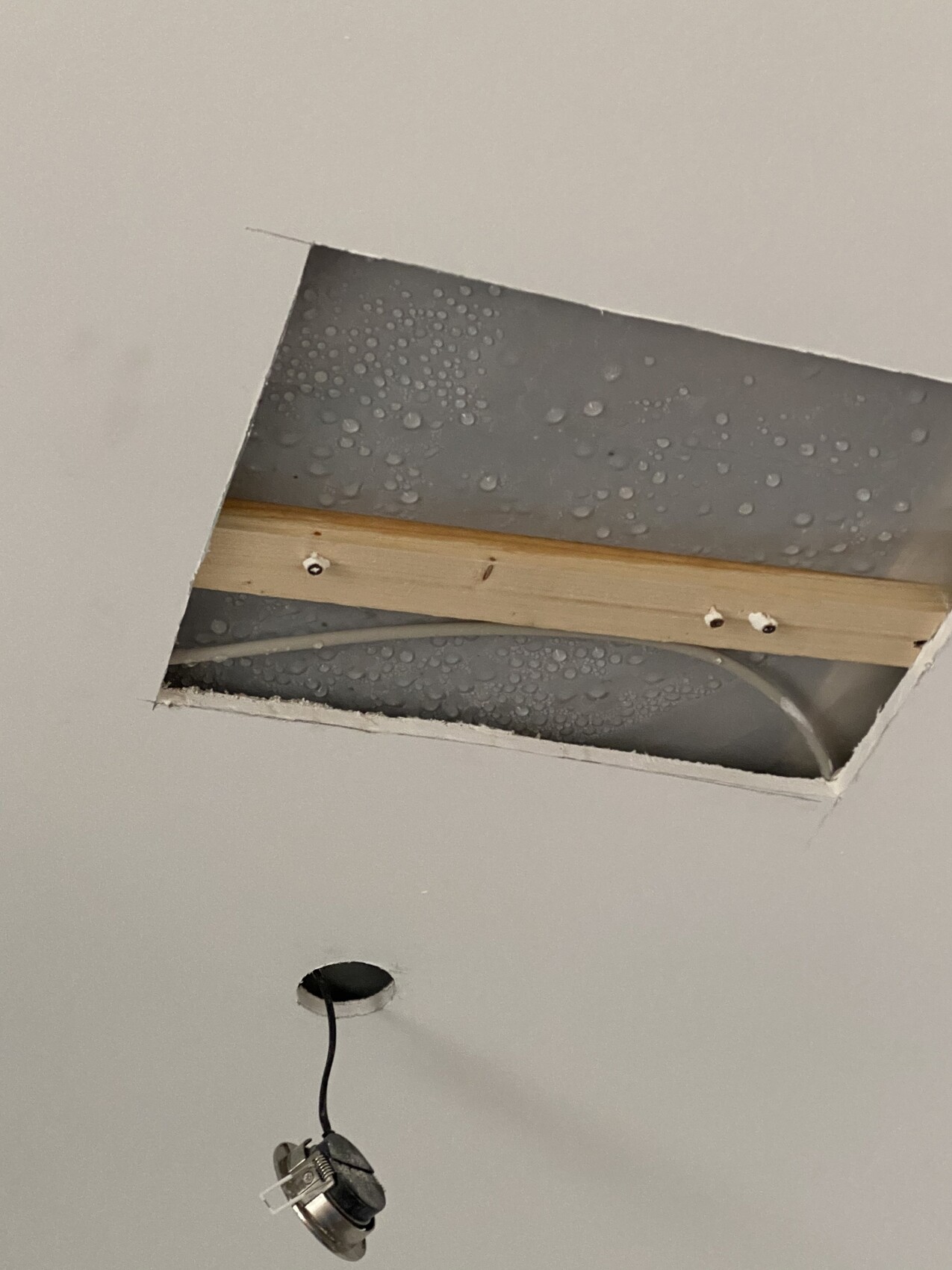
In our new build (moved in November 2020), we have noticed that the ceiling in the bathroom is damp in the middle. Yesterday, the builder sent someone to remove the drywall at that spot. Water had accumulated under the vapor barrier and soaked the drywall. Unfortunately, I have no idea how the moisture got there. The area above the vapor barrier was completely dry. Is it possible that moisture from showering could get in through recessed ceiling lights if there is a small gap, or how else could this happen?
Second issue:
After opening the ceiling, it was noticed that the ventilation pipe was not insulated, which caused a lot of condensation moisture to form on the breathable membrane in the cold roof area. The drywall installer is coming today to insulate the pipe and redo the ceiling at that spot. However, everything still looks very damp. He said it will dry out... is it okay to proceed like this, or should everything be left to dry for a few days first?
I’m quite puzzled. Thanks

A
Alessandro12 Jan 2021 09:07Also consider placing a hygrometer in your bathroom to get a sense of the humidity. A constant level above 70% poses a risk of mold.
Lumpi_LE schrieb:
No, being airtight is not disadvantageous there.
There is no obvious fault visible in the pictures.
Whether the drywall or ceiling spotlights are airtight or not is irrelevant, as the drywall does not form an airtight layer.
The most common error (although there can be many other causes) is user-related. No controlled residential ventilation is already a major issue – if the bathroom is not thoroughly ventilated manually after every shower, in the morning, at noon, and in the evening, this could be the root cause. However, the builder has already made a mistake beforehand. They are indirectly obligated (building according to current standards/regulations) to develop a ventilation concept according to DIN 1946-6. If they did not explicitly inform the buyer that this was missing, they can be held liable for any subsequent damage. It is unreasonable to expect residents of new buildings to ventilate sufficiently on their own. A ventilation concept would have indicated that either a decentralized ventilation system or controlled residential ventilation is necessary. Even window frame vents may not be sufficient in this case.