
Hello
we are planning a new semi-detached house.
We want to install a photovoltaic system later on.
We will get the right half shown in the photo. Orientation is southwest.
The photovoltaic system will of course be installed on the southwest side facing the garden.
The black area is the 3x5 m (10x16 ft) terrace, which will later be covered with a fixed terrace roof measuring 4 m (13 ft) deep and 5.5 m (18 ft) wide.
My question is whether it will still be possible to install a photovoltaic system on the roof once the fixed terrace roof is there?
If the terrace roof is on the southwest side in the garden, it will no longer be possible to set up scaffolding.
For maintenance or in case of problems, access to the photovoltaic system will be necessary later on (is access without scaffolding not possible?)
Or can the photovoltaic system be installed without scaffolding?
The house will have a gable roof and 2.5 full stories.
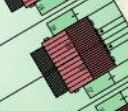
we are planning a new semi-detached house.
We want to install a photovoltaic system later on.
We will get the right half shown in the photo. Orientation is southwest.
The photovoltaic system will of course be installed on the southwest side facing the garden.
The black area is the 3x5 m (10x16 ft) terrace, which will later be covered with a fixed terrace roof measuring 4 m (13 ft) deep and 5.5 m (18 ft) wide.
My question is whether it will still be possible to install a photovoltaic system on the roof once the fixed terrace roof is there?
If the terrace roof is on the southwest side in the garden, it will no longer be possible to set up scaffolding.
For maintenance or in case of problems, access to the photovoltaic system will be necessary later on (is access without scaffolding not possible?)
Or can the photovoltaic system be installed without scaffolding?
The house will have a gable roof and 2.5 full stories.
We have an energy consumption of 3900 kWh, of which 975 kWh come from the grid.
Battery BYD 5.2 kWh: 1510 kWh charged, 1174 kWh discharged. 290 full cycles. Efficiency 78%.
Granted, the inverter is incorrectly sized, my mistake (5 kW instead of 3.2 kW).
8600 kWh yield from a 10 kWp south-southwest facing system on a flat roof (5°).
If I only consider the discharge energy, that is 1174 kWh * 0.285 cents per kWh = €330 savings.
The loss from 1510 kWh * 0.10 cents per kWh = €151 feed-in tariff (+ standby consumption when the battery is not charged) offsets this.
I don’t see how I could justify the investment of €5300.
The battery was free by a fortunate coincidence. Otherwise, it would never have paid off.
Edit: If I had invested the €5300 gross in additional panels instead, that would increase capacity by 4 kWp, which at 860 kWh per kWp per year would result in about €344. Definitely a better investment.
Battery BYD 5.2 kWh: 1510 kWh charged, 1174 kWh discharged. 290 full cycles. Efficiency 78%.
Granted, the inverter is incorrectly sized, my mistake (5 kW instead of 3.2 kW).
8600 kWh yield from a 10 kWp south-southwest facing system on a flat roof (5°).
If I only consider the discharge energy, that is 1174 kWh * 0.285 cents per kWh = €330 savings.
The loss from 1510 kWh * 0.10 cents per kWh = €151 feed-in tariff (+ standby consumption when the battery is not charged) offsets this.
I don’t see how I could justify the investment of €5300.
The battery was free by a fortunate coincidence. Otherwise, it would never have paid off.
Edit: If I had invested the €5300 gross in additional panels instead, that would increase capacity by 4 kWp, which at 860 kWh per kWp per year would result in about €344. Definitely a better investment.
D
Deliverer18 Jan 2022 17:54And this at 290 full cycles! Another outstanding figure here in the thread. I read numbers like this from real-life experience about once a week. If someone reaches close to 200 cycles, they already get congratulated! ;-)

teh_M schrieb:
Full cycles are calculated from charging energy/storage capacity, or do I have to read them off? 🙄
Is that number unusually high? I didn’t know that until just now either – learned something new 🙂 So for me it’s 1,657 / 9.8 = 179. So, a bronze medal among the currently three participants 😀
D
Deliverer18 Jan 2022 18:38Yes
Strictly speaking, you also have to subtract the energy loss that did not contribute to the charge. Most systems calculate the number themselves, but I’m not exactly sure based on which criteria. Roughly, your calculation is correct though.
teh_M schrieb:
Full cycles are calculated from charge energy/storage capacity, or do I have to read them off? 🙄
Strictly speaking, you also have to subtract the energy loss that did not contribute to the charge. Most systems calculate the number themselves, but I’m not exactly sure based on which criteria. Roughly, your calculation is correct though.
D
Deliverer18 Jan 2022 18:56Hangman schrieb:
Then for me it’s 1,657 / 9.8 = 179.For a 10 kWh battery, that’s actually quite decent. And the goal isn’t really to maximize the number of cycles. It’s simply the only way to break even financially, and it helps to see whether the battery size matches the photovoltaic system and consumption. But an unused kWh is always cheaper than one unnecessarily drawn from the battery.Similar topics