
Hello
we are planning a new semi-detached house.
We want to install a photovoltaic system later on.
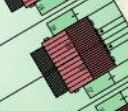
We will get the right half shown in the photo. Orientation is southwest.
The photovoltaic system will of course be installed on the southwest side facing the garden.
The black area is the 3x5 m (10x16 ft) terrace, which will later be covered with a fixed terrace roof measuring 4 m (13 ft) deep and 5.5 m (18 ft) wide.
My question is whether it will still be possible to install a photovoltaic system on the roof once the fixed terrace roof is there?
If the terrace roof is on the southwest side in the garden, it will no longer be possible to set up scaffolding.
For maintenance or in case of problems, access to the photovoltaic system will be necessary later on (is access without scaffolding not possible?)
Or can the photovoltaic system be installed without scaffolding?
The house will have a gable roof and 2.5 full stories.
we are planning a new semi-detached house.
We want to install a photovoltaic system later on.
We will get the right half shown in the photo. Orientation is southwest.
The photovoltaic system will of course be installed on the southwest side facing the garden.
The black area is the 3x5 m (10x16 ft) terrace, which will later be covered with a fixed terrace roof measuring 4 m (13 ft) deep and 5.5 m (18 ft) wide.
My question is whether it will still be possible to install a photovoltaic system on the roof once the fixed terrace roof is there?
If the terrace roof is on the southwest side in the garden, it will no longer be possible to set up scaffolding.
For maintenance or in case of problems, access to the photovoltaic system will be necessary later on (is access without scaffolding not possible?)
Or can the photovoltaic system be installed without scaffolding?
The house will have a gable roof and 2.5 full stories.
I currently don’t find photovoltaics to be an easy option. The whole system is really expensive!
I would love to have it (we have a huge roof with a perfect southwest orientation, so we can capture sunlight all day long), but the subsidies here are limited, the storage solutions are disappointing, and the feed-in tariffs feel like a joke.
With a heat pump, an aquarium, and regular home office work, we would actually be good candidates to use a significant amount of self-generated electricity during the day.
I’m now hoping for the period after the election, when relatively quick subsidies might be introduced that make a system profitable after about 10 years.
I would love to have it (we have a huge roof with a perfect southwest orientation, so we can capture sunlight all day long), but the subsidies here are limited, the storage solutions are disappointing, and the feed-in tariffs feel like a joke.
With a heat pump, an aquarium, and regular home office work, we would actually be good candidates to use a significant amount of self-generated electricity during the day.
I’m now hoping for the period after the election, when relatively quick subsidies might be introduced that make a system profitable after about 10 years.
R
RotorMotor17 Sep 2021 13:47Evolith schrieb:
I don’t think photovoltaics are a walk in the park right now. The stuff is really expensive!
I’d like to have it (we have a huge roof with a perfect southwest orientation, so we can capture sunlight all day), but the subsidies here are scarce, the storage solutions are disappointing, and the feed-in tariffs feel like a joke.
With a heat pump, an aquarium, and regular home office use, we would even be good candidates to consume a lot of self-generated electricity during the day.
I’m now hoping that after the election there will be relatively fast introduction of subsidies that make a system profitable within 10 years. It’s already been said several times that it can easily be financed.
You’re building a house to last more than 10 years, so why is it always such a big issue to expect 20 years with photovoltaics…
It’s really amazing how everyone always makes such a fuss. 🙁
 KingJulien17 Sep 2021 14:04
Evolith schrieb:
I am now hoping that after the election, relatively quick subsidies will be implemented that make a system profitable after 10 years. Or compulsion for new builds instead of subsidies for existing buildings. You can imagine what that would do to prices.
That’s too risky for me.
KingJulien17 Sep 2021 14:06RotorMotor schrieb:
why is it always such a big issue to assume 20 years with photovoltaic systems... Above all, this is one of the reasons why I still want to install a photovoltaic system, even if the economic viability over 20 years is tight:
The system doesn’t just suddenly stop working after 20 years on the roof 😉
KingJulien schrieb:
.... even if the economic efficiency over 20 years is tight:
The system doesn’t just suddenly fail after 20 years on the roof That's true,
the panels start to lose performance much earlier.
I installed Kyocera panels 12 years ago when they were considered among the best
(and were still quite expensive).
I can’t measure the efficiency precisely, but their output has clearly decreased.
I estimate it’s still about 70% of the initial value, although I try to clean them at least four times a year.
KingJulien17 Sep 2021 14:33konibar schrieb:
That's right,
the cells begin to lose efficiency much earlier. Exactly, as a prudent pessimist you include that in your profitability calculations.
Although a 30% drop over 12 years is quite significant, it won't degrade down to zero or anywhere near it.
And once the system is paid off, you still make a profit even with 20% remaining capacity. 😉
Similar topics