
Hello
we are planning a new semi-detached house.
We want to install a photovoltaic system later on.
We will get the right half shown in the photo. Orientation is southwest.
The photovoltaic system will of course be installed on the southwest side facing the garden.
The black area is the 3x5 m (10x16 ft) terrace, which will later be covered with a fixed terrace roof measuring 4 m (13 ft) deep and 5.5 m (18 ft) wide.
My question is whether it will still be possible to install a photovoltaic system on the roof once the fixed terrace roof is there?
If the terrace roof is on the southwest side in the garden, it will no longer be possible to set up scaffolding.
For maintenance or in case of problems, access to the photovoltaic system will be necessary later on (is access without scaffolding not possible?)
Or can the photovoltaic system be installed without scaffolding?
The house will have a gable roof and 2.5 full stories.
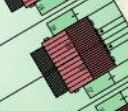
we are planning a new semi-detached house.
We want to install a photovoltaic system later on.
We will get the right half shown in the photo. Orientation is southwest.
The photovoltaic system will of course be installed on the southwest side facing the garden.
The black area is the 3x5 m (10x16 ft) terrace, which will later be covered with a fixed terrace roof measuring 4 m (13 ft) deep and 5.5 m (18 ft) wide.
My question is whether it will still be possible to install a photovoltaic system on the roof once the fixed terrace roof is there?
If the terrace roof is on the southwest side in the garden, it will no longer be possible to set up scaffolding.
For maintenance or in case of problems, access to the photovoltaic system will be necessary later on (is access without scaffolding not possible?)
Or can the photovoltaic system be installed without scaffolding?
The house will have a gable roof and 2.5 full stories.
hampshire schrieb:
I can’t say for sure because I haven’t had the new system installed for a full year yet. I only completed the first full month with the current setup in May. Have you been able to figure out how the charging algorithm works?
For maximum lifespan, Li-ion batteries are typically kept around half charge
(unlike lead-acid batteries, which should generally be kept fully charged).
So, how does the charging proceed throughout the day when the battery is about half full (around 3.8V per cell)?
Or what does the charge controller do if the battery has been fully charged for several days and there is no load drawing power? Does it then discharge itself down to 50%?
It could, for example, charge more or continue charging from 6:00 PM onward if the battery didn’t reach 100% the previous night and was fairly drained by morning.
On the other hand, if there was enough remaining capacity before sunrise, it could stop charging at 50% by midday.
What I mean is:
Is it possible to select a charging profile between maximum battery lifespan and maximum power availability?
Or does the system learn and optimize on its own?
H
hampshire16 Sep 2021 15:34konibar schrieb:
So, how does the charging continue depending on the time of day when the battery is half full (around 3.8V/cell)?
Or what does the charge controller do if the battery has been fully charged for several days and no load is drawing power? Does it then self-discharge down to 50%? This can be managed with a smart home controller that has a forecast of expected consumption and, if needed, a vacation mode. The interfaces are available. In my case, I don’t have a smart home setup. On the other hand, I haven’t had a fully charged state lasting several days yet.
konibar schrieb:
It could, for example, continue or increase charging from around 6:00 p.m. if 100% was not reached the previous night and the battery was quite low in the morning. The connection to weather forecasts allows this — although in my model this is not yet integrated, but it will come with an update within the next few years.
konibar schrieb:
If sufficient remaining capacity is still available before sunrise, it could stop charging at 50% by midday. This programming would make sense if you know you won’t need the charging capacity. It is possible in combination with a smart home controller (see above).
konibar schrieb:
Can you select a charging curve balancing maximum battery lifespan and maximum power availability? Yes. I have a 10-year full warranty with unlimited charge cycles and do not operate the battery gently with a maximum C-rate of 1.
konibar schrieb:
Or does it learn to optimize by itself? Not yet.
A clever feature is also the possible prioritization without a smart home system, for example, directing power to heat up the hot water tank or to a charging station for electric vehicles.
I find the combination of battery system and time-of-use tariff during winter particularly interesting. This is also not yet available on my device but could in principle be delivered later as an over-the-air update.

What exactly makes your system premium? I have a standard SMA setup, and there’s a checkbox for "forecast-based charging." I just click it, set a threshold from which it applies (for example, always charge the battery up to 20% and then switch to forecast-based charging), and it runs based on weather forecasts and the load profile. It costs nothing (not even time) and doesn’t require a smart home connection (which I don’t have either).
I could also use different tariffs, temperature increases for heating/hot water, etc., but that’s too complicated for me and doesn’t really make much difference in my case. I don’t know the battery charging curve, and I’m not interested—I assume LG Chem and SMA handle that without me needing to intervene 🙂
I could also use different tariffs, temperature increases for heating/hot water, etc., but that’s too complicated for me and doesn’t really make much difference in my case. I don’t know the battery charging curve, and I’m not interested—I assume LG Chem and SMA handle that without me needing to intervene 🙂
H
hampshire16 Sep 2021 16:55Hangman schrieb:
So what exactly makes your system premium? Just the price... No, I’m not trying to promote any product here. I also know the device quite well professionally since the manufacturer is a client of mine. Feel free to ask for more details via private message.
With SMA, you didn’t buy a cheap product either. There are good reasons for that.
I find forecast-based charging useful when weather and consumption forecasts are combined. Since my storage system won’t stay fully charged for days even in midsummer (unlike this year), the weather forecast was not a deal breaker for me.
Deliverer schrieb:
Quite demanding. But here’s a rule of thumb: €1000 per installed kWp as well as per installed kWh of storage capacity. Currently, due to material shortages, about 10-20% more expensive. There is no suitable storage system because that doesn’t make sense. Installation is included. Other costs depend on your house, so it’s best to discuss those with your solar installer. Maintenance might just be cleaning every few years due to your low roof pitch. What I’m trying to say is that it’s often presented as “it’s not yet worthwhile for saving money.”
As long as savings only start after 10 to 15 years at the earliest (theoretically), it never really pays off. By then, repairs or failures on one component or another will have occurred. Unfortunately, that’s how it is. This frustrates me with my now 12-year-old electric roller shutters (no mechanical defects). The first failure happened after 9 years. So far, I’ve had to replace three units, and another one is already showing signs of failure.
As long as it’s not profitable within 3 to 5 years, this “photovoltaic stuff” will never truly be worth it—except, of course, for the seller.
And I say this as an electronics technician. 😉
driver55 schrieb:
...As long as savings are only realized theoretically after 10 to 15 years at the earliest, it’s never worthwhile in real life.This is due to politics:
Instead of solving problems strategically at the top level, they are passed downwards.
With monetary control mechanisms, you can justify any nonsense as long as there is enough money in the account. Those at the bottom without relevant accounts are expected to restrict themselves in a reasonable way.
Restrictive control measures are politically impossible to enforce, as mentioned above, due to the outcry of “paternalism”.
As long as the survival of the climate is not worthwhile, nothing will change.
It’s a pity, actually, because this world could be quite beautiful.
If only the Ahr and its sister rivers wouldn’t overflow.