
Hello
we are planning a new semi-detached house.
We want to install a photovoltaic system later on.
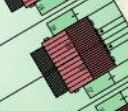
We will get the right half shown in the photo. Orientation is southwest.
The photovoltaic system will of course be installed on the southwest side facing the garden.
The black area is the 3x5 m (10x16 ft) terrace, which will later be covered with a fixed terrace roof measuring 4 m (13 ft) deep and 5.5 m (18 ft) wide.
My question is whether it will still be possible to install a photovoltaic system on the roof once the fixed terrace roof is there?
If the terrace roof is on the southwest side in the garden, it will no longer be possible to set up scaffolding.
For maintenance or in case of problems, access to the photovoltaic system will be necessary later on (is access without scaffolding not possible?)
Or can the photovoltaic system be installed without scaffolding?
The house will have a gable roof and 2.5 full stories.
we are planning a new semi-detached house.
We want to install a photovoltaic system later on.
We will get the right half shown in the photo. Orientation is southwest.
The photovoltaic system will of course be installed on the southwest side facing the garden.
The black area is the 3x5 m (10x16 ft) terrace, which will later be covered with a fixed terrace roof measuring 4 m (13 ft) deep and 5.5 m (18 ft) wide.
My question is whether it will still be possible to install a photovoltaic system on the roof once the fixed terrace roof is there?
If the terrace roof is on the southwest side in the garden, it will no longer be possible to set up scaffolding.
For maintenance or in case of problems, access to the photovoltaic system will be necessary later on (is access without scaffolding not possible?)
Or can the photovoltaic system be installed without scaffolding?
The house will have a gable roof and 2.5 full stories.
D
Deliverer16 Sep 2021 19:06driver55 schrieb:
What I’m getting at is that “in my opinion, it’s still not worth it for saving money” is how it’s presented. Photovoltaic systems pay off after 11 to 12 years. Compensation is provided for 20 to 21 years, legally guaranteed. Maintenance is usually minimal. Service life is over 30 years.
Oh, and you also contribute to the survival of humanity.
So, I don’t know what your problem is.
RotorMotor schrieb:
@hampshire how many cycles are you doing with your battery per year at the moment?After 11 months and 1 week, our numbers are:charged: 2691 kWh
discharged: 2298 kWh
Photovoltaic system 28.35 kWp, storage 10.2 kWh
Considering that the panels were covered with snow for about 4 weeks in winter and produced no energy, 200 cycles per year is far from unrealistic. After deducting subsidies and VAT refunds, the storage system cost us 4000 euros. Additionally, the tax office recognized the battery as depreciable, so there are further savings over the years through depreciation.
D
Deliverer16 Sep 2021 22:00@Fuchur How do you empty your attic in the summer?
It never really gets completely empty. During summer, it usually stays around 40% until sunrise, unless there was bad weather the previous evening and cooking still drew power from the storage or something similar. Also, I have a hot water blackout on weekdays from 7 a.m. to 3 p.m. in summer, so during worse weather (due to the smart grid), it can happen that hot water is still produced overnight.
Because of the photovoltaic-to-storage ratio of almost 3:1 and the east/west/west orientation, the storage still regularly reaches full capacity in winter during good weather despite the heat pump. 17 full cycles in December, 25 in November.
Because of the photovoltaic-to-storage ratio of almost 3:1 and the east/west/west orientation, the storage still regularly reaches full capacity in winter during good weather despite the heat pump. 17 full cycles in December, 25 in November.
Deliverer schrieb:
Ah, and one contributes to the survival of humanity.You don’t need photovoltaic panels on a single-family house roof for that.D
Deliverer16 Sep 2021 22:55How do you save 10 tons of CO2 per year?
Similar topics