
Hello
we are planning a new semi-detached house.
We want to install a photovoltaic system later on.
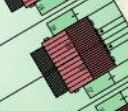
We will get the right half shown in the photo. Orientation is southwest.
The photovoltaic system will of course be installed on the southwest side facing the garden.
The black area is the 3x5 m (10x16 ft) terrace, which will later be covered with a fixed terrace roof measuring 4 m (13 ft) deep and 5.5 m (18 ft) wide.
My question is whether it will still be possible to install a photovoltaic system on the roof once the fixed terrace roof is there?
If the terrace roof is on the southwest side in the garden, it will no longer be possible to set up scaffolding.
For maintenance or in case of problems, access to the photovoltaic system will be necessary later on (is access without scaffolding not possible?)
Or can the photovoltaic system be installed without scaffolding?
The house will have a gable roof and 2.5 full stories.
we are planning a new semi-detached house.
We want to install a photovoltaic system later on.
We will get the right half shown in the photo. Orientation is southwest.
The photovoltaic system will of course be installed on the southwest side facing the garden.
The black area is the 3x5 m (10x16 ft) terrace, which will later be covered with a fixed terrace roof measuring 4 m (13 ft) deep and 5.5 m (18 ft) wide.
My question is whether it will still be possible to install a photovoltaic system on the roof once the fixed terrace roof is there?
If the terrace roof is on the southwest side in the garden, it will no longer be possible to set up scaffolding.
For maintenance or in case of problems, access to the photovoltaic system will be necessary later on (is access without scaffolding not possible?)
Or can the photovoltaic system be installed without scaffolding?
The house will have a gable roof and 2.5 full stories.
Deliverer schrieb:
... this only works if you actually charge and fully discharge it 200 times a year. The former requires a photovoltaic system that is at least three times larger (in kWp) than the battery capacity (in kWh). The latter is basically only possible with unreasonably high night-time consumption in summer.Yes,
that is unfortunately correct.
What would not be correct is the conclusion that you should just increase electricity consumption at night to make it
mathematically cheaper.
That would be a misconception, because once the system is installed, every
(partial) charge cycle reduces the battery’s lifespan.
However, this is hard to predict since the lifespan depends on many factors.
I would never assume a lifespan of 7,000 full cycles.
In my opinion, that is rather a theoretical, idealized figure, similar to fuel consumption values from car manufacturers that are practically never achieved in reality.
Cells also degrade when idle, especially at high temperatures.
So it is better to operate the battery in the basement rather than in the attic (even though cable routing might be easier there).
For this reason, I am very skeptical of claims of up to 15 years of battery life.
Sizing photovoltaic systems for off-grid operation (full supply) is a very ambitious goal.
Generally, it is not cost-effective, also because of the excessively high ecological upfront costs.
H
hampshire16 Sep 2021 10:10It is worth taking a close look at the warranty conditions. Some manufacturers offer a full 10-year warranty that is not dependent on cycles. This can provide some peace of mind. For example, subsidies in Bavaria require a guaranteed performance of 80% after 10 years and corresponding warranties.
R
RotorMotor16 Sep 2021 10:19@hampshire How many charge cycles do you currently get with your battery per year?
H
hampshire16 Sep 2021 11:38I can’t say for sure since I’ve only had the new system installed for less than a year. The first full month with the current setup was in May.
From May 1 to August 31, I recorded 127.7 cycles.
The values below were copied from my portal. Our house has some non-standard consumers, so these figures should not be considered generally applicable. We do not (yet) have an electric vehicle (which I also wouldn’t charge from the battery, but rather with surplus energy instead of feeding back into the grid).
Another factor is that the system’s 8kW charge/discharge capacity makes it less sluggish than many other systems. This means that even with variable weather and some sun, it charges the storage a lot and can also supply heavier loads during discharge.
The nearly 20% system losses can be seen in the difference between charging and discharging. The loss percentage is not constant, which I can’t fully explain, except that month transitions with different state-of-charge levels might play a role.
We have an 8kWh (8 kilowatt-hour) gross battery capacity, so the net capacity is probably about 7.2 kWh (kilowatt-hours). I can’t directly assign the battery cycle numbers in the portal to a specific period, so here is a rough calculation:
May:
Charged: 214 kWh
Discharged: 177 kWh
214 / 7.2 = 29.7 cycles
June:
Charged: 237 kWh
Discharged: 205 kWh
237 / 7.2 = 32.9 cycles
July:
Charged: 238 kWh
Discharged: 198 kWh
238 / 7.2 = 33 cycles
August:
Charged: 231 kWh
Discharged: 193 kWh
231 / 7.2 = 32.1 cycles
From May 1 to August 31, I recorded 127.7 cycles.
The values below were copied from my portal. Our house has some non-standard consumers, so these figures should not be considered generally applicable. We do not (yet) have an electric vehicle (which I also wouldn’t charge from the battery, but rather with surplus energy instead of feeding back into the grid).
Another factor is that the system’s 8kW charge/discharge capacity makes it less sluggish than many other systems. This means that even with variable weather and some sun, it charges the storage a lot and can also supply heavier loads during discharge.
The nearly 20% system losses can be seen in the difference between charging and discharging. The loss percentage is not constant, which I can’t fully explain, except that month transitions with different state-of-charge levels might play a role.
We have an 8kWh (8 kilowatt-hour) gross battery capacity, so the net capacity is probably about 7.2 kWh (kilowatt-hours). I can’t directly assign the battery cycle numbers in the portal to a specific period, so here is a rough calculation:
May:
Charged: 214 kWh
Discharged: 177 kWh
214 / 7.2 = 29.7 cycles
June:
Charged: 237 kWh
Discharged: 205 kWh
237 / 7.2 = 32.9 cycles
July:
Charged: 238 kWh
Discharged: 198 kWh
238 / 7.2 = 33 cycles
August:
Charged: 231 kWh
Discharged: 193 kWh
231 / 7.2 = 32.1 cycles
H
hampshire16 Sep 2021 12:27Addendum:
During the four months mentioned above, I drew 693 kWh from the batteries.
At a purchase price of 27 ct minus a feed-in tariff of 11 ct, this corresponds to 693 * 0.16, approximately €110. With a feed-in tariff of a new system registered today at 7.25 ct, this would be 693 * 0.1975, approximately €137.
During the four months mentioned above, I drew 693 kWh from the batteries.
At a purchase price of 27 ct minus a feed-in tariff of 11 ct, this corresponds to 693 * 0.16, approximately €110. With a feed-in tariff of a new system registered today at 7.25 ct, this would be 693 * 0.1975, approximately €137.