
Hello everyone, we moved in in the middle of last year and have a steel staircase with wooden steps. The wooden steps were only glued at the time. Now we have the problem that since we moved in, two steps have come loose. The carpenter used Lugato bombenfest as adhesive, a type of assembly adhesive. Can you recommend something better?
The steps have been oiled twice and the glued area was not scored or treated in any way. (We had noticed this with the first step.)
After the first step came loose, we reglued it. The second step is not completely detached yet but already loose. The adhesive sticks to the steel but not to the wood. What would you recommend now? I have attached pictures of the staircase construction. Of course, it is possible to screw the steps in place. However, we did not want to see screws from underneath. If we decide to screw them in now, is it possible to drill from below while keeping the steps in place?
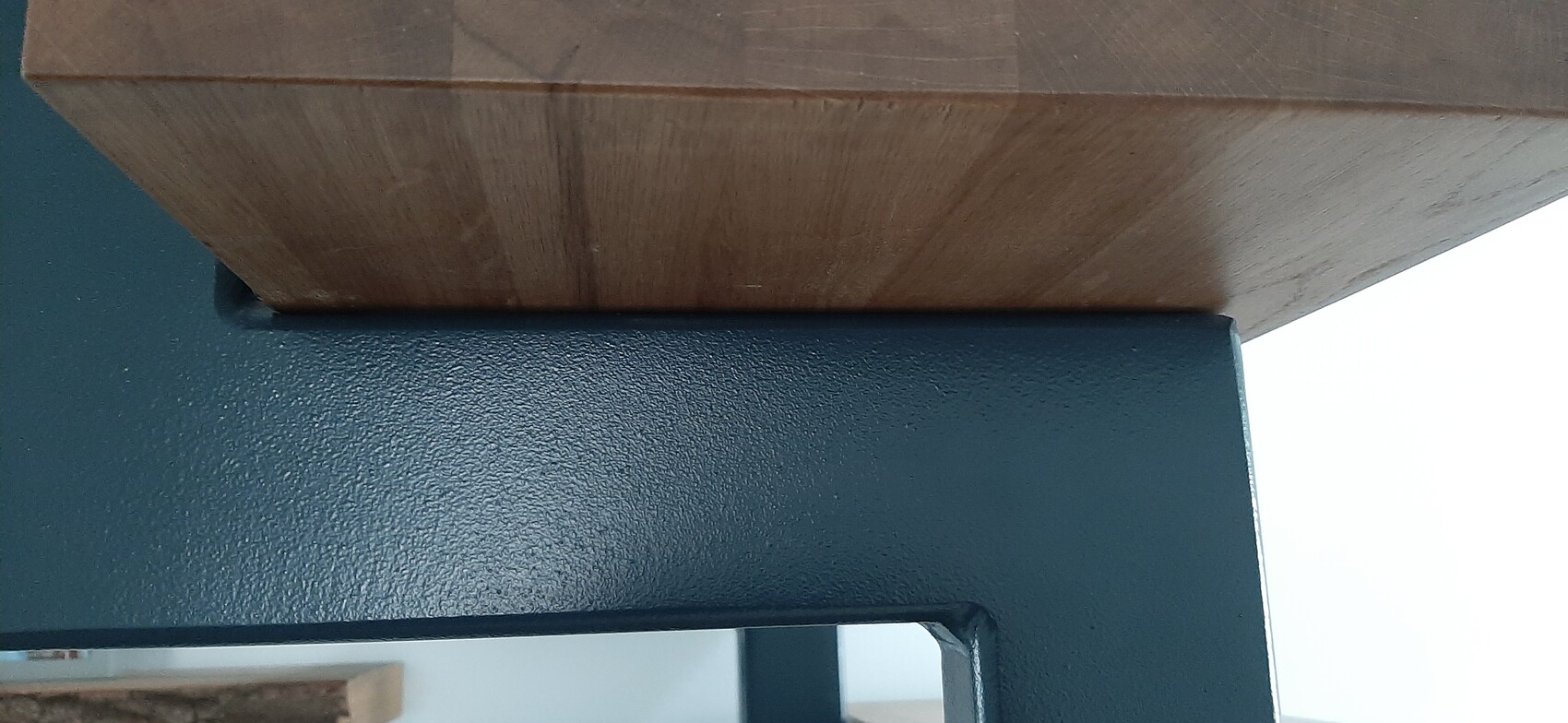
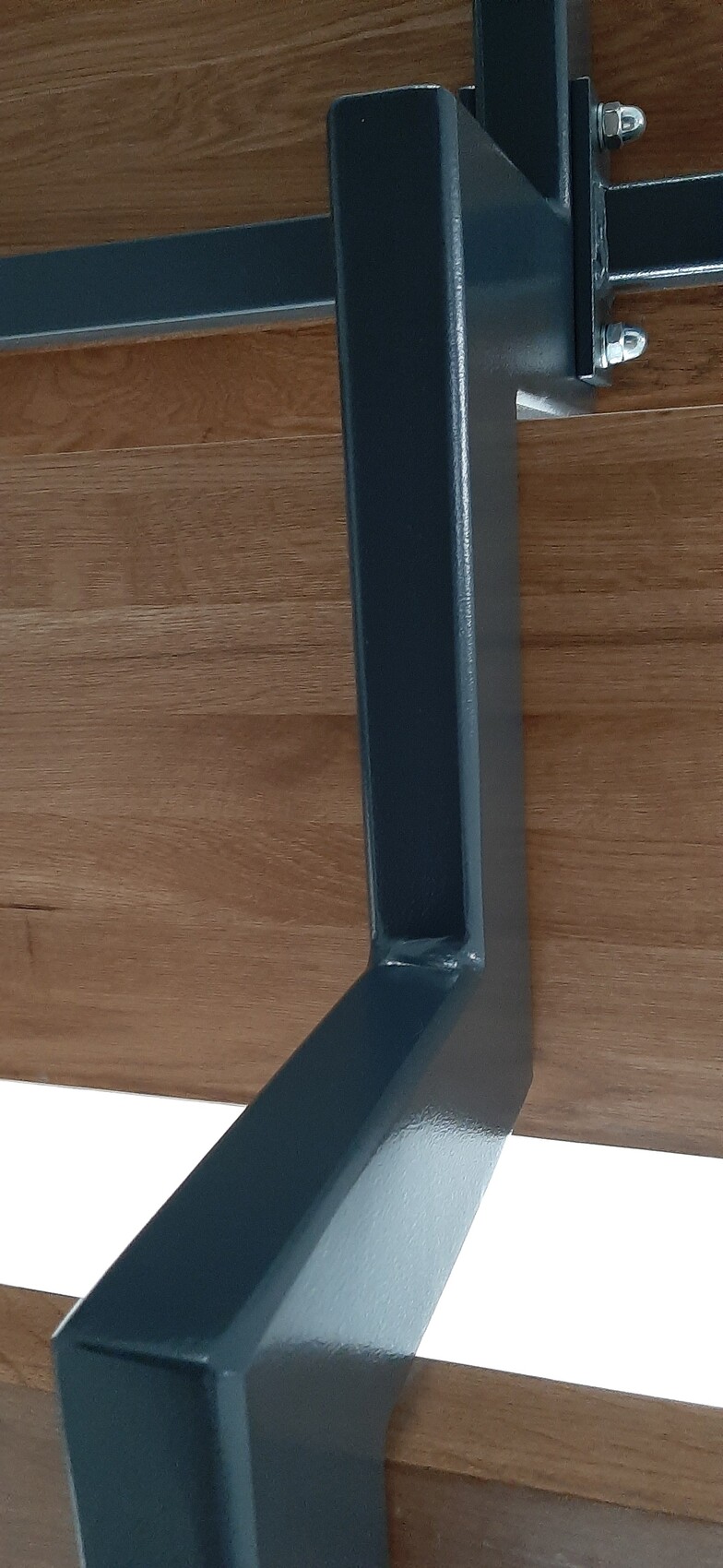
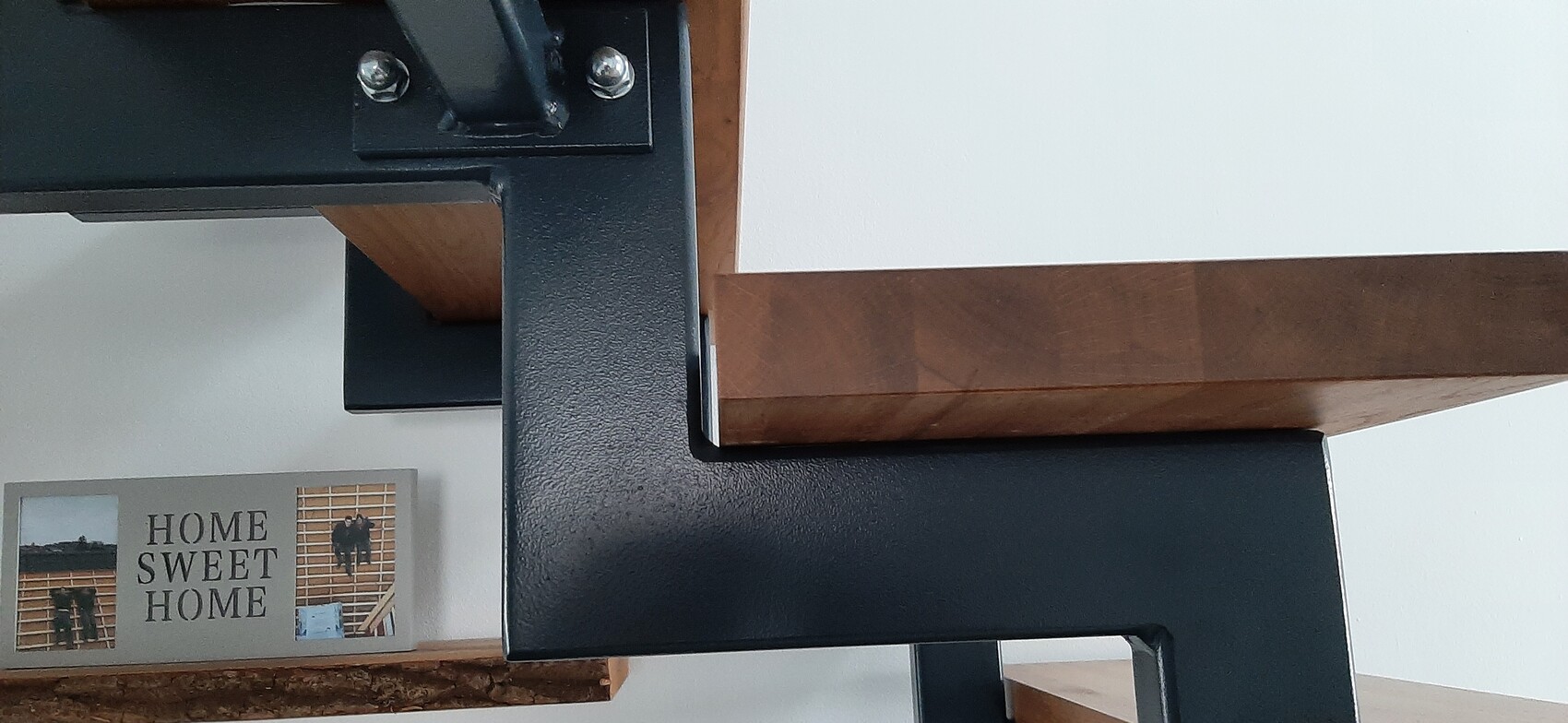
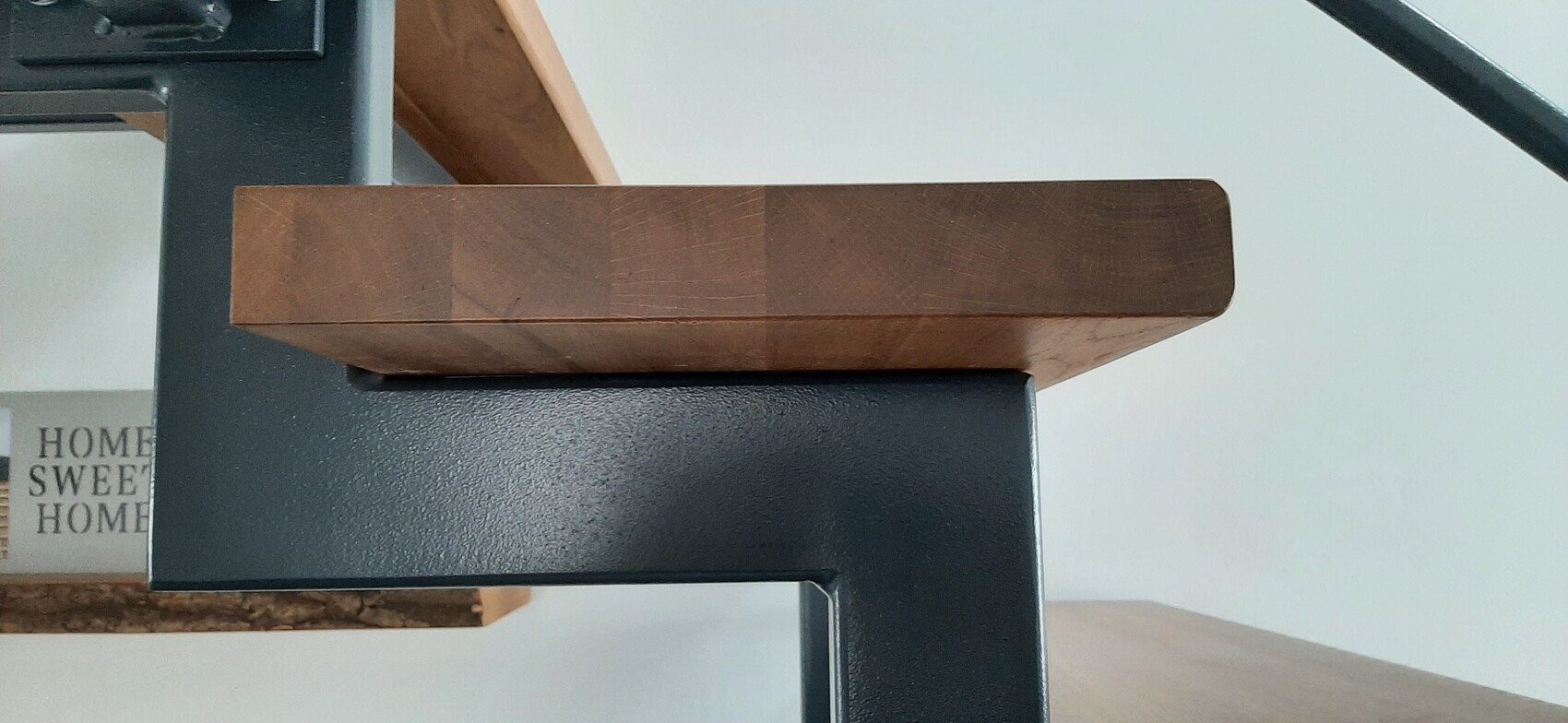
The steps have been oiled twice and the glued area was not scored or treated in any way. (We had noticed this with the first step.)
After the first step came loose, we reglued it. The second step is not completely detached yet but already loose. The adhesive sticks to the steel but not to the wood. What would you recommend now? I have attached pictures of the staircase construction. Of course, it is possible to screw the steps in place. However, we did not want to see screws from underneath. If we decide to screw them in now, is it possible to drill from below while keeping the steps in place?
H
hampshire22 Mar 2021 18:12Myrna_Loy schrieb:
And the comment about lazy tradespeople ... 🙄 No tradesperson wants to fix design mistakes made by the builders.Not only that, the generalizing term "lazy tradespeople" is itself disqualifying, disrespectful, and contradicts my experience in construction. Of course, it helps to know that the tradesperson leaves as soon as you start working on things without consulting them.
Myrna_Loy schrieb:
I was about to say – a rigid metal connection will only cause cracks in the steps. Two screw points per side in the wood, even if the connection in the wood isn’t made with elongated holes.
The wooden dowel only prevents the step from slipping if the adhesive fails again.
And the comment about lazy craftsmen… 🙄 No tradesperson wants to fix design mistakes made by builders. Where are the cracks supposed to come from?
M
Myrna_Loy22 Mar 2021 20:52Bookstar schrieb:
Where are the cracks supposed to come from?If the wood cannot move freely in all directions—that is, expand and contract—cracks will form. This happens due to fiber separation and cell collapse caused by compression damage. For a 25 cm (10 inch) wide oak board, dimensional changes can be up to 7 mm (0.28 inches). If the step is firmly installed during the heating season, when relative humidity is 20-30%, the wood will expand significantly in summer when indoor relative humidity rises to 60-80%. The compression causes cell collapse, resulting first in microcracks and eventually in fiber breakage. If the wood was also not properly dried and stored before installation (a friend of a friend once had that happen...), damage is inevitable.
Myrna_Loy schrieb:
If the wood cannot move freely in all directions—that is, expand and contract—it will develop cracks. This happens due to the fibers being pulled apart and cell collapse caused by compression damage. For a 25 cm (10 inch) wide step made of oak, dimensional changes of up to 7 mm (0.3 inch) can occur. If the step is firmly fixed during the heating season when indoor relative humidity is around 20-30%, the wood will swell considerably in summer when relative humidity rises to 60-80%. The compression causes cell collapse, leading first to microcracks and eventually fiber breakage.
If the wood was not properly dried and stored before installation (a friend of a friend once had this experience…), then damage is unavoidable. We are dealing with a single-family house without large temperature fluctuations (19 to 23 degrees Celsius (66 to 73 degrees Fahrenheit)) and relatively stable humidity (30 to 60%). The wood may occasionally make noises, but no damage is expected.
However, it is important—as you rightly pointed out—that the wood is dry at the time of installation.
M
Myrna_Loy22 Mar 2021 21:05Bookstar schrieb:
We live in a single-family house with only minor temperature fluctuations (19 to 23°C (66 to 73°F)) and relatively stable humidity levels (30 to 60%). The wood might occasionally "creak," but no damage will occur.
However, it is important— and I agree with you on this point— that the wood is dry at the time of installation. I’m going to take a risk here and say, as a trained carpenter with 20 years of experience in property management, including heritage conservation: single-family houses are not usually climatically stable enough (unless you have museum-grade air conditioning) to prevent wood damage.
P
pagoni202022 Mar 2021 21:05HausiKlausi schrieb:
I consider the idea of using sleeves to slip on or threaded inserts to screw in as the most promising option. The wood structure is not stressed excessively like with a screw, and the wood still has full freedom to move. So: hole -> insert -> screw (in the color of the metal) from below. Form follows function! I would say the same, screws!!
You must have noticed that this unconventional decision caused problems back then. Therefore, I would avoid repeating the same "mistake," even under optimized conditions. It’s still wood, which simply does not bond perfectly to metal. The risk remains.
Similar topics