
Hello everyone, we moved in in the middle of last year and have a steel staircase with wooden steps. The wooden steps were only glued at the time. Now we have the problem that since we moved in, two steps have come loose. The carpenter used Lugato bombenfest as adhesive, a type of assembly adhesive. Can you recommend something better?
The steps have been oiled twice and the glued area was not scored or treated in any way. (We had noticed this with the first step.)
After the first step came loose, we reglued it. The second step is not completely detached yet but already loose. The adhesive sticks to the steel but not to the wood. What would you recommend now? I have attached pictures of the staircase construction. Of course, it is possible to screw the steps in place. However, we did not want to see screws from underneath. If we decide to screw them in now, is it possible to drill from below while keeping the steps in place?
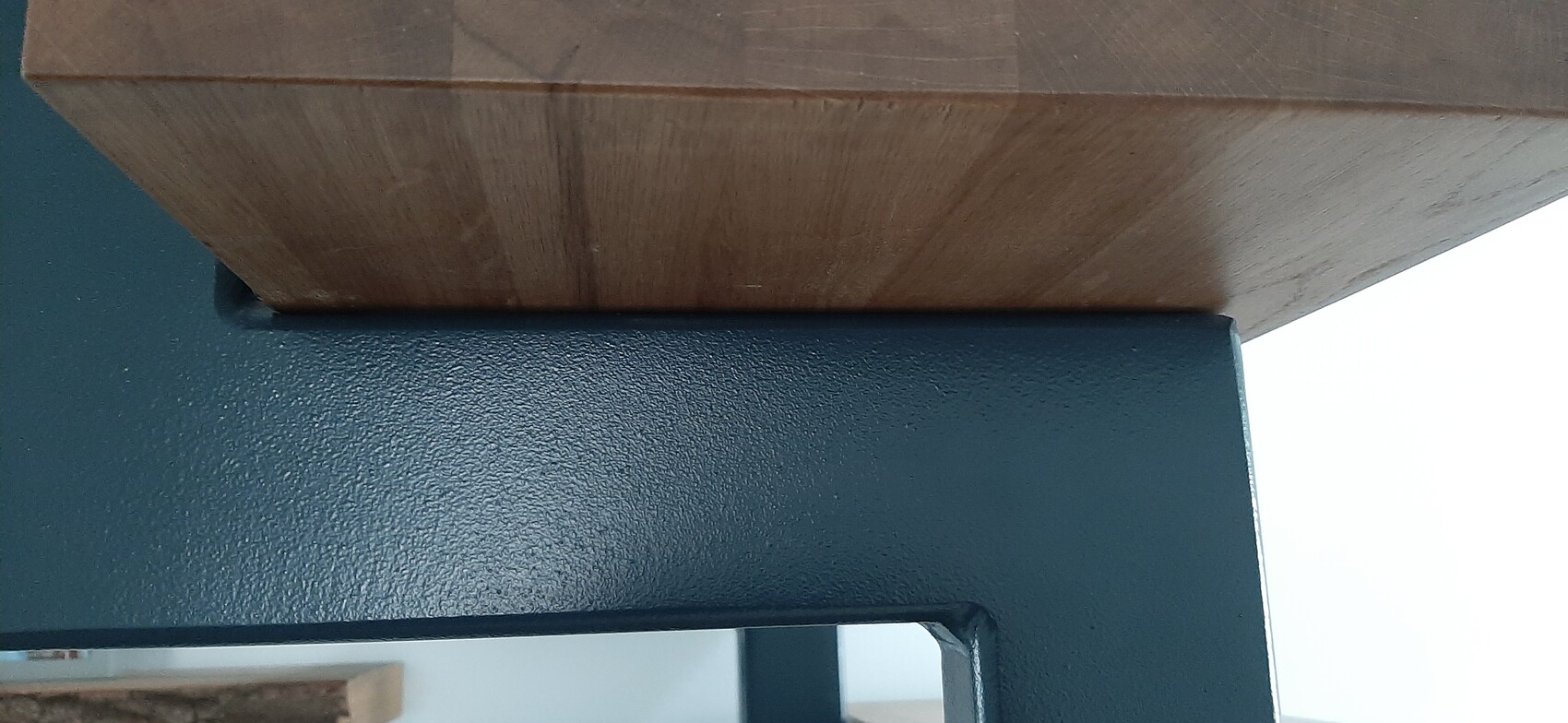
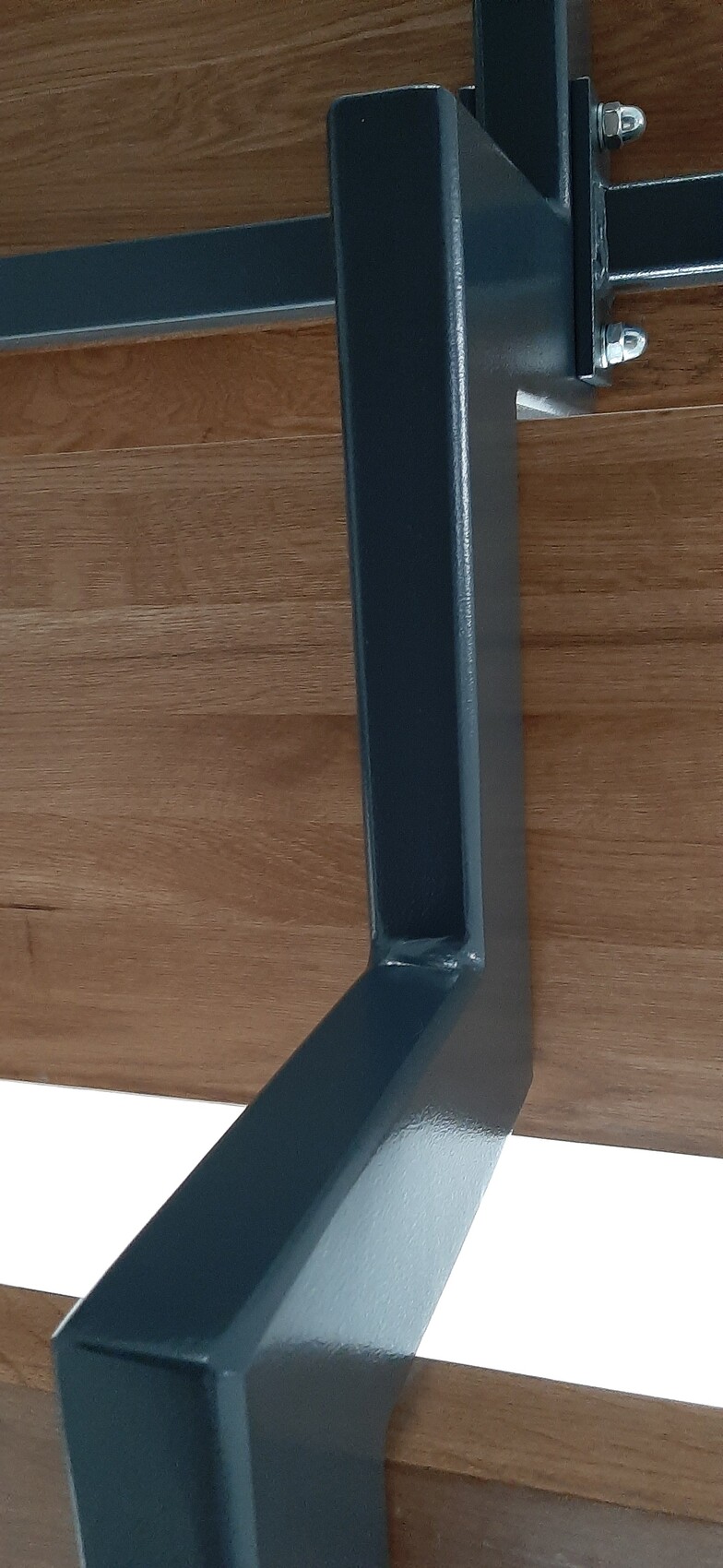
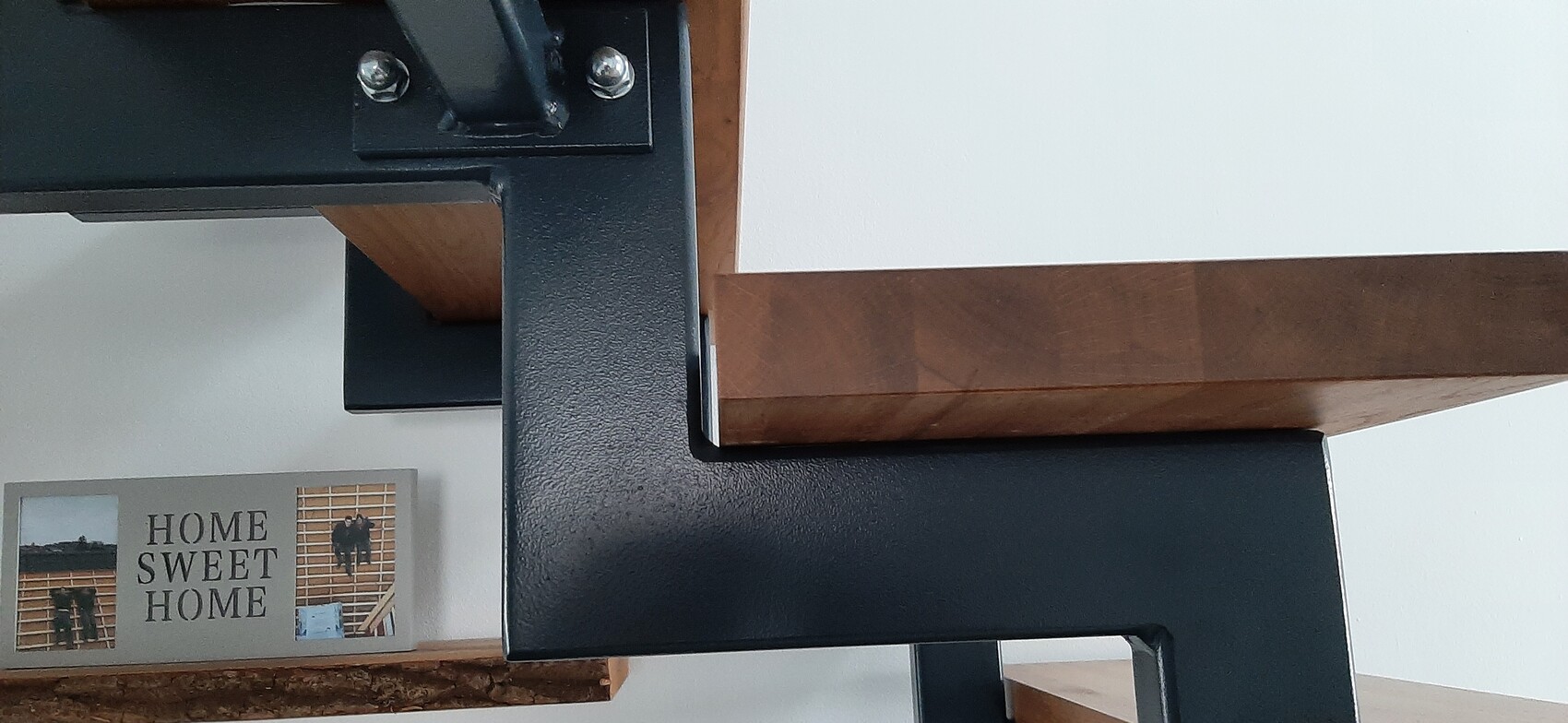
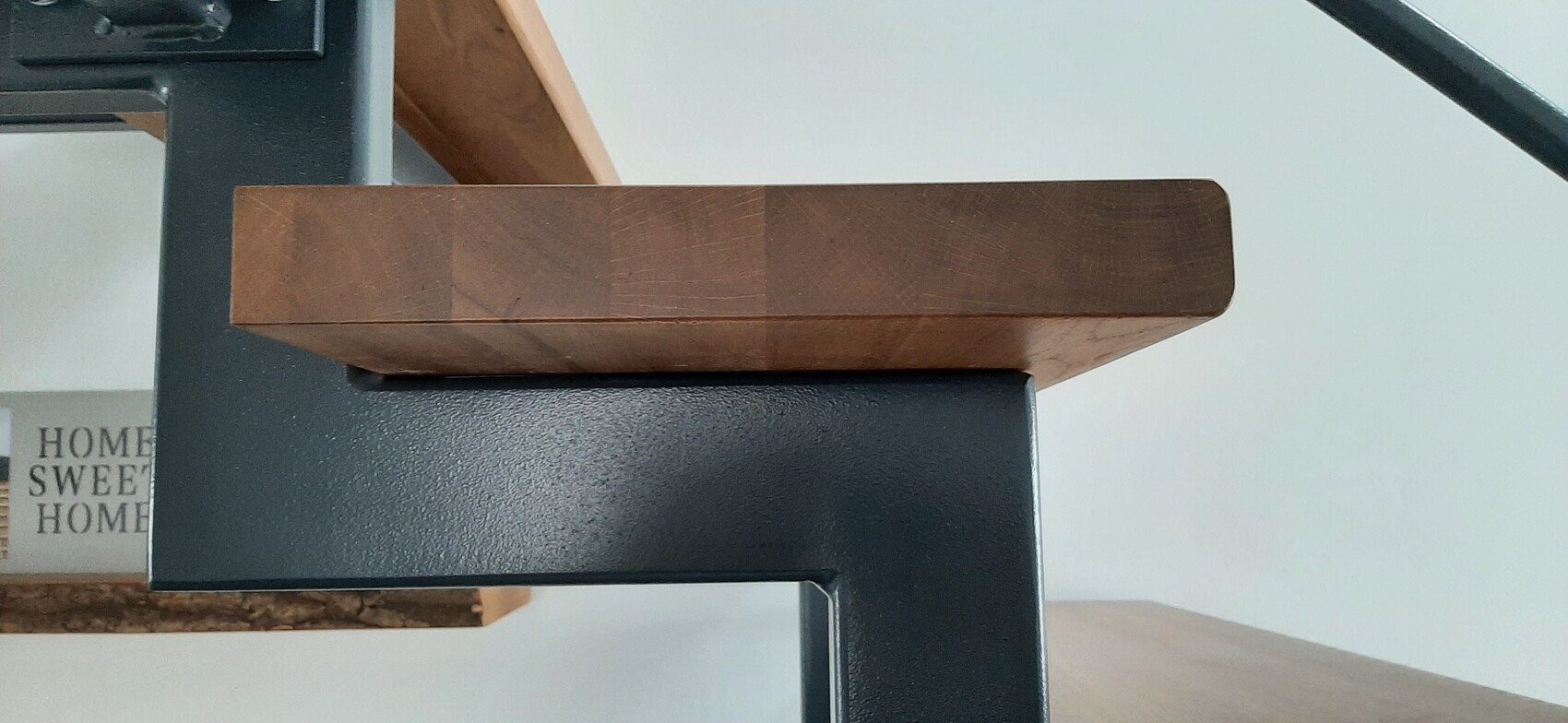
The steps have been oiled twice and the glued area was not scored or treated in any way. (We had noticed this with the first step.)
After the first step came loose, we reglued it. The second step is not completely detached yet but already loose. The adhesive sticks to the steel but not to the wood. What would you recommend now? I have attached pictures of the staircase construction. Of course, it is possible to screw the steps in place. However, we did not want to see screws from underneath. If we decide to screw them in now, is it possible to drill from below while keeping the steps in place?
Myrna_Loy schrieb:
I’m going to take a bit of a risk here and tell you, as a trained carpenter with 20 years of experience in property management, including heritage conservation: Single-family homes aren’t always that climate-stable (unless you have museum-level air conditioning) to prevent wood damage.That may be true. But we are talking about a new build constructed to energy-saving regulations, where temperature fluctuations are much smaller than in older buildings. Still, it certainly doesn’t hurt to do it properly right from the start 🙂Oh, becoming a carpenter has always been my dream job.
M
Myrna_Loy22 Mar 2021 21:32Bookstar schrieb:
That’s possible. However, we are talking about a new build constructed according to energy saving regulations, where fluctuations are significantly lower than in older buildings. But of course, it never hurts to do it right from the start 🙂
Oh, being a carpenter has always been my dream job.Relative humidity doesn’t care whether a building was constructed according to energy saving regulations or not. If a precise dehumidification system for the summer and a humidification system for the winter are not installed, then depending on the construction method (wood or masonry), relative humidity levels can fluctuate between 25% and 80% throughout the year. Wood is stable at around 55% relative humidity, and any deviation in either direction causes dimensional changes.Myrna_Loy schrieb:
Humidity doesn’t care whether the building was constructed according to the energy saving regulations or not. Unless a precisely functioning dehumidification system for the summer and a humidification system for the winter are installed, depending on the construction type (wood or masonry), indoor relative humidity can vary between 25% and 80% throughout the year. Wood remains stable at around 55% relative humidity, and any deviation in either direction causes dimensional changes. With a controlled mechanical ventilation system, we have 40% in winter and a maximum of 60% in summer inside the house. Without it, no idea.
M
Myrna_Loy22 Mar 2021 22:12From a purely physical standpoint, a maximum relative humidity of 60% in summer can really only be achieved through dehumidification. If only a few materials with buffering capacity have been used, the fluctuations will be even more pronounced. A wooden house has a greater thermal inertia than a masonry and tile construction and can better absorb peaks. Some regions may be drier than others – but relative humidity levels of up to 80% are common here in July, August, and September.
How about using Pattex silicone adhesive, for example? It offers high long-lasting elasticity. While it doesn’t bond quite as strongly as some other construction adhesives, it is especially suitable for flexible connections.
We used it to attach our house number sign. Since it was too cold the first time (0°C, application temperature at least 5°C / 41°F, application temperature at least 41°F), it fell off again after a few hours. On the second attempt (when it was significantly warmer), the adhesive cured well and now holds very securely.
We used it to attach our house number sign. Since it was too cold the first time (0°C, application temperature at least 5°C / 41°F, application temperature at least 41°F), it fell off again after a few hours. On the second attempt (when it was significantly warmer), the adhesive cured well and now holds very securely.
Similar topics