
ᐅ Window Installation – Using Expanding Foam Tape: Quick Fix or Worth the Wait?
Created on: 19 Dec 2020 08:04
A
annab377
Hello everyone,
Our general contractor actually managed to schedule a window installation appointment last week. The German-speaking window installer explained to me that they apply an external sealing tape / swelling tape. Due to the 2-3°C (36-37°F) temperature, it expands rather slowly. They started on Wednesday and by Thursday night it was supposed to have fully expanded. They also used a warm air blower because, according to him, they want to avoid the window installation foam getting underneath the swelling tape afterward. That’s why the swelling tape should be fully expanded (up to the masonry) before they can foam from the inside.
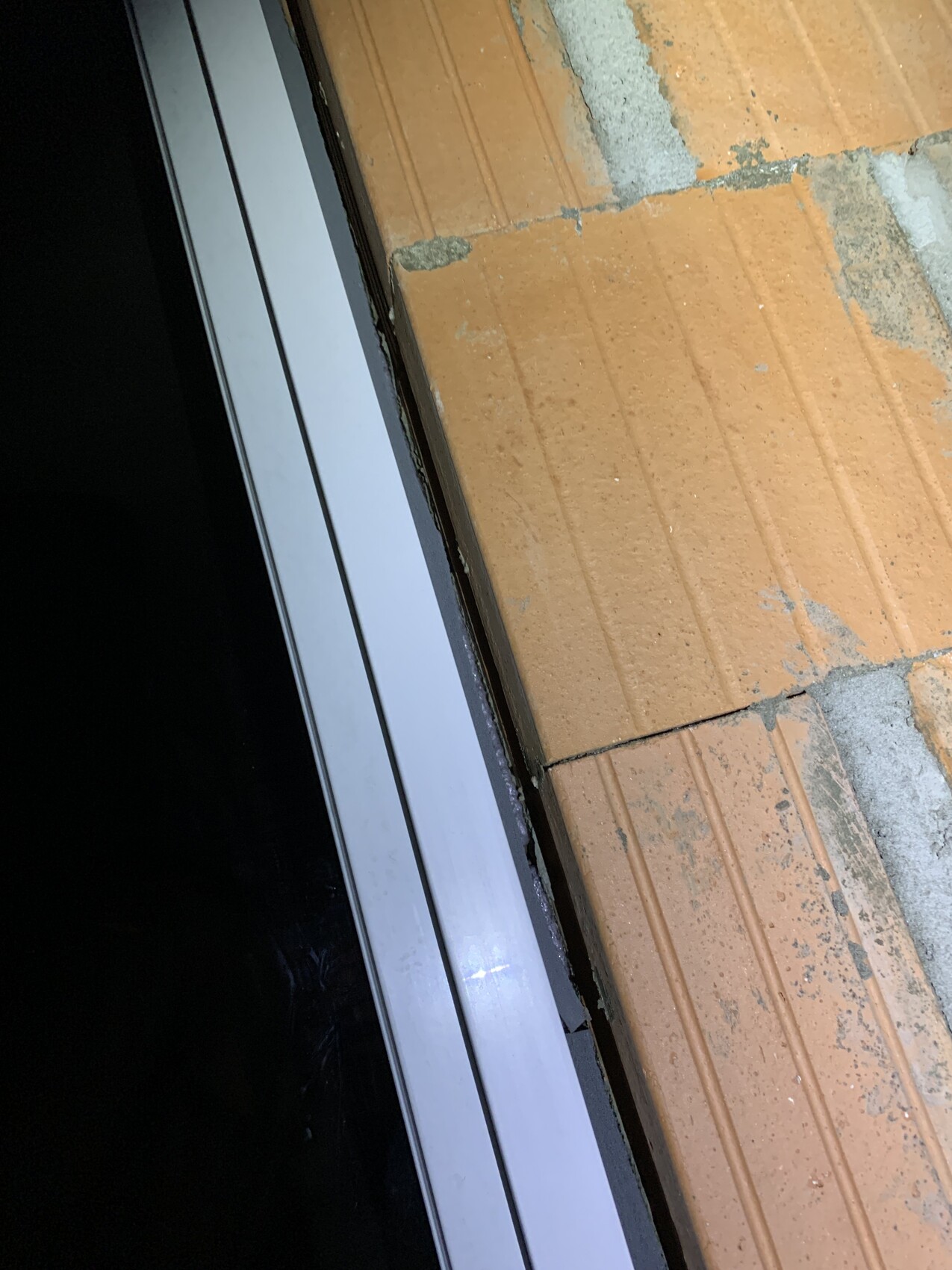
Yesterday evening, I was able to take photos of two different windows (doors) on the ground floor from the outside 🤨
According to the photos, it looks like they cut the swelling tape too short at its supposed expansion height. You can see the curves on the surface that should actually press against the window reveal, right? Doesn’t the installer use a uniform swelling tape with the same thickness for this?
The swelling tape is the gray one (in the front, since the photo is taken from outside) and behind it is the slightly different violet-gray of the installation foam.
Should I wait until next week, when a significant temperature increase of 8-9°C (14-16°F) is expected, and see if the swelling tape fully closes and contacts the window reveal everywhere? Or should I request fully closed swelling tape in all areas before final acceptance? That would probably require them to remove the affected windows again, right? Not all windows are like this. Most of the windows have swelling tape that sits completely against the reveal from the outside. I can’t see anything inside anymore because after the foam, a black adhesive tape (possibly with a cotton surface?) was applied over the joints.
What do the experts here think? I don’t want to create unnecessary thermal bridges due to such issues. Especially our window expert @11ant can surely tell me what is going on here.
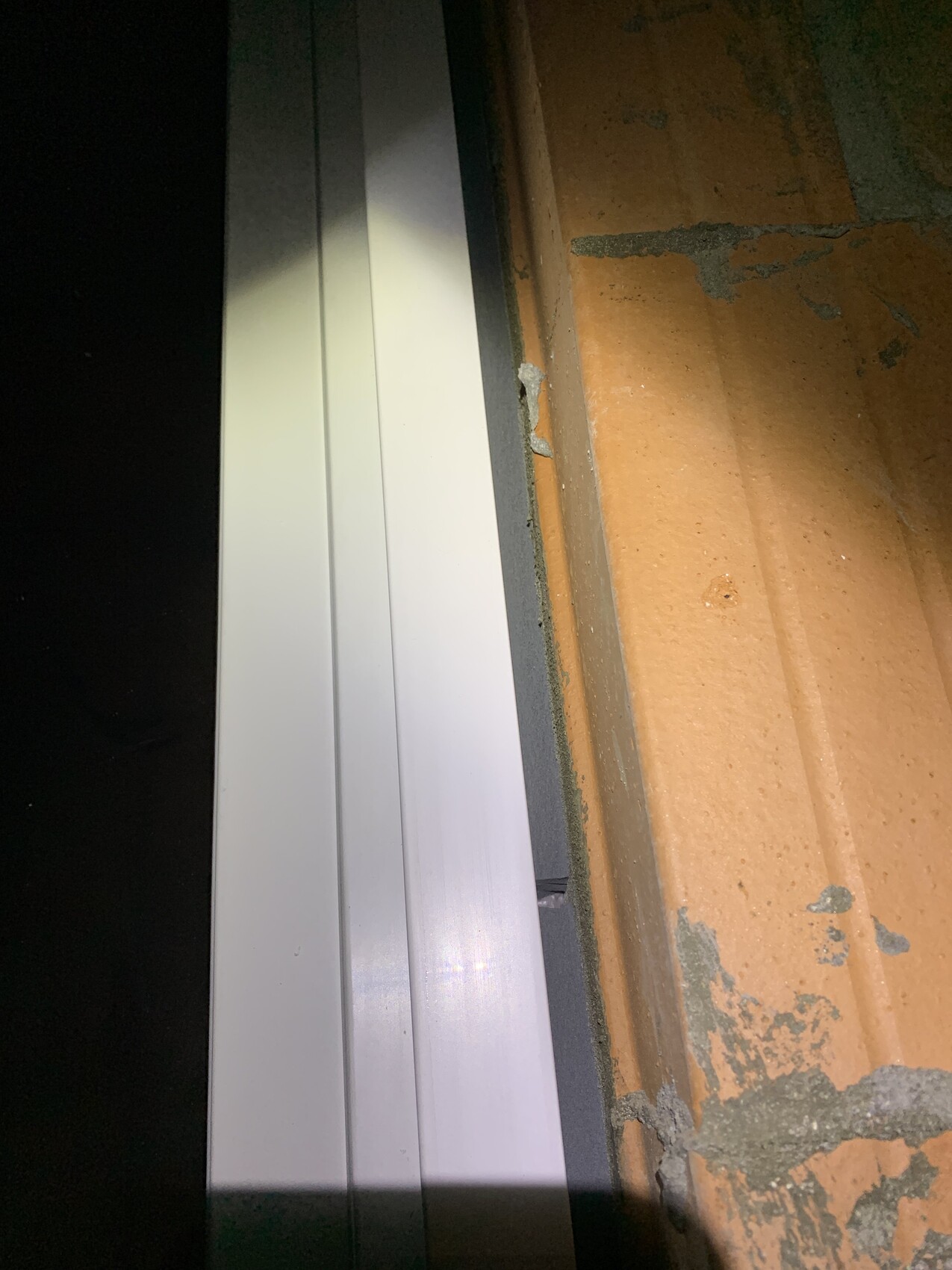
In the third picture, it looks like the swelling tape was simply cut too short in length, leaving a roughly 1 cm (0.4 inches) tall gap in the tape. There it has expanded well and presses against the window reveal. Should I just foam that small gap closed? But the waves and curves on the swelling tape surface, which unfortunately are largely not in contact with the window reveal, seem outside the tolerance range, don’t they?
Thank you very much for your answers.
Have a great weekend and an early Merry Christmas.
Annab377
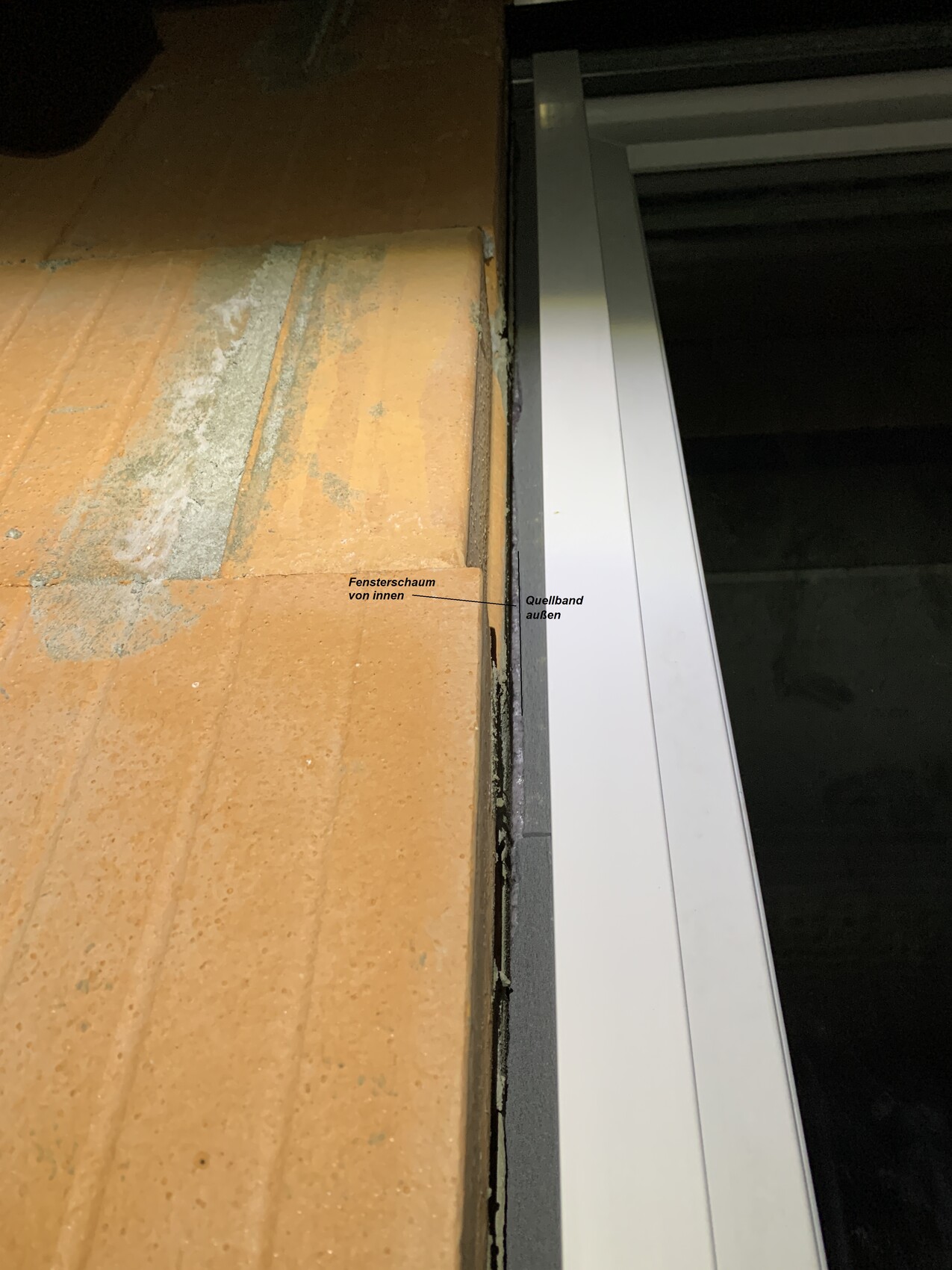
Our general contractor actually managed to schedule a window installation appointment last week. The German-speaking window installer explained to me that they apply an external sealing tape / swelling tape. Due to the 2-3°C (36-37°F) temperature, it expands rather slowly. They started on Wednesday and by Thursday night it was supposed to have fully expanded. They also used a warm air blower because, according to him, they want to avoid the window installation foam getting underneath the swelling tape afterward. That’s why the swelling tape should be fully expanded (up to the masonry) before they can foam from the inside.
Yesterday evening, I was able to take photos of two different windows (doors) on the ground floor from the outside 🤨
According to the photos, it looks like they cut the swelling tape too short at its supposed expansion height. You can see the curves on the surface that should actually press against the window reveal, right? Doesn’t the installer use a uniform swelling tape with the same thickness for this?
The swelling tape is the gray one (in the front, since the photo is taken from outside) and behind it is the slightly different violet-gray of the installation foam.
Should I wait until next week, when a significant temperature increase of 8-9°C (14-16°F) is expected, and see if the swelling tape fully closes and contacts the window reveal everywhere? Or should I request fully closed swelling tape in all areas before final acceptance? That would probably require them to remove the affected windows again, right? Not all windows are like this. Most of the windows have swelling tape that sits completely against the reveal from the outside. I can’t see anything inside anymore because after the foam, a black adhesive tape (possibly with a cotton surface?) was applied over the joints.
What do the experts here think? I don’t want to create unnecessary thermal bridges due to such issues. Especially our window expert @11ant can surely tell me what is going on here.
In the third picture, it looks like the swelling tape was simply cut too short in length, leaving a roughly 1 cm (0.4 inches) tall gap in the tape. There it has expanded well and presses against the window reveal. Should I just foam that small gap closed? But the waves and curves on the swelling tape surface, which unfortunately are largely not in contact with the window reveal, seem outside the tolerance range, don’t they?
Thank you very much for your answers.
Have a great weekend and an early Merry Christmas.
Annab377
Hausbau0815 schrieb:
Images 1 to 3 show the current waterproofing. This is how it should be done.On the inside of my windows, there is this black tape with a fabric-like surface. Beneath it, if I understand correctly, there is expanding foam, which can sometimes be felt through the tape.
Using sealing tape on the outside and expanding foam on the inside is also compliant with energy-saving regulations.
What is the actual function of the black tape with the fabric-like surface? It partially comes loose at the outer edge of the tape (in this case, the lowest point inside the living space). The plasterer will cover that area with trim anyway, right?
 Hausbau08155 Jan 2021 07:37
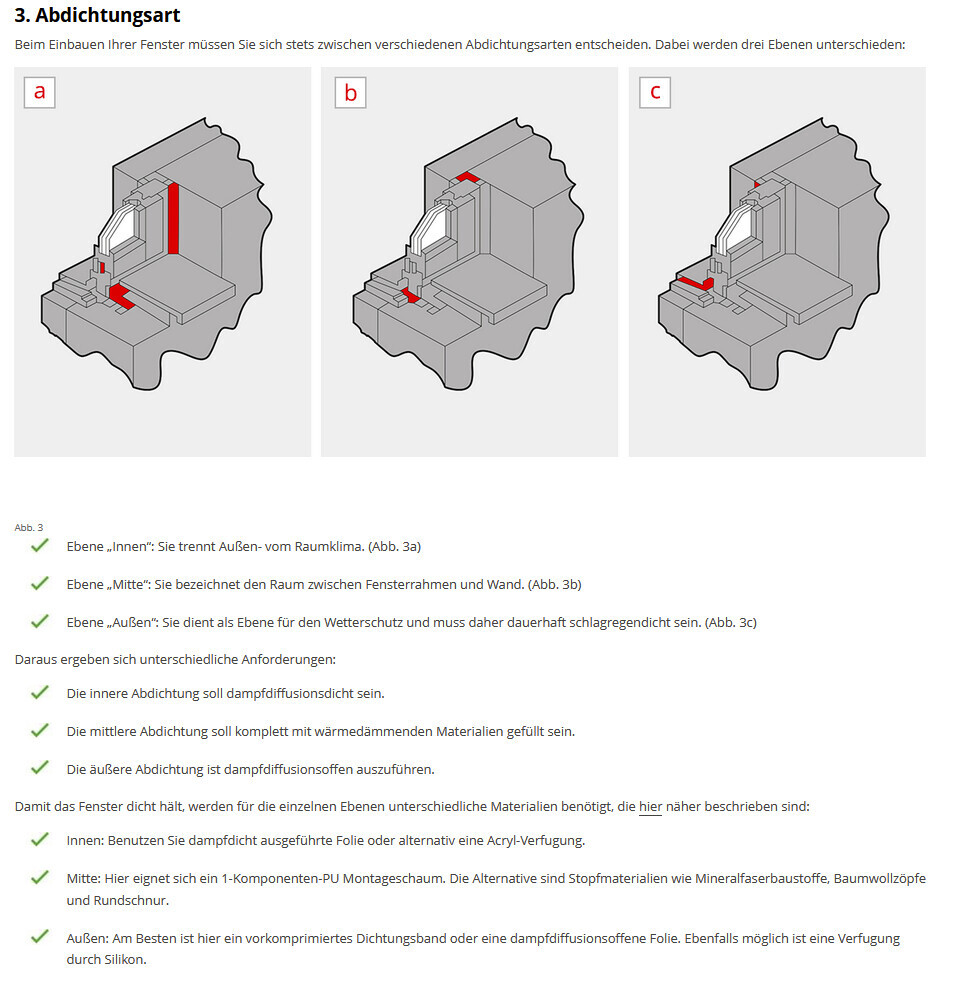
The requirement of being "more airtight on the inside than on the outside" is met by a three-layer construction of the window connection joint. The outer layer should be resistant to driving rain while allowing vapor diffusion, protecting the joint from penetrating water and simultaneously permitting any trapped moisture to escape. The middle layer should provide thermal and sound insulation, and the inner layer must meet the airtightness requirements of the energy-saving regulations.
In my case, the black tape served to conceal what was underneath, namely expanding foam. Expanding foam is not airtight and, in my opinion, should only be used as insulation in the middle layer.
In my case, the black tape served to conceal what was underneath, namely expanding foam. Expanding foam is not airtight and, in my opinion, should only be used as insulation in the middle layer.
K
knalltüte5 Jan 2021 08:36Regarding the sealing, our architect basically told us on site (when we raised concerns about the poor execution of the tape sealing): There are several ways to achieve the goal. There isn’t just “one right way.”
It’s similar in our case. The exterior tape certainly has its purpose; it must provide permanent protection against driving rain. If it is currently slightly detaching from the masonry, that seems to be normal. Before plastering, it will definitely be pressed down, then a mesh corner will be applied, and finally plastered (at least that’s how I understood it).
The middle section can be filled with expanding foam (as insulation). A better solution (as done on our doors) is a frame-wide compressible sealing tape, which also provides the inner sealing (airtightness and separation between interior and exterior climate) by closing any gaps.
On the interior side, a suitable sealing tape can also be used. This can be glued onto the frame beforehand, then the window installed, the tape folded over and adhered both inside and outside (as done for us). Alternatively, the sealing tape can be applied later (after installing the interior insulation) directly onto the frame. This requires careful workmanship to ensure the reveal can be finished properly without the tape being visible. I assume this is the only way to make corrections without removing the windows—something that definitely won’t happen here, as I consider it unreasonable.
I hope I have understood and conveyed everything correctly. The drawing below at least reflects the basic (correct) scheme.
It’s similar in our case. The exterior tape certainly has its purpose; it must provide permanent protection against driving rain. If it is currently slightly detaching from the masonry, that seems to be normal. Before plastering, it will definitely be pressed down, then a mesh corner will be applied, and finally plastered (at least that’s how I understood it).
The middle section can be filled with expanding foam (as insulation). A better solution (as done on our doors) is a frame-wide compressible sealing tape, which also provides the inner sealing (airtightness and separation between interior and exterior climate) by closing any gaps.
On the interior side, a suitable sealing tape can also be used. This can be glued onto the frame beforehand, then the window installed, the tape folded over and adhered both inside and outside (as done for us). Alternatively, the sealing tape can be applied later (after installing the interior insulation) directly onto the frame. This requires careful workmanship to ensure the reveal can be finished properly without the tape being visible. I assume this is the only way to make corrections without removing the windows—something that definitely won’t happen here, as I consider it unreasonable.
I hope I have understood and conveyed everything correctly. The drawing below at least reflects the basic (correct) scheme.
Similar topics