
ᐅ Waterproofing on Extruded Polystyrene (XPS) Insulation?
Created on: 21 Jul 2016 23:21
G
GerdBuchholz
Hello everyone,
Our shell builder installed the perimeter insulation (Styrodur) directly into the formwork (see photos), which caused the concrete and Styrodur to bond.
Now we are about to start plastering (exterior), and I’m hearing from different sources that this might cause issues with waterproofing. Normally, the concrete is waterproofed with bitumen first, and then the Styrodur is applied afterward. Bitumen reportedly does not adhere well to the outside of Styrodur.
Another plasterer suggests that using a waterproof slurry (WeberSuperflex D2) would be the correct solution here.
Since I couldn’t find any information about this online, I’m wondering if you might have some advice. Does anyone have experience with this?
How do people handle this, for example, when using prefabricated formwork from manufacturers like Lohrelemente?
Details: slab foundation with strip footings, no basement. No water pressure. Masonry made of Ytong.
Best regards, Gerd
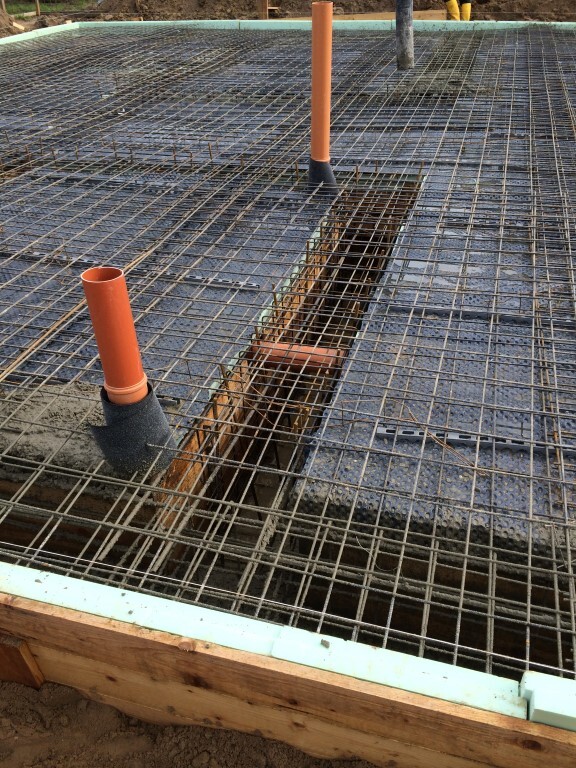
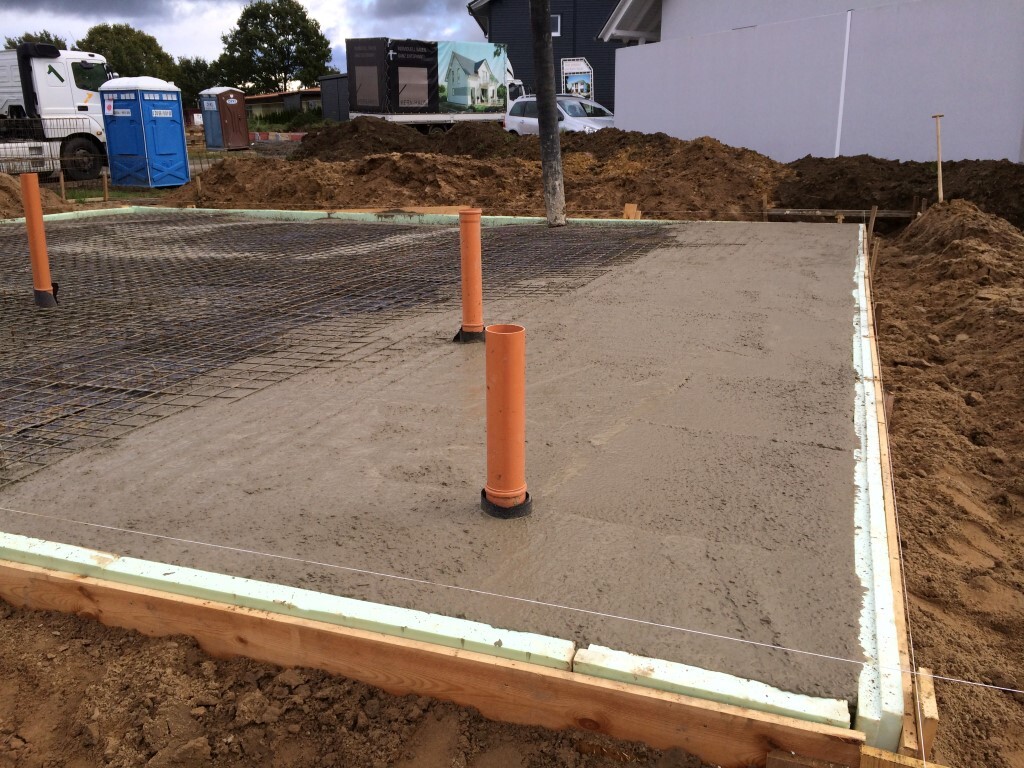
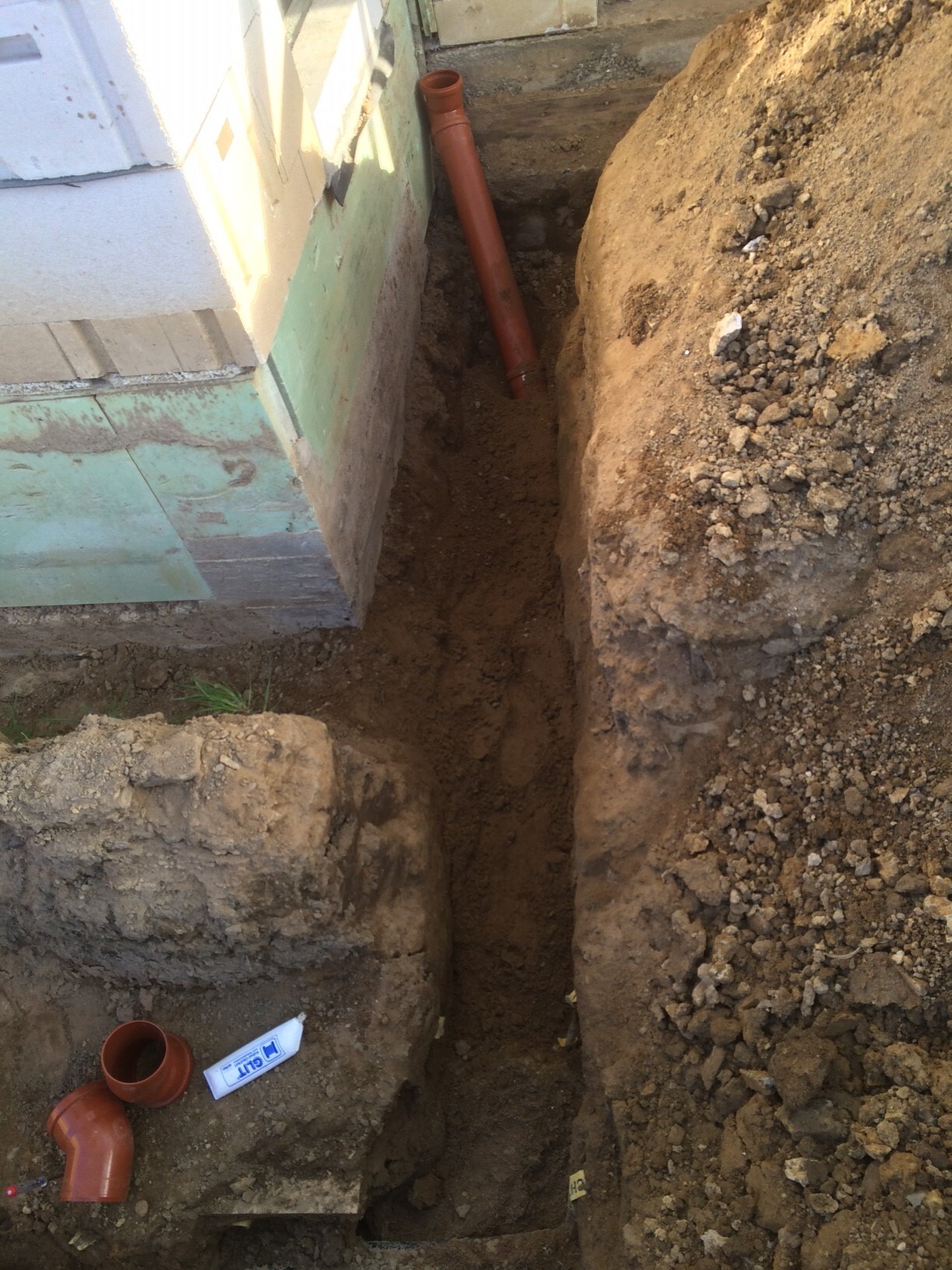
Our shell builder installed the perimeter insulation (Styrodur) directly into the formwork (see photos), which caused the concrete and Styrodur to bond.
Now we are about to start plastering (exterior), and I’m hearing from different sources that this might cause issues with waterproofing. Normally, the concrete is waterproofed with bitumen first, and then the Styrodur is applied afterward. Bitumen reportedly does not adhere well to the outside of Styrodur.
Another plasterer suggests that using a waterproof slurry (WeberSuperflex D2) would be the correct solution here.
Since I couldn’t find any information about this online, I’m wondering if you might have some advice. Does anyone have experience with this?
How do people handle this, for example, when using prefabricated formwork from manufacturers like Lohrelemente?
Details: slab foundation with strip footings, no basement. No water pressure. Masonry made of Ytong.
Best regards, Gerd
U
Ulrich Fuckert22 Jul 2016 23:48Correct. The floor slab is also not waterproofed underneath (except in the case of a tanking system). The waterproofing of the floor slab is applied on top of the slab and must extend up to the horizontal barrier beneath the lowest course of masonry. The external waterproofing must also extend up to this horizontal barrier. This creates a closed system.
What exactly is the damage pattern? The issue with "building on top of the insulation" is apparent to me as well, unless it was taken into account.
So moisture penetrates behind the insulation and possibly gets absorbed into the concrete slab. Doesn’t the horizontal damp-proof course beneath the first row of bricks also come into effect here?
So moisture penetrates behind the insulation and possibly gets absorbed into the concrete slab. Doesn’t the horizontal damp-proof course beneath the first row of bricks also come into effect here?
U
Ulrich Fuckert23 Jul 2016 00:10This is not so much about the extent of the damage, but rather about what is permitted and what is not permitted.
U
Ulrich Fuckert23 Jul 2016 00:14Furthermore, you should ensure that the new waterproofing is installed according to regulations to extend up to 30 cm (12 inches) above the planned ground level.
@UIrich: Could you please explain the load transfer to me again? Nowadays, it is common practice to install insulation at the junctions between the concrete slab and the wall, and extruded polystyrene (often called Styrodur) is also used on floor slabs to prevent thermal bridges. Typically, the last block supporting the precast slab, as well as the first block of the new row, are made weaker to avoid thermal bridges, and a 6-10cm (2.4-4 inch) thick extruded polystyrene board is placed in front of them. If this is actually not allowed, then every house built with solid construction today would have to be demolished, because this method is used everywhere.
Similar topics