
Dear forum members,
I hope you can help me with a problem I’m having. I have been living with my boyfriend in a rented apartment for three years. Already during the first autumn/winter, I was amazed by how much the windows would fog up. As soon as the temperature drops, so much condensation gathers that it literally drips onto the floor. At first, we aired the apartment thoroughly every day for a long time despite the cold outside, but that didn’t help much. Last year, my boyfriend had the brilliant idea to sleep with the window open during winter, so we got to enjoy a little peace – and about 1300€ extra heating costs...
This year the problem has, of course, reappeared. My boyfriend refuses to talk to the landlord because he’s afraid of possible costs for inspections. I can’t do it myself since I’m not on the lease and I don’t really understand the legal side of things (I’m a foreigner studying in Germany). My boyfriend says I should just keep stacking more cloths on every window and on the floor. But I’m running out of those too! Can anyone help me? What else can I do? Is it our fault that the windows look like this? Can the landlord charge us for repair or inspection costs? This morning I took a few photos to illustrate what I’m dealing with every day (really, it looks like this day and night):
Bedroom:
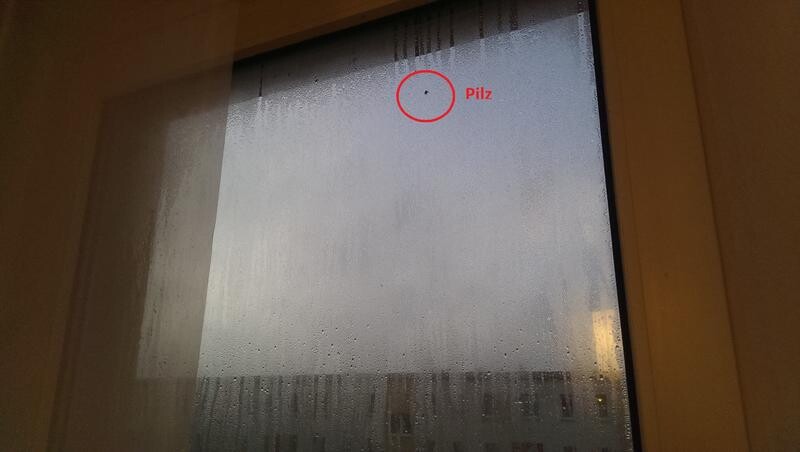
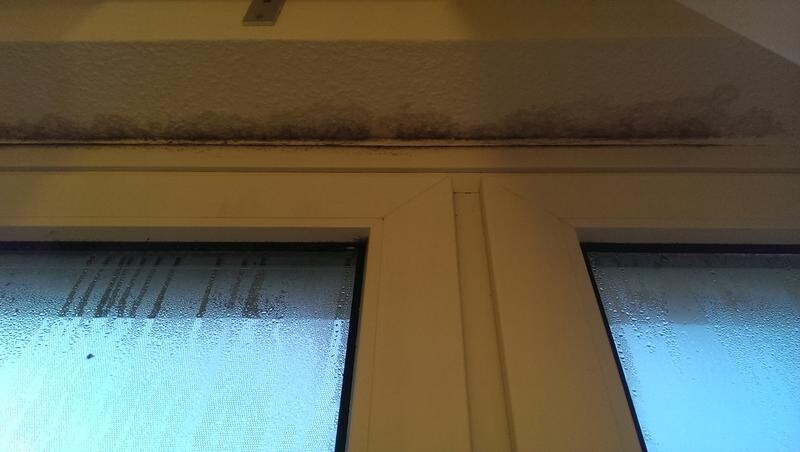
Here you can see how bad the mold problem in the bedroom is, even though we have used special treatments against it:
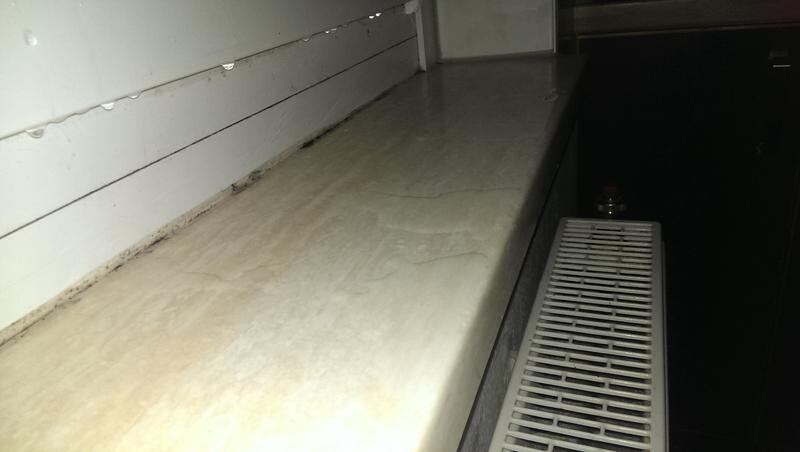
Kitchen:
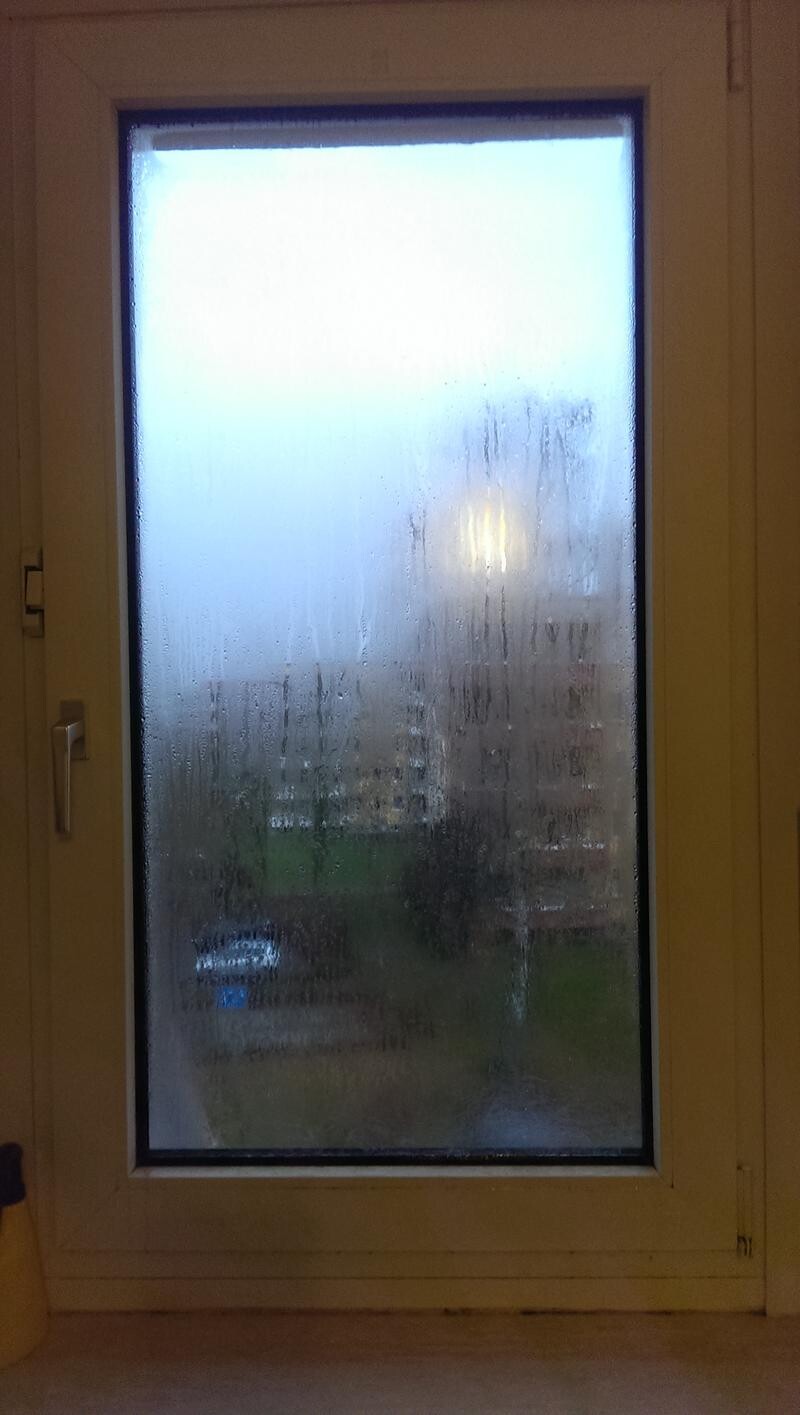
Living room balcony door:
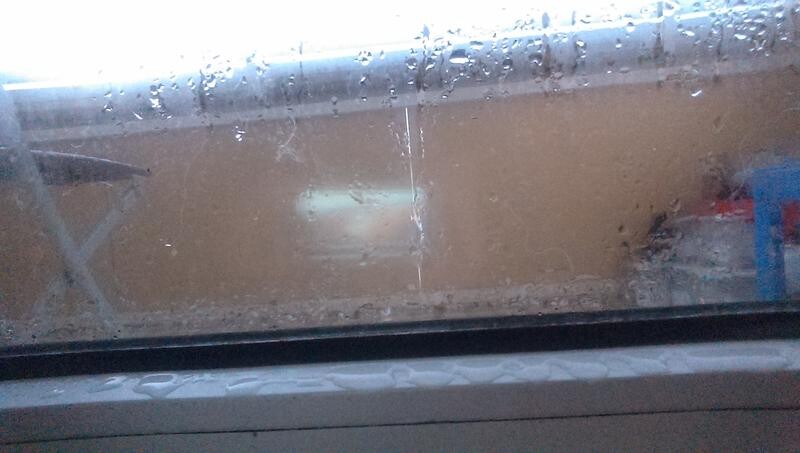
We still have one window in the study that stays comparatively dry… Why is that?
I welcome any advice. Have a great day!
Maszka
I hope you can help me with a problem I’m having. I have been living with my boyfriend in a rented apartment for three years. Already during the first autumn/winter, I was amazed by how much the windows would fog up. As soon as the temperature drops, so much condensation gathers that it literally drips onto the floor. At first, we aired the apartment thoroughly every day for a long time despite the cold outside, but that didn’t help much. Last year, my boyfriend had the brilliant idea to sleep with the window open during winter, so we got to enjoy a little peace – and about 1300€ extra heating costs...
This year the problem has, of course, reappeared. My boyfriend refuses to talk to the landlord because he’s afraid of possible costs for inspections. I can’t do it myself since I’m not on the lease and I don’t really understand the legal side of things (I’m a foreigner studying in Germany). My boyfriend says I should just keep stacking more cloths on every window and on the floor. But I’m running out of those too! Can anyone help me? What else can I do? Is it our fault that the windows look like this? Can the landlord charge us for repair or inspection costs? This morning I took a few photos to illustrate what I’m dealing with every day (really, it looks like this day and night):
Bedroom:
Here you can see how bad the mold problem in the bedroom is, even though we have used special treatments against it:
Kitchen:
Living room balcony door:
We still have one window in the study that stays comparatively dry… Why is that?
I welcome any advice. Have a great day!
Maszka
The problem with the cloths and wiping is that you then dry the cloths inside the apartment, which releases the moisture back into the room. The Kärcher window vacuum cleaner is really a great device.
By the way, we have the same issue in our apartment. The building was constructed in 2000. We tried ventilating very thoroughly for a whole week, but the moisture on the windows didn’t improve at all. However, we have very high ceilings and no ventilation options near the ceiling. What I mean is: in theory, it might be a ventilation issue, but in practice, it can’t be resolved just by opening the windows.
By the way, we have the same issue in our apartment. The building was constructed in 2000. We tried ventilating very thoroughly for a whole week, but the moisture on the windows didn’t improve at all. However, we have very high ceilings and no ventilation options near the ceiling. What I mean is: in theory, it might be a ventilation issue, but in practice, it can’t be resolved just by opening the windows.
It doesn’t have to be just about heating and ventilation behavior, although landlords absolutely favor that. Our basement is not heated at all (no heating installed), yet we spend almost all our time there, including cooking with the resulting humidity. At temperatures around 15°C (59°F) and humidity levels above 60%, with only occasional ventilation, there are absolutely zero moisture problems. Yes, the windows are fogged daily, especially in the morning, but from the outside. This has been the case for three years now—without any mold or water damage anywhere.
The first year we had double-glazed windows without insulation, the second year with insulation, and the third year with insulation and triple-glazed windows.
Before that, in a rental apartment, we had just as much condensation on the windows as the original poster, despite always heating and ventilating perfectly according to all recommendations—and everything became moldy. Especially behind furniture placed against exterior walls (where it was legally determined that an apartment where you cannot place furniture against exterior walls without causing mold is not suitable for residential use. Under no circumstances can the tenant be required to move the furniture away from the exterior walls. The solution: rent reduction!).
Back then, they sent a few experts to prove we were at fault, but it turned out that the building’s insulation was patchy and cracked and that we had done everything correctly. We simply solved the mold problem by moving out. Because any renovation was completely unlikely.
Therefore, I would recommend getting a measuring device like that. If mold or condensation occurs at normal temperatures (20°C / 68°F) and normal humidity levels (around 50%), something is wrong with the apartment.
The first year we had double-glazed windows without insulation, the second year with insulation, and the third year with insulation and triple-glazed windows.
Before that, in a rental apartment, we had just as much condensation on the windows as the original poster, despite always heating and ventilating perfectly according to all recommendations—and everything became moldy. Especially behind furniture placed against exterior walls (where it was legally determined that an apartment where you cannot place furniture against exterior walls without causing mold is not suitable for residential use. Under no circumstances can the tenant be required to move the furniture away from the exterior walls. The solution: rent reduction!).
Back then, they sent a few experts to prove we were at fault, but it turned out that the building’s insulation was patchy and cracked and that we had done everything correctly. We simply solved the mold problem by moving out. Because any renovation was completely unlikely.
Therefore, I would recommend getting a measuring device like that. If mold or condensation occurs at normal temperatures (20°C / 68°F) and normal humidity levels (around 50%), something is wrong with the apartment.
B
Bauexperte29 Nov 2014 11:44Hello,
I would be very surprised if it were different in the OP’s case; if it were otherwise, more tenants would experience the same problems with running water in the mentioned areas.
Regards, Bauexperte
Elina schrieb:This is because in over 90% of cases, it is actually true.
It doesn’t necessarily have to be just the heating and ventilation behavior, although that is definitely popular among landlords.
I would be very surprised if it were different in the OP’s case; if it were otherwise, more tenants would experience the same problems with running water in the mentioned areas.
Regards, Bauexperte
That’s why, as a tenant, I would always first measure the humidity with a hygrometer before confronting the landlord.
In case of doubt, the landlord will definitely come by with such a device and set it up to take measurements. For us, it was the facade / dormer; surface temperatures of 10°C (50°F) were measured on the moldy exterior wall, while the room was heated to 20°C (68°F). Behind the dresser, there was a streak of mold with a sharply defined edge, showing that the mold boundary exactly followed the dormer connection. This was so clear that there were no further disputes.
In case of doubt, the landlord will definitely come by with such a device and set it up to take measurements. For us, it was the facade / dormer; surface temperatures of 10°C (50°F) were measured on the moldy exterior wall, while the room was heated to 20°C (68°F). Behind the dresser, there was a streak of mold with a sharply defined edge, showing that the mold boundary exactly followed the dormer connection. This was so clear that there were no further disputes.
 schubert7929 Nov 2014 16:29
What temperatures do you currently have inside the apartment? It should definitely be better regarding the condensation...

Hello again!
I have carefully read your comments, bought hygrometers for the living room and bedroom, and have been monitoring everything closely since Friday. For the last three days, we set the heating to level 3 in every room and kept it that way. We have been constantly watching the temperature and humidity and are still ventilating three times a day (max. 10 minutes each time, with all windows wide open this time, and the cats were temporarily placed in their carrier).
The temperature now stays between 20 and 26 degrees Celsius (68 and 79°F). Early in the morning after getting up, the humidity level is 60-67% (the maximum value reached once during the night was 74%). We turn the heating off, ventilate for 10 minutes, close the windows, turn the heating back to 3, and repeat this routine... After that, the humidity drops below 50% and increases very slowly until it reaches 60-65% again in the evening.
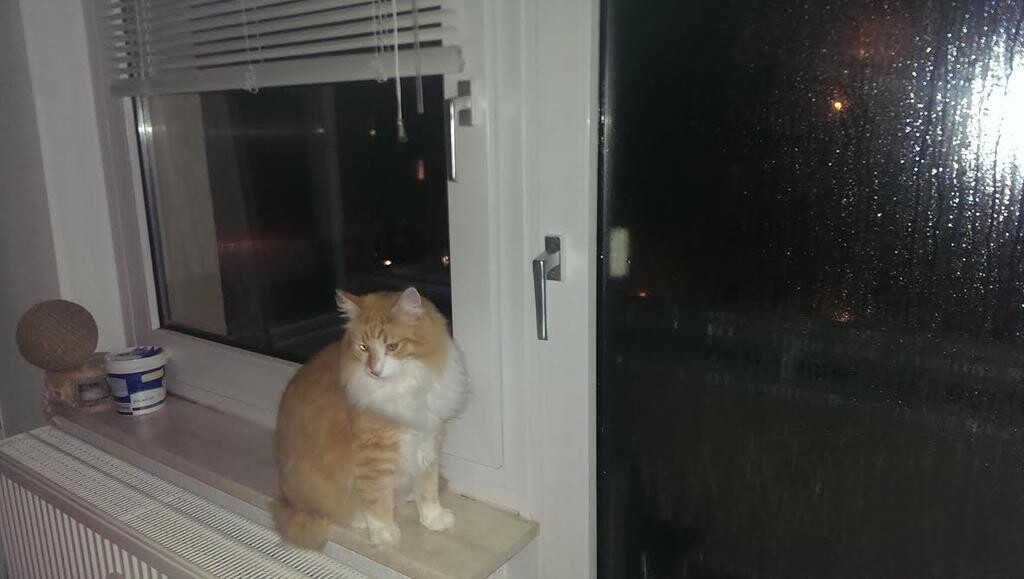
Is this correct? When should we start noticing the first effects? So far, not much has changed—only one window pane in the living room stays nicely dry, while the others, especially the balcony door, are still a disaster.
Here you can see the left pane dry, while the door looks like Niagara Falls. Why is that?
I want to add that I already wanted to contact the landlord two years ago, but I have no decision-making power here.
I think I will try for maybe one more week to ventilate and heat the apartment properly and thoroughly. But what if nothing changes much? Should the housing company decide then? If this is all our fault, we will have to accept it. Something has to change anyway.
I have carefully read your comments, bought hygrometers for the living room and bedroom, and have been monitoring everything closely since Friday. For the last three days, we set the heating to level 3 in every room and kept it that way. We have been constantly watching the temperature and humidity and are still ventilating three times a day (max. 10 minutes each time, with all windows wide open this time, and the cats were temporarily placed in their carrier).
The temperature now stays between 20 and 26 degrees Celsius (68 and 79°F). Early in the morning after getting up, the humidity level is 60-67% (the maximum value reached once during the night was 74%). We turn the heating off, ventilate for 10 minutes, close the windows, turn the heating back to 3, and repeat this routine... After that, the humidity drops below 50% and increases very slowly until it reaches 60-65% again in the evening.
Is this correct? When should we start noticing the first effects? So far, not much has changed—only one window pane in the living room stays nicely dry, while the others, especially the balcony door, are still a disaster.
Here you can see the left pane dry, while the door looks like Niagara Falls. Why is that?
I want to add that I already wanted to contact the landlord two years ago, but I have no decision-making power here.
I think I will try for maybe one more week to ventilate and heat the apartment properly and thoroughly. But what if nothing changes much? Should the housing company decide then? If this is all our fault, we will have to accept it. Something has to change anyway.
Similar topics