
ᐅ Window Installation – Using Expanding Foam Tape: Quick Fix or Worth the Wait?
Created on: 19 Dec 2020 08:04
A
annab377Hello everyone,
Our general contractor actually managed to schedule a window installation appointment last week. The German-speaking window installer explained to me that they apply an external sealing tape / swelling tape. Due to the 2-3°C (36-37°F) temperature, it expands rather slowly. They started on Wednesday and by Thursday night it was supposed to have fully expanded. They also used a warm air blower because, according to him, they want to avoid the window installation foam getting underneath the swelling tape afterward. That’s why the swelling tape should be fully expanded (up to the masonry) before they can foam from the inside.
Yesterday evening, I was able to take photos of two different windows (doors) on the ground floor from the outside 🤨
According to the photos, it looks like they cut the swelling tape too short at its supposed expansion height. You can see the curves on the surface that should actually press against the window reveal, right? Doesn’t the installer use a uniform swelling tape with the same thickness for this?
The swelling tape is the gray one (in the front, since the photo is taken from outside) and behind it is the slightly different violet-gray of the installation foam.
Should I wait until next week, when a significant temperature increase of 8-9°C (14-16°F) is expected, and see if the swelling tape fully closes and contacts the window reveal everywhere? Or should I request fully closed swelling tape in all areas before final acceptance? That would probably require them to remove the affected windows again, right? Not all windows are like this. Most of the windows have swelling tape that sits completely against the reveal from the outside. I can’t see anything inside anymore because after the foam, a black adhesive tape (possibly with a cotton surface?) was applied over the joints.
What do the experts here think? I don’t want to create unnecessary thermal bridges due to such issues. Especially our window expert @11ant can surely tell me what is going on here.
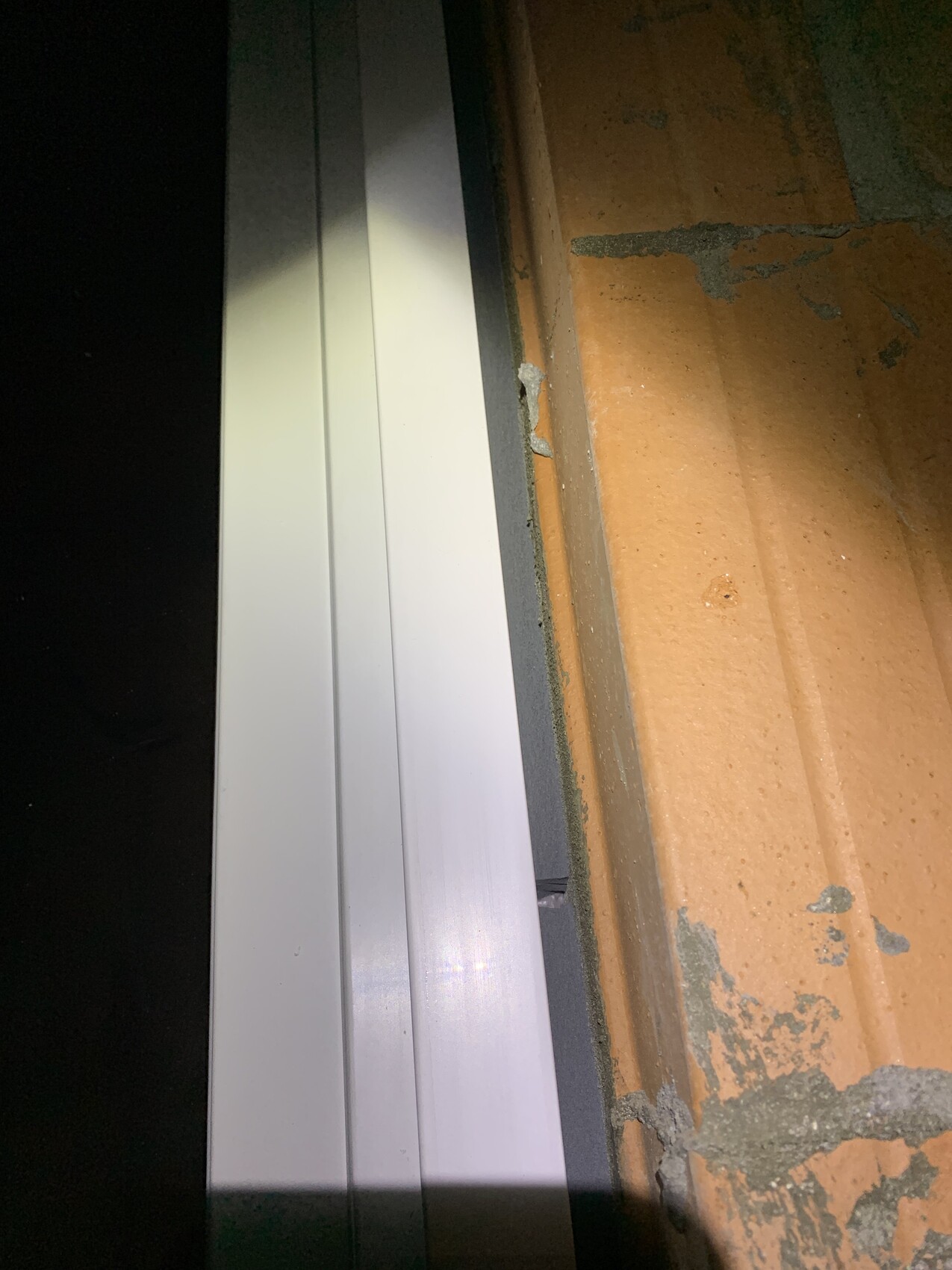
In the third picture, it looks like the swelling tape was simply cut too short in length, leaving a roughly 1 cm (0.4 inches) tall gap in the tape. There it has expanded well and presses against the window reveal. Should I just foam that small gap closed? But the waves and curves on the swelling tape surface, which unfortunately are largely not in contact with the window reveal, seem outside the tolerance range, don’t they?
Thank you very much for your answers.
Have a great weekend and an early Merry Christmas.
Annab377
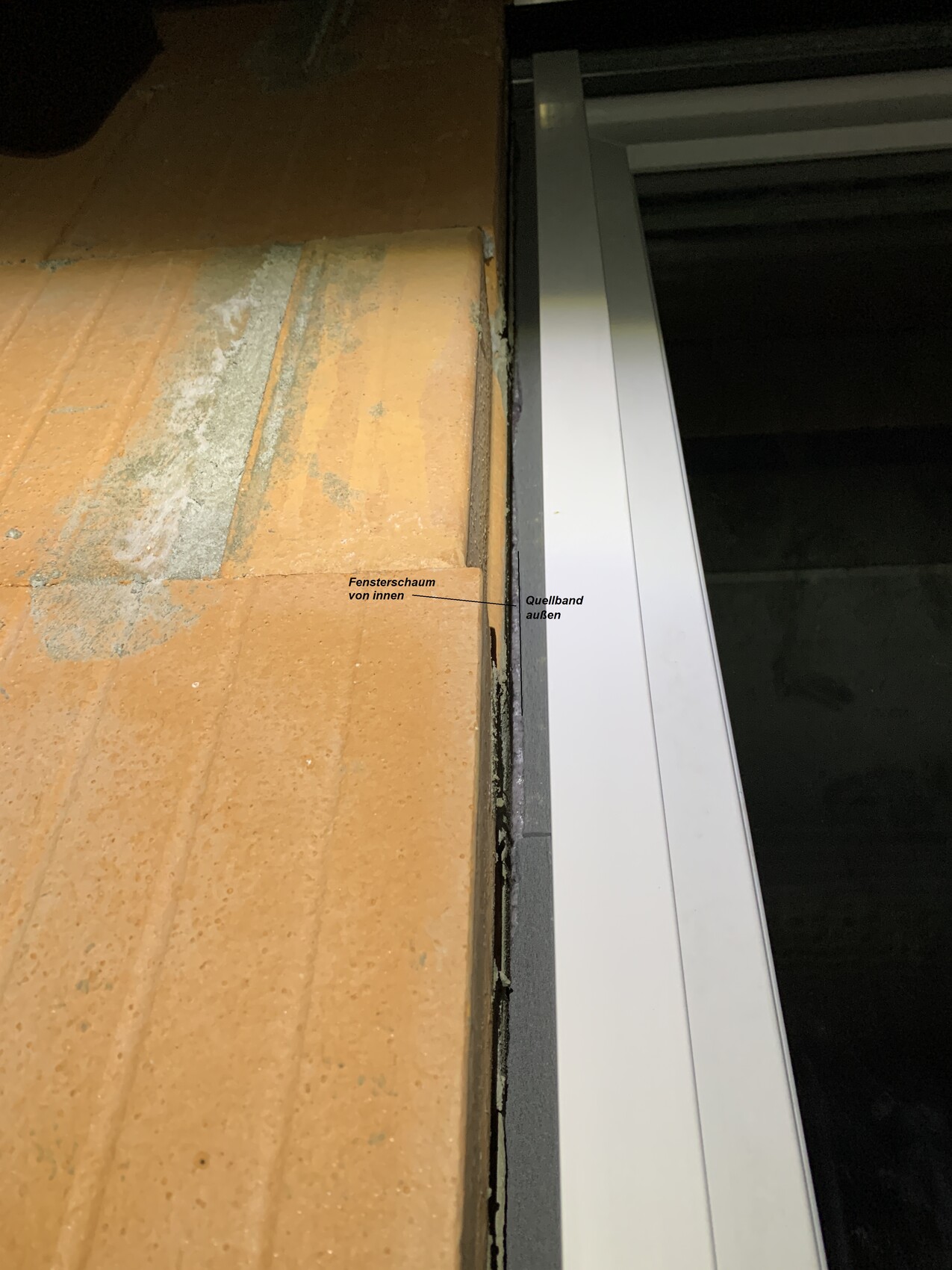
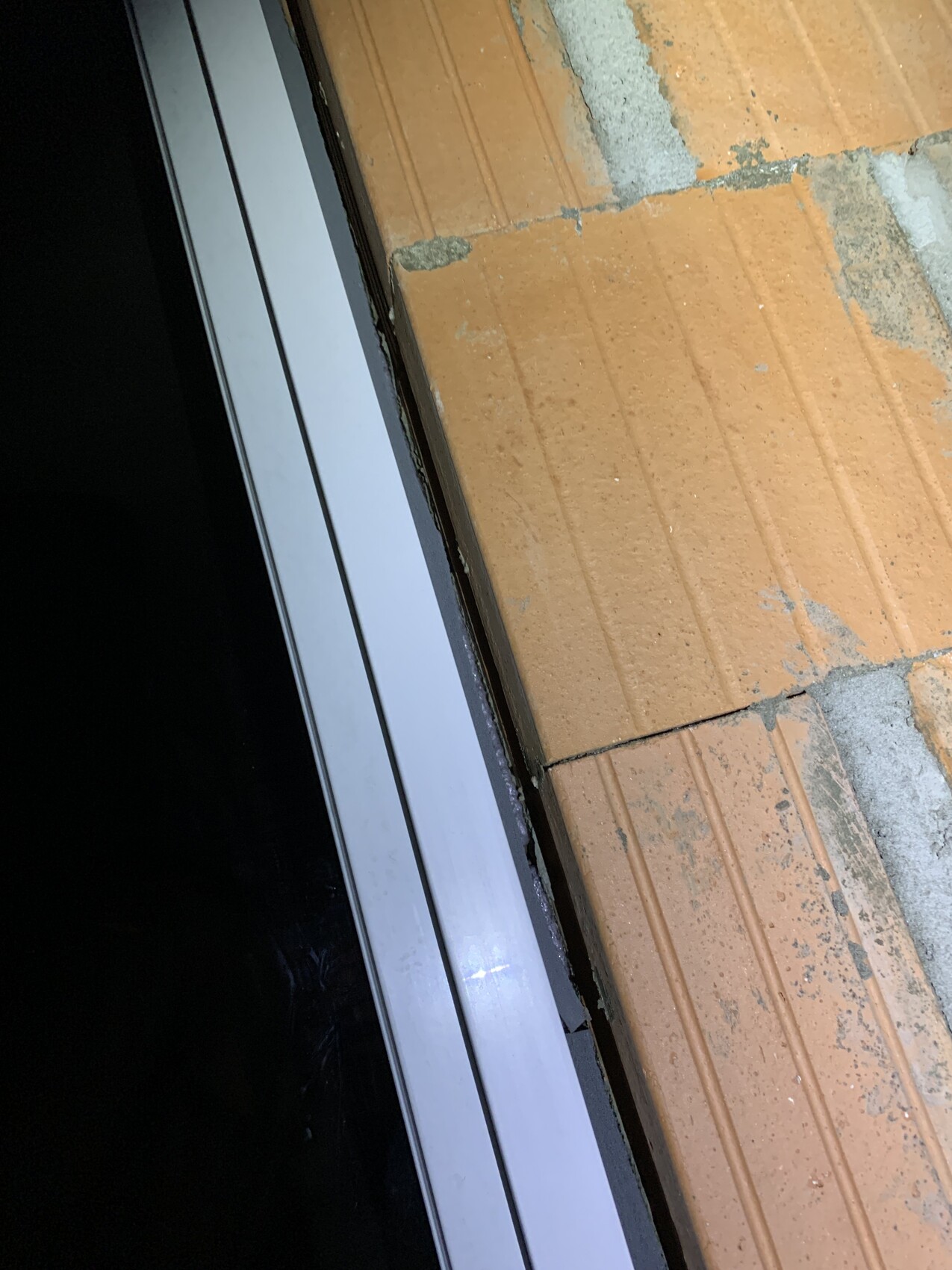
Our general contractor actually managed to schedule a window installation appointment last week. The German-speaking window installer explained to me that they apply an external sealing tape / swelling tape. Due to the 2-3°C (36-37°F) temperature, it expands rather slowly. They started on Wednesday and by Thursday night it was supposed to have fully expanded. They also used a warm air blower because, according to him, they want to avoid the window installation foam getting underneath the swelling tape afterward. That’s why the swelling tape should be fully expanded (up to the masonry) before they can foam from the inside.
Yesterday evening, I was able to take photos of two different windows (doors) on the ground floor from the outside 🤨
According to the photos, it looks like they cut the swelling tape too short at its supposed expansion height. You can see the curves on the surface that should actually press against the window reveal, right? Doesn’t the installer use a uniform swelling tape with the same thickness for this?
The swelling tape is the gray one (in the front, since the photo is taken from outside) and behind it is the slightly different violet-gray of the installation foam.
Should I wait until next week, when a significant temperature increase of 8-9°C (14-16°F) is expected, and see if the swelling tape fully closes and contacts the window reveal everywhere? Or should I request fully closed swelling tape in all areas before final acceptance? That would probably require them to remove the affected windows again, right? Not all windows are like this. Most of the windows have swelling tape that sits completely against the reveal from the outside. I can’t see anything inside anymore because after the foam, a black adhesive tape (possibly with a cotton surface?) was applied over the joints.
What do the experts here think? I don’t want to create unnecessary thermal bridges due to such issues. Especially our window expert @11ant can surely tell me what is going on here.
In the third picture, it looks like the swelling tape was simply cut too short in length, leaving a roughly 1 cm (0.4 inches) tall gap in the tape. There it has expanded well and presses against the window reveal. Should I just foam that small gap closed? But the waves and curves on the swelling tape surface, which unfortunately are largely not in contact with the window reveal, seem outside the tolerance range, don’t they?
Thank you very much for your answers.
Have a great weekend and an early Merry Christmas.
Annab377
It looks to me like the tape cannot fully expand because of the foam, which causes the height differences. The tape is available in different thicknesses for various gap widths, so it’s possible the installers chose the wrong type, although from my perspective, as mentioned in the first sentence, it seems like the foam is causing the issue.
The tape is, in my understanding, part of the sealing layer and must be used continuously around the entire perimeter. Therefore, there should be no gaps between the tape sections. This was explained to me by my window installer when he removed a too-short piece of tape and replaced it with a continuous strip.
The expansion can take several days to fully close at these temperatures—almost a week in our case.
The tape is, in my understanding, part of the sealing layer and must be used continuously around the entire perimeter. Therefore, there should be no gaps between the tape sections. This was explained to me by my window installer when he removed a too-short piece of tape and replaced it with a continuous strip.
The expansion can take several days to fully close at these temperatures—almost a week in our case.

We recently had a similar discussion here with slightly different views on the "skim coat" aspect: https://www.hausbau-forum.de/threads/fensterlaibung-vor-fenstereinbau-glattstrich.34465/
https://www.instagram.com/11antgmxde/
https://www.linkedin.com/company/bauen-jetzt/
https://www.instagram.com/11antgmxde/
https://www.linkedin.com/company/bauen-jetzt/
Mike29 schrieb:
It looks to me like the sealing tape can’t fully expand because of the foam. That would explain the differences in height. The tape comes in various thicknesses for different gap widths, so it’s possible the installers chose the wrong tape. However, as I said in the first sentence, it seems like the foam is blocking it.
The tape, as far as I know, is part of the sealing layer and should be used continuously all around. That’s why there shouldn’t be any gaps between sections. My window installer explained this to me when he removed a too-short section of tape and replaced it with a continuous piece.
The expansion can take several days at these temperatures until it fully closes up—almost a week in our case. Yes, it actually looks that way in the photo, but the tape is in front of the foam and the foam is definitely not blocking it at those points. That’s why I’m puzzled by the waves on the surface of the compression tape.
And what about that small piece that was too short—how are they supposed to fix that now? Remove the window again and install compression tape that’s long enough? Or would it be enough to fill that small gap with mounting foam?
Since the principle is to be more airtight on the inside than on the outside when installing windows, could these small spots be considered not that serious? Or is this really shoddy workmanship?
@11ant thanks also for your thread link. Unfortunately, it didn’t quite answer my question above. There was a smooth finish at my window reveals. However, for 2-3 windows, the compression tape doesn’t adhere evenly to every part of the reveal. Either it will still come and it really takes a few days, or it will stay that way. Foam insulation? Or maybe some kind of tape is applied on the outside, like what’s currently visible on the inside:
Thanks very much for your opinions and greetings from the now very icy Swabian region.
Hello,
It seems to me that the installers were not entirely sure about the purpose of the tape.
1. The tape used is of good quality (brand).
2. The tape comes in different thicknesses, but even if it’s too thin, it fills the cavity because it expands up to 8cm (3 inches). However, it then is no longer airtight, which you can check by pressing it. If it feels very soft, it was the wrong tape.
3. Foam should not be used when installing sealing tapes. I have written about this before. The tape provides the airtight, rainproof, and thermal barrier all in one. Any gaps at the joints (often also in the corners if they cut it too short) are sealed with a cartridge sealant (a sticky material like from a silicone gun). For example, with fall-protection windows, if you screw brackets to the masonry, you apply an additional airtightness tape from the inside over the sealant (previously, this was done continuously all around).
4. In my opinion, the tape cannot fulfill its function here.
Best regards,
Jann
It seems to me that the installers were not entirely sure about the purpose of the tape.
1. The tape used is of good quality (brand).
2. The tape comes in different thicknesses, but even if it’s too thin, it fills the cavity because it expands up to 8cm (3 inches). However, it then is no longer airtight, which you can check by pressing it. If it feels very soft, it was the wrong tape.
3. Foam should not be used when installing sealing tapes. I have written about this before. The tape provides the airtight, rainproof, and thermal barrier all in one. Any gaps at the joints (often also in the corners if they cut it too short) are sealed with a cartridge sealant (a sticky material like from a silicone gun). For example, with fall-protection windows, if you screw brackets to the masonry, you apply an additional airtightness tape from the inside over the sealant (previously, this was done continuously all around).
4. In my opinion, the tape cannot fulfill its function here.
Best regards,
Jann
It has actually expanded a bit more in the last few days, despite temperatures around freezing point. I plan to do the pressure test sometime next week. Unfortunately, I will probably only be able to get to the construction site next weekend. Is it possible to make a claim for something like this after installation? Do I have the right to have it repaired, and is it even possible to do this with installed windows (for example, replacing the sealing tapes afterwards)?
Similar topics