
Hello,
it is clear that a sealing tape suitable for the purpose should be applied from the frame to the window.
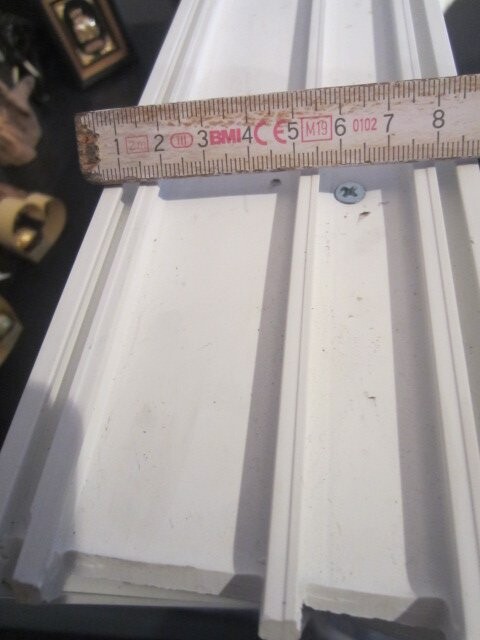
Therefore, my question: the window has a mullion (see photo). Is it better to use one sealing tape or two tapes that are then applied on both sides of the mullion?
Thank you
it is clear that a sealing tape suitable for the purpose should be applied from the frame to the window.
Therefore, my question: the window has a mullion (see photo). Is it better to use one sealing tape or two tapes that are then applied on both sides of the mullion?
Thank you
C
Charlie9027 Jan 2023 00:11You probably mean compressible sealing tape? If it is available in that width, I would recommend using one strip instead of two side by side.

Always these rush-click zoom-ins without any context – super close-up shots, but basically guessing games.
https://www.instagram.com/11antgmxde/
https://www.linkedin.com/company/bauen-jetzt/
https://www.instagram.com/11antgmxde/
https://www.linkedin.com/company/bauen-jetzt/

Compression tape is called compression tape because it is installed in a compressed state and then expands after a short (brief) period of time to fill the gap between the window frame and the raw window opening (ideally airtight while also providing insulation). Of course, the window is fixed and secured beforehand. At least, that is the intended procedure. And of course, it can also be applied around corners.
There are many other, often inferior methods. I would prefer this one. Although compression tape is probably more expensive than a combination of (external) rain protection membrane + expanding foam + internal airtightness layer ("tape"), it is the better solution. We experienced both methods in our house. We would have gladly avoided one of them (the latter method at the windows was poorly executed by so-called professionals). Compression tape on the doors was implemented perfectly. Other trades were surprised by the “arrogance” of the door installers who said they would not even attend the blower door test. Their work was perfect and airtight... and yes, they were right! The window installers were on site for hours beforehand, and on the day of the blower door test, additional work was still required.
Both methods can work, of course, but based on my personal experience, I would recommend the compression tape method.
There are many other, often inferior methods. I would prefer this one. Although compression tape is probably more expensive than a combination of (external) rain protection membrane + expanding foam + internal airtightness layer ("tape"), it is the better solution. We experienced both methods in our house. We would have gladly avoided one of them (the latter method at the windows was poorly executed by so-called professionals). Compression tape on the doors was implemented perfectly. Other trades were surprised by the “arrogance” of the door installers who said they would not even attend the blower door test. Their work was perfect and airtight... and yes, they were right! The window installers were on site for hours beforehand, and on the day of the blower door test, additional work was still required.
Both methods can work, of course, but based on my personal experience, I would recommend the compression tape method.

We used compressible sealing tape on the top and sides, and foam and tape both inside and outside. However, the compressible tape on top was not wrapped around the corners but overlapped. So the tape was longer on top, allowing it to be folded downwards.
As far as I know, it should not be used at the bottom because it is not load-bearing, and the mounting blocks would compress it, which means it would lose its insulation effect. Therefore, the area at the bottom should be properly foamed for insulation and sealed with the correct tapes on both the inside and outside to ensure airtightness and protection against driving rain.
The windows and doors were not an issue during the blower door test (BDT).
As far as I know, it should not be used at the bottom because it is not load-bearing, and the mounting blocks would compress it, which means it would lose its insulation effect. Therefore, the area at the bottom should be properly foamed for insulation and sealed with the correct tapes on both the inside and outside to ensure airtightness and protection against driving rain.
The windows and doors were not an issue during the blower door test (BDT).
Similar topics